Last April, a Denver property manager named Sarah discovered that her pristine sod had been replaced by gouged soil and broken sprinkler heads once the drifts finally receded. It’s a frustrating reality for many who dread the “spring surprise” of hidden damage. You need a clear path, but you shouldn’t have to sacrifice your lawn or expensive shrubs to get it. Implementing snow removal best practices to prevent property damage is the only way to safeguard your investment during a heavy Colorado winter. At Snow Removal Denver and Snow Plowing Denver, we believe that professional service should never result in a call to a landscaper.
This 2026 guide will teach you how to use professional marking and protection strategies to keep your hardscapes and plants safe from heavy equipment. We’ll preview the essential steps for better communication with your provider and show you how to lower your restoration costs. Learn how to achieve a clear property with zero damage this season. With over 44 years of experience, our family-owned business knows exactly how to protect your property while maintaining safe passage for everyone.
Key Takeaways
- Identify high-risk zones like driveway edges and hidden obstacles to prevent sod scraping and soil compaction before the first storm hits.
- Install 48-inch reflective fiberglass or wood stakes to ensure maximum visibility for equipment operators during heavy Denver snowfalls.
- Protect vulnerable evergreens and ornamental shrubs from salt spray and windburn by using physical barriers like snow fencing or burlap wraps.
- Hire professionals who utilize snow removal best practices to prevent property damage, such as back-dragging and adjusting plow blade height to avoid turf scalping.
- Conduct immediate post-storm inspections and rinse salt residue from plants during mid-winter thaws to maintain your property’s long-term health.
Common Ways Snow Plows Can Damage Your Denver Landscape
Denver’s winter weather is unpredictable. While clearing your property is a legal requirement, it shouldn’t come at the cost of your spring landscaping budget. Professional Snow removal involves more than just pushing white powder from one spot to another. Without following snow removal best practices to prevent property damage, heavy equipment can easily displace sod and gouge turf at the edges of your driveway. This usually happens when operators lose sight of the curb line under a thick blanket of frost.
Soil compaction is another silent killer of Denver lawns. When heavy loaders stack high-volume snow piles on top of sensitive root systems, the weight squeezes out the oxygen. This leaves your grass struggling to recover once the ground thaws. Additionally, chemical salt burn can devastate ornamental shrubs. Many property owners don’t realize that standard sodium chloride can dehydrate plant tissues and alter soil pH. Crushing low-profile plants or snapping hidden irrigation heads are also common risks when an inexperienced crew takes the wheel. At Snow Removal Denver, we have over 44 years of experience avoiding these exact pitfalls.
The Impact of Heavy, Wet Denver Snow
Denver is famous for its “upslope” storms that deliver heavy, wet snow. This type of precipitation is much denser than the light powder found in the mountains. The sheer weight of this snow can snap the branches of your evergreens or push temporary barriers directly into your flower beds. During the dormant season, Colorado turf is particularly vulnerable. It can’t repair itself until the spring growing cycle begins. Our team knows that the pressure from a plow blade against wet snow requires precise handling to avoid structural damage to your property.
Hidden Hazards: Irrigation and Hardscapes
Visibility is the biggest challenge for any equipment operator. Drivers often can’t see flush-mounted objects like irrigation heads or decorative lighting once they’re buried under just 4 inches of snow. If these items aren’t marked properly, they’re likely to be crushed by the weight of a truck or caught in a snow blower’s intake. Protecting your curb edges and lighting requires a proactive approach before the storm hits. For more details on getting your site ready, check out the ultimate winter storm preparedness guide for Denver businesses. Following snow removal best practices to prevent property damage ensures that your infrastructure remains intact while your paths stay clear.
Strategic Property Marking: The Essential First Line of Defense
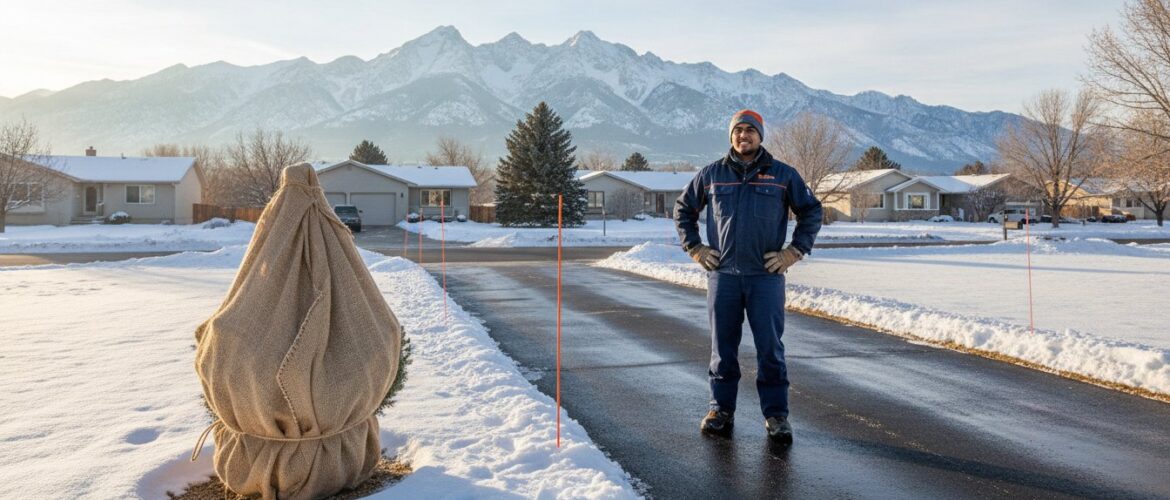
Effective property marking is the foundation of snow removal best practices to prevent property damage. When a blizzard hits at 2 AM, even the most experienced driver needs clear visual cues to navigate your property safely. You must identify high-risk zones like curbs, fire hydrants, and hidden obstacles before the first snowflake falls. We recommend using 48-inch reflective fiberglass or wood stakes to ensure maximum visibility. Fiberglass is particularly effective because it’s durable and won’t snap easily under the pressure of heavy, wet snow. These markers should be installed before the first ground-freeze in the Denver Metro area. Early installation ensures the stakes remain stable and upright throughout the entire winter season.
Implementing these snow removal best practices to prevent property damage helps our team at Snow Removal Denver provide the quality service you expect. Proper marking takes the anxiety out of the snow removal process for both the property owner and the equipment operator. It provides a clear roadmap that protects your investment from accidental gouges or crushed infrastructure. When your property is marked professionally, it allows for a faster and more efficient clearing process. This proactive step is a simple way to gain professional trust and ensure your landscape remains pristine until spring.
Where to Place Your Snow Stakes
Proper spacing is critical for maintaining property integrity. For straight runs along driveways or parking lots, you should space your stakes every 10 to 15 feet. On curves or near corners, you must tighten that spacing to every 5 feet to guide the plow blade accurately. Always offset your stakes at least 6 inches back from the pavement edge. This small gap allows for “plow roll,” which is when snow curls off the blade without snapping your markers or scraping the sod. Additionally, you should use stakes to clearly define “No-Push” zones. These are specific areas where snow should never be stacked to prevent soil compaction or damage to sensitive plants.
The Color Code for Professional Plow Drivers
A standardized color-coded system takes the guesswork out of night-time operations and heavy Denver blizzards. We suggest using orange stakes for property edges and green stakes to identify drains or hydrants. Red stakes should be reserved strictly for hazards like decorative lighting, irrigation components, or low-profile hardscapes. This consistency helps Snow Removal Denver and Snow Plowing Denver drivers work safely and with precision. Clear marking ensures that every operator knows exactly where the hidden dangers lie. If you want a team that respects your property boundaries, consider the professional snow removal services offered by our family-owned business.
Physical Barriers and Protective Coverings for Vulnerable Plants
Creating a physical barrier is a critical step in snow removal best practices to prevent property damage. While marking your property with stakes is important, sometimes you need extra armor for your high-value landscaping. At Snow Removal Denver, we’ve spent over 44 years seeing how heavy snow and salt spray can ruin a beautiful lawn. Installing snow fencing is one of the most effective ways to prevent drifts from forming where they don’t belong. This fencing also helps direct plow spray away from your sensitive ornamental shrubs. If you have evergreens, using burlap wraps is essential. These wraps shield the needles from salt spray and the drying effects of Colorado’s winter windburn.
For high-value ornamental shrubs, we recommend constructing wooden A-frame shelters. These simple structures can withstand the weight of falling snow from rooflines or the impact of snow thrown by a plow. Additionally, applying a thick layer of mulch around the base of your plants helps insulate roots from extreme temperature fluctuations. This layer acts as a blanket that keeps the soil temperature stable even during a deep freeze. Our family-owned business understands that a little preparation goes a long way in preserving your investment.
Defending Against Salt and De-Icing Agents
Protecting your plants from chemical damage requires a proactive strategy. The Salt Barrier method involves attaching plastic sheeting to the lower half of your snow fences. This prevents de-icing agents from leaching into the soil where they can dehydrate root systems. At Snow Removal Denver, we utilize specific commercial snow removal Denver methods to minimize runoff and protect your landscape. Choosing salt-tolerant species for curb-side planting is another smart long-term strategy for Denver property owners. These plants are naturally more resilient to the harsh conditions found near public roads and sidewalks.
Structural Support for Heavy Snow Loads
Heavy snow can easily splay or snap the branches of upright evergreens like arborvitae. Twine-wrapping these plants keeps the branches tucked in and prevents them from bending under the weight of wet snow. You should also consider building simple snow shields for foundation plantings that sit directly under your eaves. These shields prevent heavy roof avalanches from crushing your landscape. Protecting delicate perennials is just as important. Avoid stacking plow-pushed banks on top of perennial beds; the weight and density of the snow can delay spring growth or kill the plants entirely. Snow Plowing Denver and Snow Removal Denver professionals always prioritize these details to ensure your property remains safe and beautiful.

Professional Plowing Techniques That Minimize Property Damage
Precision matters. When an operator is behind the wheel of a heavy truck, they must understand the physics of the plow blade. Utilizing snow removal best practices to prevent property damage starts with technical maneuvers like back-dragging. Instead of pushing snow toward a delicate curb or garage door, our drivers pull the snow away from these sensitive edges first. This technique ensures that the heaviest pressure is directed toward the center of the driveway or parking lot, far from your landscaping. It’s a simple move that prevents the blade from catching on hidden masonry or wood trim.
Another critical technical detail is the use of plow “shoes.” These are adjustable metal plates that prevent the blade from making direct contact with the ground. By adjusting the shoe height, we can keep the blade a fraction of an inch above the surface. This is essential for protecting residential sod from scalping, especially on uneven Denver terrain. We also prioritize strategic snow stacking. We never pile snow on top of flower beds or against building foundations where the weight could cause structural issues or soil compaction. For tight residential spaces, we switch to smaller equipment like commercial-grade blowers to maintain property integrity.
Why Experience Matters: 44 Years in Denver
There’s no substitute for local knowledge. Snow Removal Denver has spent over 44 years learning how to “read” a property even when it’s buried under a foot of powder. Our crews look for subtle clues like the height of a mailbox or the angle of a walkway to determine where the pavement ends and the grass begins. We conduct thorough site pre-inspections before the winter season to document every potential hazard. This preparation is a key part of our professional snow plowing techniques. We believe that knowing the terrain is the best way to prevent spring repair bills.
Communication with Your Snow Removal Service
Clear communication is the final piece of the protection puzzle. We ask all our clients to provide a detailed site map before the first storm. This map should highlight irrigation heads, decorative lighting, and preferred snow storage areas. If a marker is damaged during a heavy blizzard, report it to us immediately. We’ll replace it during our mid-winter property checks to ensure continued safety. Building a long-term relationship with a family-owned provider like Snow Removal Denver ensures that the same experienced drivers visit your property every time. They learn your landscape’s quirks, which significantly reduces the risk of accidents. If you’re ready for a more reliable partner, contact us today for a free estimate on our professional services.
Post-Storm Recovery and Planning for a Resilient Landscape
Once the storm passes and Snow Removal Denver has cleared your path, the work is not quite finished. Following snow removal best practices to prevent property damage includes a thorough post-storm inspection. This ensures that any minor issues are addressed before they become costly spring repairs. Our family-owned business believes that property integrity is a season-long commitment. Walking your property after the equipment leaves allows you to spot potential hazards before the next freeze-thaw cycle begins. It’s the best way to ensure your landscape remains healthy and safe.
During mid-winter thaws, you should take a moment to rinse salt residue from your plants and hardscapes with a garden hose. This simple step prevents chemical dehydration and salt burn on sensitive ornamental species. If you notice any scuffs or displaced sod, document the damage with photos immediately. Providing this feedback to your contractor helps them adjust their technique for the next snowfall. Professional communication is a core part of the service provided by Snow Removal Denver and Snow Plowing Denver. We use this information to maintain our high standards of quality and safety for every client we serve.
Immediate Actions After a Heavy Snowfall
Walk your property immediately after the snow plow leaves. You should gently shake heavy snow off evergreen branches to prevent permanent bending or snapping. This is especially important for upright species that splay under the weight of wet Denver snow. Check that your drains and catch basins are clear of snow piles. This prevents localized flooding and ice damming during the next sunny afternoon. Finally, verify that all reflective markers are still in place. If a stake was moved or hit, reposition it immediately so the next Snow Plowing Denver crew has a clear guide for the next event.
Designing for the Plow: Long-Term Solutions
Long-term planning is a key part of snow removal best practices to prevent property damage. You should consider widening your hardscape borders by 12 to 18 inches to create a dedicated buffer zone for snow storage. This prevents plow blades from ever coming near your expensive sod. Replacing delicate turf edges with river rock or cobble can also prevent the unsightly brown edges caused by salt spray. For more tips on maintaining your home during the winter, see our guide on residential snow removal Denver. Our team has over 44 years of experience helping Denver residents build more resilient landscapes. We’re prepared to handle any snow removal work while respecting your property boundaries.
Secure Your Landscape for a Clear Denver Winter
Winter in the Denver Metro area shouldn’t leave you with a list of expensive repairs come April. Success starts with proactive property marking and physical barriers to shield your sensitive plants. Utilizing snow removal best practices to prevent property damage requires more than just a truck; it demands technical precision and the right equipment for every tight space. By focusing on professional techniques like back-dragging and proper snow stacking, you can keep your hardscapes intact and your soil healthy.
Snow Removal Denver and Snow Plowing Denver are ready to help you navigate the next storm with confidence. We are a family-owned and operated business with over 44 years of Denver experience. Our specialists remain on-call 24/7 for emergency storm response to ensure you have safe passage at any hour. Don’t wait for the next heavy blizzard to risk your property. Get a Free Estimate for Landscape-Safe Snow Removal and protect your investment today. You can rest easy knowing your site is in expert hands.
Frequently Asked Questions
How do I mark my driveway so a snow plow driver can see it at night?
You should install 48-inch reflective fiberglass stakes every 10 to 15 feet along straight sections of your driveway. On curves, place them every 5 feet to provide a clearer guide. Position these markers 6 inches back from the pavement edge to allow for plow roll. Reflective tape at the top ensures visibility during heavy Denver blizzards. This is a critical part of snow removal best practices to prevent property damage.
Will de-icing salt kill my grass and perennials?
Yes, standard sodium chloride can dehydrate plant tissues and alter soil pH, which leads to salt burn. To protect your Denver landscape, you should use salt-tolerant plants near driveways and install physical barriers like burlap. Rinsing the area with water during a mid-winter thaw helps dilute the salt concentration. Professional ice management focuses on precision application to minimize runoff into your sensitive garden beds and lawn.
What should I do if a snow plow hits my irrigation system?
Document the damage with photos immediately and contact your service provider to discuss the incident. Most professional companies like Snow Removal Denver conduct pre-season site inspections to avoid these issues. If a head is struck, it is often because it wasn’t marked or was flush-mounted. You will likely need a professional repair once the ground thaws. Maintaining a detailed site map for your contractor helps prevent these accidents.
Is it better to use a snow blower or a plow for a sensitive landscape?
It depends on the specific space and the total snow volume. For tight residential walkways and areas with delicate ornamental plants, a snow blower offers more precision and less physical impact. For large driveways or commercial lots, a plow with adjustable shoes is more efficient. Snow Removal Denver utilizes a fleet of both to ensure your property remains clear without sacrificing your landscape integrity or safety.
How far back from the curb should I plant shrubs to avoid plow damage?
You should plant shrubs at least 3 to 5 feet back from the curb or driveway edge. This provides a necessary buffer zone for plow roll and snow stacking. Denver’s heavy snow density requires extra space so that the weight of the banks doesn’t crush your landscaping. If space is limited, consider using river rock or cobble for the first 18 inches of your border to create a resilient edge.
Can I hold a snow removal company liable for landscape damage?
Liability typically depends on your specific contract and whether the damage resulted from operator negligence. If you did not mark obstacles or provide a site map, the provider might not be held responsible for accidental strikes. Professional companies with over 44 years of experience prioritize property integrity to avoid these issues. We recommend clear communication and property marking to avoid disputes. Always review your service agreement before the winter starts.
Should I wrap all my bushes in burlap for the winter?
You should prioritize wrapping evergreens and sensitive ornamental shrubs that are located close to plowing zones. Burlap protects against salt spray, windburn, and the weight of pushed snow. For foundation plants under rooflines, wooden A-frame shelters are more effective against heavy roof avalanches. Wrapping every bush isn’t always necessary, but it’s a smart precaution for high-value plants in high-traffic areas. This is one of many snow removal best practices to prevent property damage.
What is the best way to melt ice without hurting my plants?
Use calcium magnesium acetate or potassium chloride instead of standard rock salt. These alternatives are generally safer for Denver’s local turf and perennials. Applying a liquid de-icer before a storm can also reduce the total amount of product needed. Following snow removal best practices to prevent property damage involves choosing products that offer safe passage without compromising your soil’s health. Always follow the manufacturer’s instructions to avoid over-application.