
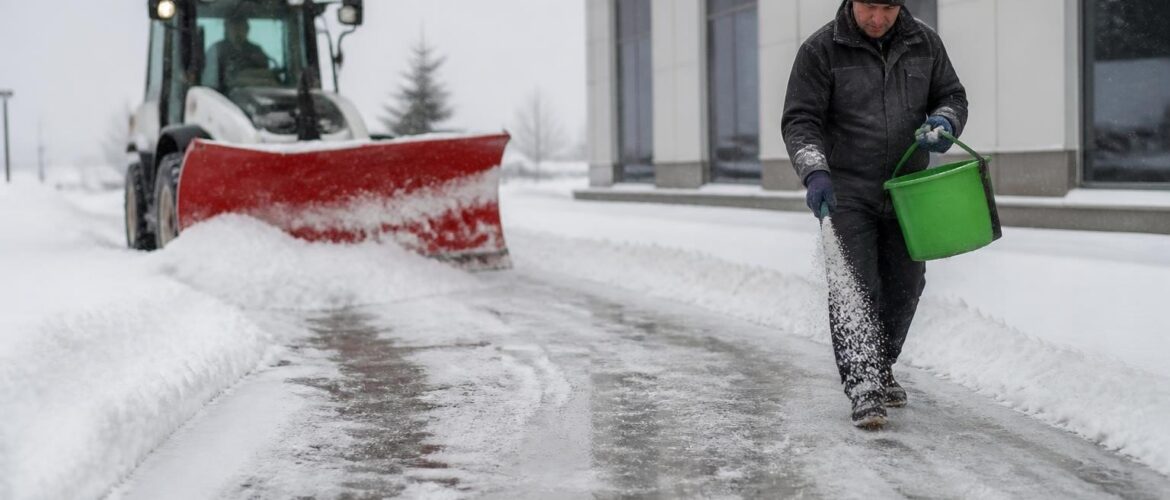
Winter maintenance requires a comprehensive approach that combines mechanical snow removal with chemical deicing. While plowing clears the bulk of accumulation, sno plow ice melt products finish the job by breaking the bond between pavement and remaining ice. For commercial property managers in Denver and throughout Colorado, understanding how these products work together ensures safe surfaces for employees, customers, and visitors throughout the harsh winter months.
Understanding the Chemistry Behind Ice Melt Products
The science of deicing relies on freezing point depression. When you apply sno plow ice melt to frozen surfaces, the chemicals dissolve into the thin layer of moisture present on ice, creating a brine solution with a lower freezing point than pure water. This brine spreads beneath the ice layer, breaking the mechanical bond with the pavement and allowing easier removal.
Common Active Ingredients and Their Performance
Different chemical compounds offer varying performance characteristics based on temperature, speed of action, and environmental impact. Property managers need to match the product to their specific conditions and priorities.
| Compound | Effective Temperature | Melting Speed | Environmental Impact | Cost Level |
|---|---|---|---|---|
| Sodium Chloride (Rock Salt) | 15°F to 32°F | Moderate | High chloride load | Low |
| Calcium Chloride | -25°F to 32°F | Fast | Moderate | Medium |
| Magnesium Chloride | 5°F to 32°F | Moderate | Lower than calcium | Medium-High |
| Potassium Chloride | 12°F to 32°F | Slow | Lower overall | Medium |
| Blended Products | Varies | Varies | Depends on formula | Medium-High |
Sodium chloride remains the workhorse of the industry due to its low cost and availability. However, its effectiveness drops significantly below 15°F, a temperature Denver frequently experiences during winter cold snaps.
Calcium chloride generates heat as it dissolves (exothermic reaction), making it highly effective in extreme cold. This property also means it works faster than rock salt, cutting through ice quickly even at subzero temperatures.
Recent research from Penn State environmental engineering experts highlights the trade-offs among different deicers, noting that while calcium and magnesium chlorides may cost more upfront, they often require lower application rates and work in colder conditions.

Strategic Application: When and How to Use Sno Plow Ice Melt
Timing and technique determine whether your ice melt investment delivers results or runs off into storm drains. Commercial properties face different challenges than residential driveways, requiring systematic approaches that protect both safety and budgets.
Pre-Treatment vs. Post-Plowing Application
Anti-icing (applying before precipitation) prevents the bond from forming in the first place. When weather forecasts predict freezing rain or light snow, a strategic application of liquid or granular sno plow ice melt creates a barrier that keeps precipitation from adhering to pavement. This approach reduces the total amount of product needed and makes mechanical removal more effective.
Deicing (applying after accumulation) requires more product and more time. After professional plowing services clear the bulk of snow, ice melt tackles the compressed layer left behind. However, applying product to thick snow wastes material as it sinks through the snow without reaching pavement.
The optimal sequence follows this pattern:
- Anti-ice high-priority areas before storms when conditions permit
- Plow accumulation down to one inch or less
- Apply appropriate sno plow ice melt to remaining ice and compressed snow
- Allow time for chemical action (15-45 minutes depending on temperature)
- Remove slush mechanically if possible to prevent refreezing
Coverage Rates and Application Density
Over-application wastes money and increases environmental impact. Under-application leaves dangerous conditions. The sweet spot depends on product type, temperature, and ice thickness.
- Light dusting (prevention): 2-4 pounds per 1,000 square feet
- Moderate ice (1/4 inch): 5-8 pounds per 1,000 square feet
- Heavy ice (1/2 inch+): 8-12 pounds per 1,000 square feet
- Extreme conditions: Multiple applications may be more effective than one heavy dose
Modern spreaders with calibrated flow rates eliminate guesswork. For facilities managing multiple locations, documenting application rates by site and condition builds institutional knowledge that improves efficiency year over year.
Environmental Considerations for Commercial Properties
The convenience of chemical deicers comes with environmental costs that commercial property managers cannot ignore. Chloride-based products persist in soil and water, and recent studies show impacts extending far beyond winter application periods.
Watershed and Soil Impacts
Research from Villanova University documents widespread and long-lasting effects of road salt on watersheds, with chloride levels in some streams remaining elevated year-round. For Denver properties near Cherry Creek, the South Platte River, or other waterways, runoff management becomes a critical responsibility.
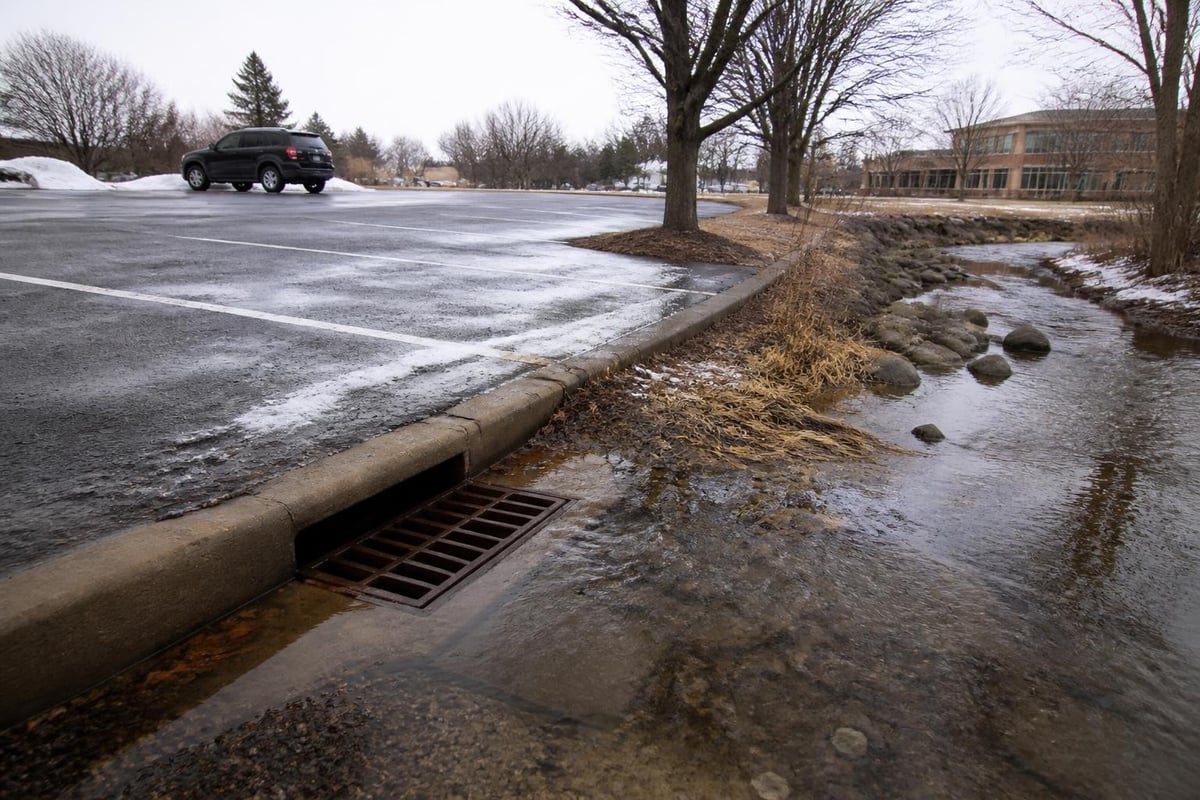
Each pound of sno plow ice melt that washes into storm drains contributes to:
- Elevated chloride concentrations in surface water and groundwater
- Soil compaction and reduced permeability in landscaped areas
- Damage to vegetation including turf, shrubs, and mature trees
- Corrosion of vehicles and infrastructure parked or located near treated areas
The EPA’s guidance on keeping waterways safe from road salt emphasizes that prevention through reduced application rates delivers better outcomes than remediation after contamination occurs.
Alternative Products and Reduced-Impact Strategies
Property managers concerned about environmental stewardship have several options beyond traditional rock salt. The Purdue University technical evaluation of alternative deicers provides multi-criteria analysis of performance, cost, and environmental tradeoffs.
Organic-enhanced blends combine traditional chlorides with ingredients like beet juice, cheese brine, or molasses. These additives improve performance at lower temperatures and reduce the amount of chloride needed. The organic component also provides corrosion inhibition.
Acetate-based products (calcium magnesium acetate, potassium acetate) offer biodegradable alternatives with minimal environmental impact. However, significantly higher costs limit their use to environmentally sensitive areas like near storm drain inlets or adjacent to protected wetlands.
Sand and abrasives do not melt ice but provide traction. For extremely cold periods when chemical melting becomes ineffective anyway, sand offers a lower-impact option. The spring cleanup burden and potential for drain clogging represent the main drawbacks.
Pet-Safe and Pedestrian-Friendly Options
Commercial properties serving the public face additional considerations beyond basic ice control. Office campuses, retail centers, and mixed-use developments see significant foot traffic from people walking dogs or bringing children. Standard sno plow ice melt products can irritate paws, damage leather footwear, and create tracking problems in building interiors.
Identifying Safer Formulations
The ASPCA’s cold-weather safety guidance recommends products specifically labeled as pet-friendly and suggests looking for formulations based on urea or propylene glycol rather than traditional chlorides. However, "pet safe" claims on packaging are not regulated, requiring property managers to read ingredient lists carefully.
Urea-based products work well in moderate temperatures and cause less paw irritation, but they introduce nitrogen into the environment and perform poorly below 20°F.
Magnesium chloride formulations generally prove gentler on paws than calcium chloride or rock salt, though no chloride-based product is truly harm-free.
For high-traffic pedestrian areas, consider:
- Designated pet relief areas treated with pet-specific products
- Heavy-duty walk-off mats at all building entrances to capture tracked chemicals
- Supplemental mechanical cleaning of walkways after chemical application
- Clear signage indicating treated areas during and after application
Protecting Building Interiors
Sno plow ice melt tracked indoors damages flooring, creates slip hazards on smooth surfaces, and generates maintenance headaches. Commercial facilities can minimize interior impacts through strategic planning.
Matting systems should extend at least 15 feet into the building during winter months. Three-zone systems (scraping zone, absorption zone, finishing zone) remove most contamination before people reach interior flooring. Regular mat cleaning and rotation keeps the system effective throughout the season.
Operational Best Practices for Large Commercial Sites
Managing ice control across extensive properties requires systems, not just products. The commercial sites served by Denver Snow Removals often span multiple acres with varied surfaces, drainage patterns, and usage levels.
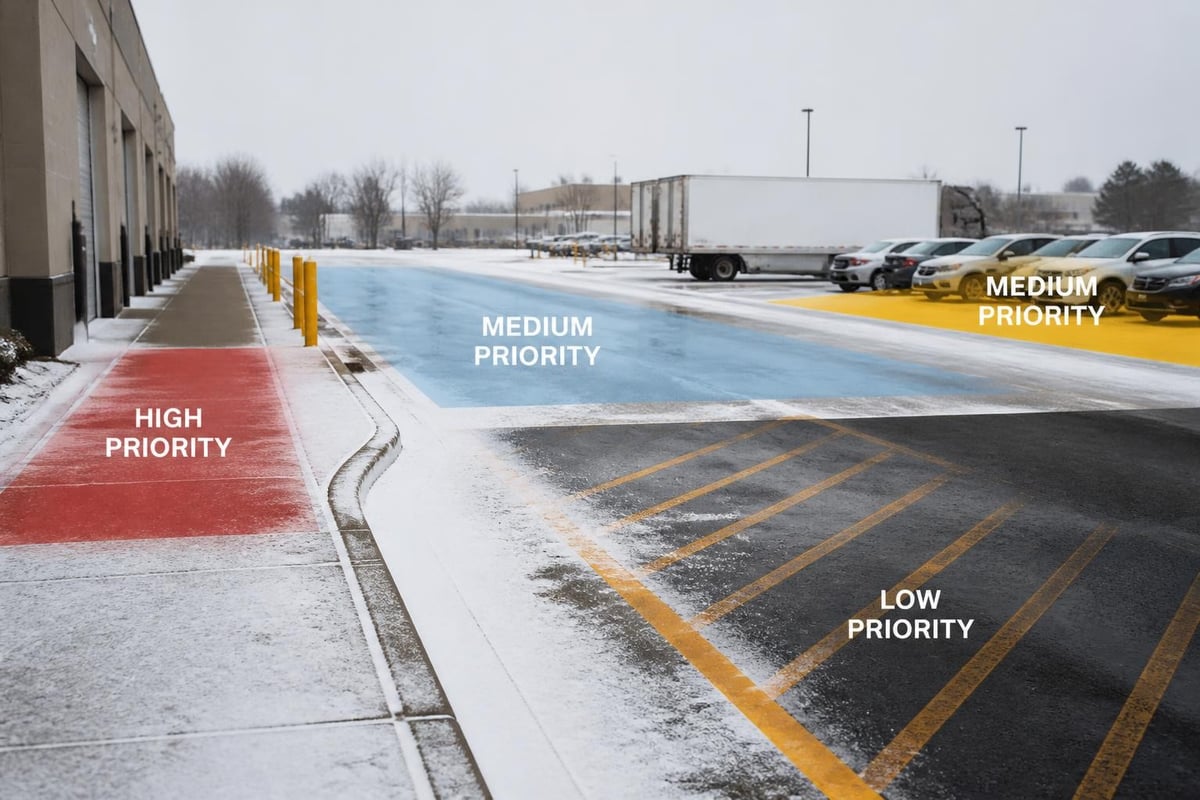
Priority Zoning and Selective Treatment
Not every square foot requires the same level of attention. Strategic zoning conserves resources while maintaining safety in critical areas.
Priority One zones demand immediate attention and premium products:
- Main entrances and exits
- Accessible parking spaces and access aisles
- Loading docks and delivery areas
- Pedestrian crosswalks
- Sidewalks along public streets
Priority Two zones receive treatment after Priority One areas are secured:
- General parking lot driving lanes
- Secondary entrances
- Dumpster access areas
- Equipment yards
Priority Three zones may receive minimal or no treatment:
- Perimeter areas with no pedestrian access
- Overflow parking used only during peak periods
- Undeveloped portions of the property
This tiered approach allows facilities to deploy premium, lower-impact sno plow ice melt products where people concentrate while using more economical options in less critical areas.
Documentation and Continuous Improvement
Professional winter maintenance operations track application rates, product performance, and weather conditions to refine their approach each season. Simple documentation systems capture valuable data:
| Date | Temperature Range | Product Used | Rate (lbs/1000 sf) | Location | Effectiveness | Notes |
|---|---|---|---|---|---|---|
| 1/15/2026 | 8°F – 18°F | Calcium chloride blend | 6.5 | Main lot | Excellent | Clear within 30 min |
| 1/20/2026 | -5°F – 5°F | Rock salt | 10 | Side lot | Poor | Reapplied with CaCl₂ |
Patterns emerge over multiple seasons, revealing which products perform best in specific site conditions and temperature ranges. This institutional knowledge directly reduces costs while improving safety outcomes.
Integration with Mechanical Snow Removal
Chemical and mechanical approaches work best as complementary strategies, not competing alternatives. The relationship between plowing and ice melt application determines overall effectiveness and cost-efficiency.
Optimizing the Plow-Then-Treat Sequence
Plowing first removes the bulk of snow volume at the lowest cost per ton. Attempting to melt heavy accumulations with sno plow ice melt alone proves prohibitively expensive and environmentally irresponsible. A single inch of snow across a 100,000-square-foot parking lot represents roughly 5,000 gallons of water. Melting that chemically requires hundreds of pounds of product.
The optimal approach:
- Initial plow pass removes 80-90% of accumulation
- Edge work and detail areas clear confined spaces inaccessible to large equipment
- Ice melt application addresses the bonded layer and problem spots
- Final cleanup pass removes slush before it refreezes
Some advanced operations use liquid brine (pre-wetted) applications on plow blades. This technique prevents snow from bonding during plowing, reducing the ice layer left behind and cutting chemical usage by 20-30%.
Equipment and Storage Considerations
Proper ice melt storage protects product effectiveness and prevents premature deterioration. Commercial quantities require dedicated facilities with specific characteristics:
- Waterproof covering to prevent moisture contamination and caking
- Elevated platforms to avoid ground moisture and allow forklift access
- Temperature control for liquid products susceptible to freezing or separation
- Separation from fertilizers and other chemicals to prevent cross-contamination
Calibrated spreaders deliver consistent application rates, eliminating the guesswork of hand-spreading or uncalibrated equipment. Modern units with ground speed compensation automatically adjust flow rates to maintain target coverage regardless of vehicle speed.
Regulatory Compliance and Risk Management
Commercial property owners and managers carry legal obligations to maintain safe premises. Ice and snow create premises liability exposure, but so do the chemicals used to combat winter conditions. Balancing these competing risks requires understanding both safety standards and environmental regulations.
Duty of Care and Reasonable Response
Colorado premises liability law requires property owners to exercise reasonable care in maintaining safe conditions. What constitutes "reasonable" depends on several factors:
- Severity and duration of weather events
- Property type and expected use (24/7 business vs. office hours only)
- Warning and notice provided to visitors
- Industry standards for similar properties in the region
Documented winter maintenance plans demonstrate proactive risk management. These plans should specify:
- Trigger points for initiating plow and ice melt operations
- Priority zones and expected clearance timelines
- Product selection criteria based on temperature and conditions
- Application rates and techniques to ensure effective treatment
- Monitoring and re-treatment protocols for extended events
The Transportation Research Board’s synthesis reports on winter maintenance provide state-of-practice guidance useful for establishing defensible operational standards.
Environmental Compliance and Stormwater Management
Properties with stormwater discharge permits face additional scrutiny regarding ice melt runoff. The EPA’s source water protection guidance on managing highway deicing offers practical prevention strategies applicable to commercial sites.
Best management practices include:
- Vegetated buffers between treated pavement and storm drain inlets
- Catch basin inserts to filter particulates and reduce chloride concentrations
- Snow storage areas located away from sensitive features and waterways
- Application rate monitoring to document reasonable use and prevent over-application
Cost Analysis and Budgeting for Ice Melt Programs
Financial planning for winter maintenance requires balancing fixed costs, variable weather-dependent expenses, and the hidden costs of inadequate treatment. Sno plow ice melt represents one component in a larger operational budget that includes equipment, labor, and liability insurance.
Direct Product Costs
Prices vary significantly based on product type, quantity purchased, and market conditions. Bulk purchasing in late summer or early fall typically delivers the best pricing before demand drives up costs.
2026 typical pricing (per ton, bulk quantities):
- Rock salt (sodium chloride): $85-$125
- Calcium chloride pellets: $375-$475
- Magnesium chloride flakes: $325-$425
- Blended products: $175-$295
- Pet-safe specialty formulas: $450-$650
A 200,000-square-foot commercial parking lot experiencing moderate winter conditions might consume 5-8 tons of ice melt per season. Properties in microclimates with more frequent freeze-thaw cycles or those maintaining higher service levels can easily double that usage.
Hidden Costs and Total Cost of Ownership
The sticker price tells only part of the story. Total cost analysis must include:
- Application labor and equipment operation
- Cleanup and disposal of tracked material from building interiors
- Landscape restoration for vegetation damaged by chloride exposure
- Concrete and metal repair accelerated by deicer corrosion
- Environmental remediation if runoff creates compliance issues
Research from the Adirondack Watershed Institute on effects and costs of road deicing demonstrates that infrastructure and environmental costs can exceed direct product and application costs over multi-year timeframes.
Premium products with lower application rates or reduced corrosivity often deliver better total cost of ownership despite higher per-pound pricing. A calcium chloride blend costing three times more than rock salt but requiring half the application rate and causing less concrete damage may prove more economical over five years.
Selecting the Right Product Mix for Your Property
No single sno plow ice melt product optimally serves all conditions, temperatures, and surface types. Professional winter maintenance programs maintain an inventory of different formulations matched to specific scenarios.
Decision Matrix for Product Selection
Temperature-based selection:
- Above 20°F: Rock salt performs adequately at lowest cost
- 15°F to 20°F: Blended products or pre-wetted salt improve effectiveness
- Below 15°F: Calcium chloride or magnesium chloride become necessary
Surface-type considerations:
- Concrete less than 1 year old: Avoid aggressive chlorides; use acetates or sand
- Brick pavers and natural stone: Select products with corrosion inhibitors
- Asphalt surfaces: Most products acceptable; avoid excessive temperatures with calcium chloride
- Decorative concrete: Color-safe formulations prevent staining
Traffic and use patterns:
- High pedestrian traffic: Pet-friendly or low-tracking formulations
- Vehicle-only areas: Cost-effective rock salt or blends
- Loading docks: Fast-acting calcium chloride for operational efficiency
- Near building entrances: Low-tracking magnesium chloride products
Property managers serving diverse sites often maintain three core products: bulk rock salt for general use, calcium chloride for cold-weather and rapid response needs, and a premium pet-friendly option for high-visibility pedestrian areas. This three-product approach balances cost control with performance flexibility.
Effective winter safety in commercial environments demands understanding how sno plow ice melt products work within comprehensive snow removal programs, considering environmental impacts alongside immediate safety needs. When you need reliable commercial snow and ice management backed by 47 years of expertise across the Denver Metro area, Denver Snow Removals delivers 24/7 emergency response for parking lots, office campuses, industrial parks, and HOA communities, ensuring your properties remain safe and accessible throughout Colorado's challenging winter months.