

The best approach to small parking lot snow combines pre-storm anti-icing, an early center-first plow pass that pushes snow into windrows at the edges, and priority clearing of accessible routes before anything else. Pair that with a written winter operations plan or contractor SLA, and hire a professional once your lot exceeds roughly 3,000 square feet or your team lacks calibrated equipment.
TL;DR:
- Small lots respond best to a simple three-pass plowing pattern: a center aisle, windrow pushes to the edges, and edge tidying, with backdragging used for tight spots.
- Costs vary from $100 to $400 per visit or more for seasonal contracts, influenced by snowfall depth, lot shape, obstacles, and finish requirements.
- A written winter operations plan with clear trigger conditions and priorities helps reduce liability and ensures consistent, timely snow clearing.
- Proper snow storage should avoid blocking catch basins and sightlines, with overflow thresholds set in advance to prevent pile buildup issues.
- Anti-icing brine applied before snow falls is more efficient and less damaging to pavement than reactive deicing, but equipment calibration is critical to avoid over-application.
Table of Contents
- Quick Checklist: Your Small Lot Snow Priorities
- What Clearing Methods and Equipment Actually Work for Small Lots
- What Does It Cost to Clear Snow From a Small Parking Lot?
- How to Write a Winter Operations Plan That Actually Protects You
- Where Should Plowed Snow Go on a Small Lot?
- Protecting Pavement Without Overusing Salt
- Who Is Liable When Someone Slips in Your Lot?
- What Fifteen Years of Small Lots Taught Me
- How Denver Snow Removal Handles Small Commercial Lots
- Where to Verify These Numbers Yourself
- Sources
- FAQ
Quick Checklist: Your Small Lot Snow Priorities
A small lot doesn’t give you room for wasted motion. Every pass matters, and every decision made before the snow starts falling saves you money and liability exposure once it does.
Before the storm:
- Walk the lot and mark drains, curb cuts, and fragile pavement with flags or stakes so they’re visible under snow cover.
- Calibrate your spreader if you’re running your own equipment, or confirm your contractor does.
- Set objective trigger conditions in writing (accumulation depth or temperature) rather than deciding on the fly. Facility Parking Guide notes this single step prevents most missed-service disputes.
During the storm:
4. Apply anti-icing brine if your trigger conditions call for it, then open primary drive lanes and ADA-accessible parking first.
After the storm:
5. Plow full windrows to the lot’s edges, clean tight spots near curbs and islands, and finish with deicer on walking routes.

What Clearing Methods and Equipment Actually Work for Small Lots
Most small lots respond well to a simple three-pass pattern: a center pass down the main aisle to open circulation, followed by windrow passes that push snow toward the perimeter, then an edge tidy pass to square off corners and clean around parked cars or islands. Backdragging, pulling the plow blade backward against a curb or building wall, catches the strip that a forward pass always misses near tight edges.
Equipment choice depends on lot geometry more than lot size. A straight-blade or angle plow on a pickup works fine for open rectangular lots. Snow pushers mounted on a skid-steer handle L-shaped or narrow lots better because they carry a bigger load without spilling off the sides. V-plows earn their keep on lots with a single narrow entrance where you need to split the pile in both directions at once.
- Hand crews with walk-behind blowers or shovels are still the only realistic option for ADA ramps, doorways, and tight islands that machinery can’t reach cleanly.
- Watch pile height near your storage zone. When a windrow starts creeping into a drive aisle or blocking a sightline, that’s your signal to start hauling.
Pro Tip: Keep a backup hand crew on call even if you contract out plowing. The first thing that fails in a small-lot storm is access to the three or four spots a truck can’t reach.
What Does It Cost to Clear Snow From a Small Parking Lot?

Per-visit plowing for a small commercial lot typically runs $100 to $400 per visit, depending on lot size, snowfall depth, and how much hand labor the sidewalks and entrances require. Seasonal contracts for small commercial properties commonly land between $2,000 and $10,000 or more for the winter, and they usually save money once you’re getting plowed more than eight or ten times a season.
Cost drivers worth knowing before you sign anything:
- Snowfall totals: A 2-inch dusting costs far less than an 8-inch dump requiring multiple passes.
- Lot shape and obstacles: Islands, angled parking, and narrow entrances slow every pass down.
- Access constraints: Gated lots or tight loading docks add time regardless of square footage.
- Finish standard: Bare pavement requirements push up deicer and labor costs versus a plow-only service.
- Hauling: Once on-site storage runs out, trucking snow off-property adds a real line item.
For a worked example, a 3,000 to 6,000 square foot lot with a moderate 4 to 6 inch snowfall and one attached sidewalk typically falls in the $150 to $300 per-visit range for plowing plus sidewalk clearing. Check current parking lot plowing costs if you want a regional comparison before you accept a bid.
How to Write a Winter Operations Plan That Actually Protects You
A one-page written plan does more for your liability position than almost anything else you can do this season. Facility Parking Guide treats a documented plan with objective trigger conditions as the foundation of defensible winter maintenance, and insurers increasingly expect to see one during claims review.
Your plan or contract should spell out:
- Trigger conditions: exactly what accumulation or temperature starts service, in writing, not left to a driver’s judgment call.
- Priority sequence: which lanes, entrances, and accessible routes get cleared first, every time.
- Service-level standards: response-time SLA, how often the contractor returns during an active storm, and the completion window after snow stops.
- Storage and hauling rules: where snow gets piled and the point at which it needs to leave the property. MAS Landscaping recommends pre-agreeing a hauling threshold in cubic yards so nobody’s negotiating that mid-storm.
- Incident reporting language: who documents slip-and-fall reports and how quickly.
Pro Tip: Before you sign a contract, ask for proof of equipment, current insurance, and two client references. A vague verbal promise of “we’ll get to you” is not a service level.
For help vetting a provider against this list, a contractor selection guide walks through the exact questions to ask before signing.
Where Should Plowed Snow Go on a Small Lot?
Storage location matters more on a small lot because you don’t have the acreage to spread it out. Piling snow over storm drains, curb cuts, or key sightlines creates flooding risk and blind corners for drivers backing out of spaces.
- Pick edge locations that sit downhill from your main circulation routes so meltwater runs away from parking rather than refreezing across it.
- Never bury a catch basin. Clear a path to it before the storm so meltwater has somewhere to go instead of pooling on pavement.
- Estimate pile footprint against your available space before the season starts, and set a specific overflow threshold, whether that’s pile height or percentage of parking lost, that triggers a hauling call.
Getting storage placement wrong early in the season tends to compound. A pile that blocks drainage in December becomes an ice sheet by February.
Protecting Pavement Without Overusing Salt
Anti-icing beats reactive deicing on both cost and pavement protection, and the timing difference is the whole point. Applying liquid brine before snow starts falling prevents the bond between ice and pavement from forming in the first place, rather than trying to break that bond after the fact. UConn’s T2 Center reports anti-icing can be more than 50% more efficient than reactive deicing, and some brine formulations hold up when applied a few days ahead of a storm.
Brine applied at roughly 0.5 to 0.75 gallon per 1,000 square feet handles most small-lot pre-treatment needs, and pre-wetting granular salt reduces bounce and scatter while cutting total salt use.
Calibration is the other half of the equation. An uncalibrated spreader routinely over-applies salt, wasting material and accelerating concrete and rebar corrosion. A short calibration check early in the season pays for itself within a few storms. Match your material to conditions, granular salt for general traction, calcium chloride blends for extreme cold, and resist the urge to dump more product on a stubborn patch of ice. More salt doesn’t melt faster; it just sits there until temperature does the work. For more on choosing the right deicer, see this parking lot de-icing plan.
Who Is Liable When Someone Slips in Your Lot?
Accessible routes and access aisles carry the highest liability exposure of any part of your lot, because a blocked ramp or unshoveled aisle disproportionately endangers the people who depend on it most. Clear these first, every storm, no exceptions.
Timing expectations vary by city ordinance, but a common risk-management standard is beginning service within 24 hours of snow stopping and completing full clearing within 48 to 72 hours where conditions allow. Check your local sidewalk clearing ordinance, since some jurisdictions set shorter windows.
- Photograph the lot before and after each service visit.
- Keep time-stamped service reports on file for the full season.
- Confirm your contract explicitly addresses liability allocation and incident reporting, not just price.
What Fifteen Years of Small Lots Taught Me
The recurring headache is never the big lot. It’s the 40-space strip mall lot with one narrow entrance where a single blocked spot creates a bottleneck for everyone. Three things fix most of that before it starts: walk the lot in October and mark hazards, flag your storage zones clearly so nobody argues about them at 2 a.m., and always keep backup equipment staged. Written plans and dated photos are what actually protect you when a claim comes in months later.
— Jesse
How Denver Snow Removal Handles Small Commercial Lots
A professional snow removal service is the direct alternative to piecing together plow trucks, hand crews, and deicing on your own every time a storm hits. Experienced snow removal teams build a written winter operations plan around your lot’s specific trigger conditions, priority routes, and storage limits, then back it with 24/7 response so you’re not calling around mid-storm looking for someone available.
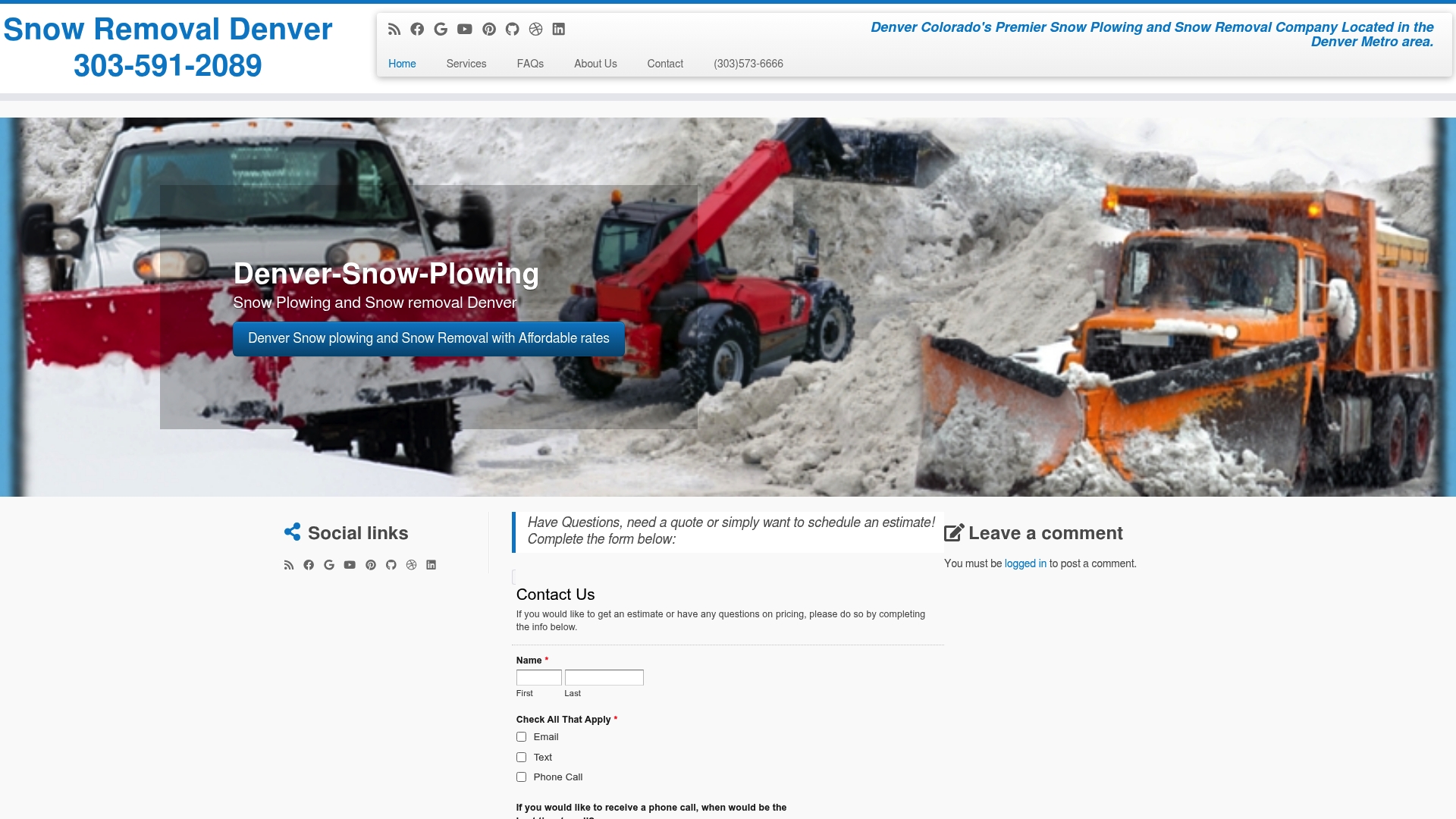
Services relevant to small commercial lots often include tailored plowing schedules; sidewalk and entrance deicing; seasonal contracts with response-time standards; and same-day service for clients needing coverage before the next storm rolls in. Getting an estimate and site walk can provide a sample winter operations plan specific to your property. If your lot needs a provider before the next snowfall, request a free snow plowing estimate today and get your written plan in place before the season gets busy.
Where to Verify These Numbers Yourself
The anti-icing rates and calibration guidance above come from the UConn T2 Center’s BMP manual and University of Delaware’s spreader calibration guidance. For planning frameworks and cost ranges, Facility Parking Guide and InvoiceFly’s pricing breakdown cover the operational and budgeting side in more depth. If your winter plan involves tenant vehicle moves during active storms, EchoPM’s guide to parking agreements is worth a read.
Sources
- Winter parking lot maintenance | Facility Parking Guide
- Parking lots and sidewalks BMP (anti-icing guidance) | CTI / UConn T2 Center
- How much does snow removal cost? (2025 guide) | InvoiceFly
FAQ
What is the best way to remove snow from a parking lot?
Pre-treat with anti-icing brine before the storm, plow using a center-first pass into windrows at the edges, and clear accessible routes before general parking areas.
How fast should snow be cleared after a storm stops?
A common risk-management standard is starting within 24 hours and completing full clearing within 48 to 72 hours, though local sidewalk clearing ordinances may set stricter deadlines.
Is it illegal to plow snow onto a public road?
Most municipalities prohibit pushing snow from private property onto public streets or sidewalks, since it shifts a hazard rather than removing it. Check your city’s specific ordinance before choosing a storage location.
How much does snow removal cost for a small commercial lot?
Per-visit plowing typically runs $100 to $400, while seasonal contracts commonly range from $2,000 to $10,000 or more depending on lot size and region.
Should I DIY small lot snow removal or hire a contractor?
DIY can work for lots under roughly 3,000 square feet with calibrated equipment and a small crew, but anything larger, or any lot with ADA routes and liability exposure, benefits from a written contract with a professional provider like Denver Snow Removal.