

Denver business owners are legally required to clear their sidewalks immediately after snow stops falling, and most small storefronts hire a commercial snow removal provider on either a per-push or seasonal contract rather than doing it themselves. Small commercial properties under 10,000 square feet typically pay $125–$350 per service visit under per-push contracts, according to MyShyft. Seasonal contracts for the same size properties typically run $3,000–$8,000.
Table of Contents
- What does Denver law require of small business owners after a snowfall?
- What is the difference between per-push and seasonal snow removal contracts?
- How much does storefront snow removal cost in Denver?
- What happens to a Denver storefront lot during and after a major storm?
- What should a small business owner look for in a Denver snow removal provider?
- How do Denver providers handle de-icing when temperatures drop below freezing?
- When should a small business book snow removal for the 2026–2027 winter?
- Key Takeaways
- References
What does Denver law require of small business owners after a snowfall?
Denver requires businesses to begin clearing their sidewalks immediately after snow stops falling, while residences get until the next day. According to the City and County of Denver, this rule applies to storefront sidewalks, entryways, and adjacent walkways, not just the parking lot.
After a city notice is issued, businesses have four hours to comply before the inspector's re-check. Residences receive 24 hours for the same process. The shorter business window reflects the higher foot traffic and public safety expectations around commercial storefronts.
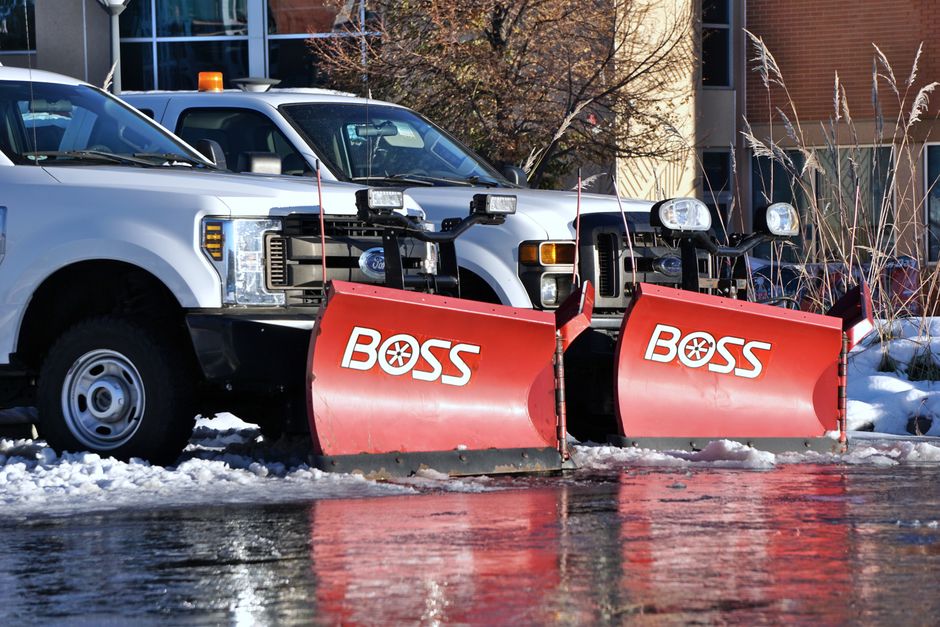
Sidewalk clearing remains the owner's responsibility even when a plow contractor handles the parking lot. A contractor may plow the lot but leave the sidewalk untouched unless that service is explicitly included in the contract.
Failure to clear creates slip-and-fall liability exposure on top of city fines. Storefront owners face financial risk from both municipal enforcement and civil claims if a pedestrian is injured on an uncleared walkway.
What is the difference between per-push and seasonal snow removal contracts?
Per-push contracts bill for each service visit triggered by a set snow depth, typically a 1-inch or 2-inch trigger. According to MyShyft, small commercial properties under 10,000 square feet typically pay $125–$350 per service visit under this model.
Seasonal contracts charge a flat fee for the winter and include automatic clearing after storms with no per-visit billing. Colorado Curbing and Landscape offers seasonal snow removal contracts with automatic snow clearing after storms, serving office buildings, retail centers, medical facilities, industrial properties, and HOAs.
Per-push suits owners who want to pay only when it actually snows. Seasonal suits owners who want predictable budgeting regardless of how many storms arrive during the winter.
Some providers offer a zero-tolerance trigger or a 1-inch trigger based on client preference. JLS Landscape and Snow states it offers zero-tolerance or 1-inch trigger thresholds per client preference.
Contract terms vary on trigger depth and number of included visits, so owners should confirm these details in writing before signing.
How much does storefront snow removal cost in Denver?
Small commercial properties under 10,000 square feet typically pay $125–$350 per service visit under per-push contracts, according to MyShyft. The same size properties typically pay $3,000–$8,000 for a full seasonal contract.
Pricing scales with lot size, sidewalk linear feet, trigger depth, and de-icing material included. A larger lot with extensive sidewalk frontage costs more than a compact storefront with a short walkway.
Sidewalk-only service is often quoted separately from parking lot plowing. Denver's sidewalk clearing requirement means storefront owners may need both services even if the lot itself is small.
Owners should ask whether de-icing materials and snow hauling are included or billed as add-ons. Some providers include basic de-icing in the per-visit rate, while others charge separately for material application.
What happens to a Denver storefront lot during and after a major storm?
The city plows about 2,050 lane miles of main streets with a fleet of 70 large plows, according to the City and County of Denver. Side streets and private lots can stay snow-covered longer because city resources focus on main arteries first.
Residential plowing runs 3:00 a.m. to 3:00 p.m., takes one center pass per side street, and does not expose bare pavement. Residential areas receive no de-icing materials, which means storefront owners cannot rely on the city for ice control on adjacent side streets.
Denver uses Ice Slicer, a solid deicer over 90 percent chloride salts, on main streets and liquid magnesium chloride downtown. These materials are not applied to private storefront lots or sidewalks.
Commercial providers track storm data 12–24 hours ahead and stage equipment before snow starts. JLS Landscape and Snow states it tracks meteorological data 12-24 hours ahead of every storm.
What should a small business owner look for in a Denver snow removal provider?
Confirm the provider handles both parking lots and sidewalks, since Denver's sidewalk rule puts that duty on the business. A contractor that only plows lots leaves the owner exposed to city fines and slip-and-fall liability.
Ask about trigger thresholds, response times, and whether de-icing is included in the quoted rate. These terms determine how quickly the storefront reopens after a storm and what the final invoice looks like.
Verify insurance and check whether the provider uses its own equipment or subcontracts. A provider with its own fleet and trained operators has more control over response times than one that relies on third parties.
Look for a provider serving both commercial and residential properties, which signals year-round local capacity. Snow removal in Denver specializes in commercial and residential snow plowing for parking lots and driveways, so storefront owners can source lot and sidewalk service from one provider.
How do Denver providers handle de-icing when temperatures drop below freezing?
Deicing products are selected by temperature range, with different materials used at 30°F versus 0°F. JLS Landscape and Snow states it selects deicing materials by temperature range, using different products for 30°F versus 0°F conditions.
Denver's own mix includes Ice Slicer, a naturally mined product from Utah that is over 90 percent chloride salts, according to the City and County of Denver. Ice Slicer's red color comes from 60 trace minerals naturally found in the deicer.
Liquid magnesium chloride is used in the downtown core, while solid deicer covers main streets. Private providers may use different products depending on surface type and temperature.
Storefront owners should confirm which deicer is used and whether it can damage concrete or landscaping. Some chloride-based products accelerate concrete scaling, especially on newer pavement.
When should a small business book snow removal for the 2026–2027 winter?
Seasonal contracts are typically signed before the first storm, so fall is the practical booking window. Waiting until snow is forecast leaves owners competing for limited contractor capacity.
Colorado's Front Range saw significant late-season snowfall in spring 2026, showing storms can arrive outside the core winter months. JLS Landscape and Snow states it maintained full operational readiness through May 2026 during that period.
Providers that maintained full operational readiness through May 2026 are built for extended seasons. Early booking locks in pricing before demand spikes and secures priority routing on the provider's storm map.
Owners should ask how snow is hauled away. Some providers use 20-yard end dump trucks to move snow to approved disposal locations, according to JLS Landscape and Snow.
Key Takeaways
- Denver businesses must start clearing sidewalks immediately after snow stops falling; residences get until the next day.
- After a city notice, businesses have four hours to clear before the inspector re-checks.
- Small commercial properties under 10,000 square feet typically pay $125–$350 per per-push visit in Denver.
- Seasonal contracts for the same size properties typically run $3,000–$8,000.
- Denver's residential plowing does not expose bare pavement and applies no de-icing materials, so storefront ice control is the owner's job.
- Deicing products are chosen by temperature range, with different materials for 30°F versus 0°F conditions.
- Seasonal snow contracts are best booked in fall, before the first storm of the 2026–2027 winter.