

A downtown Denver parking structure is not an open surface lot with a roof on it. Snow that falls on a deck has nowhere to go until someone moves it, ramps turn into the most dangerous surface in the building once traffic packs the slush down, and every piece of equipment has to fit under a concrete beam with room to spare. Snow removal inside a garage is a logistics problem before it is a plowing problem, and the properties that come through a storm cleanly are the ones that settled the details in October rather than at 2 a.m. in January.
Why a Parking Structure Needs Its Own Snow Plan
Commercial snow removal on an open lot is mostly about pushing snow to a designated corner or hauling it off site. A multi-level garage changes the rules. Snow has to be moved through the same narrow aisles that cars use, pushed toward a limited number of drop points, and sometimes lifted or blown into a truck bed because there is no room to stack anything at all. Ramps carry traffic in one direction, so closing half a lane to clear it means the whole flow of the building changes for the duration.
Downtown Denver garages also serve a mix of users who all arrive at the same time. Office tenants pull in before the morning meeting, hotel guests arrive with luggage, delivery drivers need loading access, and retail customers come and go all day. Each group has a different tolerance for a wet floor, a blocked lane, or a fifteen minute wait at the entrance. A snow plan for a structure has to account for that traffic pattern, not just for the depth of snow on the top deck.
Ramps: The Highest-Risk Surface in the Building
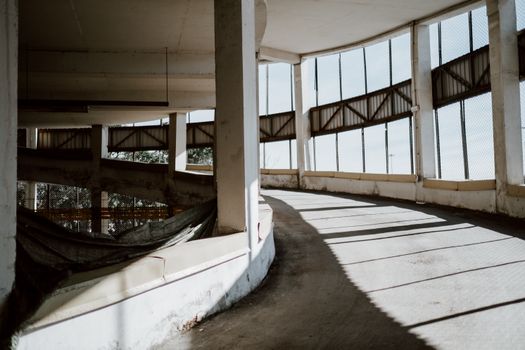
Ramps concentrate risk. They combine a grade, a turn, and a transition from open sky to covered concrete, which means the surface at the top of a ramp can be snow covered while the bottom stays merely wet. Vehicles entering from a snowy street arrive with packed snow in their tire treads and drop it on the incline. Add a stop at the top where a driver waits for a gate or a space, and the result is a slope covered in polished ice that no amount of salt will fix quickly once traffic has burnished it.
Clearing the Ramp Before It Gets Packed
The practical answer is timing. A ramp is far easier to clear when the snow is still loose than after two hundred vehicles have driven over it and pressed it into a hard, bonded layer. That argues for scraping ramps early and often during an event rather than waiting for the storm to end. It also argues for a written trigger depth, so the crew is dispatched on a measurable threshold instead of a phone call after someone has already slid into a wall.
Traction and Deicing on Sloped Concrete
Deicing on a ramp is a balance. Too little material and the incline stays slick through the morning rush. Too much and you create a wet, tracked mess that carries grit and meltwater into the levels below and eventually into stairwells and elevator lobbies. The right approach depends on the surface temperature, the grade, the traffic volume, and the drainage path. A crew that works garages regularly will treat ramps as a category of their own rather than applying the same mix used on the open top deck.

Decks and Top Levels
The top deck is the only part of most structures fully exposed to the sky, which makes it the source of a large share of the building’s snow and water. Wind across an open deck can scour one corner bare and build a drift against a parapet or stair tower that is far deeper than the surrounding snow. Clearing a deck is not simply a matter of driving in circles. It requires a plan for where the snow will be pushed, and often a plan for lifting it back off the structure.
Exposure, Drifting, and Refreeze
An open deck also freezes faster than surrounding streets after sunset, particularly where plowed snow has been stacked against a wall and the meltwater runs back across the driving surface. Stacks left in place during a warm afternoon can refreeze into a solid mass overnight and become a problem that lasts for days. Clearing stacks, opening drainage paths, and returning for a follow up pass after the thaw and refreeze cycle is part of finishing a deck properly.
Where the Snow Goes
Many downtown structures have no legal or practical place to pile snow. Storm drains cannot be blocked, fire lanes cannot be obstructed, and a stack that blocks parking spaces costs the owner revenue and complaints from monthly parkers. That leaves hauling as the realistic option: loading snow into a truck and removing it from the property entirely. Snow hauling is a service that should be written into the contract in advance, because locating equipment and a disposal arrangement in the middle of a storm is far more expensive than planning for it in the fall.
Clearance: The Constraint That Shapes Every Decision
Clearance is where garage snow removal gets decided. A plow truck that clears an open lot in two passes may not fit under a low beam, a sprinkler line, or a duct run in the level below. Equipment selection for a structure follows from the building’s actual dimensions, not from the size of the storm. Contractors who serve downtown Denver garages work with a range of equipment sizes for exactly this reason, and the walkthrough before the season is the right moment to establish what can physically enter each level.
What to Record During the Pre-Season Walkthrough
- The posted clearance at every vehicle entrance, ramp, and transition between levels, recorded as posted rather than estimated.
- Low points inside the structure, including ductwork, piping, signage, and any ceiling-mounted equipment a raised blade or cab could contact.
- Turning radius at each ramp landing, since a truck that fits the aisle may still not complete the turn.
- Door heights at loading areas, trash rooms, and service corridors that crews may need to access on foot.
- Locations of drains, trench grates, and sump areas that must stay open as meltwater runs down through the building.
- Overhead protection, such as a canopy at the entrance, that limits where equipment can operate or stage.
Equipment and Methods That Fit Inside a Structure
Clearing a garage usually means smaller equipment, more passes, and more hand work than an open lot. Compact plows, walk behind blowers, and skid units can reach areas a full size truck cannot, while ramps and tight corners may be finished by hand. The tradeoff is production rate. A crew that can clear a large surface lot in an hour may need considerably longer inside the same number of square feet, and that time estimate should be reflected in the service plan rather than discovered during the first storm.
| Garage zone | What matters most | Question to settle before the season |
|---|---|---|
| Entrance and exit lanes | Keeping the queue moving without blocking the street | Where can equipment stage without obstructing access or the public right of way? |
| Ramps and landings | Traction on a grade with limited room to maneuver | How does traffic flow when one side of the ramp is closed? |
| Covered levels | Clearance, drips, and tracked in slush | Which equipment fits under the lowest obstruction on each level? |
| Top deck | Drifting, refreeze, and no place to stack | Is snow being hauled off site, and who authorizes that work? |
Trigger Depths and a Written Plan
The most useful document a garage owner can hold is a short written snow plan. It should state the trigger depth that brings a crew to the property, the order in which areas are cleared, where snow is placed or hauled, and who has authority to call for additional work. Agreeing on trigger depth and where the snow goes, and putting that plan in writing before the first storm, is the difference between a service visit and a guess.
Downtown properties also need to confirm who is responsible for the sidewalk and entry apron at street level, which may fall under a separate obligation from the structure itself. Verify that requirement with the relevant city office or your property’s own agreements rather than assuming the garage contract covers it.
Coordinating With Tenants, Pedestrians, and Parked Cars
Interior work happens around people. Monthly parkers leave cars on the same levels crews need to clear, pedestrians cut through the structure to reach a stairwell or an elevator lobby, and delivery vehicles arrive on their own schedule. Advance notice to tenants, clear signage at ramp entrances, and a defined sequence that keeps at least one path open at all times make the work safer and faster. Where a level must be cleared with cars still on it, the plan should say so up front so the property manager can coordinate moves in advance.

Seasonal Contracts and Emergency Response for Structures
A garage that serves an office tower or hotel cannot wait for a crew to become available after the storm has already stranded the morning commute. Seasonal agreements with defined trigger depths keep a property in the service queue during the busiest events, while per push arrangements suit smaller structures with unpredictable use. For downtown Denver properties, the practical considerations are response time, equipment that actually fits, and a contractor with the experience to know the difference between a lot and a deck. This company has provided commercial snow plowing, ice removal, and snow hauling across the Denver metro area for more than 47 years, including overnight events when access has to be restored before the building opens.
Frequently Asked Questions
How often should a downtown Denver parking garage be plowed during a storm?
Most structures are served on a defined trigger depth rather than a fixed schedule, with additional visits during long events. Ramps and entrance lanes often need attention before the top deck does, because packed slush on a grade becomes hazardous quickly. A written plan should state the trigger, the order of areas, and who authorizes extra visits during a heavy storm.
Can a regular plow truck operate inside a parking garage?
Sometimes, but not always. A truck that fits the entrance may still be too tall for a low beam on a lower level or too long to complete a turn at a ramp landing. Clearance should be confirmed at every transition during a pre-season walkthrough, and the plan should specify smaller equipment where the structure requires it.
Who is responsible for snow removal on a parking deck?
Responsibility follows ownership, lease terms, and any local requirements that apply to the property. A garage attached to a commercial building may sit inside one contract while the sidewalk outside falls under another. Review your agreements and confirm any municipal obligations with the city before the season, then make sure the contract matches.
Does plowing damage concrete or waterproofing on a deck?
Careless work can chip concrete, catch expansion joints, or scrape a membrane, which is why equipment and blade settings matter inside a structure. Crews who work garages regularly adjust for joints, drains, and thresholds rather than treating a deck like an asphalt lot. Flag any known repairs or sensitive areas during the walkthrough so they can be avoided.
When should a garage snow removal contract be signed?
Before the first measurable snow, and ideally well before it. Pre-season walkthroughs establish clearance, access, staging areas, snow placement, and trigger depths while the property is dry and accessible. Signing late compresses all of that into the first storm, when crews are already committed and decisions have to be made in a hurry.