
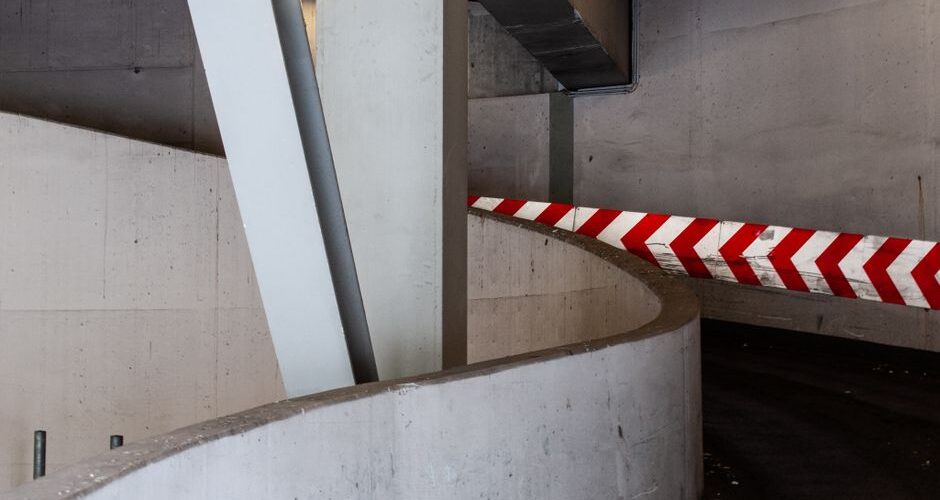
Downtown Denver garages take a beating in winter. Between office towers, hotels, retail centers, and residential buildings, the same narrow entry points get hammered by hundreds of vehicles a day while snow melts off windshields and refreezes on the concrete below. Of all the surfaces in a structured parking facility, the ramp is the one that can shut an entire building down. Close the ramp and you have closed the garage, which means tenants, guests, and delivery drivers are all looking for somewhere else to park.
Ramp ice control is not the same job as plowing a flat lot. Slopes, shade, tight corners, and constant traffic change how snow and ice behave, and they change what equipment and materials actually work. Here is how downtown Denver garages keep those ramps passable through a Front Range winter.
Why the Ramp Fails Before the Rest of the Garage
A flat parking deck gives you some margin. Snow sits where it lands, a plow can push it into a corner, and cars can usually creep across a thin layer of packed snow. A ramp gives you almost no margin. Every vehicle that enters or exits has to maintain traction on a grade, and once that grade glazes over, drivers start sliding backward, stalling at the apron, or hitting the wall at the bottom of the turn. Traffic backs up onto the street, and the garage stops functioning as access.
The ramp is also the surface that gets the least natural help. Sun exposure is limited in a downtown core where buildings are close together and shadows fall early. Meltwater from the upper decks drains down the ramp and refreezes overnight. Snow tracked in on tires compacts into a hard layer that a plow blade skips over instead of cutting through. By the time a property manager gets a call about a slide, the ramp has usually been deteriorating for hours.
What Makes a Downtown Denver Ramp Different
Slope and Gravity
Water, slush, and de-icer all move downhill, and they move toward the lowest point of the ramp, which is typically the apron at the sidewalk or the transition to the street. That is exactly where vehicles are stopping, turning, and applying the most torque. Any treatment applied across the whole ramp needs to account for where the liquid ends up, not just where the snow fell.
Shade and Refreeze
Structured garages hold cold air. Interior ramps that never see direct sun stay below freezing long after a warm afternoon has cleared the surrounding streets. A ramp that looks wet at 3 p.m. can be a sheet of black ice by 7 p.m. This is the single most common way a downtown garage gets caught off guard, and it is why a single daytime application is rarely enough on a refreeze night.
Traffic Volume and Tight Geometry
Entry and exit lanes are narrow in older downtown garages, and many ramps have a tight radius or a switchback. Full-size plow trucks may not fit, and even when they do, there is limited room to push and stack snow. That means ramp work is often a combination of small equipment and hand labor, done around the arrival and departure peaks rather than during them.
Pre-Treatment Starts Before the First Flake
The most effective ramp ice control happens before the storm arrives. Anti-icing a dry, cold surface creates a barrier that keeps the first layer of snow from bonding to the concrete, which makes every later pass faster and safer. For downtown garages, that planning window is short, so pre-storm work is usually scheduled off the forecast rather than off the first snowflake.
- Apply liquid anti-icer to ramp surfaces, aprons, and the transition to the street before precipitation begins.
- Clear and treat entryways, sidewalks, parking areas, staircases, ramps, and loading docks so employees, tenants, and customers keep safe access.
- Stage equipment and materials on site before the event so crews are not waiting on deliveries mid-storm.
- Confirm who has keys, gate codes, and access to the ramp levels that need service at 2 a.m.
- Check drains, trench grates, and low spots so meltwater has somewhere to go instead of freezing across the lane.
Ice Control Methods That Work on a Grade
Treating a sloped surface takes a different approach than treating a flat lot, and most garages end up layering several methods rather than relying on one.
| Method | Where It Helps Most | What to Watch |
|---|---|---|
| Liquid anti-icer applied pre-storm | Ramp lanes, aprons, and the street transition | Needs a dry surface and a real forecast window |
| Granular de-icer after snow starts | Packed snow, ice patches, shaded ramp sections | Oversalting leaves residue that gets tracked into lobbies |
| Traction products and grit | Driveways, walkways, parking areas, and hard black ice patches | Temporary fix that requires cleanup and reapplication |
| Hand work with shovels and small power equipment | Corners, switchbacks, curbs, and areas a truck cannot reach | Labor intensive and slow during heavy snowfall |
| Snow melt systems built into the surface | Ramps and drive aprons where the system was installed | Embedded pipes or electric cables must be present and functioning |
Built-in snow melt systems use embedded pipes or electric cables beneath the pavement to heat the surface and melt snow as it lands. They activate automatically or on demand depending on the design. Garages that already have them still need a crew on site, because the ramp apron, the sidewalk, and the gutter line usually are not part of the heated zone. Garages that do not have them should treat the ramp as a hand-work assignment in every storm plan.
Hand Work and the Details Machines Miss
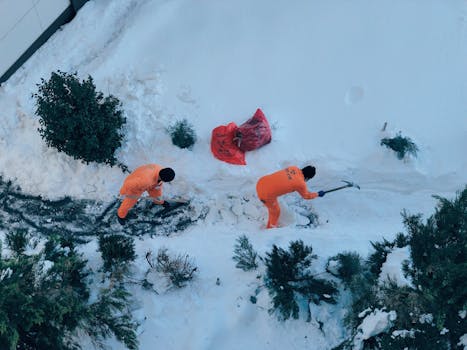
Ramp ice control in a downtown garage is often more hand work than machine work. The apron where the ramp meets the alley or street, the pedestrian walkway alongside the ramp, the stairwell landings, and the loading dock approach all fall outside what a plow can safely service. These are the spots where people actually slip, and they are the spots that get reported first.
A workable sequence is to clear the ramp driving surface first so vehicles can move, then immediately hand clear the pedestrian paths, entryways, staircases, and the apron. Leaving the ramp done and the walkway icy just moves the hazard a few feet to the side, and pedestrians in a garage are sharing space with moving vehicles.

Drainage: Where the Meltwater Ends Up
Every bit of snow you remove from a ramp becomes water. If that water cannot reach a drain, it pools at the bottom of the grade and refreezes into the exact hazard you were trying to eliminate. Before each storm, crews should check that trench drains, area drains, and low spots are open and free of debris. During and after the event, the apron and the drain line need to be checked again, since that is where refreeze shows up first.
This is also why timing matters on the back end of a storm. A ramp that is cleared at 11 p.m. and left alone until morning can be worse at 6 a.m. than it was at midnight. A refreeze check on the ramp before the morning commute is one of the highest value stops a crew can make.
Coordinating With Garage Operations
Ramp work is disruptive. Closing a lane slows everyone down, and garages with a single entry and exit have no way to route traffic around a crew. Clear communication with building management keeps the job moving. That typically means agreeing on which lane closes first, scheduling heavy work outside peak arrival and departure windows, and making sure tenants and valet operations know what to expect.
Loading docks deserve their own line in the plan. Deliveries do not pause for weather, and a dock apron that ices over can stop a building’s supply chain for the day. The same goes for hotel drop-off zones and residential move-in areas, which are often on the ramp itself in downtown buildings.
Sidewalk Rules, Curb Ramps, and Denver 311
Denver’s snow shoveling rules put the responsibility for clearing sidewalks and curb ramps on the adjacent property. In most cases property owners have a next-day window after a storm to clear those surfaces. If a sidewalk or curb ramp is still not cleared after that window, residents can report it to Denver 311 by phone or through the app, and the city can notify the owner.
Internal garage ramps are private property and fall outside that reporting path, but the liability picture is similar. A slip or a collision on an untreated ramp is a property management problem, and documentation of what was applied and when is the best protection. Because requirements can change, it is worth confirming current obligations with the city rather than relying on an old storm plan.
Seasonal Contracts and Trigger Depths
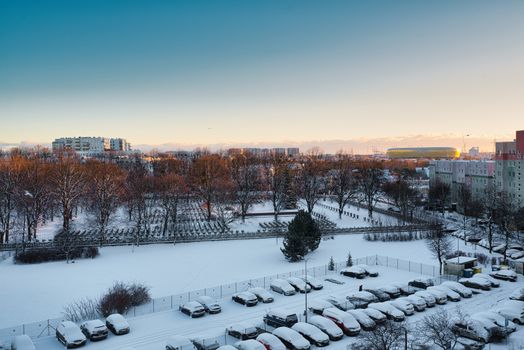
Downtown garages rarely do well with on-call snow service. By the time a manager notices the ramp is bad, the storm is already underway and every vendor in the metro is committed elsewhere. A seasonal contract with defined trigger depths puts a crew on the property based on the forecast, not based on a phone call. For a building with a single sloped entry, that difference decides whether the garage stays open.
With more than 47 years serving the Denver metro area, our crews handle 24/7 emergency snow plowing and ice removal for parking structures, office campuses, HOA communities, industrial parks, and commercial properties. The ramp gets treated as a priority surface in every plan, because it is the one that controls access to everything else.
Frequently Asked Questions
How often should a downtown Denver garage ramp be treated during a storm?
It depends on snowfall rate and temperature, but most ramps need attention at the start of precipitation, again as accumulation builds, and once more after the storm ends to catch refreeze. Shaded interior ramps often need an additional overnight check because meltwater from upper decks keeps draining across the slope long after the snow stops falling.
Can I use salt on a concrete parking ramp?
Concrete and de-icing materials interact differently than asphalt, and repeated heavy applications can leave residue that gets tracked into lobbies and stairwells. Ask your snow contractor what products they plan to use on the ramp and how they manage cleanup. For ramps with embedded snow melt systems, confirm the manufacturer’s guidance before applying any chemical.
What is the biggest mistake property managers make with ramp ice?
Treating the ramp like a flat parking lot. A plow pass and a scatter of de-icer may clear the driving lane, but it leaves the apron, the pedestrian walkway, and the drain line untreated. Those are the spots where water collects and refreezes, and they are the ones drivers and pedestrians encounter first.
Do I need a seasonal contract or can I call for service during a storm?
You can call, but during a metro-wide event, response times stretch because every commercial property is calling at once. A seasonal contract with trigger-depth terms puts a crew on your property based on the forecast, which matters most for garages with a single sloped entry that cannot be bypassed. Ask how priority is assigned before signing.
Who is responsible if someone slips on an icy garage ramp in Denver?
Internal garage ramps sit on private property, so the responsibility generally falls to the owner or manager to maintain safe access. Denver’s sidewalk and curb ramp rules apply to the public right of way and allow residents to report uncleared surfaces to Denver 311. For specific legal questions, consult the city or your own counsel.