
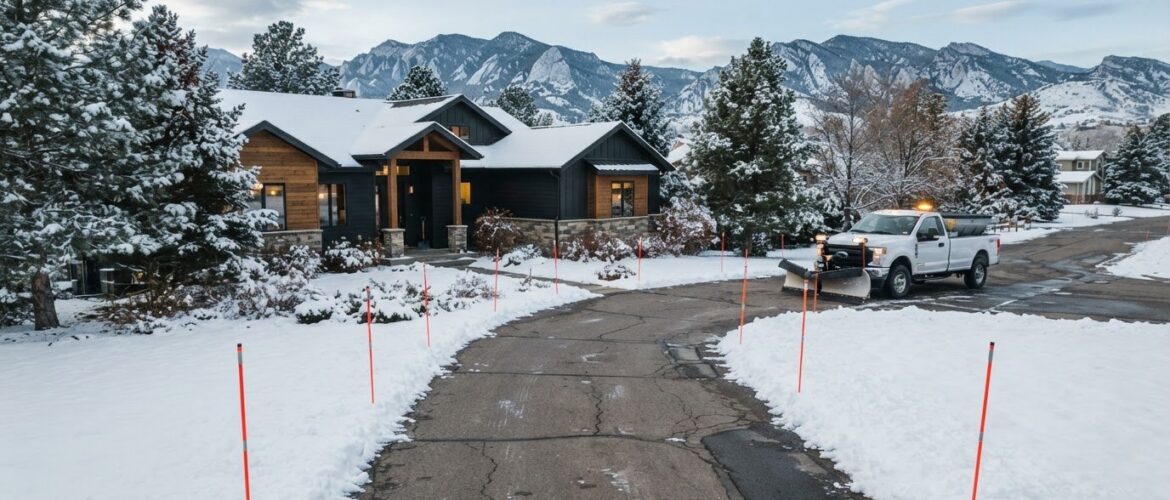
What if the best way to protect your driveway from a snowplow starts before the first snowfall? If you’re wondering how to protect driveway from plow damage, visible edges matter, but they’re only part of the plan. Plow contact can scrape or chip a surface, and existing cracks or the driveway material can affect how it holds up through winter.
Markers and sealant alone can’t prevent every kind of damage. Preparing the driveway and making its boundaries clear can, however, reduce avoidable contact. This guide explains where damage can happen, how surface condition and plowing technique factor in, and what to do before snow arrives in Denver.
You’ll also learn what driveway markers and surface treatments can and can’t do, and when residential snow removal may be a practical option. A little preparation can help keep your driveway accessible while reducing preventable wear.
Key Takeaways
- Learn how to protect driveway from plow damage by making its boundaries visible and reducing avoidable contact, without expecting any method to eliminate all risk.
- Understand how driveway material, surface age, cracks, and uneven repairs can affect plowing decisions.
- Compare softer plow edges, careful blade clearance, and snow blowers, and see why the right approach depends on conditions.
- Use a pre-winter checklist to mark driveway edges, move obstacles, note surface defects, and clear an equipment route.
- Find out when residential snow removal may help, and how Snow Removal Denver’s driveway and walkway service draws on over 44 years of experience.
How Plows Damage Driveways, and What Homeowners Can Control
Preparation can reduce avoidable plow contact, but no marker, surface treatment, or clearing method can guarantee a damage-free winter. Damage may include a surface scrape, a chipped edge, or added stress on pavement that was already weakened. Poor visibility, an uneven surface, or hurried clearing can increase the chance of contact, especially where the driveway changes shape or elevation. Identifying vulnerable areas helps you focus your preparation.
Snowplows are one way to clear snow, and equipment and techniques vary. This video shows one DIY approach for a gravel driveway. It’s an example, not a universal solution for paved surfaces.
Which driveway areas are most vulnerable to a plow?
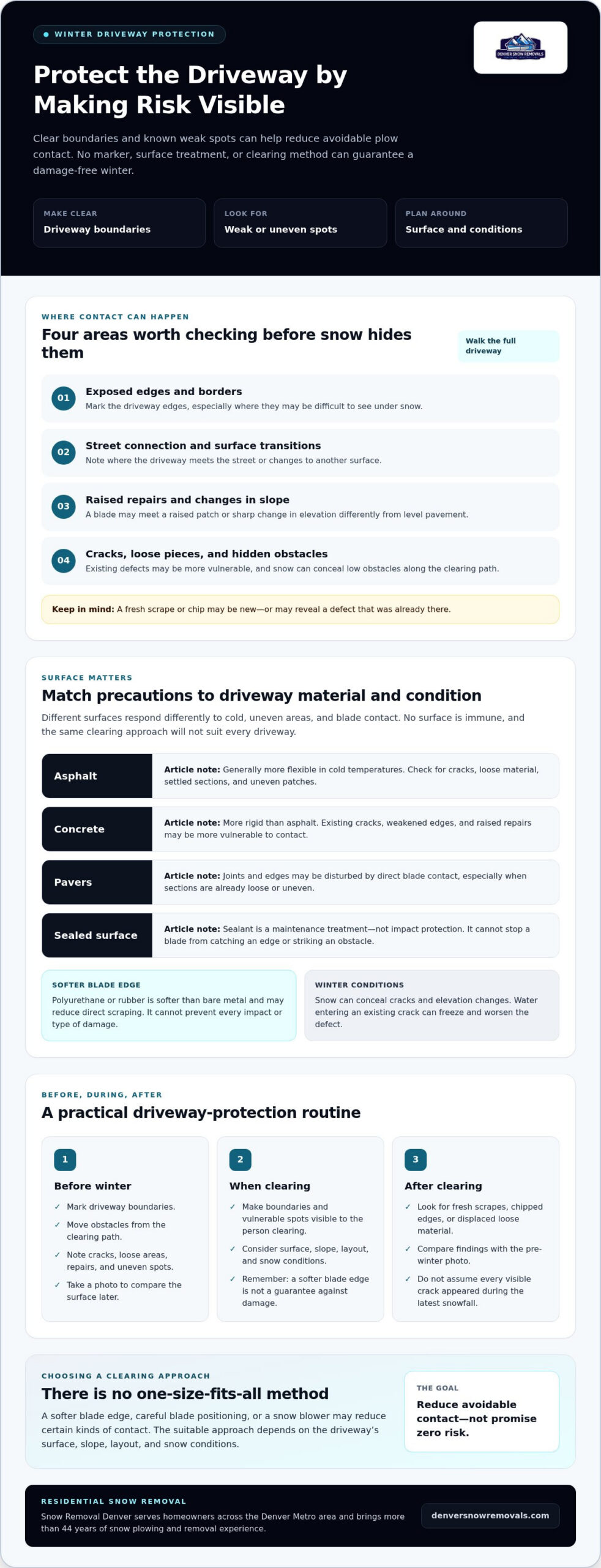
Pay particular attention to exposed edges, the point where the driveway meets the street, and transitions between pavement and another surface. Raised borders, repaired patches, and sharp changes in slope can also be vulnerable if a blade catches them. Snow can hide these features, along with low obstacles near the clearing path. Walk the driveway before winter and note the spots that may be hard to see under snow.
After clearing, look for signs of direct contact, such as a fresh scrape, chipped edge, or displaced loose material. Don’t assume every crack appeared during the latest snowfall: surface wear can develop gradually and have several causes. A photo taken before winter gives you a reference for comparing the driveway’s condition later, especially around existing defects.
Does plowing always damage asphalt or concrete?
No. Damage is possible, but it isn’t inevitable. The driveway’s condition and shape, snow cover, and clearing approach all affect the chance of contact. Existing cracks, loose pieces, and weakened edges may be more vulnerable than intact, even pavement. A plow can aggravate a weak spot, but an existing defect may also become easier to notice after snow is cleared.
The risks homeowners can most directly reduce are hidden boundaries, overlooked obstacles, and avoidable blade contact with uneven or weakened areas. Asphalt, concrete, and pavers have different surface characteristics, so one approach won’t suit every property. For broader background on equipment and clearing approaches, see Snow removal methods and their impact on driveways.
To understand how to protect driveway from plow damage, separate what you can control, such as visibility and access, from factors you can’t fully control, such as changing snow conditions. Marking boundaries and identifying vulnerable spots gives the person clearing the driveway useful information. These steps can reduce risk, though they can’t guarantee damage won’t occur.
How Driveway Material and Winter Conditions Affect Plow Damage
The same clearing approach won’t suit every driveway. Asphalt, concrete, and pavers respond differently to cold, surface irregularities, and blade contact. Denver winters can also bring snowfall, melting, and refreezing. Water that enters an existing crack can freeze and worsen the defect, so assess both the driveway material and its condition before snow arrives.
Driveway material and existing condition should guide plow precautions, because the same blade contact can affect different surfaces in different ways. No surface is immune to damage. A careful approach can reduce avoidable scraping, but it can’t guarantee damage-free clearing.
What plowing precautions suit asphalt and concrete?
Asphalt is generally more flexible in cold temperatures, while concrete is more rigid. That’s useful context, not a ranking of which driveway is better. A polyurethane or rubber plow edge is softer than bare metal and may reduce direct scraping, but it can’t prevent every impact or type of damage. The surface, its condition, and the equipment all matter.
Before winter, check for cracks, loose material, settled sections, and uneven patches. These areas may be more vulnerable to contact than intact, level pavement. For example, a raised repair can meet the blade differently from the surrounding surface. Note problem areas so they’re visible during clearing, and don’t treat a softer blade edge as a substitute for addressing a weakened section.
What changes when a driveway has pavers or a sealed surface?
Pavers have joints and edges that may be disturbed by direct blade contact, especially where a section is already uneven or loose. A sealed surface also needs care, but sealant is a maintenance treatment, not impact protection. It may help protect the surface as part of routine care, but it can’t stop a blade from catching an edge or striking an obstacle.
Identify delicate borders, repaired patches, and areas that sit higher or lower than the surrounding driveway. For pavers, look for loose units or uneven joints. On a sealed driveway, note worn or damaged areas rather than assuming the coating makes the surface plow-proof. Make these features clear before snowfall so the clearing approach can account for them.
Winter conditions add another factor. Snow can conceal cracks and changes in elevation, while thawing and refreezing can make existing defects more vulnerable. A visual check after snow clears can help you compare a scrape or chip with cracks or worn patches that were already present. If you’re considering residential driveway and walkway snow removal, Snow Removal Denver serves homeowners across the Denver Metro area and brings more than 44 years of snow plowing and removal experience.
Which Plow Techniques Help Protect a Driveway?
The right clearing technique depends on the driveway’s surface, slope, layout, and snow conditions. A softer blade edge, careful blade positioning, or a snow blower may reduce certain kinds of contact, but none is a universal solution. The aim is to clear enough snow for access while avoiding unnecessary scraping or impact. That balance can change across one driveway, particularly where the surface rises, dips, or meets a different material.
Can a rubber or polyurethane plow edge reduce scraping?
A rubber or polyurethane edge is softer than bare metal where the blade meets the ground. Compared with a hard metal edge dragged across an uneven surface, it may reduce direct scraping on pavement. It won’t prevent every chip or crack: an existing weak spot, raised repair, or hidden obstacle can still be struck. Treat a softer edge as one risk-reduction measure, not a guarantee or a substitute for knowing the driveway’s condition.
Why does blade clearance need to adapt?
Keeping a blade from bearing directly on the driveway can help limit scraping, but there’s no single clearance that suits every property. A flat, even surface calls for a different approach from a sloped driveway with settled patches or a raised transition. Leaving too much snow behind can also make access difficult. The operator needs to balance surface protection with practical clearing, adjusting to the grade and visible conditions rather than relying on a fixed setting.
In some conditions, leaving a thin layer of snow may be preferable to scraping the blade against the surface. Whether that makes sense depends on how the remaining snow affects traction, access, or later refreezing. It isn’t right for every snowfall or location. Clear boundaries and visible trouble spots help the operator make a more informed decision as conditions change.
When might a snow blower be gentler than a plow?
A snow blower removes snow without dragging a wide plow blade across the driveway. That can be useful in tighter areas or where direct blade contact is a concern. A snow blower still needs to be operated carefully, and it may not be practical for every driveway. The area to clear, snow depth, access, and available equipment all affect which method makes sense. Snow blowers and plows have different strengths, not guaranteed outcomes.
Equipment choice and controlled blade contact can reduce avoidable surface wear, but the safest technique depends on the driveway and conditions. Before clearing, point out uneven areas and delicate transitions. Then prioritize a route that preserves access without forcing the blade against the surface. These details matter as much as the equipment when considering how to protect driveway from plow damage.
For Denver homeowners who want help keeping driveways and walkways accessible through winter, residential snow removal in Denver is a practical option. Snow Removal Denver is a family-owned provider with over 44 years of snow plowing and removal experience.
How to Prepare Your Driveway Before Snowplowing
Prepare before the first snowfall so driveway edges, obstacles, and weak spots are easier to account for during clearing. A simple check won’t eliminate every risk, but it can reduce surprises when snow covers familiar details. Use this checklist to get your Denver driveway ready.
- 1. Mark the driveway boundaries. Place visible, stable markers along edges, curbs, and transitions that are hard to distinguish from the surrounding area. Position them where they’ll remain visible above accumulated snow without obstructing people, vehicles, or the clearing route.
- 2. Make hidden obstacles visible. Check for drains, steps, landscaping borders, low walls, and other features near the driveway. Mark or clearly identify them so they’re less likely to be mistaken for clear pavement when snow covers their outline.
- 3. Check and document the surface. Photograph existing cracks, loose pavers, settled sections, and previous repairs before winter. These images record the driveway’s starting condition and help distinguish older wear from a change noticed after snow removal.
- 4. Clear a practical equipment route. Move vehicles, bins, hoses, toys, and other removable obstacles out of the driveway and access path. Consider where snow can be placed without blocking the entrance, walkways, or visibility for people entering and leaving the property.
- 5. Share the important details. Point out delicate edges, uneven repairs, and preferred snow-placement areas before clearing begins. Be specific, such as noting a raised paver near the garage or a drain close to the curb.
Mark driveway edges and hidden obstacles
Markers work best when they stay in place and clearly distinguish the driveway from nearby ground or landscaping. Position them to show the boundary without creating a tripping hazard or narrowing the route for a vehicle or pedestrian. Walk the full driveway before snowfall and check that markers are visible from the approach, including around curves and changes in slope.
Document surface condition and communicate priorities
Keep your photos and notes together so you can refer to them during the season. A clear explanation of vulnerable areas helps communicate clearing priorities, though it can’t guarantee a particular result. For broader winter preparation and service context, the guide “Residential Snow Removal Denver: Your Guide to a Safe, Clear Winter” offers additional background. The related guide “Professional Snow Plowing Techniques: A Guide to Clearing Snow Safely & Efficiently” provides more context on clearing approaches.
Preparing the driveway also helps you plan for safe access across the property. For residential snow removal for your driveway and walkways, request a free snow removal estimate from Snow Removal Denver.
When Professional Snow Removal Can Help Protect Your Denver Driveway
Clearing snow yourself can become difficult when snowfall keeps returning, your schedule leaves little time, or the driveway is steep, narrow, or hard to access. Residential snow removal takes the recurring work of clearing driveways and walkways off your list and helps maintain an accessible entrance. It can be a practical option when accumulation makes routine access harder. Professional service can help manage snow, but it can’t remove every surface risk or guarantee a damage-free driveway.
What can a residential snow removal service take off your plate?
Driveway and walkway clearing helps keep the route from the street to your home accessible. It can be useful if you have limited time to shovel, need to keep an entrance clear, or find that repeated snowfall makes it difficult to keep up. The right approach still depends on the property and conditions, and no clearing method eliminates every possibility of surface wear or contact.
Snow Removal Denver serves residential properties across the Denver Metro area. Its snow removal fleet includes trucks, front-end loaders, and snow blowers. The equipment is part of the service, not a guarantee that a particular method will suit every surface or snowfall. Sharing the driveway’s layout, surface condition, and areas of concern helps make your priorities clear when planning for winter snow removal.
How to take the next step in Denver
Before snow arrives, note the driveway material and any existing cracks, loose pavers, or uneven repairs. Mark the edges and hard-to-see transitions, move obstacles out of the clearing route, and identify delicate areas or preferred places for snow placement. These preparations give you a useful starting point whether you clear the driveway yourself or arrange residential snow removal.
Repeated snowfall can make it hard to keep up, while limited access or a challenging driveway can add to the work. Residential snow removal helps clear driveways and walkways so you can maintain access around your home. Snow Removal Denver is a family-owned provider with over 44 years of snow plowing and removal experience. That experience makes the company a practical option for winter clearing, without suggesting any process can prevent all driveway damage.
If your Denver Metro home could use help keeping its driveway and walkways clear, request a free estimate for residential snow removal. Share the surface type, marked boundaries, and any concerns about vulnerable areas so your preparation and service needs are clear. Request a free residential snow removal estimate.
Make Your Driveway Ready for the Next Snowfall
Set a reminder to check your driveway before winter weather arrives. Looking over the surface and making its boundaries easy to see can help you feel prepared when snow needs clearing. It’s a practical first step in deciding how to protect driveway from plow damage, even though no precaution can remove every risk.
If clearing the driveway and walkways yourself is difficult to manage, residential snow removal can help keep access to your home clear. Snow Removal Denver is a family-owned provider serving Denver Metro homeowners, with over 44 years of snow plowing and removal experience. You can request a free estimate and plan ahead for the season.
Request a free residential snow removal estimate and plan for a more prepared winter.
Frequently Asked Questions
Can a snowplow damage a concrete driveway?
Yes. A snowplow can chip or scrape concrete, especially if its blade catches a raised edge, loose fragment, or damaged joint. Concrete’s rigidity doesn’t make it immune to impact. If you notice a crack after clearing, compare it with earlier photos before assuming the plow caused it. Note its location and whether it crosses a joint or follows an existing defect.
Should a snowplow scrape a driveway completely clean?
Not necessarily. Clearing down to bare pavement may increase blade contact, while leaving snow behind can affect traction or access. The appropriate finish depends on the surface, slope, and conditions after the storm. For example, a thin residue on a steep section may create a different safety concern than a small amount on a level parking area. Aim for safe access, not a perfectly scraped appearance.
Do driveway markers prevent plow damage?
No. Markers show where the driveway ends, but they can’t stop a blade from striking the surface or an unseen obstacle. They’re most useful when snow hides the curb or pavement border. Check them after a storm, since they may shift or become buried. Keep them outside the vehicle’s path and away from places where someone could trip.
Can plowing damage asphalt more in cold weather?
Cold weather doesn’t automatically make asphalt more vulnerable. Asphalt is generally more flexible in cold temperatures than concrete, though damage can still occur if a blade hits a weak edge or loose material. Existing cracks deserve attention: water can enter them, freeze, and worsen the defect. A crack noticed after plowing may have been there before the storm, so compare it with earlier records.
Is driveway sealant enough to protect against snowplows?
No. Sealant may provide a protective film as part of driveway maintenance, but it isn’t a barrier against blade impact, scraping, or a strike to a raised edge. Repair existing cracks before sealing so water is less likely to enter and freeze within them. Treat sealing as one element of surface care, not a replacement for careful clearing or preparation.
What should I do if a plow damages my driveway?
Photograph the affected area and take a wider image showing where it sits on the driveway. Compare these with any pre-winter photos, and record when you first noticed the change. If fragments are loose, keep people and vehicles clear of the spot where practical. Documenting the condition helps distinguish a fresh scrape from gradual wear or a pre-existing crack.
Can snow removal help protect a steep or uneven driveway?
Residential snow removal can help keep a steep or uneven driveway and its walkways clear, making access to the home easier during Denver snowfall. Share details about the slope, surface changes, and trouble spots when arranging service. That context helps set expectations for clearing, but it can’t eliminate every surface risk. Snow Removal Denver provides residential snow removal for driveways and walkways in the Denver Metro area.