

Denver County snow removal splits into two tracks: the city clears roughly 2,050 lane miles of main streets plus about 1,260 center lane miles of residential streets, while property owners are legally responsible for their own sidewalks, driveways, and parking lots. The City and County of Denver are the same jurisdiction, so every rule here applies inside Denver County lines only. Snow removal in Denver specializing in commercial and residential snow plowing parking lots and driveway's handles the private side 24/7 with automatic dispatch of plows and shovel crews before, during, and after a storm.
Table of Contents
- Who is responsible for snow removal in Denver County?
- What does the Denver County sidewalk ordinance require, and what happens if you ignore it?
- Why does Denver County get black ice so often, and how do you prevent it?
- What's the difference between residential and commercial snow removal in Denver County?
- What does snow removal cost in Denver County — per visit, per push, or seasonal contract?
- How do you avoid slip-and-fall liability on a Denver County commercial property?
- Which Denver County neighborhoods and ZIP codes need snow removal service?
- Can your neighbor legally shovel snow onto your property in Denver County?
- Key Takeaways
- References
Who is responsible for snow removal in Denver County?
The City and County of Denver are one jurisdiction, and the Department of Transportation & Infrastructure (DOTI) runs emergency snow response for about 2,050 lane miles of main streets using a fleet of 70 large plows, according to Denver's Snow Removal page.
The Residential Snow Plow Program was created during the blizzards of 2006-07. It covers roughly 1,260 center lane miles of residential streets using 4×4 pickup trucks with plows, according to the same City and County of Denver source. Residential plowing occurs between 3:00 a.m. and 3:00 p.m.
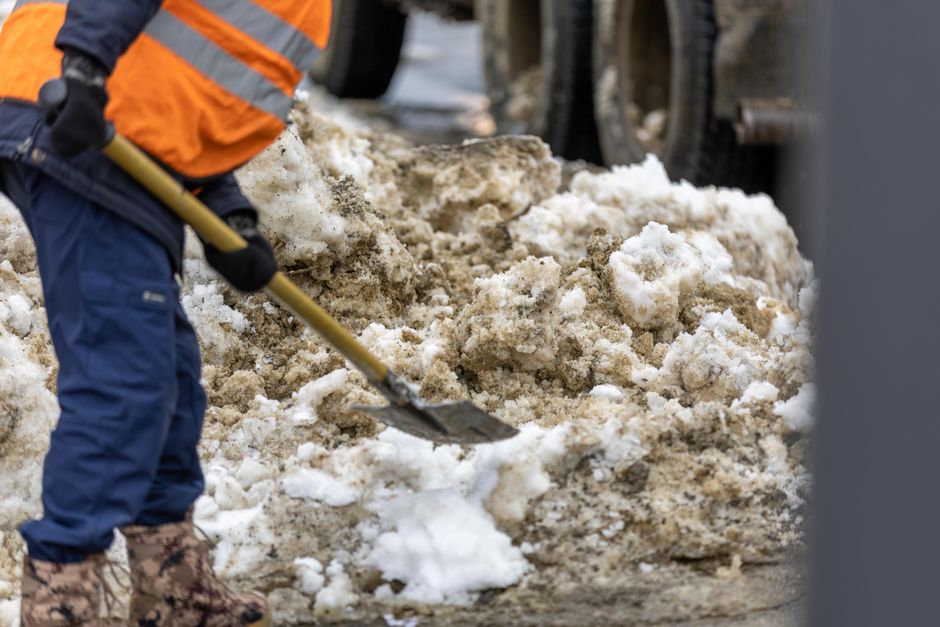
Residential plows take one pass down the center of every side street and do not expose bare pavement. Residential areas receive no de-icing materials at all, according to Denver's Snow Removal page. That means side streets stay packed down rather than cleared to asphalt.
Property owners must clear their own sidewalks, including adjacent ADA ramps and bus stops. The city does not perform that work for private property. Denver also prohibits pushing, plowing, or depositing snow into public streets, alleys, and other rights-of-way, according to Zenith Services Co..
What does the Denver County sidewalk ordinance require, and what happens if you ignore it?
Denver requires property owners to clear snow and ice from sidewalks, including adjacent ADA ramps and bus stops, according to Denver's Snow Removal page. The obligation falls on the owner, not the tenant, unless a lease says otherwise.
Enforcement starts with a time-stamped notice. A commercial property owner then has a matter of hours to comply before a fine is issued, according to Zenith Services Co.. Residential properties get a longer compliance window than commercial properties under the same enforcement process.
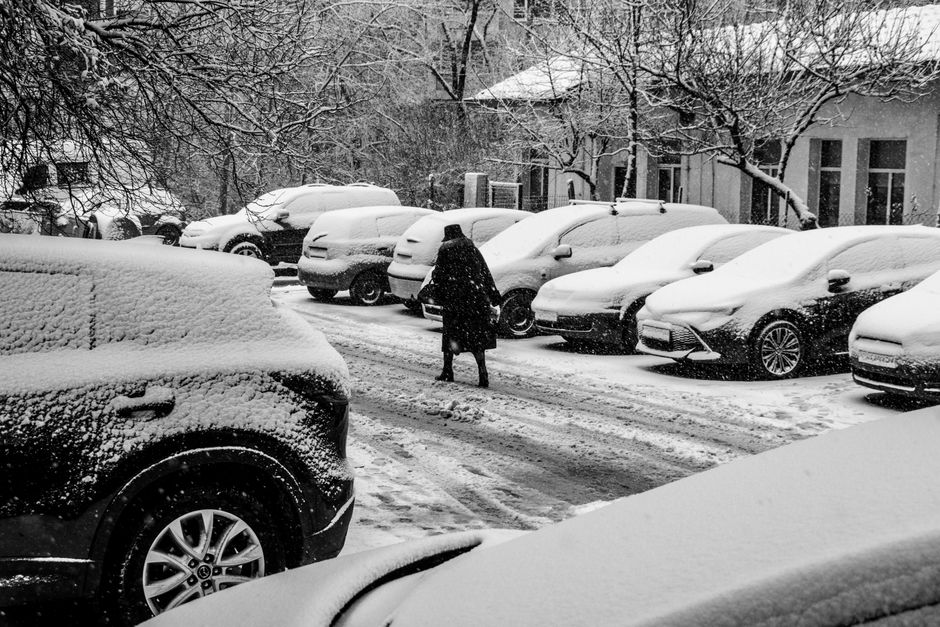
The practical rule of thumb for Denver County is to shovel within 24 hours of the storm ending. Waiting longer invites a notice and a fine, and repeat violations compound the problem. The 24-hour window is the standard local contractor benchmark for avoiding enforcement action.
Pushing snow into the street or alley is a separate violation on top of the sidewalk issue. Denver prohibits pushing, plowing, or depositing snow into public streets, alleys, and other rights-of-way, according to Zenith Services Co.. A property owner can be cited for clearing the sidewalk incorrectly even if the sidewalk itself is clean.
Why does Denver County get black ice so often, and how do you prevent it?
Denver County gets black ice often because elevation and intense sun combine with freeze-thaw cycles to melt snow by day and refreeze it overnight into nearly invisible ice. The high-altitude sun works on snow even when air temperatures stay below freezing, then nighttime temperatures drop and the meltwater freezes solid.
Shaded north-facing driveways, sidewalks, and parking lot corners refreeze first and stay icy longest. Those areas never get enough direct sun to dry out during the day, so they cycle through melt and refreeze repeatedly. That makes them the highest-risk spots on any Denver County property.
Pre-salting before an ice event stops the bond from forming between ice and pavement. Salting after the fact only treats the surface and leaves the bottom layer bonded, which means more scraping and more risk. The timing matters more than the product in most Denver County freeze-thaw cycles.
Denver uses Ice Slicer, a naturally mined solid deicer from Utah that is more than 90 percent chloride salts, on its routes, according to Denver's Snow Removal page. In the downtown core, the city applies liquid magnesium chloride instead of solid deicer, according to the same City and County of Denver source.
What’s the difference between residential and commercial snow removal in Denver County?
Residential snow removal covers driveways, walkways, sidewalks, steps, and porches. The work uses small equipment and hand labor because tight access, gates, and stairs rule out large plows. Residential service in Denver County is about clearing a safe path without damaging landscaping or hardscape.
Commercial snow removal covers parking lots, HOA and retail lots, with plowing, stacking, parking lot sanding, and de-icing to prevent slip-and-fall liability. Commercial work requires larger equipment, snow stacking plans, and documented service for every event. The liability exposure is the main difference from residential work.
Commercial lots need return visits during steady snowfall so exits, fire lanes, and ADA stalls stay usable. A single pass at the end of a long storm leaves a lot buried for hours, and that gap is where claims come from. Return visits during the storm keep the lot functional the whole time.
Driveway reflectors and pre-season marking protect turf, irrigation, and curbs before the first storm. Marking happens in late fall so plow operators can see edges under snow. Both residential and commercial tracks run 24/7 with automatic dispatch of plows and shovel crews before, during, and after the storm, according to Denver's Snow Removal page and Zenith Services Co..
What does snow removal cost in Denver County — per visit, per push, or seasonal contract?
Per-push or per-event pricing bills each time a plow is dispatched, which suits homeowners who want to pay only when it snows. The rate depends on driveway length, sidewalk footage, and whether hand shoveling is included. Per-push pricing is the most common residential structure in Denver County.
Seasonal flat rate locks in unlimited or defined service for one price and is the most predictable option for commercial lots. The contractor absorbs the risk of a heavy winter, and the property owner gets a fixed budget line. Seasonal contracts are typically arranged before the season, from late summer through autumn, according to Zenith Services Co..
Per-inch tiers and time-and-materials contracts exist for larger sites with variable storm sizes. Per-inch tiers bill more as accumulation increases, while time and materials bill actual labor, equipment, and salt used. Both structures give flexibility but less predictability than a flat seasonal rate.
Mid-winter sign-ups cost more or get waitlisted because contractors have already committed their routes and labor. For a Denver County benchmark, Taskrabbit lists 1,233 featured snow removal Taskers in Denver charging an average of $44 an hour, with up to $1,000 in Taskprotect coverage, according to Taskrabbit. That hourly figure is a useful floor for small jobs, not a full-service commercial rate.
How do you avoid slip-and-fall liability on a Denver County commercial property?
Slip-and-fall claims are the real cost of a poorly cleared lot, and one untreated icy patch can outweigh a full season of service. A documented service record is the property owner's best defense, because liability turns on whether reasonable care was taken before and during the storm.
Parking lot sanding and de-icing, plus documented return visits during and after a storm, are the core defenses. Sanding provides traction on packed snow, while de-icing breaks the bond at pavement level. Return visits show that the property was maintained continuously, not just once after the storm ended.
Snow removal in Denver specializing in commercial and residential snow plowing parking lots and driveway's handles commercial lots, HOA and retail lots, sidewalks, and ice melt with automatic dispatch, so there is a service record for every event. Pre-salting before ice events and post-storm cleanup of ADA ramps and bus stops close the gaps that generate claims.
Keep the time-stamped compliance window in mind. Commercial properties get hours, not days, once a notice is issued, according to Zenith Services Co.. A missed notice can turn a routine storm into a fine and a liability exposure at the same time.
Which Denver County neighborhoods and ZIP codes need snow removal service?
Downtown Denver, LoDo, RiNo, Five Points, Capitol Hill, and Cheesman Park have dense sidewalks and heavy foot traffic. Those neighborhoods need frequent clearing because pedestrians, delivery traffic, and retail storefronts all depend on walkable sidewalks within hours of a storm.
Cherry Creek, Washington Park, Wash Park West, Platt Park, Baker, and University Hills mix residential driveways with retail lots. The residential side needs driveway and walkway clearing, while the retail side needs parking lot plowing and de-icing. Both service types run in the same storm cycle.
Highlands, Sloan's Lake, Berkeley, and the 80211 ZIP code have older homes, narrow driveways, and shaded walkways. Narrow access means hand work and small equipment, and shaded walkways refreeze faster than open sun exposure. Those properties need pre-salting before ice events.
Central Park/Stapleton, Lowry, Hilltop, City Park, Virginia Village, and the 80230 and 80238 ZIP codes have HOA and larger residential lots. HOA contracts typically cover shared drives, sidewalks, and parking areas under one seasonal agreement. Core ZIPs served include 80202, 80203, 80204, 80205, 80206, 80209, 80210, 80211, 80218, 80220, 80224, 80230, and 80238, according to Denver's Snow Removal page and Zenith Services Co..
Can your neighbor legally shovel snow onto your property in Denver County?
No, a neighbor generally cannot legally shovel snow onto your property in Denver County. Denver prohibits pushing, plowing, or depositing snow into public streets, alleys, and other rights-of-way, according to Zenith Services Co.. The same logic applies to dumping snow across a property line onto a neighbor's lot.
Shoveling snow across a property line can create a nuisance and a liability exposure for whoever created the hazard. If the dumped snow refreezes into ice on your walk, the neighbor who put it there may be responsible for any resulting injury. Document the condition with photos and dates if it becomes a pattern.
The cleanest fix is to have your own service clear to the property line and stack snow on your side only. That removes any question about where the snow came from and keeps the boundary clear. A local contractor can mark the property line before the season so plow operators know exactly where to stop.
Report repeat street or alley dumping to the city, since that is a clear ordinance violation. Denver's prohibition on depositing snow into public rights-of-way applies regardless of whether the snow came from private property or a neighbor's pile, according to the same Zenith Services Co. source.
Key Takeaways
- The City and County of Denver are the same jurisdiction, so Denver County snow rules apply uniformly across the city.
- DOTI clears about 2,050 lane miles of main streets with 70 large plows and roughly 1,260 center lane miles of residential streets with 4×4 pickups.
- Residential plows make one center pass between 3:00 a.m. and 3:00 p.m. and leave no bare pavement or de-icing material.
- Denver property owners must clear sidewalks, ADA ramps, and adjacent bus stops; commercial owners get only hours to comply after a time-stamped notice.
- Denver uses Ice Slicer solid deicer on routes and liquid magnesium chloride downtown.
- Snow contracts are usually signed from late summer through autumn, structured as per-push, seasonal flat rate, per-inch tiers, or time and materials.
- Taskrabbit lists 1,233 Denver snow removal Taskers at an average of $44 an hour with up to $1,000 in Taskprotect coverage.