
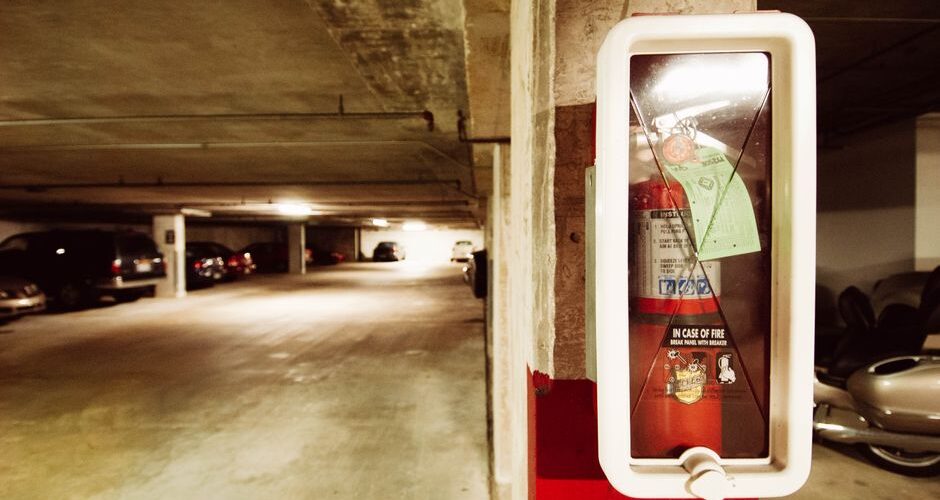
A downtown Denver parking structure is not an open surface lot with a roof on it. Snow that falls on a deck has nowhere to go until someone moves it. Ramps turn into the most dangerous surface in the building once traffic packs the slush down. Every piece of equipment has to fit under a concrete beam with room to spare. Snow removal inside a garage is a logistics problem before it is a plowing problem, and the properties that come through a storm cleanly are the ones that settled the details in October rather than at 2 a.m. in January.
For property managers, facility teams, and building owners across the Denver metro, a garage deck deserves its own plan, separate from the sidewalk and entry clearing that most people picture first. A structure has edges, drains, clearance limits, tenant schedules, and a steady flow of vehicles that never fully stops. Each of those shapes how snow gets handled.
Why a Parking Structure Is Not an Open Lot
On an open lot, snow can be pushed to a perimeter or stacked on a landscaped island. On a deck, there is no perimeter to push to. Snow sits on a structural slab until a crew breaks it up, carries it, and hauls it out. That single difference changes the crew size, the equipment, and the time a job takes.
Downtown structures also tend to stay busy. Office towers, hotels, residential buildings, and mixed-use properties keep decks in near-constant use, which means a crew cannot simply close a level and work across it at will. Stalls fill, traffic keeps moving, and the space available to maneuver shifts hour by hour. A plan that ignores vehicle flow tends to stall out on the first real storm.
Drainage matters just as much. Meltwater has to reach the deck drains rather than pooling in low spots and refreezing overnight. A deck that is clear at 4 p.m. can be a sheet of ice by 10 p.m. if the water has nowhere to run.
The Ramp Problem Comes First
Ramps are the most dangerous surface in the building once traffic packs the slush down, and they should be the first priority on every visit. A vehicle that loses traction on a flat deck slides in a straight line. A vehicle that loses traction on an incline slides into whatever is below it.
That makes ramp treatment a sequence question. Crews typically address the entry and exit ramps before the upper decks, clear the transition points where tires carry snow from outside, and then work outward. Deicing on ramps needs to be timed to traffic rather than applied once and forgotten, because a pass of tires can scrub a treatment off the surface faster than it does on a flat slab.
Buildings with a single narrow ramp have less margin than buildings with separate entry and exit lanes. If a vehicle stalls on the only ramp, the entire structure backs up, and the plow that was supposed to be on level three is sitting in a line of cars instead.
Equipment Clearance and Height Restrictions
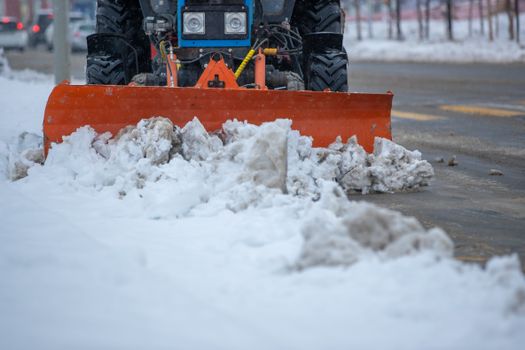
Height is the constraint that catches people off guard. A full-size truck with a plow mounted on the front needs vertical clearance, and many downtown decks do not offer it. Compact equipment and hand crews often do the work inside a structure, with larger equipment staged outside for hauling and for surface areas.
Clearance planning should account for more than the posted height at the entrance. Beam depths vary between levels, overhead piping and fire lines can drop below the structural ceiling, and lighting fixtures hang into the envelope. A walkthrough that measures the tightest points, not the average ones, gives a realistic picture of what can enter the deck.
Where the Snow Actually Goes
Snow hauled out of a structure has to be staged before it is carried away. Loading zones, alley access, and street frontage set the limits on how quickly material can leave the property. Snow hauling and disposal is a distinct service from plowing for that reason, and on garage decks it is the part that drives the schedule.
A few ground rules keep the work efficient. Snow should not be pushed over a deck edge without a deliberate plan for where it lands and who controls the area below. It should not be piled against doors, stairwell enclosures, or curb stops where it blocks access. And it should not be left where meltwater will run back across a walking path or a ramp.
Coordination with the city matters here as well. Denver’s Department of Transportation and Infrastructure handles emergency snow response for city streets, and its stated approach emphasizes efficient, effective, and fiscally responsible service. Private garage decks are a separate responsibility, but hauling and staging still touch the public right of way, so timing and placement deserve a conversation before the season starts.

Contracts, Trigger Depths, and 24/7 Response
A seasonal contract with trigger-depth terms gives a building a defined starting point for each event rather than a phone call and a wait. The trigger depth, the surfaces covered, the priority order, and the deicing approach all belong in writing. So does the answer to a simple question: who decides when a crew is dispatched, and who is notified once work begins.
Storms in the Denver metro do not always arrive on a convenient schedule. Overnight events, weekend events, and fast swings between snow and melt all put pressure on a plan. A 24/7 emergency response arrangement covers the storms that fall outside business hours, and a provider with decades of local experience has usually seen the same building types, the same ramp geometry, and the same downtown access constraints many times before.
Working Around Building Operations
Tenants notice snow management even when they never see a plow. A cleared ramp at 7 a.m. is the visible result of work that started hours earlier. Property managers can help by confirming a few operational details in advance: where tenants park during deck closures, how deliveries and ride-share traffic are routed, when trash and recycling pickup occurs, and whether any level is reserved for a specific user group.
Residential and HOA buildings add another layer. Residents expect access at all hours, and a deck closure needs communication before it happens, not after. A short notice template prepared in the fall removes a scramble in the middle of a storm.
A Pre-Season Walkthrough Checklist
- Measure and record the lowest overhead clearance on every level, including piping, lighting, and beam depths.
- Map the ramps, identify the narrowest points, and confirm the order in which they will be treated.
- Locate deck drains and note any low spots where meltwater collects and refreezes.
- Identify where snow can be staged on site and where it must be hauled away.
- Confirm access routes for equipment, including alley access and loading zones.
- Document the priority order for decks, ramps, stairs, walkways, and entries.
- Agree on the trigger depth, dispatch decision maker, and contact list for after hours.
- Prepare tenant and resident notice templates for deck closures and reduced parking.
- Photograph the structure before the season for a clear baseline.
Walking the building in fall, with the plan in hand and the contractor on site, usually surfaces the conflicts that are hardest to solve during a storm. Those conversations are far cheaper in October than they are at 2 a.m. in January.
Frequently Asked Questions
How is snow removed from a parking garage deck?
Snow on a deck is broken up, moved, and either hauled out or staged for removal, because there is no open ground to push it onto. Compact equipment and hand crews often handle the interior work, with larger equipment staged outside for hauling. Ramps are typically treated first so vehicles can keep moving safely.
Why are garage ramps treated before the upper decks?
Once traffic packs the slush down, ramps become the most dangerous surface in the building. A vehicle that loses traction on an incline slides into whatever is below it, including other vehicles, walls, or the level entrance. Clearing and deicing ramps first protects traffic flow and reduces the chance of a blocking incident.
What should a garage snow contract include?
Look for a defined trigger depth, a written priority order for ramps and decks, the deicing approach, snow hauling arrangements, and a clear dispatch decision process. A seasonal agreement also helps to lock in service before winter demand peaks, and 24/7 emergency coverage handles storms that arrive overnight or on weekends.
How early should a downtown Denver building plan winter service?
Planning well before the first storm gives time for a walkthrough, clearance measurements, staging decisions, and tenant communication. Properties that settle these details in the fall tend to move through a storm without a scramble. Waiting until snow is in the forecast compresses every decision into the least convenient window.