
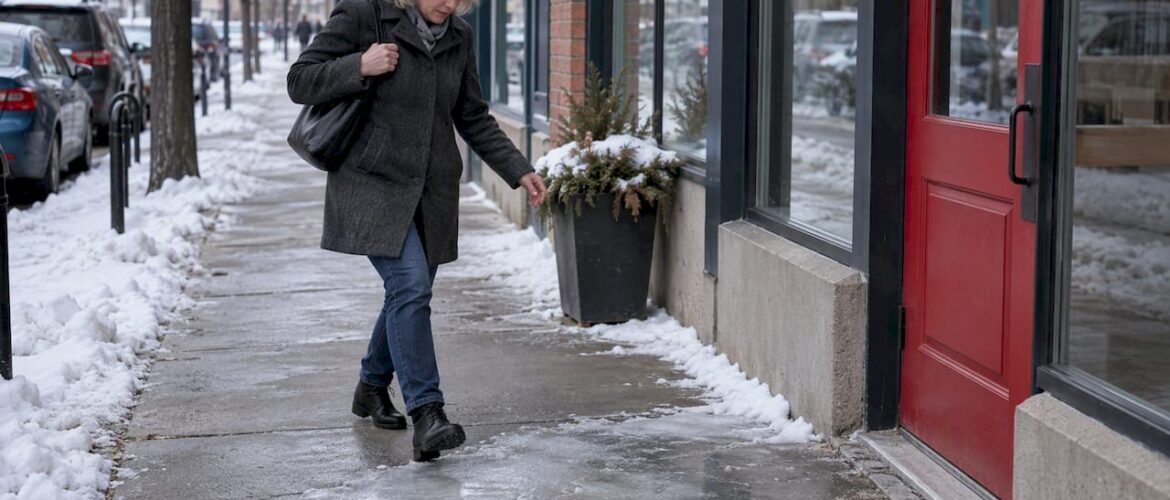
Liability for a slip and fall on snow or ice in Denver depends on who controlled the property, what that owner knew or should have known, and whether the owner or a contractor made the hazard worse. Natural snow alone rarely makes an owner liable on a public sidewalk. Ice that someone created, ignored for too long, or treated carelessly can. If you own, manage or maintain property in Denver, the practical lesson is the same either way: the clock starts ticking when snow stops, and a documented response is your best protection.
This guide explains the main Colorado rules in plain language, separates the city’s clearing ordinance from civil liability, and shows what property owners can do before the next storm. It is general information, not legal advice. If you were hurt or have been sued, talk to a Colorado premises liability attorney about your facts.
TL;DR
- Colorado courts have held that owners have no common-law duty to remove naturally accumulating snow and ice from public sidewalks, but they can be liable for ice they create or for negligent removal.
- Denver’s ordinance requires sidewalk clearing and carries a fine, yet a Colorado appeals court held it does not create a private lawsuit by itself.
- On private property, the Premises Liability Act sets the duty of care by the visitor’s status. Invitees, such as customers and tenants’ guests, are owed the highest standard.
- The usual filing deadline is two years, and claims against a government entity require written notice within 182 days.
- Prompt clearing, anti-icing and written service records are the strongest ways to reduce your exposure.
Table of Contents
- Two different questions: the ordinance and civil liability
- The natural accumulation rule on public sidewalks
- Negligent removal can create liability
- Private property: the Premises Liability Act
- What an injured person has to prove
- Cities and government property
- Fault, damages and deadlines
- What evidence matters
- How Denver owners reduce slip-and-fall risk
- Our perspective
- Getting service in place before the next storm
- FAQ
- Sources
Two different questions: the ordinance and civil liability
Most confusion starts here. Denver’s sidewalk rule tells owners what they must do. A slip-and-fall lawsuit asks whether someone was legally responsible for an injury. They overlap, but they are not the same thing.
What the city requires
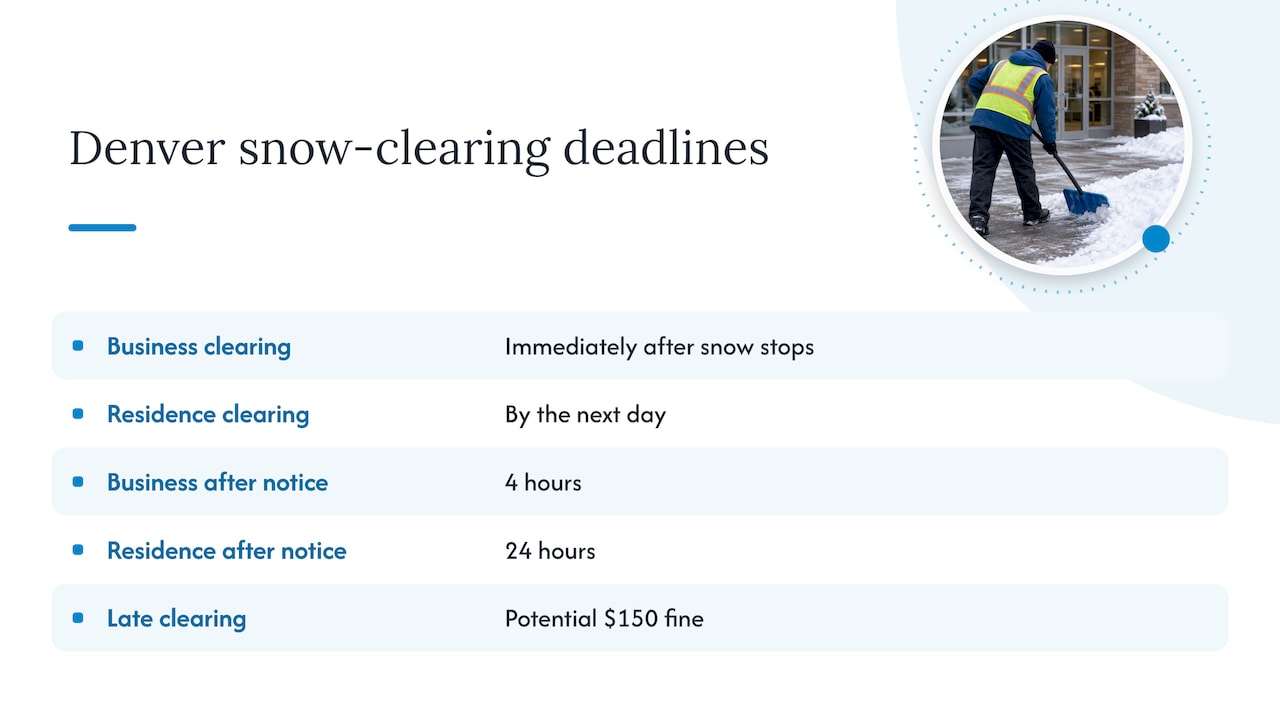
According to the City and County of Denver, property owners are responsible for clearing the sidewalks next to their property, including ADA ramps and bus stops. Businesses must clear immediately after the snow stops. Residences have until the next day.
If a sidewalk is not cleared in time, an inspector leaves a time-stamped notice. Per the same city page, businesses then have four hours and residences 24 hours before a potential $150 fine. For a walk-through of who clears what, see our guide to Denver property owner snow obligations. Downtown owners face a few extra considerations, covered in our downtown sidewalk shoveling rules.
What the ordinance does not do
In Burbach v. Canwest Investments, LLC (2009), the Colorado Court of Appeals addressed this directly. The court’s reasoning was that Denver’s snow removal ordinance benefits the community and does not create a private civil cause of action for pedestrians who are hurt. In other words, an injured person generally cannot win simply by showing that the owner broke the ordinance.
That is not a free pass. A missed deadline can still be evidence of how an owner managed the property, and the fine is real. It just means the lawsuit turns on other rules, which come next.
The natural accumulation rule on public sidewalks
In Bittle v. Brunetti (1988), the Colorado Supreme Court held that naturally occurring snow and ice, without more, do not create a common-law duty for property owners next to a public sidewalk. Liability may arise when an owner creates the ice, for example by discharging water onto the sidewalk.
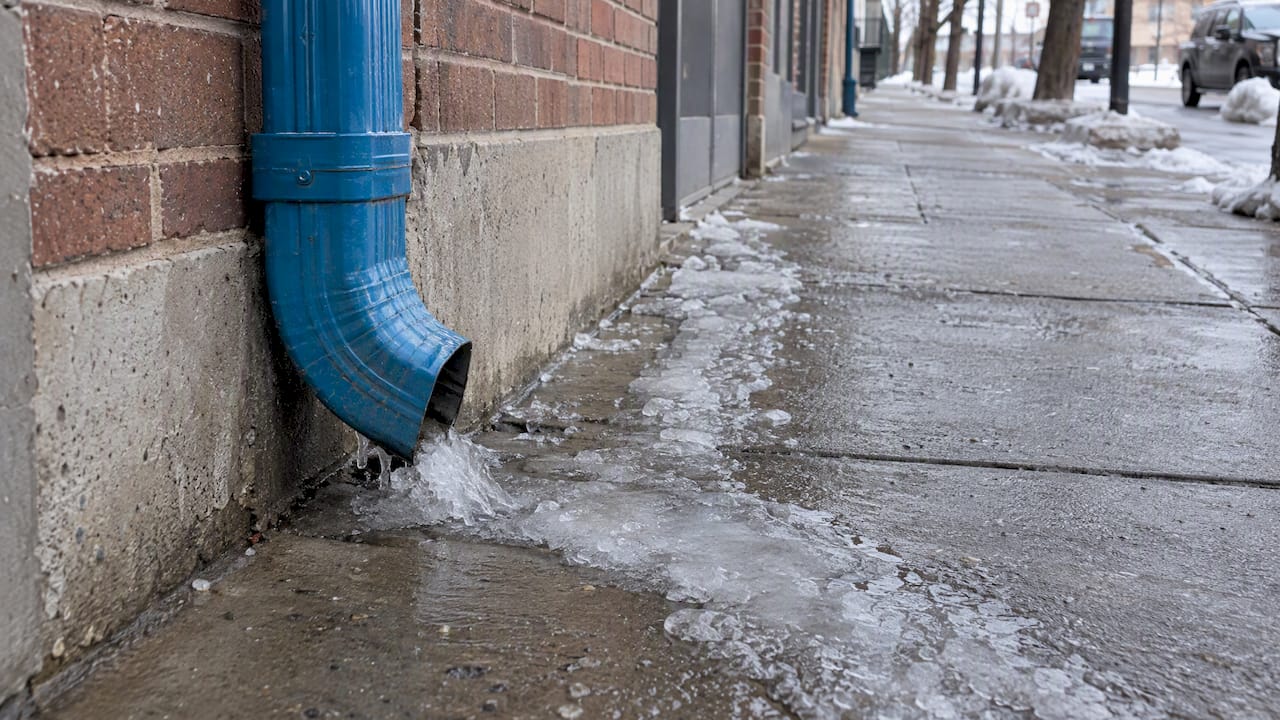
A related case shows how fact-specific this gets. In Woods v. Delgar Ltd., the court found that a lessee owed no duty where the plaintiffs offered no evidence that it controlled, built or maintained the awning from which water allegedly dripped and froze on a public sidewalk. Control matters. So does the source of the water.
Common owner-created ice problems in Denver include:
- Downspouts that empty across a walkway
- Roof or awning drip lines that freeze overnight
- Sprinkler overspray or irrigation leaks in shoulder seasons
- Melt from piles that drains across a path and refreezes
- Snow pushed from a parking lot onto a walking route
Denver’s freeze-thaw cycle makes the last two especially common. Snow melts in afternoon sun and refreezes after dark, so the sidewalk that was dry at 3 p.m. can be glazed by 7 p.m.
Negligent removal can create liability
Owners who do not have to clear natural snow can still take on risk by starting. One law firm summary notes that owners may be held liable when they begin removal negligently, such as by creating a new hazard or failing to address a condition they made worse. The same source reports that recent appellate interpretations have narrowed the natural accumulation defense where removal efforts leave a condition worse than the natural one.
What does negligent removal look like in practice?
- Shoveling a narrow channel and leaving a thin sheet of packed snow that polishes into ice
- Piling snow where it melts across the walkway
- Applying ice melt once, then not rechecking after temperatures drop
- Clearing a lot but leaving the entrance apron or curb ramp untouched
The lesson is not to do nothing. On private property, where the Premises Liability Act governs, doing nothing is not a safe harbor. The lesson is to clear completely, treat surfaces, and recheck.
Private property: the Premises Liability Act
For lots, entrances, walkways and common areas inside a property line, the main framework is Colorado’s Premises Liability Act, C.R.S. 13-21-115. The statute is the exclusive remedy for injuries on another person’s property, and it sorts the duty of care by whether the injured person was an invitee, licensee or trespasser.
| Visitor status | Typical example | What the statute asks of the landowner |
|---|---|---|
| Invitee | Customer, tenant, client, delivery visitor on business or common areas | Reasonable care against dangers the owner actually knew or should have known about |
| Licensee | Social guest, someone with permission but no business purpose | Reasonable care regarding owner-created dangers actually known, and warning of known dangers not ordinarily present on that type of property |
| Trespasser | Person with no permission | Narrower standard set out in the statute |
The invitee standard is the highest, and it is the one that applies to most commercial lots, apartment common areas and HOA walkways. Under the statute, on agricultural or vacant land only dangers actually known qualify.
Why status matters in court
The Colorado Judicial Branch’s jury instructions explain that the court determines whether the injured person was a trespasser, licensee or invitee, and the fact finder then decides liability and damages. That status materially affects what must be proved. For a property manager, the takeaway is simple: assume every resident, customer and visitor is owed the highest duty.
Hiring a contractor does not hand off the duty
In Jules v. Embassy Properties, Inc. (1995), the Colorado Court of Appeals held that an office-building owner could not avoid its statutory duty to an invitee by delegating maintenance. The court said the statute required reasonable care against dangers actually known or that should have been known. A good contractor lowers your risk and can document the work, but you still choose, supervise and verify.
What an injured person has to prove
The Colorado Judicial Branch’s 2025 premises-liability instructions list what a plaintiff must show by a preponderance of the evidence for a negligence claim. In summary, the defendant owned, occupied, controlled or conducted activities on the premises. The plaintiff must also show:
- An unreasonable-risk condition existed.
- The defendant was negligent in managing or maintaining the property, or in removing, correcting or warning about the condition.
- The plaintiff suffered injury, damage or loss.
- The defendant’s negligence caused it.
Notice is the hinge for snow and ice
For snow- and ice-related falls, the same instructions explain that the injured person generally must prove actual notice, constructive notice, or that the defendant’s operating methods made the dangerous condition continuous or readily foreseeable. Constructive notice can be shown through circumstantial evidence, including the circumstances showing the condition itself.
In plain terms: did the owner know about the ice, or should the owner have known? A lot that was plowed at 6 a.m. and not looked at again during a day of melt and refreeze is a different story from a patch that formed ten minutes before a fall. This is where written records help or hurt.
The “open and obvious” defense
Owners often argue the danger was clear enough that a reasonable person would have avoided it. One Colorado law firm reports that the open-and-obvious defense is frequently used. It is not automatic, since an obvious snowbank does not excuse a hidden sheet of black ice under it, but it is a reason injured people should not assume liability is simple.
Cities and government property
If the fall happened on a sidewalk the city maintains, different rules apply. In City & County of Denver v. Dugdale (1953), the Colorado Supreme Court held that slipperiness from naturally occurring ice does not ordinarily make a municipality liable. It also said constructive notice requires means of knowledge and enough time to remedy a visible, actionable defect, and that travelers must use ordinary care and extra caution in snowy or icy conditions.
The Colorado Governmental Immunity Act adds another layer. Legislative Council Staff describes it as a policy balance that preserves government function while providing limited, specific pathways for accountability when public entities cause harm.
Fault, damages and deadlines
Comparative fault
Colorado uses modified comparative fault. According to one Denver injury firm, a claimant may recover if found less than 50 percent responsible for their own injury. Recoverable losses can include medical expenses, lost wages and pain and suffering. Another Colorado firm lists disability or disfigurement as well, subject to comparative negligence.
For owners, this means the injured person’s footwear, speed, lighting conditions and warning signs can all come up. Documented warnings and cleared alternate routes help.
Filing deadlines
The limitations period for Colorado tort actions, including negligence, is two years, according to Legislative Council Staff. A law firm summary of C.R.S. 24-10-109 adds that claims against a government entity require written notice within 182 days. If you were hurt on public property, that shorter window is the one to ask an attorney about right away.
What evidence matters
Whether you manage a building or were hurt on one, the same evidence decides many cases. A Denver injury firm lists photos and videos, surveillance footage, witness statements, maintenance and inspection logs, weather reports and medical documentation as key.
For property owners, the items you control are the logs and the footage. Keep:
- Time-stamped records of each plow, shovel and de-icing visit
- Photos of the cleared area before and after service
- Weather notes showing when snow stopped and when temperatures dropped
- Contractor agreements that spell out trigger depth, response windows and re-treatment
- Incident reports written the same day a fall is reported
How Denver owners reduce slip-and-fall risk
Legal exposure follows physical hazards, so the fix is mostly operational.
- Clear within the city’s time frame. Businesses clear immediately after snow stops, residences by the next day, and sooner is safer.
- Treat before the storm where you can. Anti-icing keeps snow from bonding to pavement. Our sidewalk ice control approach and our commercial de-icing playbook explain how pre-treatment and de-icing fit together.
- Fix the water sources. Redirect downspouts, check awnings and gutters, and adjust irrigation so meltwater does not cross walking paths.
- Manage the piles. Stack snow where melt drains away from entrances, or haul it when space runs out.
- Recheck after the melt. Afternoon thaw and evening refreeze are when most surprises form.
- Write everything down. A record showing you acted reasonably is far easier to defend than a memory.
- Put the plan in a contract. Seasonal terms should say what triggers service and how fast. Compare options in our guide to seasonal snow removal contracts.
Our perspective
We have plowed and treated Denver properties for more than 44 years, and the pattern we see is consistent: the properties that stay out of trouble are the ones with a plan before the storm, not the ones that react after a complaint.
Our approach is built around that. We offer true 24/7 emergency dispatch, commercial-grade equipment designed to clear a lot in one pass, and documented service visits, so a property manager or HOA board has a record of what was done and when. We pair plowing with anti-icing and de-icing because a cleared surface that refreezes is still a hazard.
We also believe in up-front pricing and free estimates, so a board or owner can decide on a seasonal plan in October, not in the middle of a blizzard. The law decides who is liable. Our job is to give you every practical reason never to find out.
Jesse
Getting service in place before the next storm
If you manage a lot, an apartment community or a storefront, we can build a plan around your site: plowing, sidewalk clearing, ice management, snow hauling and seasonal contracts, with 24/7 emergency response. Homeowners can book driveway and walkway clearing from $41.25 per visit, one-off. See our parking lot, driveway and anti-icing services or ask for a free estimate on the Denver Snow Removal home page.
We design our service visits to be documented, so you can show what was done and when if a question ever comes up.
FAQ
Can I sue if I slip on a snowy Denver sidewalk?
Possibly, but not every fall has a liable party. On a public sidewalk, Colorado courts have held that owners generally have no duty to remove natural snow and ice, though they can be liable for ice they create. Who controlled the area and what they knew are the key questions, so speak with a Colorado premises liability attorney about your facts.
Does breaking Denver’s shoveling ordinance make an owner automatically liable?
No. A Colorado appeals court held in 2009 that the ordinance does not create a private cause of action for injured pedestrians. The owner can still face the city’s fine, and the facts around the missed clearing can matter in a lawsuit on other grounds.
How long do I have to file a slip-and-fall claim in Colorado?
The general limit for negligence claims is two years from the injury. If a government entity is involved, written notice is required within 182 days. Confirm the exact deadlines for your situation with an attorney promptly.
Does hiring a snow removal contractor protect me from liability?
It helps, but it does not remove your duty. A Colorado court has held that an owner cannot avoid its statutory duty to an invitee by delegating maintenance. A contractor with clear response terms and documented visits lowers your risk and gives you a record to rely on.
What if the injured person was partly at fault?
Colorado’s modified comparative fault system lets a claimant recover only if less than 50 percent responsible. Their share of fault also reduces the recovery. Evidence such as warnings, lighting and cleared alternate paths can matter.
Sources
- Snow Removal, City and County of Denver
- Burbach v. Canwest Investments, LLC, 224 P.3d 437 (Colo. App. 2009)
- Bittle v. Brunetti (Colorado Supreme Court, 1988)
- Woods v. Delgar Ltd., 226 P.3d 1178
- Colorado Slip and Fall Attorneys, CGH Injury Lawyers
- Premises Liability Act, C.R.S. 13-21-115 (SB22-115)
- Colorado Judicial Branch jury instructions, Chapter 12 (2024)
- Colorado Judicial Branch jury instructions, Chapter 12 (2025)
- Jules v. Embassy Properties, Inc. (Colorado Court of Appeals, 1995)
- City & County of Denver v. Dugdale (Colorado Supreme Court, 1953)
- The Colorado Governmental Immunity Act and State Risk Management Funding, Legislative Council Staff
- How to Prove Liability in a Denver Frozen Walkway Slip and Fall
- Who Is Liable for a Slip and Fall on Ice and Snow in Colorado
- Statutes of repose and limitations memorandum, Legislative Council Staff