
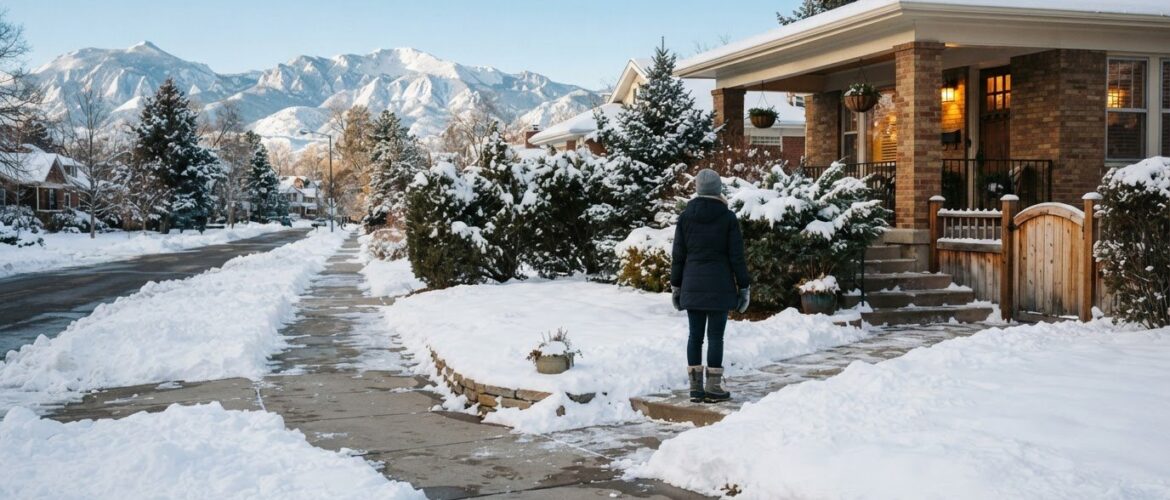
After a Denver storm, a cleared driveway doesn’t necessarily leave a safe pedestrian route beside your home. Choosing dependable denver residential sidewalk clearing starts with identifying the walkways people use and deciding what the service should cover. Snow can drift back across a path or become compacted under foot traffic, so a plan should account for changing conditions.
This guide explains how to assess the sidewalk and walkways around your property, distinguish sidewalk clearing from broader residential snow removal, and prepare a clear service request. Snow Removal Denver is a family-owned local business with more than 44 years of snow-removal experience. Its residential snow removal includes driveway and walkway clearing, with free estimates for homeowners in the Denver Metro area.
Key Takeaways
- Identify the pedestrian routes, entrances, and narrow spots you want included in denver residential sidewalk clearing.
- Note changes in walkway width, gates, obstacles, and access needs when describing the work.
- Compare DIY and professional clearing based on your time, physical capacity, walkway layout, and the work needed after repeated snowfall.
- Prepare a simple route description to make it easier to request a property-specific estimate.
- Snow Removal Denver is a family-owned Denver Metro business with over 44 years of experience and residential snow removal that includes walkways.
Why Denver Residential Sidewalk Clearing Needs Its Own Snow Plan
A snow-covered sidewalk can interrupt everyday trips, from walking in from the street to taking bins out or reaching a gate. Clearing the driveway restores vehicle access, but it doesn’t automatically clear the pedestrian route. A separate plan for denver residential sidewalk clearing helps you identify the paths people actually use and distinguish them from other snow-removal work.
Residential sidewalk clearing focuses on the pedestrian walkways beside or across a home’s property, including the connections people use to reach entrances. Street plowing addresses the roadway, while driveway clearing opens vehicle access. Broader residential snow removal can cover several areas around a property. Describe each area you want cleared so the requested work is clear.
Which areas count as the sidewalk-clearing job?
Walk the route from the sidewalk to the places people enter or pass through. Include any of these areas that you want cleared:
- The sidewalk beside the property and any section crossing a driveway entrance.
- Paths connecting the sidewalk to a front door, side entrance, or gate.
- Narrow turns, steps, or other pedestrian pinch points where snow can restrict passage.
When requesting an estimate, identify where the route begins and ends. Mention gates, changes in width, obstacles, and any entrance path you want included. Clear boundaries distinguish walkway work from driveway clearing and help ensure the intended pedestrian route is understood.
How Denver weather changes the clearing plan
Not every storm leaves the same job. A light dusting takes a different effort from deeper accumulation, and wind can push snow back across a cleared path. Foot traffic can also pack snow against the surface. A walkway’s condition depends on the snowfall, when the path is cleared, and what happens afterward.
If snowfall continues or another round arrives, the path may need attention again. Entrances and narrow connections can become obstructed quickly when snow drifts or people repeatedly use the route. Snow-removal methods and equipment vary by conditions and area, as outlined in this overview of snow removal techniques and equipment.
Keep the full property in view. Sidewalks, driveways, and other residential areas serve different purposes, and clearing one doesn’t automatically clear the others. Describe the pedestrian route separately, even when you’re arranging broader snow removal for your home.
What Reliable Sidewalk Clearing Should Cover at a Denver Home
A useful clearing request starts with a picture of the route, not just the address. Homes on the same block can have different sidewalk lengths, entrance paths, steps, gates, and narrow turns. For denver residential sidewalk clearing, describing these details helps define which pedestrian areas you want addressed.
Before requesting an estimate, map the full pedestrian route, its access points, obstacles, and changes in width. Specify whether you need snow clearing, ice management, or both. This helps prevent a sidewalk request from being mistaken for driveway-only work and makes it less likely that a connecting path will be overlooked.
Map the walkway and its access points
Trace the route as someone would walk it. Note where it begins and ends, and which connections need to stay open. Include the public-facing sidewalk, paths to entrances, steps, and links to a gate or front door. If a path narrows around a post or widens near an entrance, mention that change.
A simple checklist can help:
- Sidewalk length and approximate width, including narrower sections.
- Entrances, steps, gates, corners, and connecting paths.
- Fixed obstacles, such as planters or railings, that affect access.
- Where pedestrians need a continuous, unobstructed passage.
Use landmarks to make the boundaries easy to follow. For example, explain that the route runs from the corner along the sidewalk, then turns up the path to the front steps. If you want only the sidewalk cleared, say so. If the entrance path is part of the request, identify it separately.
Set clear expectations for snow and ice
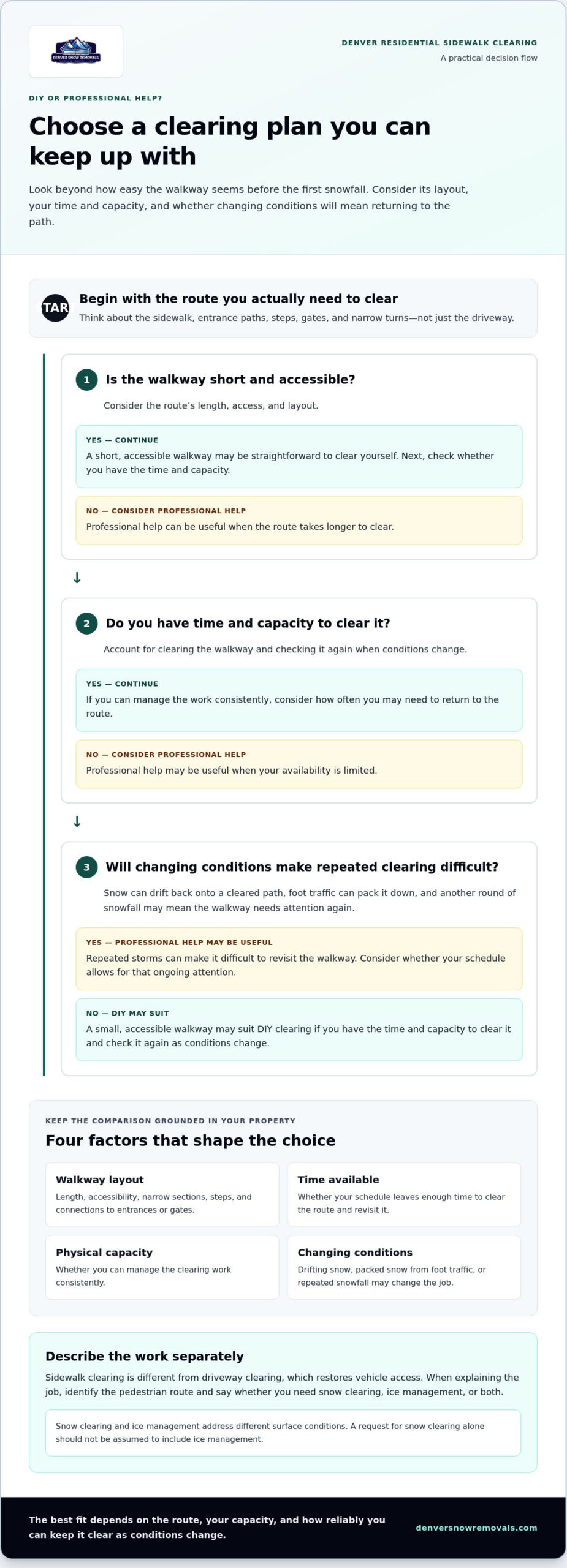
Snow clearing and ice management address different surface conditions. Snow may be removed while a slick area remains, or freezing conditions may affect the walkway after visible snow is gone. State whether you’re requesting snow removal, ice management, or both, and point out where icy conditions tend to affect access. Don’t assume that snow clearing alone also addresses ice.
Ice can develop around steps, shaded sections, and places where water crosses or collects on the walking route. Describe these areas so the request reflects the conditions at your property, without assuming a particular material or treatment. Homeowners considering the difference between snow clearing and managing icy surfaces can learn more in this Denver ice management services guide.
For a property-specific estimate, provide the route description and note which areas need snow clearing or ice management. Homeowners in the Denver Metro area can request a residential snow removal estimate that includes walkway clearing.
DIY Shoveling or Professional Sidewalk Clearing: Which Fits?
A short sidewalk beside a home may be straightforward to clear yourself. The decision gets harder when the route is long, storms arrive in succession, or your schedule leaves little time to revisit the walkway. For denver residential sidewalk clearing, consider what you can manage consistently, not just how easy the path looks before the first snowfall.
DIY may suit a small, accessible walkway if you have the time and capacity to clear it and check it again when conditions change. Professional help can be useful when the route takes longer, your availability is limited, or repeated storms make it difficult to keep up. Neither option removes every winter hazard, but a realistic plan can help maintain pedestrian access.
When handling the sidewalk yourself may work
Doing it yourself may fit a short, level route with few connections, especially if you can make time to clear it as conditions change. Consider the full route, including the path to the entrance, rather than judging only by sidewalk length. If another snowfall covers the cleared area, plan when and how you’ll clear it again.
When a residential clearing service may be a better fit
Professional help can be practical for a long or complicated walkway, limited availability, mobility constraints, or recurring storms that make repeated clearing hard to fit into your routine. Snow Removal Denver provides residential snow removal that includes walkway clearing. When requesting an estimate, describe the route and the areas you want included.
Use this comparison to assess what fits your property and winter routine:
| Situation | DIY fit | When professional help may be useful |
|---|---|---|
| Short, accessible sidewalk | Often manageable if you have time and capacity to clear it. | If you’d rather not take on the recurring task. |
| Long route with entrances or connecting paths | Possible, but account for every section and the time required. | When the full route takes more effort than you can routinely spare. |
| Busy or unpredictable schedule | Works if you can still make time as conditions change. | When work or other commitments make repeat clearing difficult. |
| Repeated snowfall through the season | Requires checking the walkway again after conditions change. | When keeping up with recurring clearing becomes burdensome. |
| Mobility constraints | Choose only if the task feels manageable for you. | When you need support handling the physical work. |
A practical test: Can you clear the entire route, including its connections, and return to it when snow accumulates again? If so, DIY may be reasonable. If the work regularly conflicts with your time or capacity, professional clearing can take that routine task off your hands. You can request an estimate for residential walkway clearing and describe the sidewalk areas that matter at your home.
How to Prepare for Sidewalk Clearing in Denver
A clear request makes it easier to match residential snow removal to your property. Before arranging denver residential sidewalk clearing, gather details about the route, the areas you want included, and how people access your home. This preparation helps you explain the work accurately and gives the estimate a useful starting point.
Describe your property and requested clearing area
Walk the pedestrian route and list the sections you want addressed. Separate the public-facing sidewalk from paths leading to entrances, gates, or steps. If the sidewalk connects to a path beside the house, say whether that section is part of the request. Specific start and end points are more useful than saying “clear the sidewalk” when the property has several connected routes.
Use this checklist to organize the details:
- Map the route: Note sidewalk and walkway segments, their approximate length and width, and where they connect.
- Mark access points: Include entrances, steps, gates, and turns that pedestrians use.
- Describe obstacles: Identify fixed features or narrow sections that affect access.
- Flag recurring problem areas: Mention spots where snow tends to drift or icy conditions affect the route.
- Explain access needs: Describe where you need a continuous pedestrian passage and whether the request covers snow clearing, ice management, or both.
For example, describe a route that follows the sidewalk from the driveway to the corner, then continues along a path to the front steps. State whether the driveway itself is outside the requested sidewalk scope. Snow Removal Denver provides free estimates for Denver Metro homeowners, and a clear property description helps communicate what you want included.
Check local guidance and plan for changing conditions
Service planning and local requirements are separate parts of winter preparation. Check current official sidewalk-clearing information from Denver’s Department of Transportation and Infrastructure (DOTI) for guidance that applies to your property. Requirements and deadlines can change, so use current city information rather than relying on an old summary or an assumption.
Conditions may change after the initial clearing. Additional snowfall can cover a route again, while freezing conditions may affect the surface after visible snow has been removed. Include these possibilities in your plan so you know when to reassess the walkway and whether your request should address snow removal, ice management, or both.
Once you’ve mapped the route, listed the access points, and checked current city guidance, you’re ready to describe the work clearly. Request a free residential snow-removal estimate for your Denver Metro property and share the sidewalk and walkway areas you want included.
Get Denver Residential Sidewalk Clearing from Snow Removal Denver
Snow Removal Denver provides residential snow removal that includes walkways. Start by describing your property and the areas you want included. This gives the estimate a clear starting point and distinguishes sidewalk clearing from driveway or other residential snow-removal needs.
Snow Removal Denver is a family-owned business with over 44 years of snow-removal experience, serving homeowners across the Denver Metro area. Its fleet includes trucks, front-end loaders, and snow blowers for snow-removal work. Share the walkway details so the estimate can address the specific areas you want cleared.
What to include when requesting an estimate
Share your property location and describe the route pedestrians use, rather than relying on a general request to clear “the sidewalk.” Note where the route begins and ends, which adjoining paths connect to it, and any access details that could affect the work. A clear description helps make the estimate relevant to your home and the areas you want considered.
- Property location: Provide the address or location within the Denver Metro area.
- Sidewalk route: Identify the sections alongside the property and any sidewalk crossing a driveway entrance.
- Connected walkways: Mention paths to front or side entrances, steps, gates, and turns.
- Access considerations: Describe narrow sections, obstacles, or spots where people need a continuous passage.
- Service focus: Explain whether your request concerns snow clearing, ice management, or both.
These details help define the requested work and clarify whether you want a sidewalk, driveway, or other paved area included. If you’re unsure how to describe a boundary, use a simple route description, such as “from the corner along the front sidewalk to the path leading to the entrance.” Name each separate area you want included.
A local team for residential snow removal
Sidewalks are one part of a home’s winter access. A clearly described walkway request focuses on the pedestrian route, while residential snow removal can address the broader needs identified for the property. Snow Removal Denver’s family-owned background and more than 44 years of experience bring local snow-removal experience to the work.
Homeowners across Denver Metro can request a free estimate and explain the property, walkway route, access considerations, and snow or ice concerns. Request your free Denver Metro estimate for residential snow removal that includes walkways.
Put Your Sidewalk Plan Into Practice
A useful winter plan is one you can follow when conditions change. Keep a brief note of the route you want maintained, and update it if you change an entrance, add a gate, or notice a new trouble spot. Then your next request for denver residential sidewalk clearing can reflect how people actually move around your home, not just the layout you remember from summer.
Think about what would make the plan easier to follow during a storm: who will notice when access needs attention, which path matters most, and what details to share when arranging help. You don’t need to predict every snowfall. Clear property information gives you a practical starting point and makes it easier to act when winter conditions arrive.
Ready to plan for your home’s walkways? Request a free residential snow-removal estimate and share the areas you want addressed.
Frequently Asked Questions
Who is responsible for clearing the sidewalk in front of a Denver home?
In Denver, the property owner is responsible for clearing snow and ice from the sidewalk adjoining the property. Street plowing is a separate city operation and doesn’t clear the pedestrian route beside a home. If the sidewalk borders your property, include it in your winter access plan. For unusual property boundaries or current requirements, consult Denver’s official sidewalk-clearing guidance.
How soon does a Denver homeowner need to clear snow from a sidewalk?
Denver homeowners must clear sidewalk snow and ice within 24 hours after snowfall stops, according to current city guidance. The timing begins after the snow ends, not necessarily when it first starts. If snowfall continues or returns, conditions may change, so monitor the route and check the City of Denver’s current requirements for updates to the rule.
Does residential sidewalk clearing include the driveway and walkway to the front door?
Snow Removal Denver’s residential snow removal includes driveways and walkways. When requesting an estimate, describe whether you need the public-facing sidewalk, driveway, path to the front door, or a combination of these areas. Clear details help define the work requested.
Can a snow removal service clear sidewalks after every Denver storm?
Describe your needs for repeat clearing when requesting an estimate, including whether you’re planning for individual storms or ongoing winter needs. Snowfall can vary, and conditions may change after an initial clearing, so include how you want recurring work handled in your service arrangement.
Is professional sidewalk clearing worth it for a small residential property?
It may be worthwhile even for a small Denver property if clearing the sidewalk is difficult to fit into your routine or you’d rather not handle it yourself. Consider the route’s length, your available time, and whether you can keep up when snow returns. If a short path is manageable and you can monitor it, DIY may suit you. The best fit depends on your circumstances.
How much does residential sidewalk clearing cost in Denver?
The cost depends on the property and the specific areas included, so an estimate is the practical way to get a figure for your request. Describe whether you need sidewalk-only clearing or also want a driveway or entrance path included. Snow Removal Denver offers free estimates to Denver Metro homeowners. Sharing the route and access details helps make the estimate specific to the work you’re considering.
What should I tell a snow removal company when requesting sidewalk clearing?
Provide the Denver property location and describe the route from its starting point to each entrance or connection. Mention the sidewalk, driveway crossing, front-door path, gates, steps, and any narrow or difficult-to-access areas. Also explain whether you’re seeking snow clearing, ice management, or both, and whether you anticipate repeat service during the season. These details help the estimate reflect your property and needs.