

Most commercial snow events in Denver do not begin at a convenient hour. Snow starts overnight, temperatures hover near freezing, and the first employees pull into the lot before sunrise. A 24/7 dispatch team exists for exactly that window, the hours when nobody is awake to make a phone call and the property still has to be safe and open by 7 a.m.
For property managers, HOA boards, and facility teams, the difference between a manageable winter and an expensive one comes down to how the dispatch side of a snow contract is built. Here is what to expect from a Denver commercial snow removal provider that runs dispatch around the clock.
What 24/7 Dispatch Means in Practice
Dispatch is not a single phone number with someone sitting beside it. A working dispatch operation combines weather monitoring, crew staging, equipment assignment, and documented communication for every property on the route.
Full-service snow contractors in the Denver area track conditions continuously so crews can be positioned before snow starts rather than after the first call comes in. Pre-positioning matters along the Front Range, where storms can arrive quickly, intensify overnight, and then be followed by a hard freeze that turns cleared pavement into ice.
A property manager with a 24/7 dispatch contract is buying three things: coverage during overnight and weekend events, a predictable process for when crews arrive, and a written record of what was done and when it was done.
The Three Phases of a Snow Event
Before the storm
Pre-storm work is where most of the value gets created. A dispatch team reviews the forecast, confirms trigger depths against each contract, assigns equipment, and makes sure fuel, salt, and liquid de-icing supplies are loaded. Property managers receive advance notice that an event is coming.
This is also the phase when site logistics get resolved: where equipment enters, where snow will be stacked, and which areas must be cleared first. Getting those answers in October is far easier than sorting them out at 3 a.m. in January.
During the storm
Once accumulation passes the trigger depth written into the contract, crews deploy. Plowing and ice control happen together rather than as separate trips, because clearing pavement without treating it invites refreeze on a cold Denver night.
Dispatch keeps coordinating throughout the event, reassigning equipment when a lot takes longer than expected, adding a second push when accumulation continues, and keeping the property manager informed instead of leaving them guessing.
After the storm
Post-storm work includes final cleanup, widening of drive lanes, clearing around entryways and landscaped islands, and in some cases snow hauling. Hauling means loading snow into trucks and removing it from the property, which matters when there is nowhere left to stack it.
A complete close-out includes checking for ice, re-treating trouble spots, and confirming the site is ready for normal operations the next morning.
Trigger Depth: The Clause That Defines Your Response
Almost everything about response time traces back to the trigger depth. This is the accumulation threshold, measured in inches, that authorizes a crew to mobilize. Setting that number clearly means both sides know exactly when service begins.
Read the number carefully and match it to the property. A retail center with heavy morning traffic and a clinic with continuous access need different thresholds than a distribution yard that can absorb a few hours of delay.
| Contract element | What it controls | What to confirm |
|---|---|---|
| Trigger depth | When crews mobilize | Whether accumulation is measured per event or cumulatively |
| Push frequency | How often lots are cleared during a storm | Where snow will be stacked on site |
| Ice control | When salt or liquid de-icer is applied | Whether it is included or billed separately |
| Snow hauling | Removal of snow from the property | Whether it is on call or included in the season |
| Seasonal scope | What is covered for the full winter | Which surfaces and areas are included |
Services a Dispatch Team Coordinates
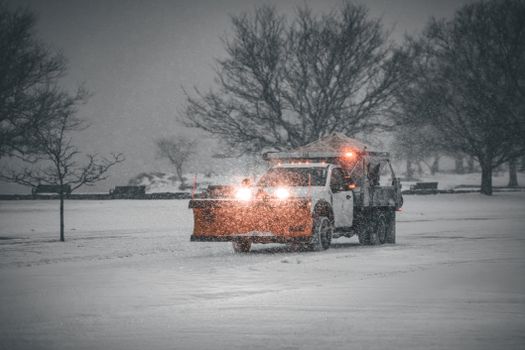
- Commercial snow plowing for parking lots, drive lanes, and loading areas
- Ice control and de-icing with granular or liquid products
- Snow hauling and disposal when stacking space runs out
- Entryway and walkway clearing for safe access
- Seasonal contracts covering the full winter rather than single events
- Post-storm cleanup and site checks before business hours
What Commercial Snow Removal Costs in Denver
Pricing structures vary, but per-push billing and seasonal contracts are the two models most commercial properties choose between. One publicly published Denver pricing guide lists per-push rates for small commercial properties under 10,000 square feet in the range of $125 to $350 per push, with medium properties between 10,000 and 50,000 square feet beginning at $300 per push and up.
Treat any published figure as a starting point rather than a quote. Actual pricing depends on lot size, surface type, equipment access, stacking space, distance from the crew staging area, and how much ice control the property needs across a season.
Seasonal contracts work differently. A property pays an agreed amount for the winter in exchange for coverage tied to the trigger depth in the agreement. That structure suits managers who want a predictable budget, while per-push billing suits properties where snow volume swings widely from year to year.
Why Local Response Time Matters Along the Front Range
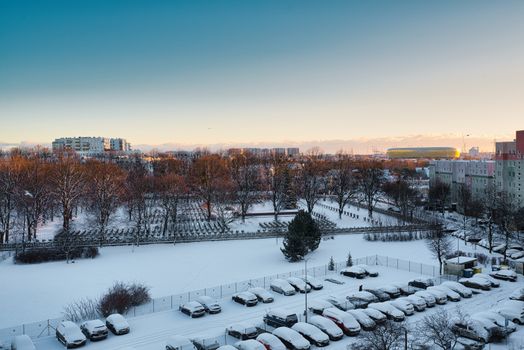
Denver sits at the edge of the Front Range, where winter weather can shift fast. Local contractors describe their teams and equipment as local and monitoring conditions around the clock so they can respond to snow or ice of any size.
Local matters. Equipment staged near the metro area reaches a property faster than crews dispatched from hours away, and local operators already know how specific corridors handle snow and where drifting and refreeze tend to cause the most trouble.
The City and County of Denver handles snow response on public streets through its Department of Transportation and Infrastructure, which describes its emergency snow response as efficient, effective, and fiscally responsible, with a plan designed for normal winter weather conditions. Private lots and campuses fall outside that plan, which is why commercial properties contract privately.
What to Prepare Before the Season Starts
- Walk the property and mark obstacles such as curbs, islands, parking stops, and anything a plow blade could catch.
- Identify snow stacking areas and confirm they will not block sight lines, drains, or access points.
- Confirm the trigger depth in your contract and check that it matches the property’s operating hours.
- Provide current contact information for whoever should receive dispatch updates overnight.
- Ask how the contractor documents service, so you have records if a liability question comes up later.
- Review ice control products with the contractor, especially around entrances and any surface sensitive to salt.
Questions to Ask Before Signing a Seasonal Contract
- What is the trigger depth, and how is accumulation measured?
- How quickly after the trigger does equipment arrive on site?
- Is ice control included, or is it billed separately?
- Is snow hauling available, and how is it billed?
- Who answers the phone at 2 a.m.?
- What credentials does the company hold? CSP certification is one credential used in the commercial snow industry.
- How many years has the company worked in the Denver metro area?

What Decades of Denver Winters Actually Buy You
A contractor with a long history of Denver winters has already worked through seasons that refuse to follow the forecast. That experience shows up in how dispatch prioritizes properties, how equipment is staged across the metro, and how quickly crews adapt when accumulation runs heavier than predicted.
Experience also shapes the contract conversation. A seasoned provider will push back on a trigger depth that does not fit the site, ask about stacking space before the first storm, and explain how ice control will be handled on surfaces that are sensitive to salt. Those details protect the property long before the first flake falls.
Frequently Asked Questions
What does 24/7 dispatch mean for a commercial property?
It means crews can be mobilized during overnight, weekend, and holiday snow events without waiting for business hours. Dispatch monitors forecasts, assigns equipment, and coordinates plowing and ice control once accumulation passes the trigger depth in your contract. Property managers receive updates during the event instead of discovering the condition of the lot at sunrise.
How is commercial snow removal priced in Denver?
Most properties choose either per-push billing or a seasonal contract. One published Denver pricing guide lists per-push rates of roughly $125 to $350 for small commercial properties under 10,000 square feet, with medium properties beginning around $300 per push and up. Those numbers are reference points only, since your actual quote depends on lot size, access, stacking space, and ice control needs.
What is a trigger depth in a snow removal contract?
Trigger depth is the accumulation threshold, measured in inches, that authorizes crews to mobilize. Below that depth, the property waits or handles light snow on its own. Above it, the contractor dispatches equipment. Confirming whether accumulation is measured per event or cumulatively is one of the most important details to review before signing.
Does the City of Denver clear private parking lots?
No. Denver’s Department of Transportation and Infrastructure handles emergency snow response on public streets with a plan designed for normal winter weather conditions. Private parking lots, office campuses, industrial parks, and HOA communities fall outside that scope, so commercial properties arrange snow removal through a private contractor instead.
When should a commercial property sign a snow contract?
The best time is before the season begins, while crews are still being assigned and site logistics can be walked without snow on the ground. Waiting until the first storm means competing for limited equipment and accepting whatever terms remain available. Signing early also gives you time to confirm trigger depths, stacking areas, and ice control details with the contractor.