
When winter weather hits the Denver metro, parking lots, access roads, and walkways can become unsafe in a matter of hours. For commercial property managers, facility directors, and HOA board members, finding reliable commercial snow removal near me is more than a seasonal task. It is a responsibility that affects tenants, employees, customers, and guests. A professional snow removal provider does more than clear snow. They keep your property safe and accessible before, during, and after every storm.
What Commercial Snow Removal Includes
Commercial snow removal is not the same as residential driveway plowing. Properties with larger paved areas, multiple entrances, and high traffic demand a more complete approach. Professional commercial services typically include plowing, sanding, and de-icing for parking lots, access roads, sidewalks, and entrances. These four elements work together to keep vehicle and foot traffic moving safely.
A full-service snow management plan may include:
- Parking lot plowing and hauling
- Sidewalk and walkway clearing
- Entrance and loading zone access
- Salting and sanding for traction
- Ice management on high-traffic surfaces
- Snow hauling and disposal when piles become a problem
Each property is different. A retail center with a large lot and pedestrian entrances has different needs than an industrial warehouse with long access roads. A provider that offers comprehensive services can tailor a plan to match the specific layout and usage of your property.
Why Denver Metro Properties Need a Snow Plan
Snow and ice create unsafe conditions for both vehicle and foot traffic alike. A sudden storm can turn a routine commute into a dangerous situation. For commercial properties, the stakes are higher. Employees need to reach the building. Customers need to park and enter safely. Delivery trucks need clear access to loading docks. Apartment and HOA communities need residents and guests to move through the property without slipping or getting stuck.
Waiting until snow starts falling is the wrong approach. Most professional providers recommend establishing a plan before the season begins. This allows the company to schedule resources, assign routes, and prepare equipment. When a storm is forecast, the team is already ready to respond. The goal is to create a safe place to walk and drive, not to react after conditions become dangerous.
A well-managed snow plan also protects the property itself. Repeated freezing and thawing can damage pavement. Large snow piles can block fire lanes, dumpsters, and emergency access points. A consistent removal schedule keeps these areas clear and reduces long-term wear.
How to Evaluate Commercial Snow Removal Providers
Not every snow removal company is equipped to handle commercial properties. When you search for commercial snow removal near me, take time to evaluate each provider carefully. The cheapest bid is not always the best choice. The provider you select will be responsible for keeping your property safe all winter long.
Experience and Track Record
Snow removal is a specialized trade. It requires knowledge of de-icing materials, plowing techniques, equipment limits, and property layouts. Experienced providers bring a proven track record of performance. Some commercial snow removal companies have been operating for decades and have managed snow events at prominent condominium communities, office parks, and industrial campuses. Longevity matters because it shows the company has handled a variety of storm conditions and kept clients coming back season after season.
Ask about the properties they currently serve. A company that manages parking lots, industrial parks, HOA communities, and office campuses understands the different demands of each property type. They know how to prioritize entrances, main drives, and emergency access points.
Response Time and 24/7 Availability
Snow does not follow a nine-to-five schedule. Storms can start late at night, intensify during the morning commute, or continue for days. A commercial provider must be available around the clock. Emergency snow plowing and ice removal require a dispatch team that can mobilize quickly, even during a prolonged storm event.
When evaluating providers, ask about their response plan. How quickly can they reach your property after a storm begins? Do they offer 24/7 emergency service? What is their policy for multiple snow events in a single week? The answers to these questions tell you whether the company is prepared for the realities of a Denver winter.
Equipment and Snow Hauling Capabilities
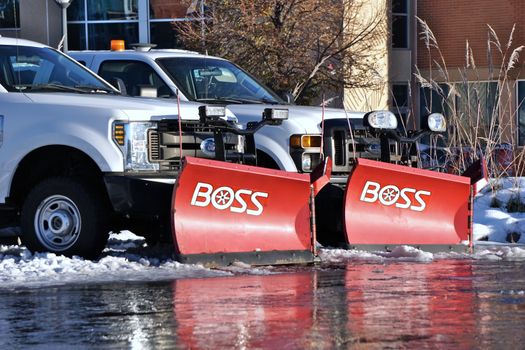
Commercial lots require more than a pickup truck with a plow. Providers who serve large properties need a fleet that can handle parking lots, access roads, and tight pedestrian areas. They also need access to snow hauling and disposal options. When snow accumulates over several storms, plowing alone is not enough. Piles can block sightlines, reduce parking capacity, and create hazards. A provider with hauling capabilities can remove snow from the property entirely.
Equipment quality matters for efficiency and safety. Well-maintained plows, spreaders, and loaders perform better in heavy snow. They also reduce the risk of damage to pavement, curbs, landscaping, and other property features.
Commercial vs. Residential Snow Removal
Residential snow removal focuses on driveways, sidewalks, and sometimes walkways around a single home. Commercial snow removal is more complex. It involves larger areas, stricter time expectations, and a wider range of surfaces. A commercial provider must clear parking lots while vehicles are still moving through them, keep sidewalks safe for pedestrians, and maintain access for deliveries and emergency services.
The service scope also differs. Commercial contracts often include salting, sanding, and ice management as standard components. Many residential services offer these as optional add-ons. Commercial properties may also require snow hauling, which is rarely part of a residential driveway plowing service.
Because the stakes are higher, commercial clients should work with a provider that has the staffing and equipment to meet the demands of a business property. A company that splits its focus between residential driveways and large commercial lots may not have the capacity to respond quickly when conditions are worst.

How to Find Commercial Snow Removal Near You
Searching for commercial snow removal near me will return many local companies, but not all are equal. Start by checking the Better Business Bureau directory, which lists snow removal services in your area and provides business ratings. This can help you narrow the field to established companies with a record of resolving customer concerns.
Then take the search a step further:
- Ask other property managers and HOA boards which providers they use and whether they would recommend them.
- Verify that the company is properly insured and equipped for commercial properties.
- Request a property walkthrough so the provider can assess your lot size, entrances, and problem areas.
- Review the proposed contract terms, including trigger depths, response times, and seasonal pricing.
- Confirm that the provider offers 24/7 emergency dispatch and snow hauling if your property needs it.
Local knowledge also matters. A Denver metro provider understands the region’s weather patterns and municipal expectations for snow clearing. They know how to prepare for the freeze-thaw cycles that are common along the Front Range and how to keep surfaces safe across a full season.
Seasonal Contracts and Storm Response Plans
Most commercial properties benefit from a seasonal snow removal contract. A contract with trigger-depth terms establishes exactly when the crew will mobilize. For example, plowing begins once snow reaches a specific accumulation, and de-icing follows on high-risk surfaces. Clear terms prevent disputes and ensure consistent service throughout the winter.
A seasonal contract also secures your place with the provider. During peak storm events, companies serve their contracted clients first. Properties without a contract are treated as spot customers and may wait longer for service. For a business that needs its lot open by morning, being a priority is essential.
Part of a strong contract is a clear communication plan. You should know who to contact during an emergency and how the provider tracks and documents each visit. Many commercial providers use dispatch systems that log plowing times, material usage, and site conditions. This documentation can be valuable for property owners who need to respond to tenant complaints or insurance questions.

Building a Long-Term Snow Removal Relationship
The best commercial snow removal arrangements are built on more than a single season. A provider that learns your property over time becomes more effective. They know which corners drift closed first, which entrances need extra attention, and where ice tends to form. That knowledge reduces response time and improves the quality of every storm visit.
Look for a provider that treats snow removal as an ongoing service, not a one-off transaction. Reliable companies communicate before storms, show up when they say they will, and follow up after the event. They also handle the unexpected. When a storm dumps more snow than predicted, a strong provider deploys additional equipment and crews to keep your property open and safe.
Consistency matters in snow management. Tenants, employees, and customers notice when a property is plowed and de-iced quickly. They also notice when it is not. Choosing a commercial snow removal company with decades of experience, 24/7 emergency response, and a full range of services gives your property the protection it needs to operate through every winter event.
Frequently Asked Questions
What does commercial snow removal include?
Commercial snow removal typically includes plowing, sanding, and de-icing for parking lots, access roads, sidewalks, and entrances. Many providers also offer snow hauling and ice management as part of a full-service plan. The exact scope depends on the property, so a walkthrough with the provider helps confirm which services your site requires.
How do I find commercial snow removal near me?
Start with the Better Business Bureau directory to find listed snow removal services in your area. Then ask other property managers and HOA boards for recommendations. Verify that each provider has commercial experience, proper equipment, and 24/7 emergency dispatch before signing a seasonal contract.
When should I book a seasonal snow removal contract?
Book before the season begins so the provider can assess your property and assign resources. Contracting early ensures your property is on the route list when the first storm arrives. Late sign-ups may still receive service, but priority during major events typically goes to properties with active seasonal contracts.
Do commercial providers clear sidewalks and entrances too?
Yes. Professional commercial snow removal includes plowing, sanding, and de-icing for parking lots, access roads, sidewalks, and entrances. Keeping pedestrian paths safe is a core part of commercial snow management, especially for retail centers, office campuses, and HOA communities where foot traffic is consistent throughout the day.