

Winter storms do not wait for business hours. A parking lot buried under snow by early morning can keep employees from getting to work, customers from reaching a store, and delivery vehicles from unloading. For property managers across the Denver metro area, commercial snow removal is a core part of winter operations. The right plan keeps the property safe, accessible, and open for business no matter how much snow falls.
Denver properties face a wide range of winter weather, from light dustings to heavy storms that linger for days. A reliable snow removal partner helps property managers stay ahead of those events with plowing, ice management, and emergency response. This article explains what property managers should look for, which services matter most, and how to build a winter plan that protects tenants and visitors.
Why Commercial Snow Removal Matters for Denver Properties
Commercial properties carry a responsibility to keep their grounds safe. Snow and ice create hazards on sidewalks, parking lots, and entryways. Full-service snow and ice management includes clearing all sidewalks, fire exits, handicap parking areas, and ramps so they are free of snow. When those areas are neglected, the risk of slips, falls, and property damage rises quickly.
Accessibility matters just as much as safety. A parking lot that is not cleared during a storm becomes unusable. Employees cannot park, customers cannot shop, and service vehicles cannot make their rounds. Snow removal crews that work during and after snowfall keep the lot usable throughout the storm, which limits downtime for the businesses on the property.
For HOA communities and apartment complexes, the stakes are similar. Residents need safe walkways and accessible parking. Industrial parks and office campuses need plowed lots and clear building entrances before the workday begins. A proactive snow plan addresses all of these issues before they become problems.
Core Services in a Commercial Snow Removal Program
A complete commercial snow removal program includes more than just plowing. Property managers should understand the full range of services that keep a property safe in winter conditions. The table below outlines the most common services and what they cover.
| Service | What It Covers |
|---|---|
| Snow plowing | Clearing parking lots, driveways, and access roads during and after snowfall to keep surfaces usable. |
| Ice management | De-icing, sanding, and salting to reduce slippery conditions on driving surfaces and walkways. |
| Sidewalk shoveling | Clearing walkways, building entrances, fire exits, and handicap ramps so pedestrians can move safely. |
| Pre-treatment | Applying anti-icing materials before a storm to slow ice from bonding to pavement. |
| Snow hauling | Removing accumulated snow from the property when piles grow too large for available space. |
| 24/7 emergency response | Dispatching crews at any hour to handle snow and ice after a storm hits. |
Every property is different. A small retail center may need sidewalk shoveling and a single lot cleared. A distribution center or industrial park may require large-scale plowing, snow hauling, and frequent de-icing across multiple zones. The right provider assesses the property and builds a plan around its specific layout and traffic patterns.

What Property Managers Should Look for in a Snow Removal Provider
Choosing a commercial snow removal company is a decision that affects the entire winter season. Property managers should evaluate providers on experience, equipment, and responsiveness before signing a contract.
Experience and Track Record
Snow removal is a fast-moving operation that rewards experience. Providers with decades of work in commercial settings understand how storms behave, how properties drain, and where ice tends to form. A company with over 47 years of experience brings that institutional knowledge to every storm event.
Equipment and Fleet Capacity
Commercial snow removal requires serious equipment. A provider with a large inventory of plow trucks, sanders, front end loaders, and dump trucks can handle nearly any snow clearing project. When a storm hits the entire metro at once, providers with more equipment can dispatch crews faster and cover more properties without delays.
24/7 Monitoring and Dispatch
Storms do not follow a nine-to-five schedule. Reliable providers operate with 24/7 monitoring and response so crews are ready when snow starts falling. Emergency snow removal services mean a property manager can get help at any hour, whether the storm arrives overnight or during a holiday weekend.
Snow Disposal Capacity
Denver snow events can produce large volumes of snow with nowhere to go. Providers with access to a snow dump site can haul snow off the property quickly, which helps properties with limited space for snow piles. Managing a dedicated dump site also reduces the time trucks spend waiting to unload.
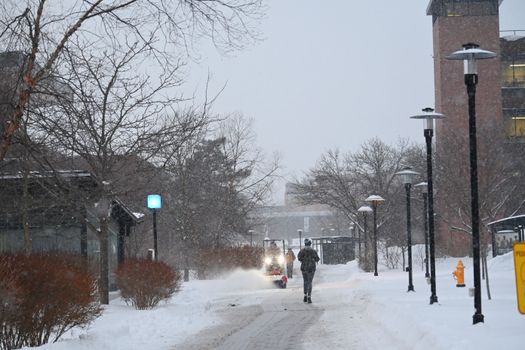
Seasonal Contracts and Trigger Depths
Most commercial properties benefit from a seasonal snow removal contract rather than calling for service one storm at a time. Seasonal contracts give the provider time to plan for the property, assign equipment, and commit to response priorities. Property managers get predictable coverage from the first snowfall to the last.
A key term in many seasonal contracts is the trigger depth. This is the snow accumulation level that automatically activates the crew. When snow reaches the agreed depth, the provider dispatches plows and ice management teams without the property manager needing to make a phone call. Trigger-depth terms remove guesswork from the process and ensure consistent service across multiple storms.
Property managers should review contract terms carefully before signing. Ask how the provider responds during back-to-back storms, how emergency callouts are handled, and which services are included in the base rate. Clear expectations on both sides prevent confusion when winter weather arrives.
How Property Managers Can Prepare for Winter
Preparation starts before the first flake falls. Property managers can take several steps to make the season run smoothly.
- Walk the property to identify high-risk areas, including sloped walkways, shaded spots where ice lingers, fire exits, and handicap parking zones.
- Confirm that the snow removal contract covers all required surfaces, from parking lots to building entrances.
- Review the trigger depth with the provider and make sure the response plan matches the property’s needs.
- Keep contact information for the snow removal team available for tenants, security staff, and on-site maintenance crews.
- Plan for snow storage so plowed snow does not block fire lanes, dumpsters, or accessibility ramps.
A property that is ready for winter recovers faster after a storm. Tenants notice when walkways are clear and parking lots are usable. Visitors notice when entrances are safe. Consistent snow removal protects the property’s reputation as well as its pavement.

Frequently Asked Questions
How much does commercial snow removal cost?
Pricing depends on the size of the property, the services included, and the terms of the contract. Providers generally base quotes on lot dimensions, the number of surfaces to clear, and whether the agreement covers a single season or individual events. Property managers should request detailed quotes and compare what each provider includes.
What is a trigger depth in a snow removal contract?
A trigger depth is the snow accumulation level that activates the snow removal crew. When snowfall reaches the agreed depth, the provider dispatches equipment automatically. This ensures the property is cleared without requiring the property manager to monitor the weather and place a call during every storm.
Does commercial snow removal include sidewalks and fire exits?
Full-service commercial snow and ice management programs clear sidewalks, fire exits, handicap parking areas, and ramps in addition to parking lots. Property managers should confirm that these surfaces are listed in the contract so pedestrian access stays safe throughout the winter.
Why is 24/7 emergency snow removal important?
Snow storms can arrive overnight, on weekends, and during holidays when regular crews are not scheduled. A provider with 24/7 dispatch can respond at any hour, which keeps the property safe and accessible before the next business day begins. Prompt response also reduces the risk of ice forming after snow is packed down.