
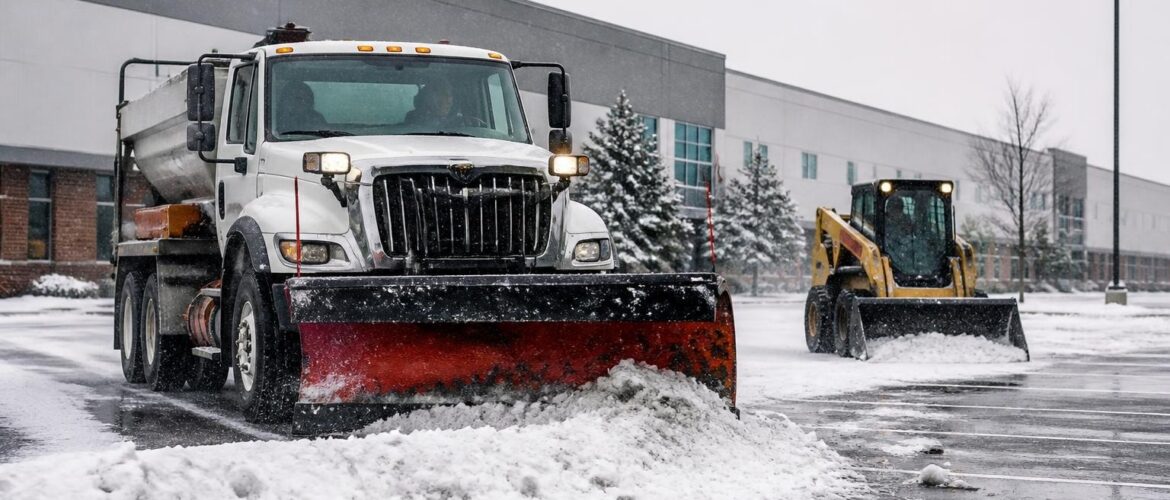
When winter storms hit the Denver Metro area, businesses face a critical decision: how to maintain safe, accessible facilities for employees, customers, and tenants. Commercial snow plowing services provide the expertise, equipment, and reliability needed to keep operations running smoothly regardless of weather conditions. Unlike residential snow removal, commercial operations require industrial-grade equipment, strategic planning, and round-the-clock availability to protect both property value and liability exposure. Understanding what separates exceptional service providers from average contractors can mean the difference between seamless winter operations and costly disruptions.
Understanding Commercial Snow Plowing Operations
Commercial snow plowing services encompass far more than simply clearing parking lots after a storm. These operations involve comprehensive winter management strategies designed to minimize downtime and maximize safety across large properties.
Professional providers utilize a fleet of specialized equipment tailored to different property types and conditions. Wheel loaders, skid steers, pickup trucks with plow attachments, and salt spreaders work in coordinated teams to address everything from loading docks to pedestrian walkways. The complexity increases exponentially when managing industrial parks spanning dozens of acres or office campuses with multiple access points.
Equipment Requirements and Fleet Management
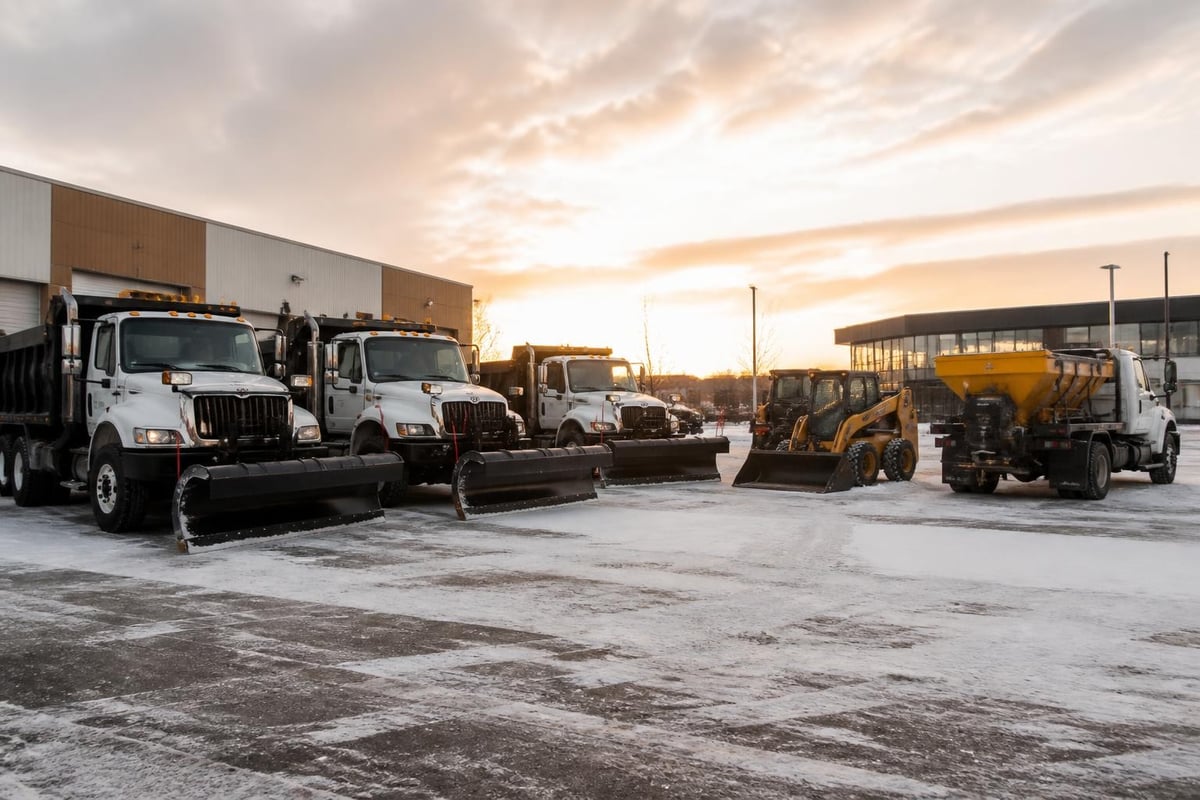
The backbone of any reputable commercial snow removal operation is its equipment inventory and maintenance program. Companies serving large commercial properties typically maintain:
- Heavy-duty plow trucks (three-quarter ton and larger) equipped with 8-10 foot blades
- Skid steers and wheel loaders for confined areas and snow stacking
- Salt spreaders and brine tanks for pre-treatment and de-icing
- Backup equipment to ensure service continuity during mechanical failures
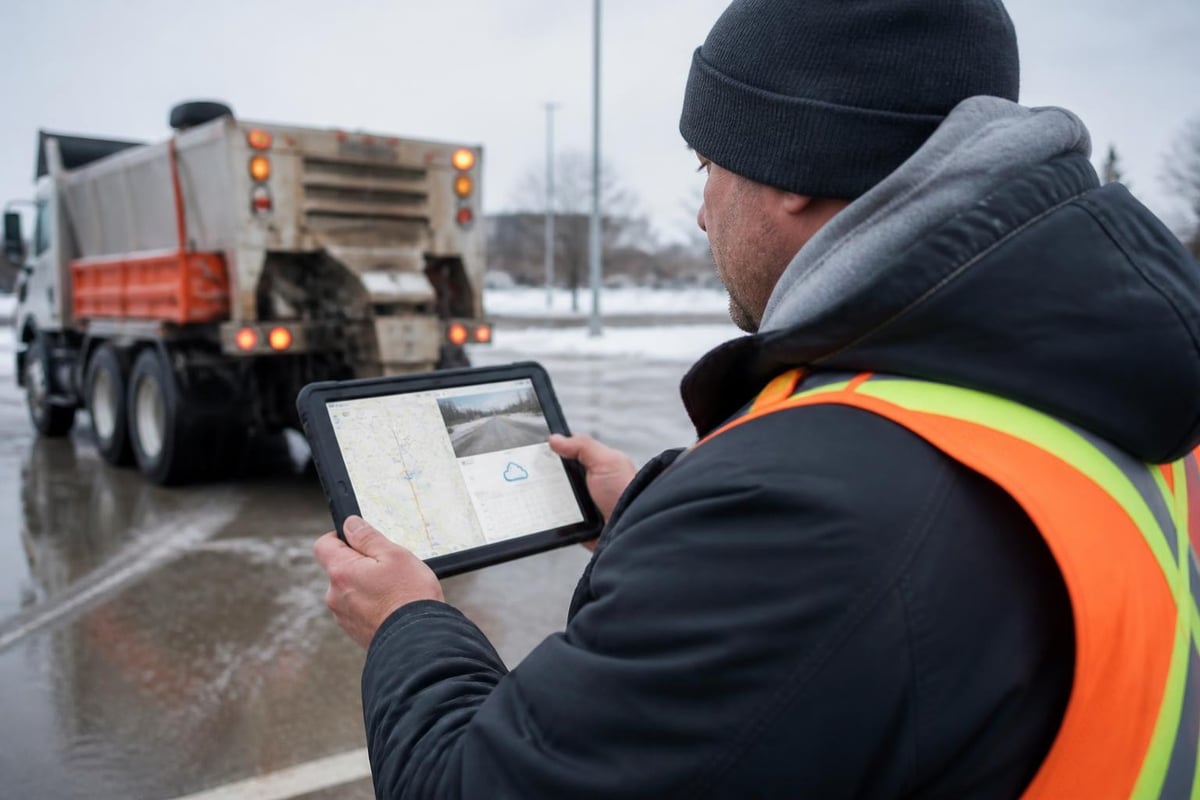
- GPS tracking systems for documentation and efficiency monitoring
Modern commercial snow plowing services invest heavily in preventive maintenance schedules to minimize equipment downtime. The best providers maintain backup units for every critical piece of equipment, ensuring that a mechanical failure never compromises service delivery. This redundancy becomes essential during extended storm events when equipment operates continuously for 24-48 hours.
Service Level Agreements and Contract Structures
Establishing clear expectations through detailed contracts protects both property managers and service providers. The SIMA’s ANSI-standard procurement guidelines provide vendor-neutral frameworks for structuring commercial snow management agreements.
Trigger Depths and Response Times
Commercial contracts typically specify precise trigger depths that activate service:
| Service Type | Typical Trigger | Response Time | Priority Level |
|---|---|---|---|
| Emergency routes | 1 inch | 1-2 hours | Critical |
| Main parking lots | 2 inches | 2-4 hours | High |
| Secondary areas | 3 inches | 4-6 hours | Standard |
| Sidewalks/walkways | 1 inch | 2-3 hours | High |
These specifications must align with actual business needs. A medical facility requires different response parameters than a warehouse operation. Property managers should evaluate their specific liability exposure and operational requirements when negotiating trigger depths.
Pricing Models and Budget Considerations
Commercial snow plowing services typically offer three primary pricing structures, each with distinct advantages depending on seasonal snowfall variability:
Per-occurrence pricing charges for each service visit based on accumulation amounts. This model provides predictability for individual events but can create budget uncertainty during heavy snow years. Properties in areas with inconsistent snowfall often prefer this approach.
Seasonal contracts establish fixed pricing for unlimited service throughout the winter season. While these agreements protect against budget overruns during severe winters, they may result in overpayment during mild seasons. The 2025-2026 winter season has seen increased adoption of seasonal contracts in the Denver area due to recent weather unpredictability.
Hourly billing suits properties requiring specialized work or those with minimal snow removal needs. This approach offers flexibility but requires careful monitoring to prevent cost overruns during extended storm events.
Liability Protection and Documentation Standards
The financial consequences of slip-and-fall incidents on commercial properties make liability management a critical component of snow removal planning. Weather-related road conditions significantly increase accident risk, and private property faces similar challenges during winter months.
Insurance Requirements and Coverage Verification
Property managers must verify that commercial snow plowing services maintain adequate insurance coverage before signing contracts. Minimum coverage typically includes:
- General liability insurance ($2-5 million aggregate)
- Commercial auto insurance for all equipment
- Workers' compensation for all crew members
- Property damage coverage for facility protection
Certificates of insurance should be reviewed annually and updated to reflect current policy periods. The best practice involves requiring providers to name the property as an additional insured on liability policies.
Service Documentation and Record-Keeping
Comprehensive documentation protects all parties in the event of liability claims. Professional providers utilize GPS-equipped vehicles that automatically log arrival times, service duration, and areas serviced. Photographic evidence timestamped before and after service provides visual confirmation of work completed.
Salt and de-icer application rates should be recorded for each event, documenting both environmental compliance and due diligence in creating safe conditions. These records become invaluable if premises liability claims arise months after a winter event.
Environmental Considerations and Sustainable Practices
The environmental impact of winter maintenance operations has become increasingly scrutinized as communities address freshwater salinization concerns. Progressive commercial snow plowing services implement strategies to minimize ecological damage while maintaining safety standards.
De-icing Product Selection and Application Rates
Traditional rock salt remains the most cost-effective de-icing solution, but its environmental consequences demand careful management. Professional operators follow salt sustainability best practices to optimize effectiveness while reducing chloride loading:
- Pre-wetting salt before application increases effectiveness by 30-50%
- Brine pre-treatment prevents ice bonding to pavement surfaces
- Calibrated spreaders ensure accurate application rates (typically 200-300 pounds per lane mile)
- Temperature-appropriate products maximize performance across conditions
Alternative de-icers including calcium chloride, magnesium chloride, and organic compounds offer benefits in specific applications. Calcium chloride works effectively at lower temperatures than rock salt, making it valuable during extreme cold snaps. However, its higher cost limits widespread use to high-priority areas or severe conditions.
Operational Planning for Large Commercial Properties
Managing snow removal across sprawling office parks, industrial facilities, or retail centers requires strategic planning that extends well beyond simply dispatching trucks when snow falls.
Site-Specific Snow Management Plans
The most effective commercial snow plowing services develop customized plans for each property, accounting for:
- Traffic patterns during different times of day
- Critical access points requiring priority clearance
- Snow storage locations that don't impede spring drainage
- Pedestrian pathways connecting parking to building entries
- Loading dock requirements for uninterrupted freight operations
- Emergency vehicle access for fire lanes and ambulance routes
These plans should be documented in writing and reviewed with property management before the season begins. Walk-through inspections identify potential obstacles, drainage concerns, and areas requiring special attention. Many successful snow removal operations conduct pre-season meetings to align expectations and refine operational details.
24/7 Availability and Emergency Response Protocols
Commercial operations cannot accommodate snow removal limited to business hours. Storms frequently arrive overnight or during weekends, requiring immediate response to ensure safe facility access when employees arrive. Emergency snow removal capabilities distinguish professional commercial services from basic contractors.
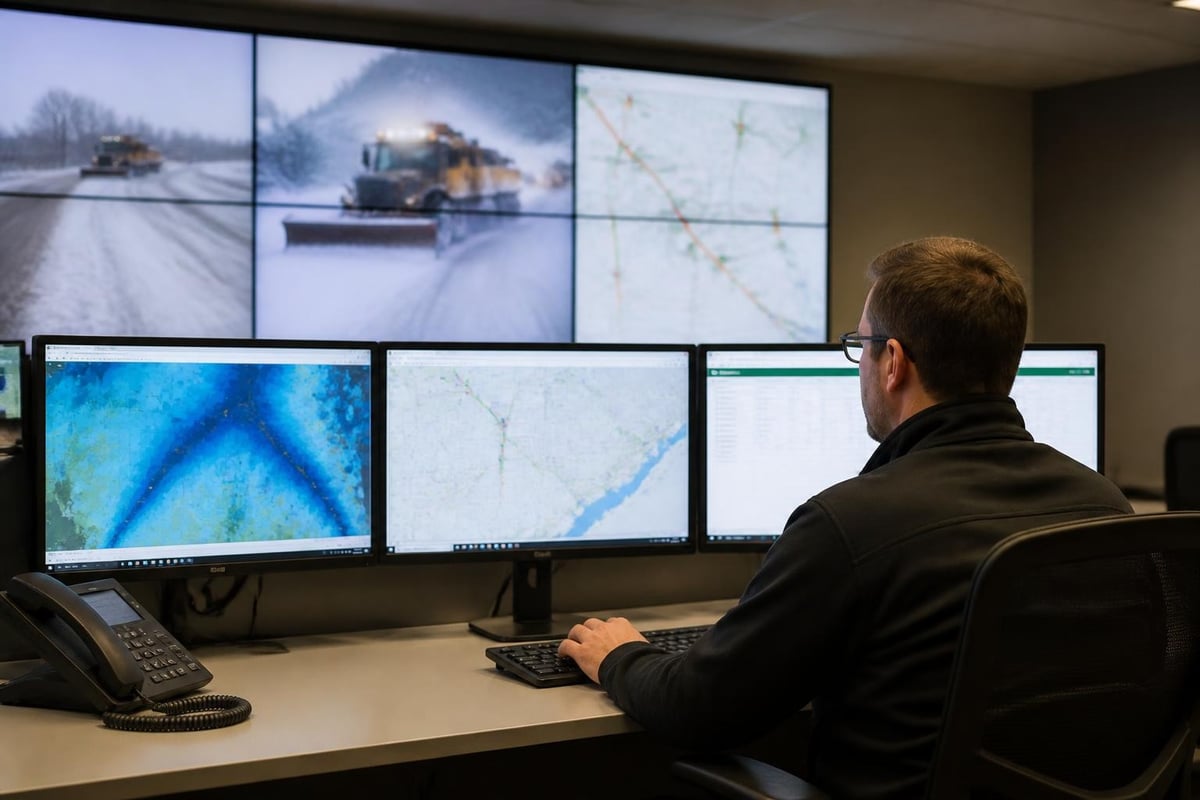
Reputable providers maintain dedicated dispatch centers monitoring weather forecasts around the clock. When storm systems approach, crews pre-position equipment and prepare for immediate deployment. Some operations implement anti-icing protocols, applying brine solutions to parking surfaces 24-48 hours before precipitation begins, preventing ice formation and simplifying post-storm cleanup.
Staff Training and Safety Protocols
The quality of commercial snow plowing services depends ultimately on the skill and professionalism of equipment operators. Investment in comprehensive training programs separates industry leaders from companies focused solely on equipment acquisition.
Operator Certification and Skill Development
Professional operators require proficiency beyond basic equipment operation. Training programs should address:
- Proper plow angle and speed for different snow conditions
- De-icer application rates appropriate to temperature and surface conditions
- Property protection techniques preventing damage to curbs, signage, and landscaping
- Safety protocols for working around pedestrians and vehicles
- Equipment inspection procedures identifying mechanical issues before failures occur
The federal training resources developed for public sector winter maintenance provide excellent frameworks that commercial operators can adapt. While these programs target municipal operations, the fundamental principles of anti-icing, material management, and operational efficiency apply equally to private sector work.
Technology Integration in Modern Snow Removal
Commercial snow plowing services increasingly rely on technology to enhance efficiency, documentation, and customer communication. GPS fleet tracking, weather monitoring systems, and automated dispatch software have transformed industry operations over the past decade.
Real-Time Communication and Customer Portals
Property managers expect transparency regarding service status during storm events. Leading providers offer web-based portals or mobile applications that display:
| Feature | Business Benefit | Implementation Method |
|---|---|---|
| Live equipment tracking | Verify service in progress | GPS-enabled fleet management |
| Photo documentation | Visual confirmation of work completed | Smartphone apps with timestamps |
| Salt usage reports | Environmental compliance tracking | Automated spreader telemetry |
| Weather forecasts | Proactive planning capability | Integrated meteorological services |
| Invoice transparency | Detailed billing breakdown | Cloud-based accounting integration |
This transparency builds trust and provides property managers with information needed to communicate with tenants, employees, and stakeholders during winter events.
Weather Monitoring and Predictive Planning
Sophisticated weather monitoring separates reactive services from proactive operations. Professional commercial snow plowing services subscribe to specialized forecasting services providing hyper-local predictions and storm timing models. These tools enable strategic decisions about crew scheduling, equipment positioning, and pre-treatment applications.
Advanced providers analyze historical weather data for each client property, identifying patterns in storm frequency, accumulation amounts, and temperature trends. This intelligence informs budget forecasting and service planning for upcoming seasons.
Selecting the Right Service Provider
Choosing commercial snow plowing services requires careful evaluation extending beyond price comparison. Property managers must assess operational capabilities, financial stability, and service philosophy to identify partners capable of protecting their investment through multiple winter seasons.
Evaluation Criteria and Due Diligence
A thorough vetting process examines multiple dimensions of contractor capability:
Experience and tenure in the local market indicates established relationships with suppliers, knowledge of regional weather patterns, and proven operational systems. Companies with decades of service history demonstrate financial stability and commitment to the industry. For instance, providers with over 45 years of local experience bring invaluable institutional knowledge about Denver's unique winter conditions.
Equipment inventory inspection verifies that contractors possess adequate resources to service your property without spreading fleets too thin across excessive client loads. Request detailed equipment lists and backup plans for mechanical failures.
Reference verification from similar properties provides insight into actual service delivery versus sales promises. Speak directly with current clients managing comparable facilities about response times, communication quality, and problem resolution.
Safety programs and training documentation demonstrate commitment to professional operations. Review injury rates, training curricula, and equipment maintenance schedules.
Contract Negotiation and Performance Standards
Well-structured agreements protect both parties while establishing clear performance expectations. The industry resources and contract templates available through professional associations provide starting points for negotiations.
Key contract provisions should address:
- Precise trigger depths for each service area
- Maximum response times from storm start to service initiation
- Documentation requirements and reporting frequency
- Communication protocols during active storms
- Damage liability and claims procedures
- Payment terms and invoice schedules
- Contract renewal procedures and price adjustment mechanisms
Performance guarantees tie contractor compensation to measurable service standards. Some agreements include penalty clauses for missed response times or quality failures, while others offer bonuses for exceptional performance during severe weather events.
HOA and Multi-Family Property Considerations
Homeowners associations and apartment communities present unique challenges for commercial snow plowing services due to extensive sidewalk networks, diverse resident schedules, and vehicle movement complications during active snow removal.
Resident Communication and Expectation Management
Success in HOA and multi-family environments requires close coordination between property management, snow removal contractors, and residents. Clear communication protocols prevent conflicts and ensure smooth operations:
- Pre-season notifications informing residents of parking restrictions during snow events
- Real-time alerts when crews are en route or actively working
- Posted signage at property entrances indicating snow removal policies
- Digital platforms (email, apps, websites) providing status updates during storms
Many disputes arise from residents unaware that vehicles parked in designated zones prevent thorough plowing. Proactive communication reduces these conflicts and enables more efficient service delivery.
Sidewalk and Pedestrian Area Management
Multi-family properties feature extensive pedestrian infrastructure requiring specialized attention. Sidewalk clearing involves different equipment and techniques than parking lot plowing, often utilizing walk-behind snow blowers, shoveling crews, and targeted de-icing applications.
Service agreements should specify sidewalk clearing timelines separate from parking area requirements. Pedestrian safety takes priority, often requiring completion before business hours when residents leave for work or school.
Industrial and Warehouse Facility Requirements
Manufacturing plants, distribution centers, and industrial parks demand commercial snow plowing services capable of managing large-scale operations without disrupting critical business functions.
Loading Dock Access and Supply Chain Continuity
Uninterrupted freight movement drives industrial facility priorities during winter weather. Loading dock areas require immediate attention, often before general parking lot clearing commences. Professional service providers coordinate closely with facility managers to understand delivery schedules and prioritize accordingly.
| Facility Type | Priority Area | Service Timing | Special Requirements |
|---|---|---|---|
| Distribution center | Loading docks | Before 5 AM | 24/7 truck access |
| Manufacturing plant | Employee parking | Before shift change | Multiple entry points |
| Cold storage | Entire perimeter | Continuous | Anti-icing critical |
| Industrial park | Main thoroughfares | Ongoing during storms | Heavy equipment clearance |
Some industrial operations require continuous snow removal during extended storm events rather than post-storm cleanup. This approach maintains operational continuity but requires significantly more resources and coordination.
Heavy Equipment Accommodation
Industrial sites often host large trucks, forklifts, and specialized vehicles requiring extra clearance and turning radius. Snow storage must avoid creating sight-line obstructions or narrow passages that impede equipment movement. Experienced contractors familiar with industrial operations understand these nuances and plan accordingly.
Office Campus and Corporate Property Management
Professional office environments demand pristine presentation and absolute safety for employees, clients, and visitors. Commercial snow plowing services supporting corporate campuses must balance thorough snow removal with aesthetic considerations and minimal disruption to business operations.
Visitor Access and Professional Appearance
First impressions matter in corporate settings. Entry drives, visitor parking, and main walkways receive priority attention to ensure clients arriving for meetings encounter professional, well-maintained facilities. Some contracts specify white-glove service standards including detailed hand-shoveling around architectural features, removal of all visible salt residue, and meticulous attention to landscaping protection.
Corporate campus management often involves coordination with multiple stakeholders including facilities managers, security personnel, and executive leadership. Professional snow removal providers assign dedicated account managers who understand corporate expectations and maintain regular communication throughout the winter season.
Selecting and managing commercial snow plowing services requires careful planning, clear communication, and partnership with experienced professionals who understand the unique demands of large-scale winter property management. Success depends on comprehensive contracts, reliable equipment, skilled operators, and commitment to safety and environmental responsibility. Denver Snow Removals brings over 47 years of commercial snow removal expertise to the Denver Metro area, serving office campuses, industrial parks, and HOA communities with 24/7 emergency response and the equipment, training, and dedication needed to keep your property safe and accessible all winter long.