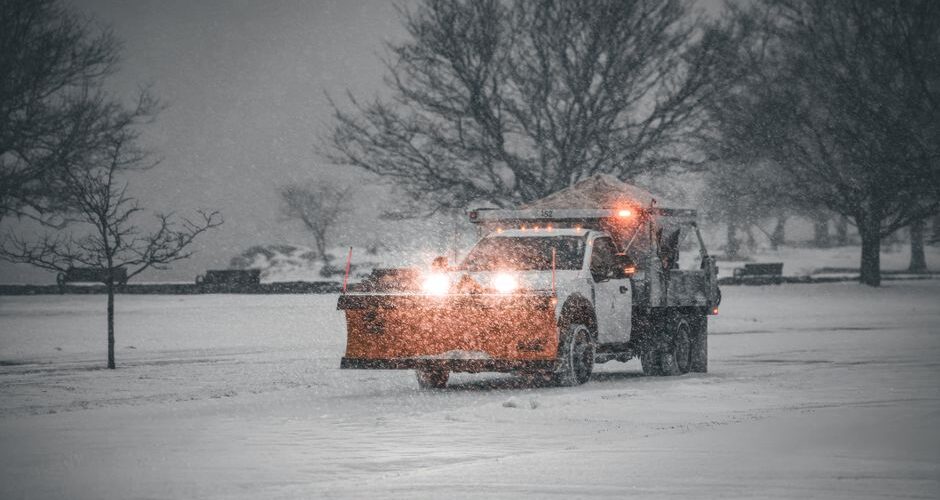
Winter weather arrives without regard for business hours, open signs, or staffing schedules. When snow begins to accumulate on a commercial property, it creates hazards that property managers, business owners, and HOA boards must handle quickly and correctly. Commercial snow and ice removal is the frontline defense against those hazards. A well-run program keeps parking lots, drive lanes, walkways, and loading zones clear enough for employees, customers, and residents to move safely from the first snowfall through the final thaw of the season.
Why Slip-and-Fall Prevention Starts Before the First Flake
The visible hazard of snow is obvious, but the more dangerous problem hides beneath the surface. Snow that is left to pile up compacts into ice, and lightly falling snow can conceal an icy layer until someone steps on it. Pedestrians carrying packages, visitors moving through a lot in the dark, and employees arriving before sunrise all depend on cleared pavement. Snow and ice removal providers describe their mission in direct terms: protecting commercial clients when winter weather threatens the safety of their employees and customers.
That mission starts before a single flake falls. A property with a defined snow response plan keeps the window of exposure short. Without a plan, a parking lot can sit under accumulating snow for hours while customers and staff continue to arrive. With a plan, crews are already deployed, plowing and treating surfaces in a sequence that protects the most heavily used areas first.
Core Services in a Commercial Snow and Ice Removal Program
A complete snow response involves more than one plow pass. Commercial providers typically combine several services to manage a property through the full life cycle of a storm, from the first flake to the final melt. The services that matter most for liability prevention include:
- Snow plowing: clearing parking areas, access roads, and service drives with plow trucks and skid steers.
- Ice management and mitigation: applying salt, sand, or liquid deicer so ice cannot bond to the pavement.
- Salting services: treating high-traffic walkways, entrances, and ramps after each plow pass.
- Snow stacking: concentrating pushed snow into designated areas so parking stalls and aisles remain usable.
- Snow hauling: removing snow from the property when stacking space is full.
- Snow melting: disposing of snow on site when a property has no room to push or haul it.
Ice management is a separate step from plowing because it addresses refreezing, which happens after the plow has passed. Many providers also apply liquid deicer before a storm arrives, giving crews a cleaner first pass and reducing the amount of salt needed later. In regions that see repeated freeze-thaw cycles, this combination of pre-treatment and ongoing ice mitigation is what keeps sidewalks and parking lots safe between storms.

The Equipment Behind a Professional Response
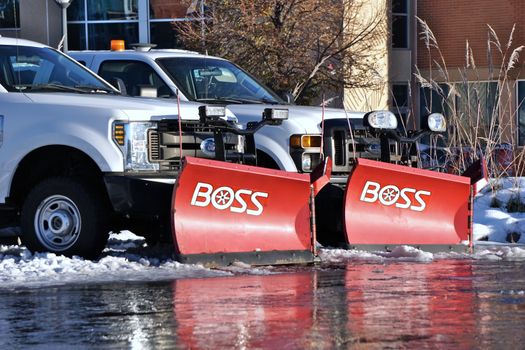
Commercial snow removal depends on equipment that can handle deep snow on paved surfaces without tearing up curbs, damaging cars, or leaving ridges of ice. Large operations rely on a mixed fleet sized for commercial work. Providers in heavy-snow regions, such as Anchorage, Alaska, cite plow trucks, sanders, front end loaders, and dump trucks as the assets that let them deliver every service a client needs. Each machine has a specific role in a coordinated response.
| Equipment | Primary Role in Snow Removal |
|---|---|
| Tractor snow plow | Clears concrete walkways and tight spaces that full-size trucks cannot reach. |
| Snow plow skid steer | Maneuvers through parking lots, ramps, and loading docks while moving heavy snow. |
| Salt spreading machine | Applies an even layer of salt across drive lanes, lots, and pedestrian paths. |
| Plow truck | Provides the main clearing force for large parking areas and access roads. |
| Front end loader | Moves deep accumulations, loads dump trucks, and clears snow from stacking areas. |
| Dump truck | Hauls snow away from the property when on-site stacking is no longer possible. |
Equipment manufacturers such as Bobcat market their snow removal machines as robust solutions for commercial and residential spaces alike. For property managers, the lesson is practical. A provider’s equipment list is a direct measure of its ability to keep pace with a storm. Skid steers and tractor plows handle the pedestrian zones where slip-and-fall risks are highest, while spreaders and sanders make sure deicing happens in the same operation as clearing.
24/7 Response Keeps Properties Safe Around the Clock
Storms do not follow a business schedule. Snow that starts at midnight can pile up before the first employee arrives, which makes the overnight hours the highest-risk period for many properties. That is why professional snow removal companies operate a 24/7 emergency response line. Commercial providers in cities like Chicago offer tailored deicing and snow plowing services with round-the-clock response so that property managers never face an unanswered call during a storm.
Around-the-clock availability matters for slip-and-fall prevention because the danger builds during the earliest stage of a storm. When crews wait for the snow to stop, customers are already walking across accumulating surfaces and hidden ice. When crews deploy overnight, they clear and treat lots in time for the morning rush. Continual monitoring keeps surfaces safe through a storm that lasts several days and across the freeze that follows it.

Seasonal Contracts and Pre-Storm Planning Keep Liabilities Low
The most dependable way to reduce slip-and-fall risk is to have a snow program in place before winter arrives. Commercial providers encourage managers to schedule services in advance instead of calling from a parking lot during an active storm. Seasonal contracts with trigger-depth terms define exactly when a crew deploys, so no one has to make a judgment call in the middle of a blizzard. When those terms are clear, the response starts automatically and the liability window stays small.
Advance planning also gives the provider time to learn the property. A crew that knows where the main entrances are, which walkways get the most foot traffic, where fire lanes are located, and where snow can be stacked without blocking sight lines will clear a site faster and more safely than a crew seeing it for the first time. Providers in markets such as Dallas advertise services that help businesses plan ahead for storms and respond quickly when they arrive. That combination of preparation and speed is exactly what liability prevention requires.
What to Look for in a Commercial Snow and Ice Removal Provider
Not every snow removal contract delivers the same level of protection. Commercial properties need a provider with the experience, equipment, and response culture to handle serious weather. Property managers and HOA boards should evaluate several factors before signing a seasonal agreement:
- Emergency availability: Does the company answer calls 24/7, and does it have crews on standby before a storm hits?
- Fleet size: Does the provider operate plow trucks, sanders, front end loaders, and skid steers at a commercial scale?
- Range of services: Can the company handle plowing, ice management, salting, snow stacking, and snow hauling under one contract?
- Contract clarity: Does the agreement define trigger depths and spell out when each service activates?
- Local experience: Does the provider have a record of managing properties in your region and its specific climate?
Providers with deep local roots tend to deliver the most consistent results. Denver-based commercial snow removal companies with more than 47 years of experience have managed parking lots, industrial parks, HOA communities, and office campuses through countless snow events. That kind of history means the crews have seen the patterns that cause the most slip-and-fall incidents and have refined their response plans accordingly. Property managers who choose an experienced partner gain a team that treats snow removal as a safety responsibility, not just a seasonal chore.
Frequently Asked Questions
When should I schedule commercial snow and ice removal?
Schedule your contract well before the first storm of the season. Commercial providers build their client lists in the fall, and a seasonal agreement signed early gives the crew time to inspect your property and set trigger-depth terms. Waiting to call until snow is already falling often means the provider’s fleet is committed to other clients, and your lot stays untreated during the most dangerous hours.
What is included in a commercial snow and ice removal program?
A complete program includes plowing parking lots and access roads, applying salt or liquid deicer to walkways and heavy-traffic areas, and managing accumulating snow through stacking or hauling. Ice management is distinct from plowing because it prevents refreezing after the plow passes. Larger providers may also offer snow melting for properties that have no place to store pushed snow.
How fast do crews respond to a snow event?
Providers with a 24/7 emergency response line can dispatch crews at any hour, including overnight and on weekends. Response speed also depends on your contract. Seasonal agreements with trigger-depth terms activate crews automatically once the snow reaches a set depth, which removes the delay that comes from waiting for a property manager to place a phone call during a storm.
How does commercial snow removal differ from residential plowing?
The main difference is scale and coordination. Commercial crews use plow trucks, front end loaders, sanders, and dump trucks sized for parking lots and campus roads, while residential work focuses on driveways and small walkways. Commercial sites also require planning for fire lanes, handicapped access, delivery zones, and pedestrian paths, so route coordination is far more complex than clearing a single driveway.