

Winter sidewalk maintenance represents one of the most critical safety responsibilities for commercial property managers and business owners throughout the Denver Metro area. A properly maintained snow sidewalk ensures safe pedestrian access, reduces liability exposure, and demonstrates professionalism to tenants, customers, and visitors. With Colorado's variable winter weather patterns delivering everything from light dustings to multi-foot accumulations, understanding the comprehensive approach to sidewalk snow management has never been more important for maintaining operational continuity and protecting your investment.
Understanding Municipal Snow Sidewalk Requirements
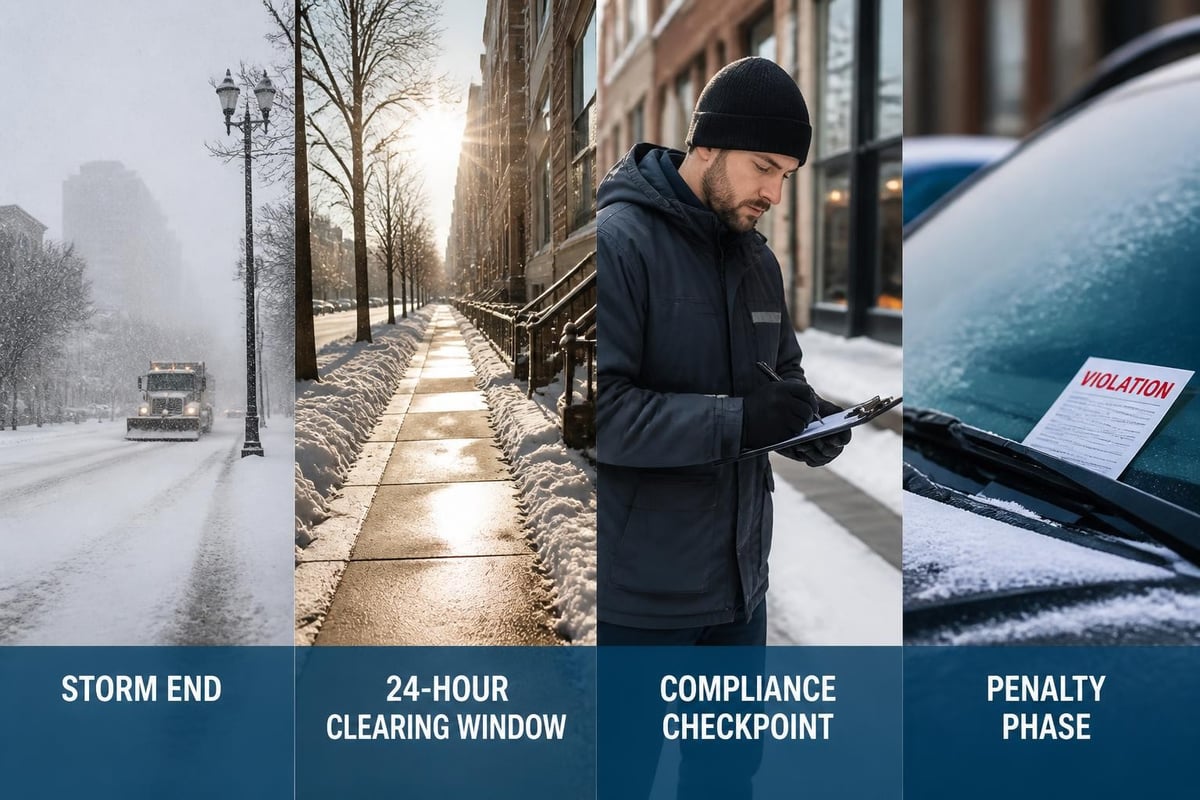
Commercial property owners face specific legal obligations when it comes to sidewalk snow removal. Most municipalities in the Denver Metro area enforce strict timelines for clearing pedestrian pathways following winter weather events.
Legal Timelines and Compliance
Denver and surrounding communities typically require property owners to clear snow and ice within 24 hours of storm cessation. Some jurisdictions impose even shorter windows during business hours, recognizing the high pedestrian traffic during commercial operations. Municipal codes like Broomfield’s sidewalk ordinance outline specific requirements and potential penalties for non-compliance.
Failure to maintain a clear snow sidewalk can result in:
- Financial penalties ranging from $150 to $1,000 per day
- Liability exposure for slip-and-fall injuries
- Municipal clearing with costs billed back to the property owner
- Damage to professional reputation and tenant relations
Property managers should document all clearing activities, including timestamps, methods used, and weather conditions. This documentation provides crucial protection in the event of insurance claims or legal disputes.
Snow Sidewalk Clearing Techniques and Equipment
Professional snow sidewalk maintenance requires appropriate equipment selection based on property size, surface type, and typical snow accumulation patterns. The right tools make the difference between efficient operations and wasted labor hours.
Equipment Selection Matrix
| Property Size | Primary Equipment | Secondary Tools | Application Method |
|---|---|---|---|
| Small (< 5,000 sq ft) | Walk-behind snowblower | Shovels, ice scrapers | Manual finish work |
| Medium (5,000-20,000 sq ft) | Compact sidewalk plow | Broadcast spreader | Mechanical + spot treatment |
| Large (> 20,000 sq ft) | Dedicated sidewalk machines | Liquid brine applicators | Systematic coverage |
Specialized sidewalk equipment has evolved significantly, offering GPS tracking, pre-wetting capability, and precise application rates. These advances reduce material waste while improving coverage consistency across your snow sidewalk network.
Clearing Sequence Optimization
Professional operators follow a systematic approach to maximize efficiency:
- Pre-storm preparation with anti-icing treatments 24-48 hours before predicted snowfall
- During-storm monitoring to determine optimal intervention timing
- Initial pass removing bulk accumulation while snow remains light and fluffy
- Edge definition creating clean boundaries along landscaping and building entrances
- Surface treatment applying deicing materials to prevent bonding
- Final inspection confirming ADA-compliant clearance and safe transitions
This sequenced approach prevents the formation of ice layers that dramatically increase clearing difficulty and extend the time a snow sidewalk remains hazardous to pedestrians.
Material Selection and Environmental Considerations
Deicing material selection significantly impacts both snow sidewalk performance and environmental sustainability. The traditional reliance on rock salt faces increasing scrutiny as communities recognize long-term ecological consequences.
Deicing Product Comparison
Sodium Chloride (Rock Salt)
- Effective temperature range: 15°F to 32°F
- Cost-effective for large areas
- Corrosive to concrete and metals
- Environmental concerns documented by EPA research on salt impacts
Calcium Chloride
- Works down to -25°F
- Faster ice melting action
- Higher material cost
- Less concrete damage than sodium chloride
Magnesium Chloride
- Effective to -13°F
- Reduced environmental impact
- Gentler on vegetation
- Moderate price point
Potassium Acetate
- Airport-grade performance
- Minimal corrosion
- Biodegradable formula
- Premium pricing
The EPA’s 2024 guidance on winter deicing emphasizes the growing concern over freshwater salinization, with roadway and sidewalk applications contributing significantly to groundwater contamination. Forward-thinking property managers increasingly adopt precision application techniques and alternative products to minimize environmental footprint while maintaining a safe snow sidewalk.
ADA Compliance and Accessibility Standards
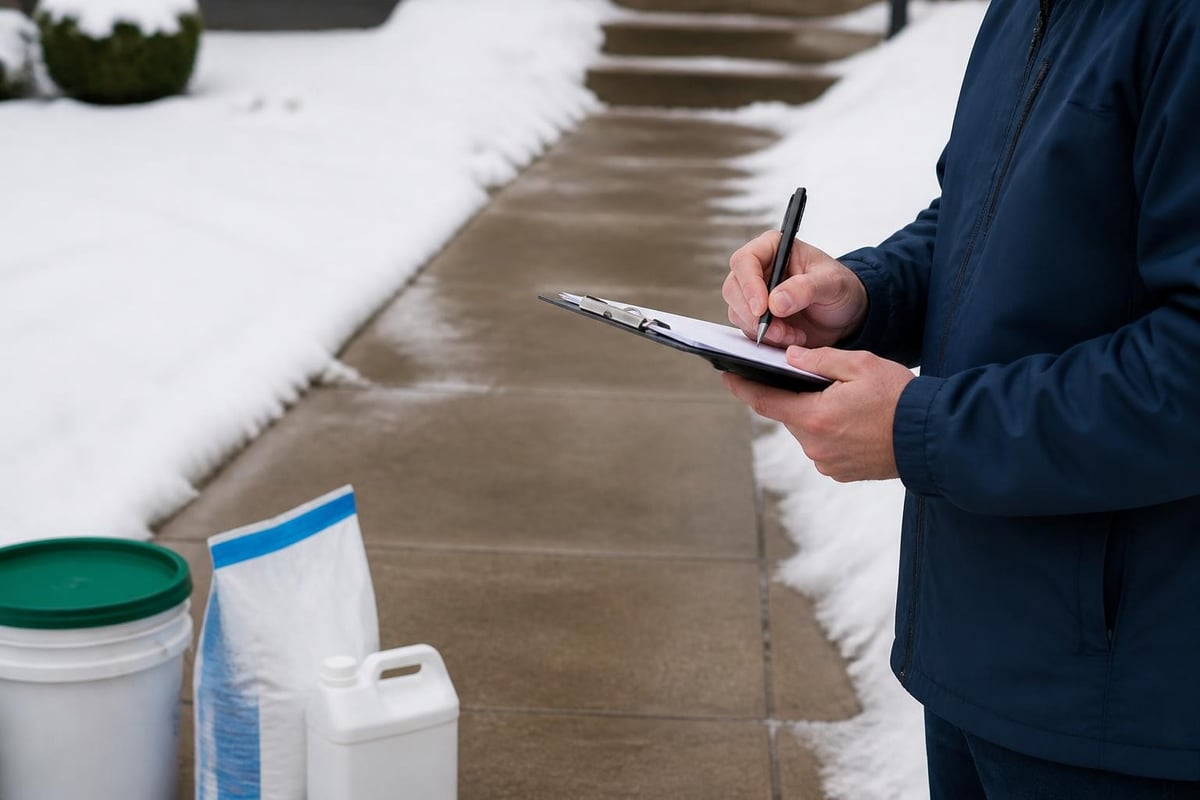
Federal accessibility requirements apply year-round, making snow sidewalk maintenance a civil rights issue beyond simple liability management. Commercial properties must ensure continuous accessible routes for individuals with mobility impairments.
Critical Clearance Specifications
The Americans with Disabilities Act mandates minimum clear width requirements that remain enforceable regardless of weather conditions:
- 36-inch minimum clear path for straight sections
- 48-inch minimum at turns and direction changes
- 60-inch preferred for two-way pedestrian traffic
- Maximum 2% cross-slope to prevent wheelchair drift
Snow piles, ice accumulation, and temporary narrowing all constitute ADA violations. Professional planning standards for pedestrian facilities provide detailed guidance on maintaining accessible routes during winter operations.
Property managers should prioritize:
- Accessible building entrances and connecting paths
- Designated accessible parking to entrance routes
- Public transit stop connections
- Crosswalk approach areas
Strategic snow stockpiling prevents accessibility barriers. Rather than piling snow along the cleared snow sidewalk edges where it narrows the pathway, professional services transport excess accumulation to designated storage areas.
Proactive Winter Sidewalk Maintenance Programs
Reactive snow removal costs more and delivers inferior results compared to systematic preventive programs. Commercial properties benefit from comprehensive maintenance contracts that address all winter challenges.
Pre-Season Preparation Checklist
- Drainage assessment to identify pooling areas that create ice patches
- Surface repairs addressing cracks, heaving, and deterioration
- Lighting evaluation ensuring adequate visibility during clearing operations
- Material stockpiling securing deicing products before supply shortages
- Equipment servicing preventive maintenance on all mechanical systems
- Staff training reviewing protocols and safety procedures
Professional snow removal services like Denver Snow Removals conduct comprehensive site assessments before winter, identifying problem areas and developing customized response plans that account for each property's unique characteristics.
Storm Response Protocols
| Storm Severity | Response Time | Service Level | Material Application |
|---|---|---|---|
| Light (0-3") | 4-6 hours | Single pass | Spot treatment |
| Moderate (3-6") | 2-4 hours | Multiple passes | Full coverage |
| Heavy (6-12") | Continuous | On-site presence | Aggressive treatment |
| Severe (12"+) | Pre-positioned | 24/7 operations | Maximum application |
Understanding Denver’s average snowfall patterns enables realistic planning and appropriate resource allocation throughout the winter season.
Specialized Applications for Commercial Properties
Different commercial property types present unique snow sidewalk challenges requiring tailored approaches.
Office Campus Considerations
Multi-building campuses demand coordinated clearing sequences that maintain accessibility between structures. Prioritization matrices identify critical paths:
- Primary entrances and reception areas
- Inter-building connector sidewalks
- Parking lot pedestrian routes
- Peripheral and secondary pathways
- Recreational or amenity area walks
Large office properties often benefit from dedicated sidewalk equipment that operates independently from parking lot plowing, ensuring simultaneous completion rather than sequential delays.
Retail Center Requirements
Shopping centers face compressed clearing windows due to early morning deliveries and customer expectations. Pre-dawn operations ensure snow sidewalk clearance before store openings, with continuous monitoring during business hours for refreeze conditions.
High-traffic retail environments require:
- Frequent reapplication of deicing materials due to foot traffic distribution
- Immediate response to changing conditions during operating hours
- Aesthetic considerations maintaining professional appearance
- Loading zone coordination balancing delivery access with pedestrian safety
Industrial Park Challenges
Manufacturing and distribution facilities operate around the clock, making continuous access non-negotiable. Snow sidewalk maintenance must accommodate:
- Shift changes with concentrated pedestrian movement
- Heavy foot traffic between parking and facility entrances
- Specialized footwear considerations for safety boot compatibility
- Extended pathway networks connecting multiple buildings
Industrial properties increasingly adopt embedded snow-melting systems for critical walkways, eliminating manual clearing requirements for high-priority routes.
Advanced Technologies and Innovation
Modern snow sidewalk management leverages technology for improved efficiency and documentation.
GPS Tracking and Documentation
Fleet management systems provide real-time visibility into clearing operations:
- Time-stamped location data proving service completion
- Route optimization reducing fuel consumption and labor hours
- Performance metrics quantifying productivity and efficiency
- Customer portals offering transparency and peace of mind
These systems transform snow removal from an invisible overnight service into a documented, verifiable business process.
Weather Intelligence Integration
Professional services integrate multiple data sources for accurate storm prediction:
- National Weather Service forecasts and winter weather alerts
- Hyperlocal weather stations providing micro-climate data
- Pavement temperature sensors triggering pre-treatment operations
- Moisture detection systems identifying black ice formation
This intelligence enables proactive response, treating surfaces before precipitation bonds to pavement and creates hazardous snow sidewalk conditions.
Liquid Anti-Icing Programs
Pre-storm liquid brine application represents the most significant advance in winter maintenance efficiency. Applied 24-48 hours before snowfall, liquid treatments:
- Prevent snow-pavement bonding
- Reduce required deicing material by 30-50%
- Enable mechanical removal with minimal scraping effort
- Lower environmental impact through precision application
Brine programs require initial infrastructure investment but deliver substantial long-term cost savings and superior snow sidewalk performance.
Liability Management and Risk Mitigation
Slip-and-fall incidents on commercial properties generate significant legal exposure, with average settlement costs exceeding $20,000 and jury awards reaching six figures for serious injuries.
Documentation Best Practices
Comprehensive record-keeping provides essential protection:
- Service logs with arrival, completion, and material application records
- Photographic evidence documenting conditions before and after service
- Weather data establishing storm timing and intensity
- Material usage proving appropriate treatment application
- Inspection reports showing diligent monitoring
Professional snow removal providers maintain these records as standard practice, offering property owners crucial protection when incidents occur.
Insurance Considerations
Commercial general liability policies typically cover snow-related incidents, but insurers increasingly scrutinize winter maintenance practices. Property owners should:
- Verify contractor carries adequate liability coverage
- Confirm workers' compensation insurance for all personnel
- Document contractor certifications and training
- Maintain umbrella policies for catastrophic claims
- Review policy exclusions related to snow removal timing
Partnering with established snow removal services like those offering comprehensive commercial snow removal demonstrates due diligence that insurers recognize when evaluating claims and setting premiums.
Sustainable Snow Sidewalk Practices
Environmental stewardship and operational efficiency increasingly align as property managers recognize the long-term costs of traditional approaches.
Material Reduction Strategies
- Calibrated spreaders applying precise quantities rather than over-application
- Pre-wetting systems activating granular products with liquid for improved performance
- Strategic stockpiling concentrating materials where melting creates maximum benefit
- Alternative products using less environmentally harmful formulations
These practices reduce material costs while minimizing environmental impact, creating financial and sustainability benefits.
Organic and Alternative Solutions
Innovation continues introducing new snow sidewalk treatment options:
- Agricultural byproducts like beet juice and cheese brine
- Sand and aggregate for traction without chemical melting
- Heated pavement systems for zero-chemical critical areas
- Covers and canopies preventing accumulation on priority routes
While some alternatives carry higher upfront costs, total cost of ownership calculations often favor sustainable approaches when considering concrete preservation, landscaping protection, and reduced environmental remediation.
Integration with Comprehensive Property Maintenance
Snow sidewalk management exists within the broader context of year-round property maintenance programs. Forward-thinking property managers view winter services as one component of comprehensive facility care.
Seasonal Transition Planning
Spring reveals winter's impact on sidewalk infrastructure:
- Crack sealing addressing freeze-thaw damage
- Joint repair fixing expansion gaps compromised by ice
- Surface cleaning removing deicing residue and stains
- Drainage maintenance clearing systems of sand and debris
Proactive spring restoration prevents minor winter damage from escalating into major summer reconstruction projects.
Year-Round Service Integration
Property service providers increasingly offer bundled programs connecting:
- Winter snow and ice management
- Spring cleanup and repairs
- Summer landscape maintenance
- Fall preparation and winterization
This integration creates accountability, eliminates coordination hassles, and often delivers cost savings compared to managing multiple specialized contractors. For properties requiring specialized services, providers also offer targeted solutions like parking garage deicing that address unique facility requirements.
Professional snow sidewalk management protects people, property, and business continuity throughout Colorado's challenging winter season. By combining appropriate equipment, proven techniques, and proactive planning, commercial property managers ensure safe, accessible, compliant pedestrian environments regardless of weather conditions. With 47 years of experience serving the Denver Metro area, Denver Snow Removals provides the expertise, equipment, and 24/7 responsiveness that commercial properties demand for reliable winter sidewalk maintenance.