
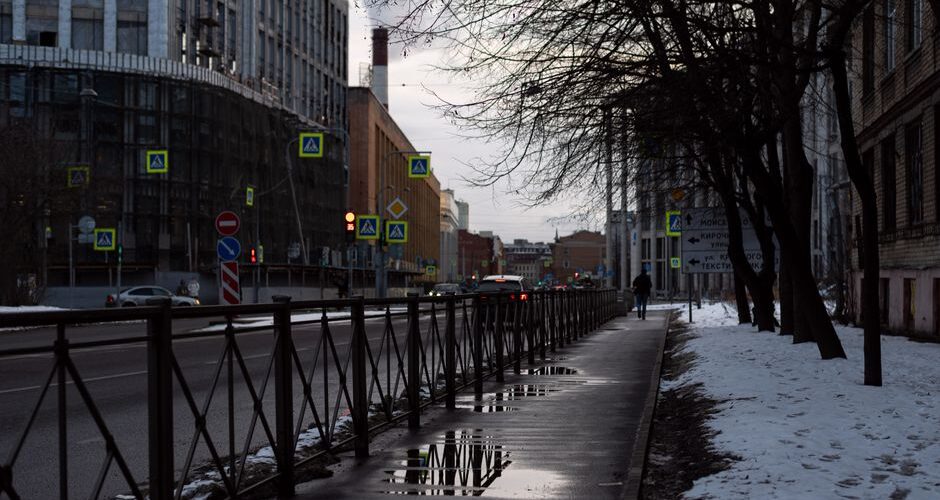
Snow in Denver does not fall on one responsible party. It falls on a city with its own plow fleet, on property owners with sidewalks attached to their buildings, and on the businesses that lease or manage those properties. For anyone responsible for a retail center, office campus, warehouse or HOA community, the rules that matter most are the ones covering the pavement a customer walks on before they ever reach your door.
Denver places sidewalk snow and ice clearing on property owners, including the ADA ramps and bus stops connected to those sidewalks. The City and County of Denver handles emergency snow response on the street network through the Department of Transportation and Infrastructure, known as DOTI. Understanding where the city’s obligation ends and yours begins is the difference between a cleared frontage and a complaint, a slip claim or a violation notice.
Who Clears What in Denver
Denver’s snow responsibilities are shared across several layers. A Denver neighborhood association page on the topic notes that multiple entities take on snow removal, from the City and County of Denver down to individual property owners. That layering is exactly why business owners sometimes assume the city will handle a sidewalk that is legally their responsibility.
The city’s role, per denvergov.org, is emergency snow response delivered by DOTI. The city describes that program as efficient, effective and fiscally responsible. That is a street-level function aimed at keeping main routes passable.
Your role is the frontage. Denver requires property owners to clear snow and ice from their sidewalks, and that requirement extends to adjacent ADA ramps and bus stops. If your building has a curb ramp at the corner or a bus stop along the block, that pavement falls inside your clearing obligation, not outside it.
Sidewalks, ADA Ramps and Bus Stops
These three items travel together in Denver’s requirement. A plowed street does not help a pedestrian in a wheelchair if the ramp at the corner is packed with ice, and it does not help a bus rider if the stop is buried. Commercial property managers should treat the full pedestrian path along the frontage as one continuous zone: the sidewalk, the ramps at each intersection, and any transit stop that touches the property line.
For a multi-tenant retail center, this often means the clearing obligation runs the length of the building and around the corners. For an industrial park, it may mean long stretches of walkway that get far less foot traffic and therefore far less attention, which is exactly where ice lingers and thickens.
Confirm Deadlines and Penalties With the City
The published sources used for this article do not state a specific hourly deadline for clearing Denver sidewalks after a storm, and they do not state a dollar amount for any sidewalk snow fine. Those details change and should be confirmed directly with the City and County of Denver rather than assumed. A 2024 Denver7 report on Denver snow removal rules and fines cites 720-913-SNOW (7669) as a number to call. That same report also lists 303-739-7280 for questions about the snow ordinance, though it is not clear from the report which jurisdiction that line belongs to, so verify before relying on it.
How the City Handles Streets: DOTI’s Emergency Response
DOTI manages Denver’s emergency snow response. The city’s own service listing groups sweeping, snow removal and sidewalk programs together on denvergov.org, which is a useful reminder that sidewalk policy and street plowing are administered under the same city umbrella even though the labor falls on different parties.
What the city does not do is plow residential driveways or private sidewalks. Nothing in the available sources suggests otherwise, and businesses should plan accordingly. Your parking lot, your drive aisle, your walkways and your frontage are private property obligations.
What Historic Fleet Numbers Show
A Denver Public Library history article dated March 2, 2019, described Denver Public Works as operating a fleet of 70 large plows covering roughly 1,900 miles of main streets, plus a team of 36 smaller plows. Those figures are historical. They predate the DOTI naming now used on denvergov.org, and no current fleet size or mileage figure is available in the sources reviewed here. Treat the 2019 numbers as context for how large the city’s street network commitment is, not as today’s capacity.
Snow on Trees: City Guidance Worth Passing Along
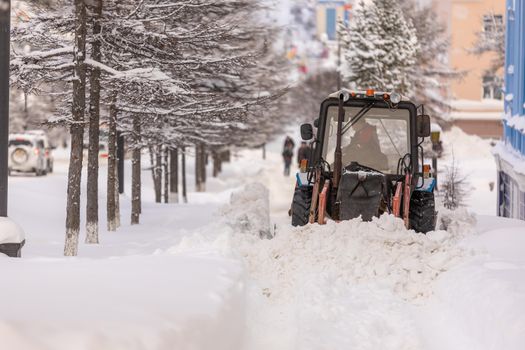
The City and County of Denver’s official account has posted guidance on removing snow from trees. The advice is straightforward: do not attempt to knock snow off a tree if utility lines are nearby, and use a broom to gently brush or shake the snow loose rather than striking the branches.
That guidance applies to any landscaped frontage. Heavy snow loading can break limbs over sidewalks, parking areas and walkways, and a broken limb near a power line turns a landscaping task into a safety call. Facility teams clearing a commercial campus should know where the utility lines run before anyone touches a snow-laden tree.
Denver Snow Angels
Denver Snow Angels is listed by the City and County of Denver under its Human Rights and Community Partnerships department as a program or initiative. The available source material does not explain whether the program matches volunteers with residents who need help, provides a city clearing service, or does both.
What is clear is that the program name appears alongside the city’s statement of the sidewalk requirement, which indicates it exists to help address the same obligation. Property managers who want to know how the program operates should check the city page directly rather than assume it covers commercial frontage. It is unlikely to substitute for a commercial clearing contract.

Private Snow Vendors Are Not City Services
Several private companies advertise snow services in Denver. DenverSnow.com states that it plows in the City and County of Denver proper on surface streets only, does not serve I-25 or I-70 during blizzards, and describes itself as licensed, insured and GPS tracked. Zenith Services Co. advertises commercial snow and ice management in Denver, including plowing, salting and walkway clearing.
Nothing in the available sources indicates that these vendors are affiliated with or endorsed by the City and County of Denver. They are private businesses. That distinction matters when a property manager is comparing options, because a private contract is the mechanism that actually delivers frontage clearing, and a city program is not a backup plan for a commercial sidewalk.
Planning Frontage Clearing for a Commercial Property
Denver’s split responsibility model creates a practical planning problem. The street may be plowed while your sidewalk is not, and the two conditions can exist on the same block at the same time. Commercial properties need a plan that covers the pedestrian path independently of whatever the city is doing on the roadway.
A few elements are worth building into any seasonal agreement:
- Coverage that names sidewalks, ADA ramps and bus stops explicitly, not just parking lot and drive aisle surfaces.
- Trigger depths defined in writing so service starts on measurable accumulation rather than a phone call after the fact.
- Ice control on walkways, not only on vehicle surfaces, since the frontage is where pedestrian claims originate.
- A process for reporting completed work, including time-stamped documentation that shows when clearing happened.
- Coordination between plow crews pushing snow in the lot and crews clearing the walkway, so cleared sidewalk does not get buried by a parking lot pass.
Snow hauling deserves separate attention at retail and office sites. When lot capacity is tight, pushing snow to the perimeter creates sightline problems and reduces parking count. Removing snow from the site avoids that, but it needs to be arranged before the season starts, not during the storm.
Why the Frontage Gets Overlooked
Parking lots are visible and immediate. A lot that is not plowed generates calls within minutes. Sidewalks generate calls later, usually after a pedestrian slips or a customer complains. On a large campus, the frontage can total more linear feet than the drive aisles, and it may cross multiple ownership or management boundaries.
Mapping the obligation before the first storm is the simplest fix. Walk the property line, mark where the sidewalk starts and ends, identify every ramp and transit stop, and confirm who is responsible for each segment. That map becomes the scope document for a snow contract and the reference point when a question arises in January.
Where to Verify Denver Snow Requirements
denvergov.org is the authoritative source for city snow policy, and it lists snow removal and sidewalk programs among its service topics. The DOTI snow removal page covers the city’s street response, and the Denver Snow Angels page sits alongside the statement of the property owner sidewalk requirement. For questions about the ordinance, the Denver7 report cites 720-913-SNOW (7669).
Because deadlines, penalties and program details are not fully published in the sources reviewed here, business owners should confirm current specifics with the city before finalizing a compliance plan. Building a contract around an assumed deadline is a risk that costs more to fix than to prevent.
Frequently Asked Questions
Does Denver clear sidewalks in front of businesses?
No. Denver requires property owners to clear snow and ice from their sidewalks, including adjacent ADA ramps and bus stops. The City and County of Denver’s DOTI program handles emergency snow response on the street network. A plowed road does not mean the sidewalk along your building has been cleared, so commercial properties need their own frontage plan.
Is Denver Snow Angels a city clearing service for businesses?
Denver Snow Angels is listed under the city’s Human Rights and Community Partnerships department as a program or initiative. The available sources do not explain whether it matches volunteers, provides clearing, or does both. Commercial property managers should check the city page directly and should not assume it covers business frontage or replaces a seasonal snow contract.
How many plows does Denver operate?
A 2019 Denver Public Library article described Denver Public Works as having 70 large plows covering roughly 1,900 miles of main streets, plus 36 smaller plows. Those figures are historical and predate the current DOTI naming. No current fleet size or mileage figure appears in the sources reviewed, so treat the 2019 numbers as background only.
Can I hire a private company for sidewalk snow removal in Denver?
Yes. Private vendors advertise commercial plowing, salting and walkway clearing in Denver, and they are separate from the city. Nothing in the available sources indicates any private vendor is affiliated with or endorsed by the City and County of Denver. A written seasonal contract is the way to guarantee frontage clearing, including sidewalks, ramps and bus stops.
What should a commercial snow contract cover for business frontage?
It should name sidewalks, ADA ramps and bus stops along with parking lot surfaces, define trigger depths in writing, include walkway ice control, and require documentation of completed work. It should also address coordination between plow crews and walkway crews, and arrange snow hauling in advance for tight sites where pushing snow to the perimeter reduces parking or blocks sightlines.