You arrive at your property before sunrise and the asphalt looks perfectly dry, but a single step sends you sliding across a lethal, invisible sheet of black ice. For many local business owners, this is the nightmare scenario that leads to expensive personal injury claims and rising insurance premiums. Relying on reactive measures simply isn’t enough in our unique climate. That’s why professional commercial de-icing services in Denver prioritize prevention rather than just reaction.
We understand the anxiety of wondering if your walkways are safe after a midnight temperature drop. It’s frustrating when standard rock salt fails during a deep Denver freeze, leaving you vulnerable to liability. This guide will teach you how to identify these invisible hazards and implement a proactive plan to eliminate ice before it even forms. We will explore how our 44 years of local experience at Snow Removal Denver, combined with advanced liquid management techniques, ensures safe passage for your customers 24/7. By following this professional guide, you can reduce your insurance risks and take the stress out of winter weather management for good.
Key Takeaways
- Learn why the transparency of black ice makes it a silent threat and how it creates immediate liability for property owners.
- Understand the physics of Denver’s melt-freeze cycle to predict when runoff will transform into hazardous sheets of ice.
- Conduct a winter safety audit to pinpoint high-risk zones and prevent slips in high-traffic areas like entryways and ramps.
- Evaluate the strategic benefits of the commercial de-icing services denver companies use to stop ice bonds before they form.
- Discover how professional 24/7 weather monitoring provides an anxiety-free solution that protects your employees and customers around the clock.
What Is Black Ice and Why Is It a “Silent Threat” to Your Business?
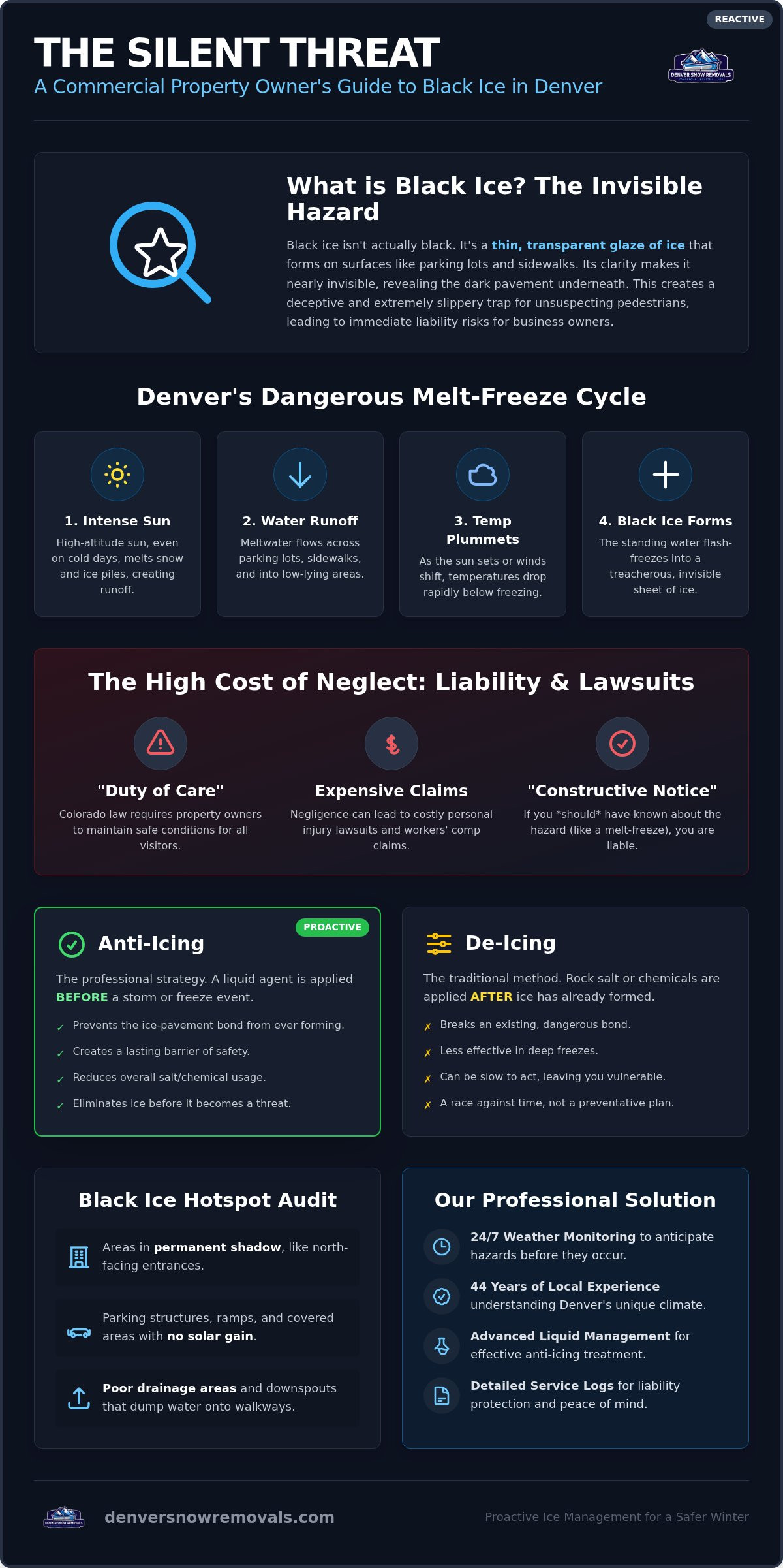
To many property managers, What is black ice? remains a critical question with a dangerous answer. It is a thin, transparent coating of glazed ice that forms on surfaces like parking lots and sidewalks. It isn’t actually black. It is perfectly clear. It appears black because it lacks the air bubbles found in snow or white ice, allowing the dark color of the pavement beneath to show through. This transparency makes it nearly impossible to see, especially during the early morning hours when your employees arrive for work.
This hazard is the ultimate silent threat for any commercial property. Snow is obvious and easy to spot. You know when it is time to call for a plow. Black ice hides in plain sight and acts as a trap. It creates a lethal, slippery surface that catches pedestrians off guard. Utilizing professional commercial de-icing services denver businesses trust is the only reliable way to manage this invisible danger before it causes an accident. We focus on providing safe passage so you don’t have to worry about what is lurking on your asphalt.
The High Cost of Neglect: Liability and Lawsuits
Colorado premises liability laws hold property owners to a strict “duty of care.” You are legally responsible for maintaining safe conditions for anyone entering your business. In slip-and-fall litigation, courts often focus on “constructive notice.” This means if the ice was present long enough that you should have known about it, you are liable. If daytime melting leads to nighttime freezing, the law expects you to anticipate that hazard.
Neglecting ice management leads to expensive workers’ compensation claims and personal injury lawsuits that can devastate your bottom line. Documentation is your best defense against these claims. Our team provides detailed service logs to prove you took proactive steps to protect your site. With over 44 years of experience, we understand the local legal landscape and the necessity of keeping your property clear of invisible hazards.
Common Misconceptions About Ice Formation
Many managers believe it must rain or snow for black ice to form. This is a dangerous myth. High humidity levels and a specific dew point can cause moisture to settle on cold pavement and freeze instantly. This “flash freezing” occurs without any visible precipitation. Sublimation also impacts moisture levels; it is the process where snow or ice turns directly into water vapor, but it can also leave behind a thin film of moisture that refreezes into a glaze. Our commercial de-icing services denver experts monitor these atmospheric conditions 24/7 to catch ice before it forms.
The Denver Melt-Freeze Cycle: Why Local Weather Patterns Demand Proactive Care
Denver is famous for having 300 days of sunshine; however, this sun is often the primary cause of winter accidents on commercial properties. Our high altitude means the sun’s rays are intense enough to melt snow even when the air temperature remains below freezing. This creates the dangerous melt-freeze cycle. During the day, snow banks melt and send water running across your parking lot. As soon as the sun dips behind the mountains, the temperature plummets. That runoff freezes instantly into a clear glaze. Professional commercial de-icing services denver providers must account for this daily transition to ensure your property remains safe for employees and customers.
Chinook winds add another layer of complexity to our local weather. These warm winds can raise temperatures by 30 degrees in a matter of hours, causing massive snowmelt. When the wind dies down, the moisture left behind on the pavement undergoes a hard freeze. This cycle creates deceptive conditions where a lot looks dry but is actually covered in a thin, lethal film. We track these patterns 24/7 to prevent surprises for our clients.
The Shadow Effect: Northern Exposures and Carports
Not every part of your property receives the same amount of sunlight. Northern-facing entrances and areas under carports often remain in a permanent deep freeze while the rest of the lot is dry. These shadow lines create trap zones where a pedestrian moves from dry pavement into a sheet of ice without warning. Commercial parking structures are particularly vulnerable because they lack the solar gain needed to melt frost naturally. Including these areas in your winter safety audit is essential for comprehensive liability protection.
Drainage and Runoff: The #1 Cause of Recurring Black Ice
Poor drainage is the most common cause of recurring ice patches. Downspouts that dump water directly onto sidewalks or into parking lot gutters create localized hazards every single night. We frequently identify several critical drainage risks during our inspections:
- Localized pooling: Water that collects in low spots of the asphalt and freezes.
- Gutter overflow: The “Ice Dam” effect where frozen gutters force water to back up and spill over onto pedestrian walkways.
- Sump pump discharge: Water pumped from buildings that creates unexpected ice trails across sidewalks.
Snow Removal Denver and Snow Removal Denver prioritize a full drainage assessment during every site visit to identify these problem spots. We believe that managing water flow is just as important as managing snow. If you want a proactive plan that addresses these structural issues, consider our ice management solutions to keep your site clear all season long. Our team uses 44 years of experience to spot these risks before they become a lawsuit.
Performing a Winter Safety Audit: Identifying Black Ice Hotspots
Performing a winter safety audit is a critical step for every Denver business owner. You should walk your property at dusk and dawn to identify potential hazards. These are the specific times when the melt-freeze cycle is most active. Look for areas where water pools as the sun goes down. These pools quickly become black ice traps that are invisible to the naked eye. Snow Removal Denver uses 44 years of local experience to help clients map out these high-risk zones before the first freeze hits.
Map out your High-Traffic Pedestrian Zones immediately. ADA ramps and entry vestibules are high-liability areas. A thin glaze of ice on a ramp is significantly more dangerous than ice on flat ground. We focus on these zones to reduce your insurance risk and ensure safe passage. It’s also vital to inspect transition points where asphalt meets concrete. These materials have different thermal retention levels. Concrete stays colder and often freezes moisture while the adjacent asphalt remains wet, creating a hidden trip hazard at your front door.
Check for Refreeze Zones near landscaping and retaining walls. These structures often hold snow that melts slowly throughout the day. This runoff creates localized ice patches across your sidewalks long after a storm has passed. Professional commercial de-icing services denver providers look for these recurring patterns to apply targeted treatments. Our team at Snow Plowing Denver understands these nuances and uses this knowledge to keep your property safe 24/7.
The Parking Lot Audit: Loading Docks and Speed Bumps
Loading docks are prime spots for black ice formation because they often stay in the shade all day. This shade prevents the sun from melting ice naturally. Speed bumps also pose a unique risk to your site safety. They act as small dams for melting snow and trap water in mini-reservoirs. When temperatures drop, these reservoirs turn into slick sheets of ice. Utilizing the commercial de-icing services denver businesses trust ensures that delivery drivers and employees have safe passage through these shaded areas.
Walkway and Entrance Safety Protocols
Walkway safety starts with identifying drip lines from roof overhangs. Clogged gutters or poorly designed eaves allow water to drip directly onto pedestrian paths. This water freezes into localized patches right where people step. Use heavy-duty matting inside your entrance to catch moisture from shoes and prevent indoor slips. Following Professional Snow Plowing Techniques ensures your staff and customers are protected from the parking lot to the office. Snow Removal Denver is prepared to handle these detailed safety protocols to take the anxiety out of your winter maintenance.
Anti-Icing vs. De-Icing: Which Strategy Stops Black Ice Before it Forms?
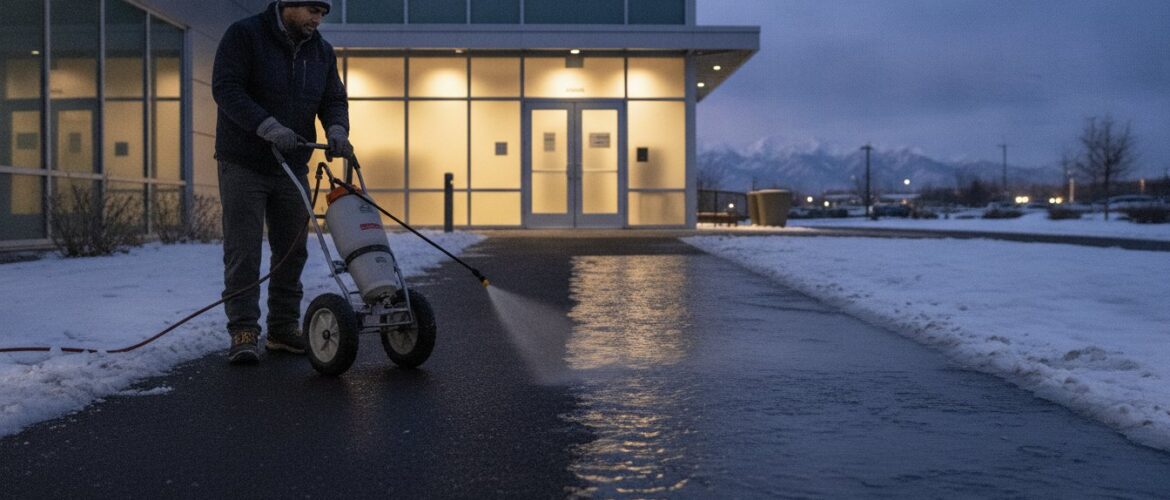
Anti-icing is the practice of applying liquid brine to your pavement before a winter storm arrives. This proactive approach prevents snow and ice from bonding to the surface in the first place. De-icing, on the other hand, is a reactive method. It involves applying granular salt after ice has already formed to break the bond. For businesses concerned about invisible hazards, the commercial de-icing services denver experts provide prioritize anti-icing because it is the only true way to stop black ice before it becomes a liability.
Liquid pretreatment is more efficient and environmentally friendly than traditional methods. It requires significantly less salt to achieve the same results. This reduces the corrosive impact on your concrete and landscaping. Because the ice never bonds, cleanup is faster and more complete, ensuring safe passage for everyone on your property. Snow Removal Denver and Snow Plowing Denver use these methods to provide a superior level of safety that reactive salting simply cannot match.
The Power of Liquid Brine in Denver’s Climate
Liquid brine creates a non-stick surface on your asphalt. When we apply it, the liquid penetrates the pores of the pavement. Traditional granular salt often bounces off dry pavement and ends up in your landscaping before it can even start working. Brine stays exactly where it is placed. It is also effective at much lower temperatures than standard rock salt. This is critical for Denver’s sub-zero nights. Our team uses high-performance liquid de-icers to ensure your site remains clear even when the temperature drops below the effective range of traditional salt.
Developing Your Black Ice Action Plan
A professional action plan starts with continuous weather monitoring. You shouldn’t have to wake up at 2:00 AM to check your parking lot for invisible hazards. Our team stays on-call 7 days and nights to watch the dew point and temperature for you. Including pre-treatment in your Commercial Snow Removal Denver contract is the best way to manage risk. It takes all the anxiety out of your winter maintenance tasks.
Documentation is another essential part of your black ice action plan. If a slip-and-fall claim occurs, you must prove you were proactive. We provide detailed logs of every application to help you meet insurance requirements. This evidence shows you fulfilled your duty of care. Our family-owned business has over 44 years of experience managing these details for local companies. If you are ready to eliminate the stress of winter weather, request a free estimate for ice management to secure your property for the upcoming season.
Professional Ice Management: Securing Your Business for the 2026 Season
Attempting to manage ice through DIY methods is a significant risk for any commercial property. Relying on a janitor with a hand-spreader often leads to inadequate coverage and increased liability. Professional commercial de-icing services denver providers have the specialized equipment needed to handle extreme cold. We don’t just react to the weather. We monitor the dew point and ground temperatures to dispatch crews before hazards develop. This proactive monitoring is the only way to ensure your site is safe before the first employee arrives. Our team at Snow Removal Denver understands that reactive calling is often too late to prevent an accident.
Snow Removal Denver and Snow Plowing Denver offer a level of expertise that comes from over 44 years of experience. We understand the local streets and the specific challenges of the Denver Metro area. As a family-owned business, we take the safety of your customers and employees personally. We are prepared to gain your professional trust by delivering reliable, high-quality results every time the temperature drops. Our long history in the community means we have seen every type of storm Denver can throw at us, and we have the resources to handle them all.
Customized Ice Management Contracts
Every business has different needs and risk tolerances. We offer customized contracts ranging from zero-tolerance plans to per-event services. A Seasonal Snow Removal Contract provides the highest level of budget predictability and peace of mind. It ensures your property is prioritized during major 2026 storms. Our team works with you to create a plan that fits your specific traffic patterns and safety requirements. This tailored approach allows you to focus on your business while we handle the anxiety and diligent work of ice management.
Reliable Equipment and On-Call Personnel
Our fleet is ready for any challenge. We use a combination of trucks, front-end loaders, and professional snow blowers to clear lots of any size efficiently. We have on-call personnel available 7 days and nights to respond to changing conditions immediately. You can count on us to be there when the weather turns. Our equipment is maintained to the highest standards to ensure we never miss a service window. If you are ready to protect your property from invisible hazards, Contact Snow Removal Denver today for a free ice management estimate. We are ready to provide the safe passage your business requires all winter long.
Protect Your Denver Property for the 2026 Winter Season
Black ice doesn’t have to be a liability nightmare for your business. By understanding the local melt-freeze cycle and prioritizing liquid anti-icing, you can eliminate hazards before they ever form. A proactive safety audit and strategic pretreatment are the keys to maintaining safe passage for your employees and customers all season long. You don’t have to manage these invisible threats alone.
The professional commercial de-icing services denver businesses trust come from a team that watches the dew point while you sleep. We take all the anxiety out of winter weather management with our 24/7 emergency response and high-performance equipment. As a family-owned and operated business with over 44 years of Denver experience, we are ready to gain your professional trust through reliable, expert service.
Take the first step toward an anxiety-free winter today. Get a Free Commercial Ice Management Estimate from Snow Removal Denver and ensure your site is secure before the next storm hits. We look forward to keeping your property safe.
Frequently Asked Questions
How do you prevent black ice on a commercial walkway?
You prevent black ice by applying a liquid anti-icing agent before a storm hits. This creates a barrier that stops moisture from bonding to the concrete or asphalt. Professional commercial de-icing services denver providers use this proactive method to ensure safe passage for pedestrians. It is much more effective than waiting for ice to form and then trying to melt it with granular salt after someone has already slipped on your walkway.
What is the best way to stop black ice from forming?
The best way to stop black ice is through continuous weather monitoring and liquid pretreatment. Our team watches the dew point and ground temperatures 24/7 to identify when flash freezing is likely to occur. By applying high-performance liquid de-icers before temperatures drop, we prevent the silent threat from ever taking hold on your parking lot. This approach reduces your liability risks and keeps your business open and safe throughout the winter season.
Can black ice form if it has not rained or snowed?
Yes, black ice forms frequently in Denver without any active rain or snow. High humidity levels or heavy fog can settle on cold pavement and freeze instantly when the temperature hits the dew point. Additionally, Denver’s melt-freeze cycle causes snow banks to melt during sunny days. That runoff then refreezes into a clear glaze at dusk. Our team tracks these specific atmospheric conditions to catch invisible ice before it becomes a hazard.
Is liquid brine better than rock salt for black ice?
Liquid brine is significantly more effective than rock salt for preventing black ice. Granular rock salt often bounces off dry pavement, while liquid brine penetrates the pores of the asphalt to create a non-stick surface. It also works at lower temperatures where traditional salt begins to fail. Using liquid treatments is a key part of the commercial de-icing services denver businesses rely on to manage local sub-zero conditions safely and efficiently.
What are the most common places for black ice to form on a business property?
Black ice typically forms in shaded areas that don’t receive direct sunlight, such as northern-facing entrances and under carports. Other common hotspots include areas near downspouts where runoff pools, loading docks, and speed bumps that trap melting snow. Identifying these zones during a winter safety audit allows for targeted treatment. We focus on these high-risk areas to ensure your employees have safe passage from the parking lot to the front door.
How often should a commercial parking lot be salted for black ice?
The frequency of treatment depends entirely on local weather patterns and ground temperatures. In Denver, you often need daily monitoring during the peak of the melt-freeze cycle. We don’t follow a rigid schedule. Instead, our personnel provide 24/7 monitoring to apply de-icing materials exactly when the dew point indicates a freeze is imminent. This ensures your lot remains clear without wasting materials or causing unnecessary wear on your property’s concrete surfaces.
Does a business have a legal responsibility to clear black ice?
Business owners in Colorado have a legal duty of care to maintain safe conditions for visitors and employees. This includes a responsibility to address hazards like black ice. If you have constructive notice that ice is likely to form, you can be held liable for slip-and-fall accidents. Professional ice management helps fulfill this legal obligation by providing documented proof that you took proactive steps to ensure safe passage for everyone on your business property.
Can I use regular salt to prevent black ice on my storefront?
You can use regular salt, but it is often ineffective for true prevention. Granular salt is a reactive tool designed to melt existing ice, not prevent it from bonding. It is also corrosive and can damage your storefront’s concrete and indoor flooring. Professional commercial de-icing services denver experts recommend liquid anti-icing instead. It provides better coverage, works faster in extreme cold, and protects your property’s value while ensuring a much safer entryway for customers.