
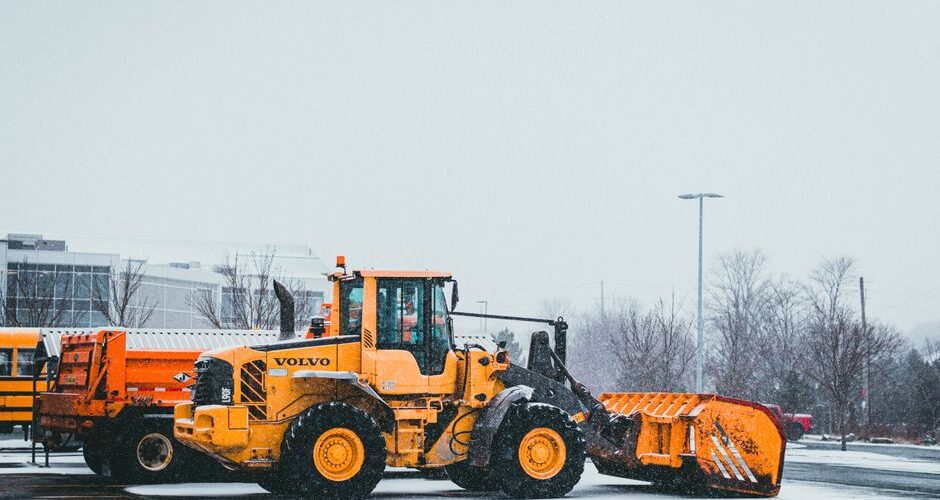
The best snow removal company in Denver is the one that sends GPS time-stamped photo proof on every push, runs W-2 crews instead of 1099 subs, carries $2M insurance with backup trucks, and covers both commercial parking lots and residential driveways and sidewalks with 24/7 overnight zero-tolerance service. I'm Jesse, owner of Denver Snow Removals at denversnowremovals.com, and that is exactly how we run every storm in Denver. We work on a 2-inch trigger, de-icing and salting included, and we document every push so property managers and homeowners have the file they need.
Table of Contents
- What makes a snow removal company the best in Denver?
- How much does commercial parking lot snow removal cost in Denver in 2026?
- How much does residential driveway and sidewalk plowing cost in Denver?
- Why does photo proof and GPS tracking matter for liability in Denver?
- What's the difference between zero-tolerance and a 2-inch trigger in Denver?
- How does Denver Snow Removals handle commercial parking lots and residential driveways?
- What should Denver property managers and homeowners ask before hiring a snow removal company?
- Key Takeaways
- References
What makes a snow removal company the best in Denver?
Five things actually matter in Denver snow removal: photo proof on every push, GPS time-stamped trucks, W-2 crews not 1099 subs, $2M insured with backup trucks, and 24/7 overnight zero-tolerance dispatch. A company either has all five or it is a gamble. Denver storms hit overnight, and the only failure that matters is a truck that did not show. Photo proof and GPS records turn "trust me" into a time-stamped file.

A 2-inch trigger with de-icing and salting included beats a cheap per-push handshake because the trigger removes the guesswork. When accumulation hits 2 inches, we roll. Denver property owners must clear sidewalks within 24 hours after a storm ends, according to the City and County of Denver. Property managers and HOA managers carry slip-and-fall liability on parking lots and walks, so proof is protection.
The best company does both commercial parking lots and residential driveways and sidewalks. Denver is a city of mixed blocks: a commercial lot in LoDo sits three streets from a house in Baker. One crew standard, one photo proof system, one insurance certificate. Straight pricing up front: commercial $250 to $850 per push, residential driveway $65 to $150, sidewalk $30 to $50, seasonal $400 to $900. According to Denver Snow Removal Cost, those Denver figures match the 2026 market.
How much does commercial parking lot snow removal cost in Denver in 2026?
Commercial parking lot snow removal in Denver runs $250 to $850 per push in 2026, with small lots at the low end and large lots over 50 spaces at the top. According to Denver Snow Removal Cost, commercial per-push pricing in Denver ranges from $250 to $800, and larger or higher-traffic lots push toward the top of that band. A small retail lot under 20 spaces lands near $250, while a big office or medical lot over 50 spaces runs $600 to $850 per push.
Seasonal contracts versus per push comes down to your trigger. A zero-tolerance commercial lot in Denver needs crews through the storm, not one pass and gone. Per-push pricing works for a property manager who wants to pay only when it snows. Seasonal pricing works for an HOA board that needs a fixed budget line. According to Denver Snow Removals, commercial seasonal flat contracts in Denver run $1,200 to $3,500 per month per lot depending on size and service level.
At Denver Snow Removals, commercial parking lot snow plowing includes de-icing and salting, stacking, GPS tracked trucks, time-stamped photo proof on every push, $2M insured, and backup trucks. Stacking means we move snow to the edges and corners so your lot does not lose spaces. HOA common areas and shared lots need a clear answer on who signs and who pays, and the photo record protects the board when a resident asks why the lot was not clear at 6 a.m.
The cheapest bid is the most expensive line item when a slip-and-fall claim lands. A property manager who cannot show a time-stamped photo of the plow push is holding an empty file in front of an insurance adjuster. According to Denver Snow Removal Cost, de-icing is typically priced separately at $100 to $350 per application, which is why included de-icing changes the real cost of a bid.
How much does residential driveway and sidewalk plowing cost in Denver?
Residential driveway plowing in Denver costs $65 to $150 per push, sidewalks run $30 to $50, and seasonal contracts run $400 to $900 for a typical Denver winter. According to Denver Snow Removal Cost, those Denver figures cover roughly four to seven qualifying storms per season. A standard driveway in Washington Park or Highlands lands near the middle of that driveway range, while a long or steep driveway in Cherry Creek runs toward the top.
Denver's 24-hour sidewalk law means property owners must clear their walk within 24 hours after a storm ends, according to the City and County of Denver. If you are traveling and your sidewalk sits unshoveled, the ticket risk is real. That is why overnight service matters: the push happens while you sleep, and the walk is clear before the 24-hour clock runs out.
We run before-work overnight service in Cherry Creek, Highlands, Central Park, Washington Park, Sloan's Lake, Baker, LoDo, and Capitol Hill. Seasonal covers a set number of qualifying storms for one flat price, which works for homeowners who travel or want budget certainty. Per push works for homeowners who are home all winter and want to pay only when it snows. Photo proof matters at home too: you see the push happened even when you are out of town, with a time-stamped photo in your file.
Why does photo proof and GPS tracking matter for liability in Denver?
Photo proof and GPS tracking matter in Denver because they answer the only question an insurance adjuster asks after a slip-and-fall: when did you plow, and can you prove it. Time-stamped photo proof on every push creates a paper trail for every storm. A property manager in Denver who can show a photo from 4:12 a.m. with the lot clear is in a different position than one who says the plow guy probably came by.
GPS tracked trucks mean you know the truck was on your lot, at what time, and for how long. No guessing, no excuses. The GPS record shows the truck entered the property, made the passes, and left. According to Denver Snow Removals, zero-tolerance clearing means bare pavement at all times during a storm, not a single pass and gone. That standard only works when dispatch can see every truck in real time.
Property managers and HOA managers use the photo record for insurance files and board reporting. When a resident emails the board asking why the lot was slick at 7 a.m., the manager pulls the time-stamped photo and the GPS log and answers with evidence. The difference between a company that documents every push and one that says "trust me" is the difference between a defended claim and an open checkbook. Denver's own snow operations run on documented routes and schedules, according to the City and County of Denver, and private lots need the same discipline.
What’s the difference between zero-tolerance and a 2-inch trigger in Denver?
Zero-tolerance means crews keep after it through the storm so your Denver parking lot and walks stay passable, with de-icing and salting included. The standard is bare pavement at all times, not a single pass and gone. A zero-tolerance lot gets repeated plow passes and salt applications as the snow keeps falling. That is the service level a busy medical building or grocery lot in Denver needs when foot traffic never stops.
The 2-inch trigger means we roll when accumulation hits the threshold, 24/7 overnight, same-night service. Once the snow measures 2 inches, dispatch sends the trucks. That trigger works for most residential driveways and sidewalks in Denver because homeowners do not need bare pavement at 2 a.m., they need a clear driveway and walk before work. According to Denver Snow Removals, commercial lots typically need a 1-inch trigger or zero-tolerance clearing, while residential properties run fine on a 2-inch trigger.
Commercial lots and HOA common areas usually want zero-tolerance because liability exposure is higher and traffic never stops. Most residential driveways run on the trigger because the goal is clear before work, not clear all night. Stacking and snow placement decide where the snow goes so your lot does not lose spaces. Matching the service level to your property means looking at traffic, hours, and liability exposure, then picking the standard that fits.
How does Denver Snow Removals handle commercial parking lots and residential driveways?
Denver Snow Removals runs commercial parking lots through Commercial Parking Lot Snow Plowing Denver – Zero Tolerance, which includes a 2-inch trigger, GPS tracked trucks, time-stamped photo proof on every push, 24/7 overnight dispatch, de-icing and salting included, stacking, $2M insured, W-2 crews not 1099, and backup trucks. Pricing starts at $250 per push or seasonal, with a free bid at denversnowremovals.com.
Residential driveways and sidewalks run $65 to $150 per driveway push, $30 to $50 for sidewalks, and $400 to $900 for a seasonal contract. Overnight service means the driveway and walk are clear before work, and Denver's 24-hour sidewalk law is covered. Homeowners in Cherry Creek, Highlands, Central Park, Washington Park, Sloan's Lake, Baker, LoDo, and Capitol Hill get the same photo proof system as commercial property managers.
W-2 crews, not subs, means the same trained people show up on your property every storm. If a truck goes down, backup trucks roll so the route still gets cleared. Photo proof on every push plus GPS time-stamped records are delivered so property managers and homeowners have the file for insurance, board reporting, or just peace of mind. One company covers both sides of Denver: commercial lots and residential driveways and sidewalks. A free bid is available today at denversnowremovals.com.
What should Denver property managers and homeowners ask before hiring a snow removal company?
Ask for proof first: do you send time-stamped photos on every push, and are your trucks GPS tracked? If the answer is no or a vague "we take pictures sometimes," keep looking. A Denver snow removal company that cannot document its work cannot protect you in a slip-and-fall claim. The photo and GPS record is the only evidence that holds up.
Ask who is on the truck: W-2 crews or 1099 subs, and do you have backup trucks when one breaks down? W-2 crews mean the same trained people on your property every storm. Backup trucks mean a mechanical failure does not leave your Denver lot unplowed. Ask about insurance: are you $2M insured, and can you show the certificate? A property manager should see the certificate before signing.
Ask what is included: de-icing and salting, stacking, 24/7 overnight dispatch, zero-tolerance or trigger, and get the per-push and seasonal price in writing. According to Denver Snow Removal Cost, de-icing is often priced separately, so included de-icing changes the real number. Ask about Denver specifically: do you know the 24-hour sidewalk law, and do you serve Cherry Creek, Highlands, Central Park, Washington Park, Sloan's Lake, Baker, LoDo, and Capitol Hill? A company that knows Denver neighborhoods knows Denver snow.
Key Takeaways
- The best snow removal company in Denver sends GPS time-stamped photo proof on every push, runs W-2 crews, carries $2M insurance with backup trucks, and covers commercial and residential properties.
- Commercial parking lot snow removal in Denver runs $250 to $850 per push, and residential driveways run $65 to $150 per push with sidewalks at $30 to $50.
- Seasonal contracts in Denver run $400 to $900 for a typical residential winter, and commercial and HOA seasonal pricing is quoted per lot.
- Denver property owners must clear sidewalks within 24 hours after a storm ends, which makes overnight service and photo proof essential for homeowners who travel.
- Zero-tolerance service keeps Denver parking lots and HOA common areas at bare pavement through the storm, with de-icing and salting included.
- Denver Snow Removals is family-owned, $2M insured, uses W-2 crews not 1099 subs, and offers a free bid today at denversnowremovals.com.