
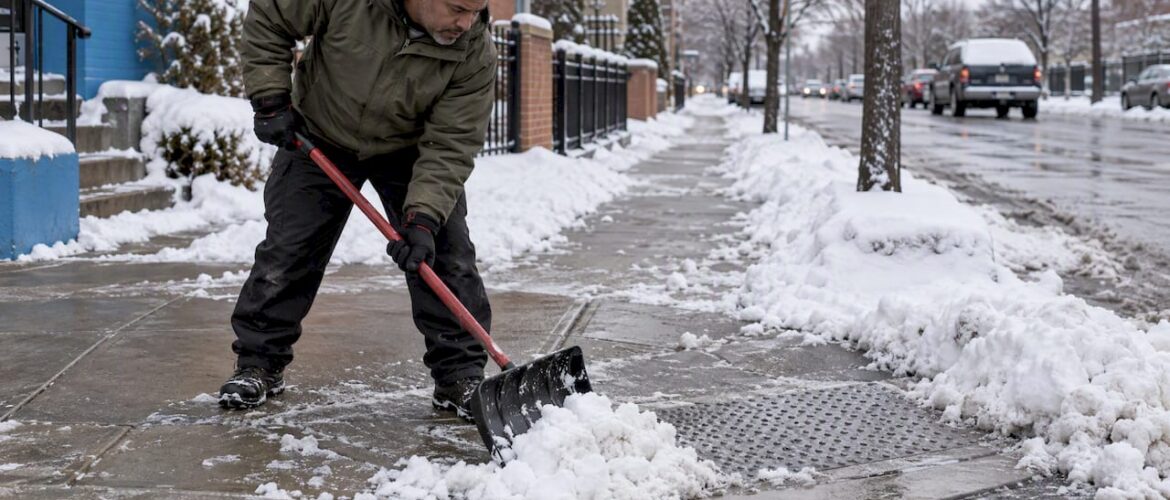
If a curb ramp sits next to your Denver property, clearing it is your job, not the city’s. Denver requires owners and tenants to clear adjacent sidewalks, including ADA ramps. Businesses must start right after the snow stops. Residences have until the next day. This guide covers how to clear a ramp properly, what goes wrong, what it can cost you, and when it makes sense to hand the work to a crew.
TL;DR
- Denver treats curb ramps as part of the sidewalk you are responsible for. Businesses must begin clearing as soon as snow stops falling, and homes by the next day.
- Clear ramps down to bare pavement, not just a packed path. Packed snow and ice are what make a ramp unusable for wheelchairs, strollers and walkers.
- Never push the snow into the street or gutter. It melts, refreezes overnight and creates the ice you were trying to remove.
- City plows often push a ridge of snow back across a ramp you just cleared, so plan a place for it to land and check the ramp again after the plow passes.
- Our residential driveway and walkway clearing starts from $41.25 per visit, and commercial and HOA properties can go on a seasonal contract.
Table of Contents
- Why curb ramps are the hardest spot on a property
- What Denver requires
- How to clear a curb ramp, step by step
- Prevent the ice before the storm
- The plow ridge problem
- What the work looks like for a property manager or HOA
- Our perspective: ramps are where a snow contract is won or lost
- Hire it out or do it yourself?
- Work with us
- FAQ
- Sources
Why curb ramps are the hardest spot on a property
A ramp is small, but it carries a lot of weight. It is where a sidewalk meets the street, so it is where plows dump snow, where meltwater collects and where pedestrians have no alternative route. A person using a wheelchair cannot step around a berm. A parent with a stroller cannot climb a frozen ridge.
The Denver city fact sheet names who depends on clear walkways: seniors, people with disabilities, parents with strollers and mail carriers. Ohio’s transportation department makes the same point in its winter guidance on keeping corners, ramps and crosswalks passable. It stresses that this matters most near schools and transit routes.
Three things make ramps tough in Denver specifically:
- Plow windrows. The street plow throws snow toward the curb, and the ramp is a low spot that catches it.
- Melt and refreeze. Denver gets plenty of sun, so snow thaws in the afternoon and freezes again at night. Local landscaping contractors describe this cycle as the main source of black ice.
- Slope and texture. Ramps are angled and have a textured warning surface. A shovel that works on flat concrete often skips over the dome pattern and leaves ice behind.
What Denver requires
The city’s snow and ice build-up fact sheet sets the timing. After snow stops falling, businesses need to begin clearing sidewalks immediately. Residences need to clear by the next day. Local news coverage of the rules says the same: Denver7 reported that the city asks residents to call 311 when a sidewalk is still unshoveled 24 hours after a storm.
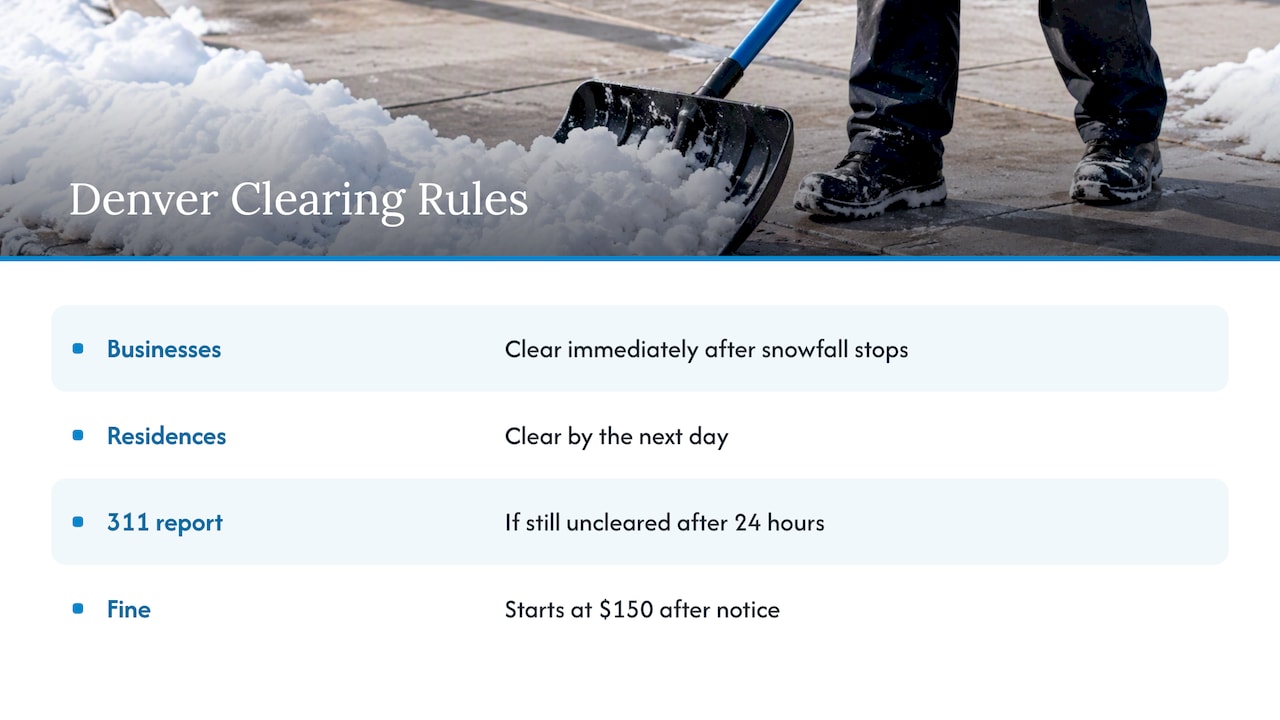
The legal basis is Denver Revised Municipal Code § 49-551. A summary on CityRuleLookup describes a process in which inspectors leave a notice first, and a fine starting at $150 can follow if the work is still not done. Repeat or continuing violations can cost more. Check the current code or call 311 if you need the exact figure for your situation, because enforcement details can change.
The fine is the smaller risk. If someone slips on an ice-covered ramp at your property, the question in a liability claim becomes whether you made a reasonable effort to clear it. Accessibility guidance from Massachusetts, for example, notes that neglected ramps are treated as negligence in injury claims. That is another state’s guidance, but the logic applies anywhere. A dated record of when you cleared and treated the ramp is your best protection.
Does the rule apply to me if the ramp is in the street corner?
If the ramp is adjacent to your lot, treat it as yours. Corner properties often have two or more ramps, and each one counts. Property managers with several corners, a long frontage or a retail strip should list every ramp on the site before the season starts.
How to clear a curb ramp, step by step
The goal is bare, dry-looking pavement across the full width of the ramp and the landing at the top. Massachusetts accessibility guidance suggests keeping a path at least 36 to 42 inches wide. We would go wider where you can, so a wheelchair and a person walking can pass each other.
- Start early. Fresh snow is light. Snow that has been walked on or plowed over turns to ice that takes far more work.
- Clear the top landing first. Then work down the slope, and finish with the gutter edge where the ramp meets the street. That edge is where meltwater pools.
- Push snow onto your own property. Put it on a lawn or planting bed, not in the street, against a fire hydrant, or in the gutter. Massachusetts guidance points out that snow in the roadway melts and refreezes into hazardous ice.
- Scrape, don’t just shovel. Use a flat-edged scraper or a shovel with a hard edge to get down to the surface. Work across the textured dome area in both directions.
- Treat the surface. After scraping, apply ice melt. Use only what you need, and keep it away from landscaping.
- Check the storm drain. If the ramp drains toward a gutter inlet, clear around it so meltwater leaves instead of pooling on the ramp overnight.
- Return after the street plow passes and again at dusk. Meltwater frozen overnight is what catches people the next morning.
Protect the surface you are clearing
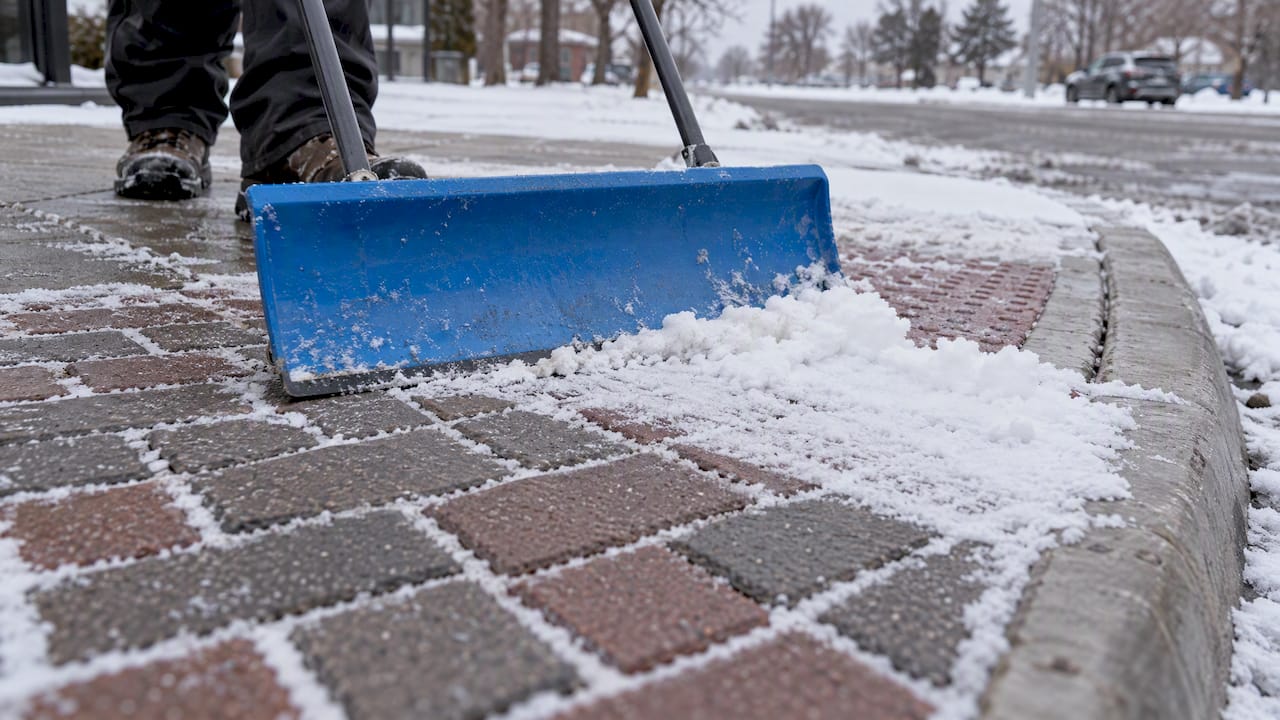
Metal blades can scratch decorative concrete and pavers. For paver ramps and aprons, the Concrete Masonry & Hardscapes Association says snow can be cleared from interlocking pavers with shovels, blowers or plows like any other pavement. Its guide also recommends plastic or synthetic blades or skid shoes rather than bare metal to prevent rust stains and scratches, and plowing diagonally across the joints to keep the blade from catching an edge.
Prevent the ice before the storm
Most bad ramp ice is not from the snow itself. It is snow that melted, ran down the slope and froze into a sheet. Pre-treating helps because the ice never bonds to the pavement in the first place. Colorado contractors describe applying de-icing materials before a storm as the most effective way to keep ice from bonding, which also makes later clearing easier.
That is why we offer anti-icing pre-treatment as its own service for parking lots, walkways and ramps. A forecast of snow followed by a clear, cold night is the case where it pays off most.
The plow ridge problem
You can clear a ramp perfectly and have the city plow undo it ten minutes later. The blade pushes a windrow along the curb, and it drops across your ramp and driveway apron.
A Colorado guide to 24-hour sidewalk rules suggests creating a small storage pocket on the down-street side of the driveway. The plow’s discharge then has somewhere to land instead of burying the cleared area. It is written for Colorado Springs, but the physics are the same in Denver. Stack snow away from the ramp’s upstream edge, and leave a gap where the plow can dump.
Expect to clear the ramp twice on big storms: once after the snow stops and once after the street plow comes through. Rules about timing do not pause because a city plow came late.
What the work looks like for a property manager or HOA
For a single home, a ramp is a ten-minute job. For a commercial lot, an apartment community or an HOA with a dozen corners, ramps are a checklist item that can slip when a crew is racing to finish the main lot.
A good contract spells out the following:
- Priority order. Ramps and accessible parking stalls should be cleared first. One Colorado contractor describes ramps and handicapped stalls as the first areas cleared so the site stays compliant.
- Trigger depth. The snowfall amount that sends a crew out. Ramps should be on a shorter trigger than the lot, or treated on every event.
- Ice control. Pre-treatment before the storm and treatment afterward, with the product named.
- Hand work. Plows cannot get into a ramp. Someone has to shovel and scrape it.
- Documentation. Time-stamped visit logs, ideally with photos of ramps and entrances.
- Snow storage and hauling. Where piles go, and what happens when they begin to block sight lines or ramps.
A Canadian snow operator’s description of a standard contract scope lists plowing on every triggered event, ice control, sidewalk and walkway clearing, and stair and ramp work as separate items. The same list works as a checklist in Denver, whoever you hire.
If your site is a public building or multi-use property, it also helps to think about the whole accessible route, not only the ramp. A guide on accessible routes for people with disabilities shows how exits, ramps and approaches work together. Snow that blocks any link in that chain defeats the rest.
Our perspective: ramps are where a snow contract is won or lost
We have been plowing in the Denver metro for over 44 years, and the pattern is consistent. Clients rarely call about the big open lot. They call about the corner: the ramp that iced over, the entrance that got buried, the notice stuck on the door.
So we run ramps and walkways as their own line of work. Plowing a lot in one pass with commercial-grade equipment is the easy part. The part that protects you is the follow-up: hand clearing, de-icing, and a documented visit showing what was done and when. That record matters if a slip-and-fall claim ever lands on your desk.
Our advice, whoever you hire:
- Walk your property before the first storm and mark every ramp, drain and low spot.
- Ask for pre-treatment, not just post-storm salt.
- Ask to see how visits are documented.
- Agree on a plan for the street plow’s windrow.
Our team is available 24/7, so a ramp that is iced over at 6 a.m. does not have to wait for a business day.
— Jesse
Hire it out or do it yourself?
For one ramp at one house, doing it yourself is realistic if you are able and have a flat scraper and ice melt. Hiring makes sense when:
- You are physically unable to clear the ramp safely, or travel often.
- You manage a business, an HOA or a multi-building property where the clearing window is immediate.
- You need documented visits for insurance or liability reasons.
- You have a long frontage or several corner ramps.
- You want treatment done before a storm rather than after.
Cost is a fair concern. Our residential driveway and walkway clearing starts from $41.25 per visit. Commercial, HOA and industrial work is quoted by site, since lot size, number of ramps, snow storage space and the level of ice control all change the scope. We give free estimates, with pricing up front.
Work with us
We plow and clear snow for homes, commercial lots, office and retail parking, industrial parks, warehouses and HOA communities across Denver. That includes sidewalk clearing and de-icing, anti-icing pre-treatment, snow hauling and 24-hour emergency commercial plowing. See our residential, anti-icing and parking lot services or visit our main page for commercial plans and seasonal contracts that run September through May. Ask for a free estimate and tell us how many ramps your site has.
FAQ
Do I have to clear the curb ramp in front of my Denver home?
Yes, if it is adjacent to your property. Denver’s city fact sheet says owners or tenants must clear their walkways, including adjacent ADA ramps. Homes have until the next day after the snow stops. Businesses must begin immediately.
Can I shovel the snow from the ramp into the street?
No. Piling it in the road or gutter blocks drainage and creates ice when it melts and refreezes. Move it onto your lawn or another spot on your property, away from hydrants and the ramp itself.
What happens if I don’t clear it?
A summary of the code on CityRuleLookup describes a notice first, then a fine starting at $150 if the problem remains. Beyond that, an unclear ramp that causes an injury can expose you to a liability claim.
Does the city plow clear the ramps?
No. City plows work the street and often push snow onto ramps and driveway aprons. The ramp itself is the adjacent owner’s responsibility, so plan to clear it after the plow passes.
Should I use salt on a concrete ramp?
Use ice melt sparingly, after scraping to the pavement, and keep it away from plants. Pre-treating before a storm usually takes less product than fighting a sheet of ice afterward. Talk with a snow contractor about products for pavers or decorative concrete.
Sources
- Denver Snow & Ice Build-Up Fact Sheet
- Denver snow removal: Sidewalk rules, fines and where to get help (Denver7)
- Snow & Sidewalk Clearing in Denver, CO (CityRuleLookup)
- Snow Removal and Accessibility in Massachusetts (Mass.gov)
- Operation and Maintenance Guide for Interlocking Concrete Pavement (CMHA)
- Colorado Springs 24-Hour Snow Removal Rules Explained
- Snow removal and plowing in Colorado (Colorado’s Best Landscaping)
- Commercial Snow Removal (snow.ca)