
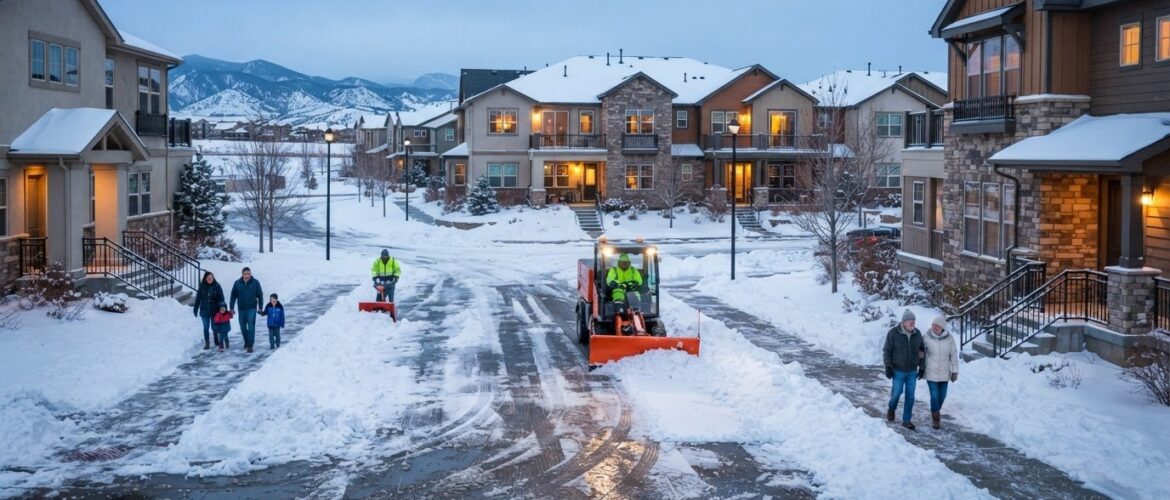
A snow plan can look adequate on paper and still leave residents facing blocked access or icy walkways after a storm. For HOAs and apartment communities considering residential snow removal Lone Tree-wide, the key question is whether shared areas will be cleared reliably when residents need them.
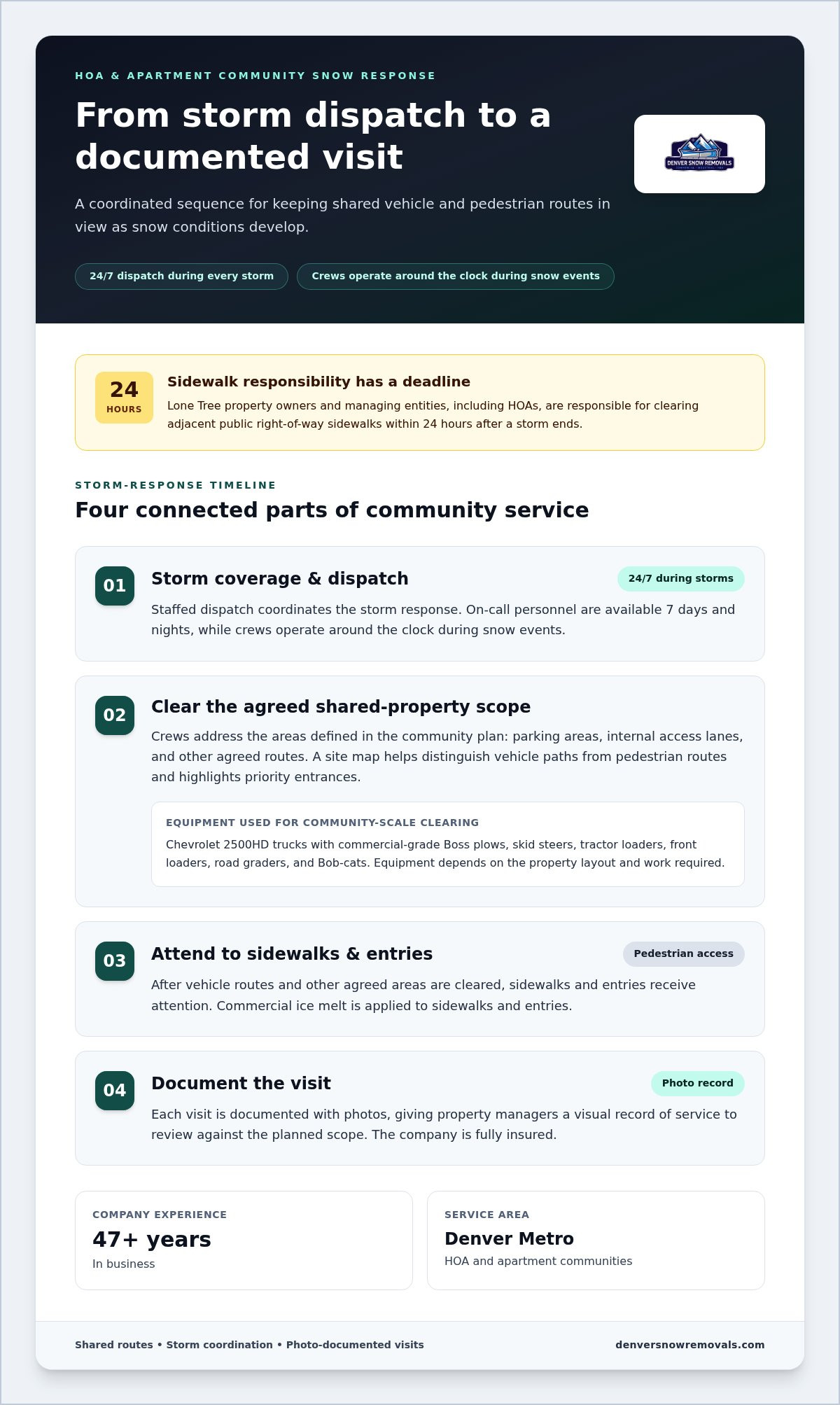
That concern is practical: Lone Tree property owners and managing entities, including HOAs, are responsible for clearing adjacent public right-of-way sidewalks within 24 hours after a storm ends. A dependable plan should also address community parking areas, access roads, and walkways, with clear expectations for storm response and budgeting.
This guide explains how to assess shared-property needs and compare seasonal agreements with per-push service. Snow Removal Denver serves HOA and apartment communities across the Denver Metro area, with 47+ years in business and fully insured service. Dispatch is staffed 24/7 during every storm, and crews operate around the clock during snow events. Each visit is documented with photos, and commercial ice melt is applied to sidewalks and entries. You’ll learn what to look for in a plan built for clear access and safer community walkways through winter.
Key Takeaways
- Residential snow removal Lone Tree planning for HOAs centers on shared spaces, including parking areas, access lanes, sidewalks, and entries.
- Understand how storm dispatch, site clearing, sidewalk attention, and visit records fit into a coordinated response plan.
- Compare service scope through practical measures such as insurance, documented visits, and ice treatment.
- Seasonal contracts run from September through May, with fleet standby during that period. Compare the seasonal model with per-push service when planning your budget.
- Denver Snow Removals serves HOA and apartment communities across Denver County and the surrounding Denver Metro area, backed by 47+ years in business.
What Residential Snow Removal in Lone Tree Means for HOAs
Here, residential snow removal in Lone Tree means managing snow across shared HOA and apartment-community property. A community plan addresses connected areas residents use to reach parking, buildings, and common entrances. The work may include community parking areas, internal access lanes, sidewalks, and entries.
That shared-property focus matters because one blocked route can affect several buildings or interrupt routine property operations. Keeping routes open helps residents, visitors, and service personnel move through the community during a storm. Lone Tree is in Douglas County, within the surrounding Denver Metro region. For local geographic context, see Lone Tree, Colorado Wikipedia.
Which shared areas should a Lone Tree community include?
Start with a simple site map. Mark parking areas, internal lanes, pedestrian walkways, building entries, and the access points that connect them. Note which paths lead from parking to occupied buildings and identify locations with concentrated foot traffic. This gives property managers and snow crews a practical picture of the routes residents need during and after snowfall.
Include the site’s layout and snow-storage constraints in planning. Narrow lanes, tight turns, parked vehicles, and limited places to move accumulated snow can affect how areas are cleared. A useful map distinguishes vehicle routes from pedestrian paths and highlights priority entrances, rather than treating the property as one open surface.
Why HOA snow removal differs from individual-home service
Community snow management involves coordinated access across shared property. Clearing a parking area without considering the internal lanes or sidewalks can leave residents with an incomplete route. An HOA plan should account for how these spaces connect and how clearing one area may affect another. That coordinated scope is different from arranging snow removal for a single property.
For property managers, a defined map makes service expectations concrete. It creates a shared reference for the areas included in the plan and keeps attention on community access rather than isolated patches. Denver Snow Removals serves HOA and apartment communities across the surrounding Denver Metro region. Each visit is documented with photos, and commercial ice melt is applied to sidewalks and entries. These steps provide a record of service and support attention to pedestrian areas.
Before winter, review the map with community decision-makers and note any changes to parking, access, or building use. A clear scope helps align snow removal with the way the property functions, keeping shared routes at the center of the plan throughout the season.
How Lone Tree HOA Snow Removal Responds During a Storm
Community snow response needs more than a plow arriving on site. It takes a dispatch process, equipment suited to shared areas, attention to pedestrian routes, and a record of completed visits. For residential snow removal Lone Tree communities, these elements help property managers understand how service is organized as storm conditions change.
Denver Snow Removals staffs dispatch 24/7 during every storm, operates crews around the clock during snow events, and has on-call personnel 7 days and nights. Dispatch coordinates the response, crews clear the property, sidewalks and entries receive attention, and each visit is documented with photos.
How does the storm-response sequence work?
Dispatch coordinates the storm response. Crews then address the shared property, including the areas defined in the community’s service scope. After vehicle routes and other agreed areas are cleared, sidewalk and entry clearing supports pedestrian access. Photo documentation provides managers with a record of the visit.
This sequence matters because a community’s access needs are connected. A cleared parking area is less useful if internal lanes or walking routes remain obstructed. Staffed dispatch and a defined site scope help direct attention across these shared areas as conditions develop.
What equipment supports community-scale snow clearing?
Denver Snow Removals uses newer Chevrolet 2500HD trucks equipped with commercial-grade Boss plows, along with skid steers, tractor loaders, front loaders, road graders, and Bob-cats. Different equipment supports different parts of a larger property, from parking areas and internal lanes to broader access routes. The appropriate equipment depends on the property layout and the work required.
How are clearing visits documented?
Each visit is documented with photos. These records help property managers track completed service and maintain a visual reference for the work performed. Denver Snow Removals is fully insured, and commercial ice melt is applied to sidewalks and entries. The company’s no slip-and-fall liability guarantee includes photo-documented visits and commercial ice melt application.
For an HOA, documentation makes storm operations easier to review after the event. Managers can use visit records to follow service activity against the property’s planned scope. A dependable response combines staffed dispatch, crews operating around the clock during snow events, appropriate equipment, and attention to shared pedestrian areas.
Communities planning winter coverage can review Denver Snow Removals’ community snow management as they define their property’s storm-response needs.
Compare Lone Tree Snow Removal Providers on Safety and Scope
A useful comparison looks beyond whether a provider plows snow. For residential snow removal Lone Tree communities, assess storm response, insurance, visit records, ice treatment, and whether the written service scope covers the property’s shared areas. These details help a board understand how the plan addresses both vehicle access and pedestrian routes.
| Comparison point | What the community needs | Denver Snow Removals |
|---|---|---|
| Storm response | A defined dispatch and crew response during snow events. | 24/7 staffed dispatch during every storm, with crews operating around the clock during snow events. |
| Insurance | Clear information about the provider’s insurance status. | Fully insured. |
| Visit records | A way to track completed service. | Each visit is documented with photos. |
| Ice treatment | Attention to sidewalks and entries as well as snow clearing. | Commercial ice melt is applied to sidewalks and entries. |
| Service scope | Coverage that reflects the community’s shared-property needs. | Snow removal and ice management for HOA and apartment communities. |
Photo documentation and ice treatment are practical parts of the company’s no slip-and-fall liability guarantee. Denver Snow Removals documents each visit and applies commercial ice melt to sidewalks and entries, supporting a clear record of work and focused attention to pedestrian areas.
What does an HOA need to know about ice treatment?
Snow clearing removes accumulated snow, while ice treatment addresses slippery conditions on surfaces such as sidewalks and entries. They are related, but serve different purposes. Denver Snow Removals applies commercial ice melt to sidewalks and entries as part of its ice management approach. Boards can learn more about Denver ice management services and how treatment fits into winter planning.
How should a board assess service scope?
Compare the written coverage with the community’s shared-area map. Make sure parking areas, internal lanes, walkways, and entrances are represented so the plan reflects how residents move through the property. For additional criteria, see this guide on choosing a snow removal company.
Scope also informs the estimate. Commercial pricing depends on acreage, seasonal visit count, and de-icing needs, so a community’s layout and planned level of service matter. A precise scope helps a board compare the work being proposed and understand what the seasonal plan is designed to cover.
Plan a Lone Tree HOA Snow Contract Before Winter
Winter planning gives an HOA time to define coverage, review the service scope, and choose a contract structure before snow events begin. For residential snow removal Lone Tree communities, start with shared-property needs: parking areas, internal access, sidewalks, and entries. A clear plan helps the board align winter service with how residents use the property and prepare a realistic budget.
Denver Snow Removals’ seasonal contracts run September-May, with the fleet on standby during that period. To secure a contract, sign before October 1st. Boards that sign in July or August receive priority dispatch and can lock rates for the 2026-2027 season.
Seasonal contract or per-push service for an HOA?
A seasonal contract supports planning across the winter service period, while per-push service charges for individual clearing visits. Seasonal contracts are typically cheaper than per-push pricing, making them a practical option for communities seeking a consistent approach and more predictable seasonal planning. The right structure depends on the HOA’s property, service scope, and budgeting preferences.
Compare the options against the same coverage needs. Consider how the arrangement accounts for parking, internal routes, sidewalks, entries, and ice treatment. Seasonal terms span September-May, and fleet standby applies during that period. Review the proposed scope alongside the contract structure so the board understands what the plan covers before winter operations begin.
What should the board prepare for an on-site estimate?
Prepare details that describe the property and the work expected. Denver Snow Removals provides free on-site commercial estimates. A concise information packet can make the discussion more focused and connect the proposed service to the community’s actual layout.
- Property acreage and a current shared-area map.
- Parking areas, internal lanes, sidewalks, and entries to include in the service scope.
- Sidewalk and entry de-icing needs for the estimate discussion.
- Any layout or access details that affect where snow can be moved or stored on the property.
Use the discussion to clarify the planned coverage and the factors that shape the estimate. Commercial pricing depends on acreage, seasonal visit count, and de-icing needs. Having those site details ready helps the board compare the proposed seasonal arrangement with its budget and community priorities.
For a community-specific winter plan, request an on-site commercial snow removal estimate from Denver Snow Removals.
Choose Denver Snow Removals for Lone Tree Community Snow Management
HOA and apartment communities need a snow plan built around shared property. Denver Snow Removals serves communities in Denver County and the surrounding Denver Metro region, including Lone Tree. With 47+ years in business, the company brings established experience to community snow removal and ice management.
Storm readiness matters. Dispatch is staffed 24/7 during every storm, crews operate around the clock during snow events, and on-call personnel are available 7 days and nights. The company is fully insured and provides a no slip-and-fall liability guarantee, with each visit documented by photos and commercial ice melt applied to sidewalks and entries.
What makes the service relevant to community managers?
Community managers coordinate access across parking areas, internal lanes, sidewalks, and building entries. Denver Snow Removals’ community-scale equipment includes newer Chevrolet 2500HD trucks equipped with commercial-grade Boss plows, loaders, skid steers, road graders, and Bob-cats. This equipment supports work across shared-property layouts. Around-the-clock crews during snow events and staffed dispatch give managers a clear operational point of contact as storm conditions require attention.
Photo records help managers track completed visits against the community’s service scope. Dispatch readiness, shared-area snow removal, insurance, and visit documentation are all relevant for boards coordinating winter service across a property.
How can a Lone Tree HOA take the next step?
Before requesting an estimate, have the board or property manager outline the community’s shared areas and identify sidewalks and entries where de-icing is needed. A property map and a clear list of service locations help focus the on-site discussion on the community’s actual layout and priorities.
Denver Snow Removals provides free on-site commercial estimates for community properties. Request one to discuss snow removal and ice management for your HOA or apartment community.
Request a free on-site estimate for your community property and plan winter coverage with Denver Snow Removals.
Set Your Community Up for a More Prepared Winter
A winter plan works best when the board turns it into a shared operating reference. Before the next storm, choose a point person to coordinate with the property manager, keep the community’s service map accessible, and agree on how updates will reach residents. That preparation can reduce confusion when conditions change and help everyone understand which shared routes the plan addresses.
For residential snow removal Lone Tree planning, match the community’s priorities with a clearly defined service scope. Denver Snow Removals brings 47+ years in business, is fully insured, and supports HOA and apartment communities with 24/7 staffed dispatch and crews operating around the clock during snow events. Visits are documented with photos, and commercial ice melt is applied to sidewalks and entries as part of the company’s no slip-and-fall liability guarantee.
Build a winter plan around your property’s actual needs. Arrange a free on-site commercial estimate for your community and plan winter coverage with Denver Snow Removals.
Frequently Asked Questions
Can snow piles be hauled away from an HOA property?
Yes. Snow hauling and snow pile removal are available for commercial properties and community settings, including HOA and apartment properties. For a Lone Tree community in Denver County and the surrounding Denver Metro region, an on-site commercial estimate can account for property acreage, seasonal visits, and de-icing needs. Share where piles accumulate and which shared areas need attention so the proposed scope reflects the site.
Does community snow removal include sidewalks and entrances?
Yes. Sidewalk clearing and de-icing are available for community properties, and commercial ice melt is applied to sidewalks and entries. Each visit is documented with photos. The company’s no slip-and-fall liability guarantee includes photo-documented visits and commercial ice melt application.
How does an HOA get a snow removal estimate in Lone Tree?
HOAs can request a free on-site commercial estimate for community property in Lone Tree and the surrounding Denver Metro region. To make the discussion useful, outline the property acreage, shared parking and access areas, and the sidewalks or entries needing de-icing. Commercial pricing is based on acreage, visits, and de-icing needs. This information helps shape an estimate for the HOA’s shared spaces.
Are seasonal snow contracts usually cheaper than per-push service?
Yes. Seasonal contracts are typically cheaper than per-push pricing. Seasonal contracts run September-May, and the fleet is on standby during that contract period. Boards can compare the seasonal approach with paying for individual pushes by considering their community’s acreage, expected service needs, and de-icing requirements. Those details help the HOA select a structure that fits its planning and budget priorities.
When should an HOA arrange its snow removal contract?
Arrange the contract before October 1st. Clients signing in July or August receive priority dispatch and can lock rates for the 2026-2027 season. Early planning also gives a board time to define shared-property coverage and discuss sidewalk and entry de-icing before winter operations begin. Seasonal contracts run September-May, with the fleet on standby during that period. Rate locking applies to the 2026-2027 season only.
What information helps an HOA plan snow clearing for shared areas?
Map the community’s parking areas, internal access lanes, sidewalks, and building entries, then mark snow-storage locations and note de-icing needs. For example, distinguish the main pedestrian route to an entrance from vehicle access through a parking area. This practical outline helps the HOA define the service scope and supports an on-site estimate. It’s especially useful for apartment communities and HOAs coordinating access across multiple shared spaces.