
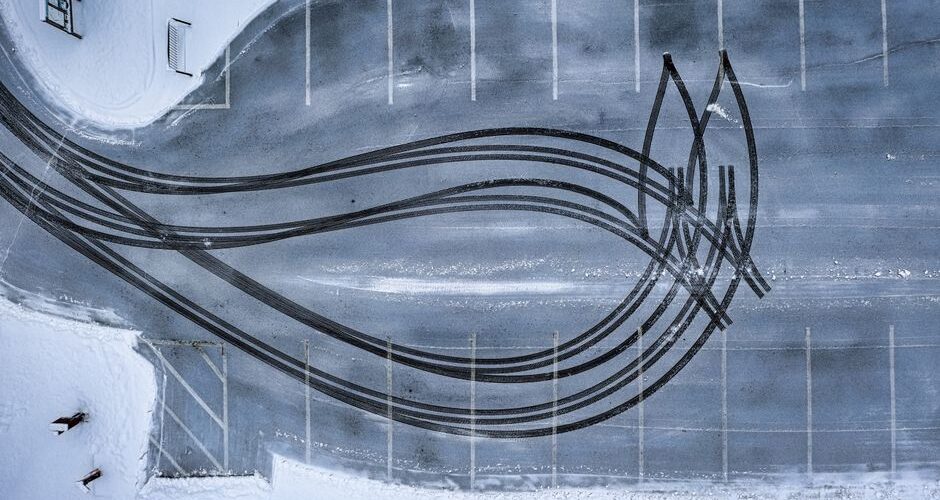
A 2 a.m. call about ice on a loading dock ramp is rarely random. Something changed on the property between the time your staff left and the time the phone rang. A daytime melt refroze in a shaded corner. Freezing rain moved in faster than the forecast suggested. A tenant slipped near an entry and reported it. Once you understand the handful of conditions that push an ice problem past the point of waiting until morning, you can predict your own after-hours calls instead of reacting to them.
This is how night dispatch decisions actually get made for commercial properties in the Denver metro, and what you can do before winter to make sure your property is one that gets a truck rather than a voicemail.
What Counts as After-Hours Ice Removal
After-hours ice removal is any request for ice control that falls outside your contracted service window or outside normal business hours and requires a crew on site before your next business day begins. That definition matters because it separates two very different situations. One is a property that is unsafe or about to become unsafe. The other is a property that is merely inconvenient and can be handled on the morning route.
Most commercial sites in Denver run on a daylight maintenance schedule. Ice does not follow that schedule. The gap between when your staff leaves and when they return is exactly the window when refreeze happens, which is why so many ice calls land between 9 p.m. and 5 a.m.
The Triggers That Set a Night Dispatch in Motion
Dispatchers do not send a crew simply because the temperature dropped. They send one because a specific condition changed on a specific property. These are the conditions that most often justify waking a crew.
Black Ice That Refreezes After a Daytime Melt
This is the most common night trigger in Denver. Daytime sun melts snow at the edges of a lot, that water runs across pavement and into shaded areas, and the temperature drops after sunset. What is left is a thin, clear layer that is nearly invisible under headlights and extremely slick underfoot. Liquid de-icers work best when they go down early in a freeze cycle rather than after ice has already bonded to the surface, which is one reason a call at 5 p.m. is easier to work with than a call at 11 p.m. When the melt and refreeze happen on a sloped drive or a ramp, the call becomes urgent quickly.
Freezing Rain and Flash Refreeze
Freezing rain can turn a clean, dry parking lot into a hazard in a matter of minutes, and it is the condition most likely to produce a wave of calls rather than a single one. On a night like that, crews work by priority rather than by arrival order. Entry walks, ADA ramps, and drive lanes at building entrances come first because those surfaces carry the most foot traffic and the highest liability exposure.
Meltwater Crossing Walkways and Drives
Snow piles left from an earlier plowing melt during a warm afternoon, and that water crosses walkways, loading areas, and drive-through lanes before it refreezes overnight. A pile pushed into the wrong corner in the morning becomes an ice patch in that same corner by midnight. Correct snow storage placement is one of the cheapest ways to reduce after-hours calls, because the water never reaches the walking surface in the first place.
A Slip, a Fall, or a Tenant Complaint
A business or property owner can be held liable for visitor injuries caused by failure to remove snow and ice in a timely manner. That exposure is one of the most common reasons a property manager calls at night instead of waiting for the morning. Once someone reports a fall, a near miss, or a complaint from a tenant, the property has documented notice of a hazard, and the call moves to the top of the queue. Nobody wants to explain a second incident at the same address.
Public Reports and the 24 Hour Clock
Denver residents can report snow and ice covered sidewalks through the city’s pocketgov.org portal, and public complaints tend to be filed once a problem has persisted for about a day. Whether a specific address falls under a city enforcement timeline, an HOA covenant, or both is something to confirm with the city or your association rather than assume. The practical effect is the same either way: a visible ice problem can turn into an official complaint within a day, and a night dispatch is almost always faster and cheaper than responding to paperwork.
Morning Opening Deadlines
Retail centers, distribution facilities, and office campuses often have staff arriving well before sunrise. A property with a 6 a.m. shift start effectively has an after-hours deadline, even though nothing about the request is technically an emergency. When the forecast shows an overnight refreeze, the smart move is to schedule the dispatch the evening before rather than wait for a phone call at dawn. Pre-scheduled overnight work is predictable. A 5 a.m. panic call is not.
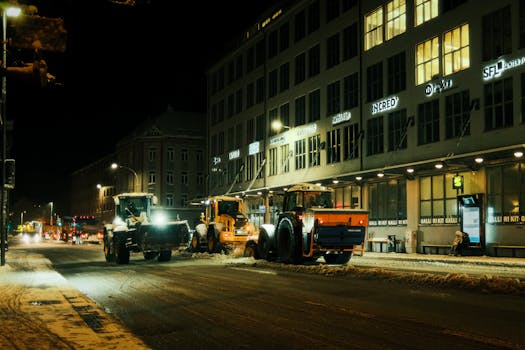
Triggers That Usually Wait Until Morning
Not every call justifies a night crew, and a dispatcher who treats every call as an emergency ends up with crews spread too thin when a real one arrives. These situations generally get handled on the normal morning route:
- Light frost on an open lot that will be plowed and treated during regular morning service.
- Snow piles sitting in designated storage areas away from walks, ramps, and drives.
- Cosmetic cleanup on a lot that is already open, safe, and fully accessible.
- Requests where the caller cannot identify which surfaces are actually affected.
That last one is worth emphasizing. A call that says “the lot looks icy” takes longer to act on than a call that says “the north entry ramp and the sidewalk by suite 200 are slick.” Specificity speeds up dispatch more than urgency does.
What Happens Between Your Call and the Truck Arriving
Understanding the sequence helps you give the dispatcher what they need in the first two minutes.
- Intake. The dispatcher captures the property address, the property type, and a description of which surfaces are affected.
- Verification against your file. Priority zones, gate codes, contact names, and material preferences come from your site profile rather than from memory or guesswork.
- Assignment. Crews are assigned based on route proximity and how your property ranks in your agreement.
- Treatment or removal. Depending on the surface and the temperature, the crew may apply liquid de-icer, spread granular material, or use equipment to break up and remove bonded ice.
- Documentation. Photos, time on site, materials used, and observed conditions are logged so the property manager has a record afterward.
Why Contract Terms Decide Who Gets a Night Truck
In the Denver market, seasonal contracts with trigger-depth terms are standard for commercial properties. A trigger sets the snow depth at which service begins automatically, with no phone call required. Ice is harder to write a trigger for because it is not measured in inches, so ice language has to be defined by condition instead of by depth.
Contract language typically spells out which conditions count as an after-hours event, how materials are billed, and whether a property manager’s approval is required before a crew is dispatched. Properties with a clearly defined ice protocol get faster service than properties where every call requires a fresh conversation about authorization at 2 a.m. Our on-call personnel are available seven days and nights a week to handle emergency situations, and the properties that move fastest are the ones whose protocols were agreed on in the fall, not during the storm.
What to Prepare Before the First Freeze
Site Maps and Priority Zones
Mark entry walks, ADA ramps, mail areas, trash enclosures, and any slope where meltwater collects. Label them as first, second, and third priority. A crew working from a marked map does not have to guess which entrance matters most, and you do not have to walk the property at midnight to explain it.
Access Details and Snow Storage
Provide gate codes, lockbox locations, which lot corners can hold snow, and which drains must stay clear through the season. A crew that already knows where the snow goes at 2 a.m. will not need to wake you up to ask, and your property avoids the meltwater problems that come from piles placed in the wrong spot.
Approval Thresholds
Decide in advance who can authorize an after-hours dispatch, what spend limit applies, and how that person can be reached. Written authorization is what allows a dispatcher to act immediately instead of chasing a signature while ice keeps bonding to concrete.

Does Fast Ice Removal Reduce Liability?
Because liability can attach when snow and ice are not removed in a timely manner, response timing matters as much as the material your contractor uses. Documentation alone does not eliminate risk, and no service log replaces legal advice. What a log does is demonstrate that the property identified a hazard and responded to it. For questions about your specific exposure, talk to your attorney or risk manager, and treat your service records as part of that conversation.
Frequently Asked Questions
What time counts as after hours for ice removal?
It depends on your contract. Most commercial agreements define after-hours service as work requested outside the standard service window, which often means evenings, overnight, weekends, and holidays. What matters more than the clock is the condition: if the surface will be unsafe before your next business day starts, it qualifies as an after-hours need regardless of the exact hour.
Do I need a seasonal contract to get a night dispatch?
Contract terms are what allow a dispatcher to send a crew without a lengthy authorization call. Seasonal agreements with defined ice protocols and pre-approved approval thresholds move fastest. Without that framework, a property can usually still be served, but the process takes longer because someone has to confirm authorization before the truck rolls.
How fast can a crew reach a Denver property at night?
Response time depends on storm conditions, how many properties are calling at once, route proximity, and where your property ranks in your agreement. Rather than promise a single number, ask your contractor how your site is prioritized and what conditions qualify for immediate dispatch. Those answers tell you far more about real-world response than an average does.
Which surfaces get treated first during a night call?
Priority usually goes to the surfaces with the highest foot traffic and the steepest consequences: building entries, ADA ramps, sidewalks connecting parking to doors, drive lanes at entrances, and any slope where meltwater collects. Loading docks and lower-traffic lot areas typically follow. Marking these zones on a site map is what makes that order automatic.
The properties that avoid frantic midnight phone calls are not the ones with the best luck. They are the ones that mapped their priority zones, defined their ice protocol in writing, and placed their snow piles where meltwater cannot reach a walking surface. Everything else is a phone call you can make in advance instead of at 2 a.m.