
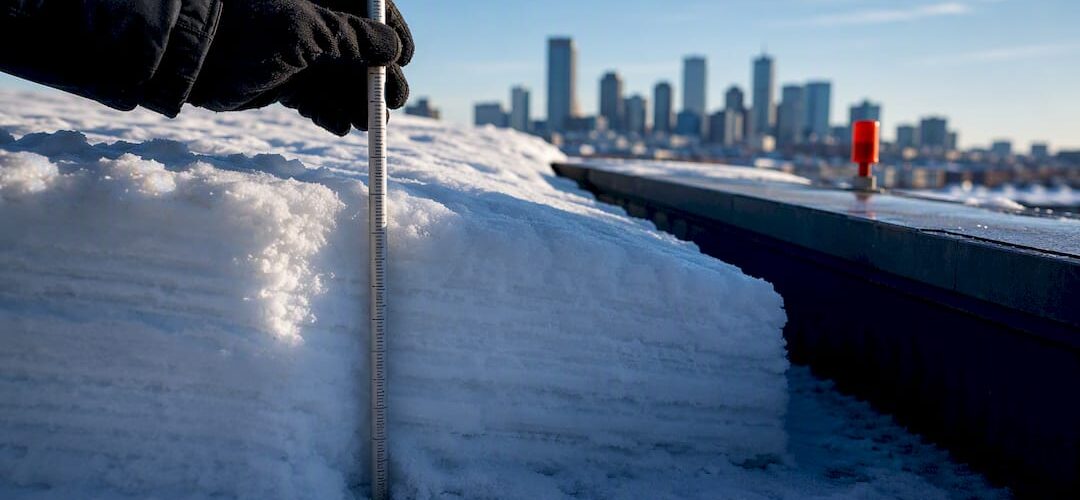
Property managers should complete a pre-season vulnerability assessment with a licensed professional engineer or qualified contractor, then put a Snow Event Response Plan in place with clear thresholds before the first storm arrives. Layer in forecast monitoring and a signed contractor retainer, and most weather-related structural and liability surprises become manageable rather than catastrophic. The sequence matters: assessment first, plan second, monitoring third.
TL;DR:
- Pre-season assessments should prioritize flat or low-slope roofs, older structures, and properties with prior warning signs, especially if budgets are limited.
- Field checks on snow load are rough estimates and should be supplemented with data from structural drawings or a licensed engineer when approaching design capacity.
- Fall protection and safety procedures for rooftop snow removal are mandated by OSHA at heights of four to six feet, requiring proper training and equipment.
- Snow removal should only occur if structural assessment indicates the building is nearing its load capacity, not solely based on snow accumulation or visible signs of distress.
- Contractors must provide insurance certificates, detailed scope of work, response times, and documentation logs to reduce liability and support claims after a snow event.
Table of Contents
- Pre-season vulnerability assessment: what to inspect and who to hire
- How to estimate and measure roof snow load (psf basics and practical checks)
- Safety and OSHA requirements for rooftop and ground snow removal
- When to remove snow and when to leave it: decision triggers and warning signs
- Snow Event Response Plan: roles, escalation, documentation, and post-event review
- Hiring contractors, contracts and insurance: what to require in a snow-removal agreement
- Monitoring tools, forecasts, and triggers (WSSI, NWS/NOAA products, and local forecasts)
- How a professional provider supports assessments and reduces liability
- Balancing safety, liability, and budget in snow risk decisions
- How a professional service can help
- Sources
- FAQ
Pre-season vulnerability assessment: what to inspect and who to hire
A building that survives ten winters without incident can still fail on the eleventh if drainage clogs, the roof membrane degrades, or a new rooftop unit adds unaccounted weight. Pre-season inspections exist to catch these changes before they combine with a heavy storm. According to BASC’s resource guide on managing snow loads, preparation should include clearing rain gutters, repairing roof leaks, and trimming overhanging tree branches before winter sets in, all of which reduce the chance that minor issues become structural emergencies once snow starts to accumulate.
A practical inspection checklist covers:
- Gutters and roof drains, checked for debris and proper slope so meltwater does not pool and refreeze.
- Parapets and low points on flat or low-slope roofs, where snow drifts and loads concentrate.
- Roof membrane condition, looking for blistering, ponding stains, or seam separation.
- Attic or ceiling moisture, a sign that snow load or ice damming is already causing intrusion.
- Rooftop equipment mounts, since added HVAC or solar hardware changes the load path the roof was designed for.
- Adjacent trees and limbs that could shed onto the roof or block drainage paths.
A qualified roofing contractor can usually handle the drainage, membrane, and gutter items. A licensed professional engineer becomes necessary when the building has a flat or low-slope roof with known drainage problems, a history of leaks or sagging, recent additions of rooftop equipment, or any visible structural distress. When budgets are tight, prioritize buildings with flat roofs, older structures, and any property that has shown warning signs in prior seasons; those carry the highest exposure per dollar spent on inspection.
Pro Tip: Schedule your structural walkthrough in September, before contractor calendars fill up and before the first snow makes roof access unsafe.
How to estimate and measure roof snow load (psf basics and practical checks)
Snow depth and snow load are not the same thing, and confusing them is one of the more common mistakes property managers make. Load is measured in pounds per square foot (psf), and it depends heavily on water content. A foot of dry powder might weigh far less than six inches of wet, compacted snow, and wind-driven drifting can pile three or four times the average depth against parapets and rooftop equipment.
A rough field check works like this:
- Mark off a one-square-foot sample area on an accessible, safe surface, never the roof itself if there is any doubt about capacity.
- Collect the snow within that square and weigh it, then convert to an approximate psf figure for that sample.
- Repeat in multiple locations, since drifting means one corner of a roof can carry a very different load than the center.
- Treat any sample near drains, parapets, or rooftop units as a minimum, since drift accumulation there is typically higher.
These field checks give a rough sense of conditions but have real limits: they cannot account for what is happening structurally inside the roof assembly, and they say nothing about how the building’s actual design capacity compares to what is sitting on top of it. The design snow load for a building is documented in its original structural drawings or is available from the local building department, and it reflects code requirements set for that specific region. Regional climate guidance from NOAA notes that ground snow-load values vary by location and that recent climate patterns can shift how often high-impact snow events occur, which is one more reason to treat historical experience as a starting point rather than a guarantee. When field checks approach even a rough estimate of design capacity, or when a roof has no documented rating at all, that is the point to call in instrumentation or a structural engineer rather than guessing further.
Safety and OSHA requirements for rooftop and ground snow removal
Rooftop snow removal is one of the more hazardous seasonal tasks a property can assign, and the obligations fall squarely on the employer or the contractor doing the work. Under OSHA’s guidance on rooftop snow removal hazards, fall protection is generally required for workers accessing surfaces at 4 feet in general industry settings or 6 feet in construction, and employers must train workers and provide appropriate personal protective equipment before any roof access occurs.
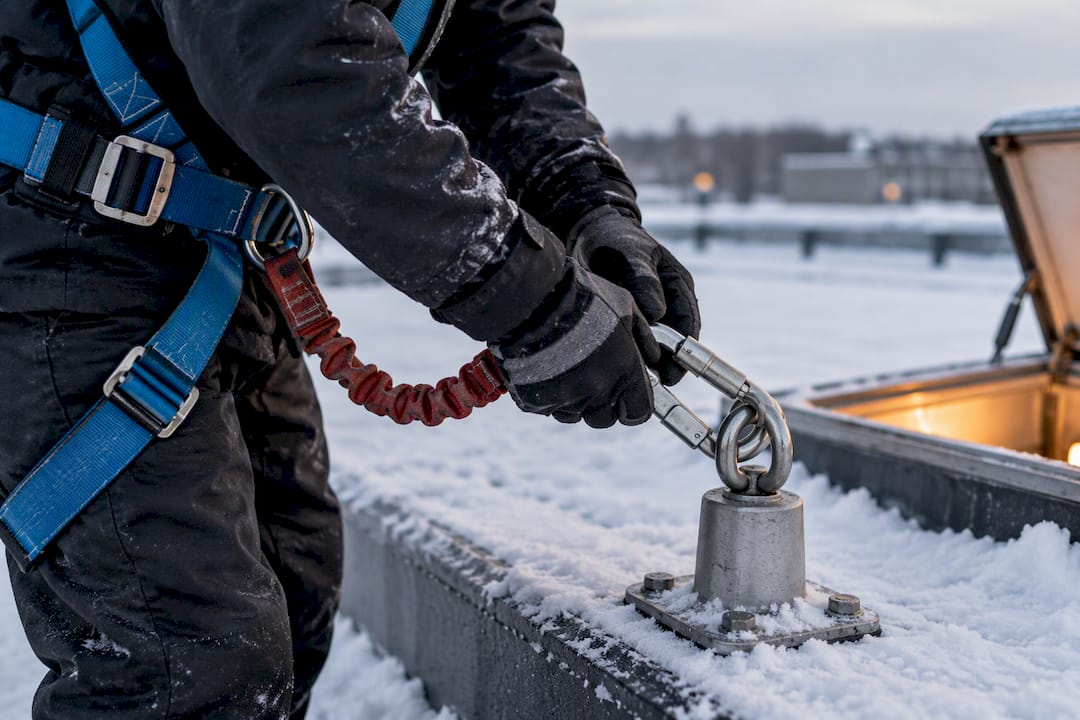
Fall protection is required under general industry and construction standards at heights typically encountered during commercial roof snow removal, according to OSHA’s rooftop snow hazard alert, meaning most commercial roof access for snow work triggers a training and equipment obligation regardless of how routine the task seems.
Key controls to require of any crew, in-house or contracted, include:
- Ground-based removal tools such as roof rakes or heated cable systems, used whenever the roof design allows removal without workers walking the surface.
- Written removal plans describing sequence and staging areas so snow is cleared in a uniform pattern rather than piled unevenly, which the same OSHA guidance flags as a way crews create unbalanced loads on the structure they are trying to protect.
- Ground-level traffic control, cones, and signage to keep bystanders clear of drop zones during active removal.
- Cold-stress precautions, layered PPE, and a rescue plan in case a worker becomes incapacitated at height or in extreme temperatures.
Techniques that avoid roof access entirely are worth prioritizing whenever the building layout permits them, since they eliminate the fall hazard altogether rather than just controlling it.
When to remove snow and when to leave it: decision triggers and warning signs
Removing snow is not automatically the safer choice. The Snow Load Safety Guide notes that most buildings are not at risk of snow-induced failure, and practitioners cited in that guidance stress that leaving snow in place is often safer than sending workers onto a roof that may already be near its limit. Removal should happen only when a qualified assessment shows the structure is approaching design capacity or the forecast will push it there.
Use this sequence when a storm is building:
- Compare current accumulation against the building’s documented design load, using the field checks described earlier as a rough gauge.
- Check the forecast for additional snowfall in the next 24 to 72 hours and factor that into the load estimate.
- Watch for rapid melt-and-refreeze cycles, which add weight through ice formation even after snowfall stops.
- If any load estimate approaches design capacity, escalate to a licensed professional engineer rather than authorizing further removal on your own judgment.
- If removal is approved, require a uniform, documented removal pattern rather than an ad hoc approach.
Visual warning signs mean the decision has already been made for you. Sagging roof members, audible creaks, cracked drywall, or doors and windows that suddenly stick are signs the structure may already be in distress, and the appropriate response is evacuation and an engineer assessment, not continued removal attempts.
Pro Tip: Keep your building’s documented design snow load on file somewhere your maintenance team can find it in five minutes, not buried in a drawing archive from the original contractor.
Snow Event Response Plan: roles, escalation, documentation, and post-event review
A Snow Event Response Plan turns judgment calls into a documented process, which matters both for safety and for how a claim gets defended later. The Snow Load Safety Guide recommends that buildings with identified vulnerabilities maintain a formal plan rather than relying on reactive decisions made mid-storm.
A workable plan includes:
- Pre-season prep tasks completed and logged before the first snowfall of the season.
- Defined trigger thresholds tied to load estimates, forecast severity, or observed warning signs.
- Occupant protection procedures, including who authorizes evacuation and how occupants are notified.
- A contractor retainer with pre-agreed dispatch rules so response does not depend on same-day availability.
Assign roles before the season starts, not during a storm:
- A single decision-maker, usually the property manager or a designated board member, who has authority to trigger evacuation or emergency removal.
- A communications lead responsible for notifying occupants, staff, and the retained contractor.
- A documentation lead responsible for time-stamped photos, service logs, and vendor reports.
Documentation is not a formality. Time-stamped photos, service logs, and signed contractor checklists regularly turn out to be decisive when defending against a slip-and-fall or negligence claim filed after a winter event. After each significant storm, run a short post-event review: what triggered the response, whether thresholds held up, whether the contractor met response windows, and what should change in the plan before the next event.
Hiring contractors, contracts and insurance: what to require in a snow-removal agreement
The contract you sign with a snow removal vendor is a liability document as much as a service agreement, and it deserves the same scrutiny you would give any other risk-transfer arrangement. Start with paperwork: a certificate of insurance, proof of workers’ compensation coverage, and confirmation of liability limits that match your property’s exposure. Ask for endorsements naming your association or ownership entity where appropriate. Denver Snow Removal’s guide to snow removal insurance walks through what property owners should require from a vendor before signing anything.
Beyond insurance, the contract itself should spell out:
- Scope of work, including which surfaces, response levels, and trigger depths activate service.
- Materials and equipment specifications, so you know what deicing products and machinery will be used on your property.
- Remedies for no-shows or missed response windows, since a vague contract offers no recourse when service fails during the storm that matters most.
- Recordkeeping requirements, obligating the vendor to log every visit with time stamps and site conditions.
Verify claims before signing. Ask for references from comparable properties, request evidence of a written safety program, and confirm the vendor trains crews on the same OSHA-aligned practices covered earlier. Guidance on preventing slip-and-fall liability covers how documented vendor visits become part of a defense strategy after an incident, since a signed service log showing a property was treated within the contracted window carries real weight in a claim.
Pro Tip: Request a sample service report before signing, not after the first storm. If it lacks time stamps or site photos, ask for a revised template.
Monitoring tools, forecasts, and triggers (WSSI, NWS/NOAA products, and local forecasts)
Forecast monitoring turns your response plan from a document into an operational routine. The WSSI-P user guide from the Weather Prediction Center describes the Probabilistic Winter Storm Severity Index as a situational-awareness tool that combines snow amount, snow load, blowing snow, and ice accumulation into a single impact picture, useful for setting operational triggers but never intended as a sole forecast source.
Precipitation type and water content change risk as much as raw snowfall totals do. Wet, heavy snow adds load faster than dry powder of the same depth, and wind-driven drifting can concentrate that load unevenly across a roof or parking lot.
Build your triggers around forecast lead time:
- Watch or warning issuance from your local National Weather Service office should activate your contractor retainer within a set window, often 24 to 48 hours ahead.
- A WSSI-P reading indicating moderate or higher impact should prompt an internal check-in among your response team.
- Any forecast combining heavy accumulation with wind should raise a flag for drift-prone roof areas regardless of the average snowfall total.
Treat these tools as inputs to a decision, not the decision itself, and confirm vendor availability before the trigger point rather than after.
How a professional provider supports assessments and reduces liability
A qualified snow removal provider fills a specific role in the plan described above: emergency dispatch when triggers activate, documented site visits that create the paper trail your plan depends on, and equipment capacity sized to your property. A professional snow removal provider typically offers dedicated 24/7 availability and equipment intended to clear commercial lots efficiently.
What a vendor relationship should deliver:
- Emergency dispatch that does not depend on same-day scheduling once a threshold is triggered.
- Time-stamped, photo-documented service visits logged for every property.
- Equipment capacity matched to the property’s size and the response windows in the contract.
- Written safety procedures consistent with OSHA-aligned practices for any elevated work.
A professional provider handles the operational side of removal well, but it does not replace a licensed professional engineer when the concern is structural. Combine contractor service with a PE assessment whenever a property shows warning signs or approaches documented design capacity. Every vendor report you receive should include the date, time, site conditions, and the specific work performed, the same details that make a service log useful in a liability defense.
Balancing safety, liability, and budget in snow risk decisions
Every property manager eventually faces the same tension: cosmetic clearing looks responsive, but it is not the same as legal defensibility or life safety. I have seen the instinct to clear every walkway and lot immediately after a storm, even when the bigger risk sits on the roof, unaddressed and unmeasured. That instinct is understandable and often wrong.
The properties that avoid trouble are the ones that pay for an engineering check before the season starts and keep a documented relationship with a vendor they trust, rather than shopping for the cheapest plow truck available during an active storm. Pre-authorizing emergency retainer action, so your team is not making financial decisions while a roof is groaning, is one of the more underrated moves a manager can make. Budget for the assessment and the contract first. Everything else follows from those two decisions.
— Jesse
How a professional service can help
If the checklist above raised questions about your own property’s readiness, a professional snow removal service can offer commercial snow removal and plowing, 24 hour emergency dispatch, sidewalk clearing and deicing, snow hauling, and seasonal contracts running September through May, matched to the response levels described earlier in this guide.
When requesting a quote, ask specifically for the response window the contract guarantees, the documentation you will receive after each visit, and a copy of the vendor’s insurance certificate. These are the same items covered in the contracts section above, and a provider that answers them clearly is one worth trusting with your property. Review the seasonal snow removal contract guide to see how a full-season agreement is structured, or request a free estimate for parking lot and sidewalk service to get pricing specific to your property before the next storm arrives.
Sources
For deeper technical guidance beyond this article, consult:
- Managing snow loads: roofs and decks (PNNL / BASC resource guide)
- Falls and Other Hazards to Workers Removing Snow from Rooftops and Other Elevated Surfaces (OSHA)
- Risk Management Series: Snow Load Safety Guide (U.S. government publication)
- WSSI-P user guide (Weather Prediction Center / WPC)
Property managers researching parking lot strategy in more depth may also find Fernandez & Sons’ parking lot snow management playbook useful for operational trigger-setting, and buildings due for a structural review can reference Upstate Roofing Pros’ explanation of commercial roof surveys.
FAQ
What are the 5 risk assessments?
Risk assessment frameworks vary by industry, and there is no single universal list of five that applies specifically to snow risk. For property managers, the closest practical equivalent covers structural capacity, human safety during removal, contractor and insurance exposure, monitoring and forecast risk, and documentation adequacy, each addressed in the sections above.
Will snow still exist in 2050?
Snow will still fall in most regions that receive it today, but regional climate guidance from NOAA indicates that precipitation patterns are shifting, with high-impact snow events persisting even as some average seasonal totals change. This makes historical snow-load experience a starting point rather than a guarantee for future planning.
What are the four P’s of winter safety?
Winter safety guidance from agencies like Ready.gov does not use a standardized “four P’s” framework, and no authoritative source in this space defines it that way. The practical equivalent covered in this guide is preparation, planning, professional assessment, and prompt response once thresholds are triggered.
What should I stock up on before a snow storm?
FEMA/Ready.gov’s winter storm guidance recommends emergency supplies, local weather alert signups, and precautions against carbon monoxide exposure and overexertion during storm events. For a property, this translates into deicing materials, backup communication methods, and a confirmed contractor retainer ready before the first snowfall.
When should I call a structural engineer instead of a snow removal contractor?
Call a licensed professional engineer when a roof shows visible warning signs such as sagging, creaking, or stuck doors and windows, or when load estimates approach the building’s documented design capacity. A snow removal contractor handles routine clearing and drainage maintenance, but structural concerns require the assessment only a PE can provide.