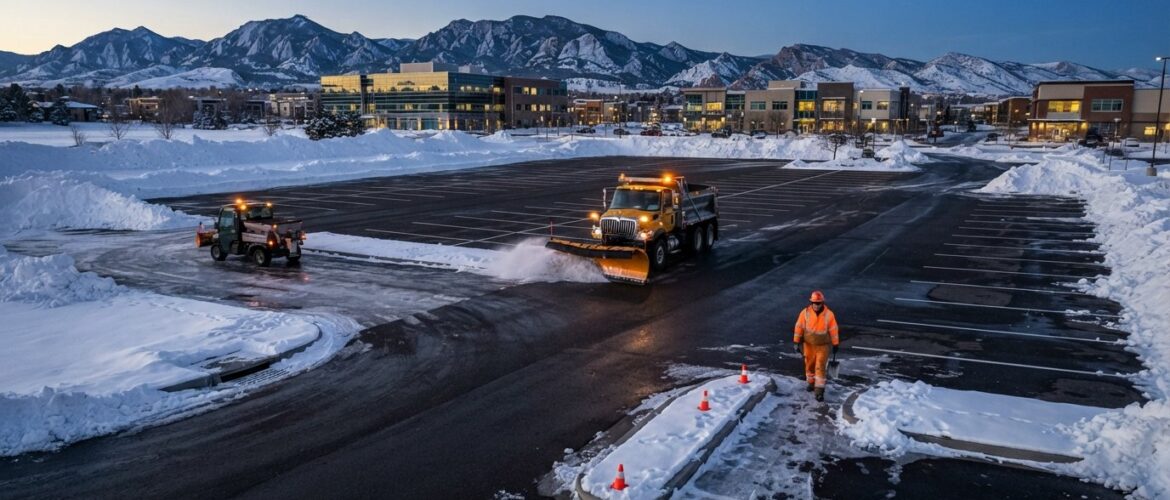
Pushing snow to the edge of an asphalt lot is the easy part; managing rapid Front Range freeze-thaw cycles without a lawsuit is the real test. When a heavy winter storm strikes, securing dependable commercial parking lot snow plowing Denver property managers can count on becomes an urgent operational priority. You already know the stress of arriving at dawn to find buried parking stalls, damaged curb lines, or tardy contractors who leave your commercial tenants stranded.
Uncleared drive aisles don’t just frustrate morning commuters; they invite severe slip-and-fall liabilities and immediate municipal code violations under Denver’s strict clearance ordinances. Discover how professional commercial snow plowing protects your Denver business from costly liabilities, code violations, and severe winter storm disruptions. In this 2026 guide, you’ll examine strategic snow staging practices, freeze-thaw defense protocols, and the operational standards needed to keep your commercial property safe and open before morning business hours.
Key Takeaways
- Understand how industrial-grade machinery and strategic snow routing prevent costly asphalt scarring, broken curbs, and blocked drainage basins.
- Learn why reliable commercial parking lot snow plowing Denver facilities require includes proactive freeze-thaw ice management to mitigate slip-and-fall risks and avoid municipal fines.
- Compare seasonal and per-push service agreements to lock in priority storm dispatch while aligning winter maintenance with your facility budget.
- Execute a pre-season site audit to mark hidden obstacles, designate dedicated snow storage zones, and preserve accessible routes before early blizzards arrive.
- Identify the dedicated fleet capabilities and local Front Range experience required to keep parking spaces open and hazard-free before morning business hours.
The High Stakes of Commercial Parking Lot Snow Management in Denver
Front Range blizzards strike swiftly, giving property managers narrow windows to secure commercial centers, office complexes, and industrial parks. When winter storms roll in from the Rockies, prompt commercial parking lot snow plowing denver businesses trust becomes vital for maintaining daily operations. Snow clearing is never just about moving heavy accumulation off the asphalt. Property managers must keep designated ADA pathways, crosswalks, and access ramps unobstructed to comply with federal accessibility standards and local regulations. For complete compliance strategies, explore our comprehensive guide to commercial snow removal in Denver.
To see how commercial operators coordinate equipment and maintain lot traffic safely during a storm, watch this practical operational breakdown:
Understanding Denver’s Rapid Freeze-Thaw Winter Dynamics
Denver’s high altitude creates intense solar radiation that melts snowbanks quickly during clear afternoons, even when ambient temperatures stay near freezing. Once the sun drops behind the mountains, that running meltwater pools across drive aisles and parking stalls, refreezing into sheets of invisible black ice. Competent commercial operators don’t just push snow to the closest curb. Crews must stack piles downhill from high-traffic pedestrian zones and catch basins. Integrating strategic snow stacking with advanced snow removal and de-icing techniques prevents runoff from migrating back into lanes and creating severe morning slip hazards.
Mitigating Commercial Slip-and-Fall Liability Risks
Colorado premises liability statutes place direct legal obligations on commercial property owners to maintain safe grounds for tenants, visitors, and delivery drivers. Unaddressed ice patches quickly cause pedestrian falls, vehicle collisions, and expensive insurance claims. Professional contractors mitigate these exposures by providing detailed operational logs with time-stamped service verifications. These records confirm precise service intervals, giving managers dependable documentation if an incident occurs. Investing in dependable commercial parking lot snow plowing denver properties require ensures safe passage before morning business hours begin.
Key Equipment and Techniques for Plowing Large Commercial Lots
Clearing a 50-car retail lot or a multi-acre distribution hub requires far more pushing power than an ordinary pickup truck with a standard straight blade. Heavy, water-logged Front Range spring snow will quickly overpower light machinery, leaving compacted ruts that turn into solid ice. Reliable commercial parking lot snow plowing denver facilities demand relies on heavy machinery engineered to move massive volumes in fewer passes. By implementing proven professional snow plowing techniques, commercial operators preserve asphalt surfaces, protect concrete curbs, and maintain open freight lanes throughout severe blizzards.
Commercial Heavy Equipment vs. Standard Pickup Plows
Dedicated commercial fleets pair high-capacity pushing implements with versatile machinery suited to distinct zones across your property:
- Heavy-duty commercial trucks: Equipped with wide V-plows and containment pushers, these trucks clear primary drive aisles and long parking lanes rapidly.
- Front-end wheel loaders: Large loaders stack extreme snow volumes out of main traffic lanes during heavy blizzard cycles.
- Skid steers and compact loaders: These machines maneuver easily around light poles, covered carports, and dumpster corrals where large plow trucks cannot fit.
Strategic Snow Staging and Obstacle Protection
Smart plowing is about where snow ends up, not just moving it out of the lane. Snow storage areas must sit downhill from storm drain catch basins. If crews pile snow uphill, daytime melt will run across open traffic lanes, creating severe hazards that run counter to OSHA winter weather slip and fall guidelines. Operators must also keep sightlines clear by never piling snow high at driveway entrances or street intersections.
Protecting infrastructure is equally critical. Prior to winter storms, high-visibility fiberglass stakes should mark curb perimeters, landscape beds, and fire hydrants so plow drivers can navigate around them in whiteout conditions. If you need a battle-tested team equipped with heavy machinery to safeguard your facility this winter, connect with denversnowremovals.com for dependable commercial service.
Evaluating Commercial Snow Contracts: Seasonal vs. Per-Push Plowing
Selecting the right service agreement directly determines both your operational reliability and your seasonal financial exposure. Front Range weather patterns fluctuate wildly from year to year; an unseasonably dry early winter can quickly give way to relentless spring blizzards. When structuring commercial parking lot snow plowing denver facilities require, commercial property managers balance service priority against budget predictability. Integrating mechanical clearing alongside proactive ice management services provides total coverage, keeping pedestrian corridors and drive lanes safe no matter which payment structure you select.
Per-Push vs. Event-Based vs. Seasonal Pricing Models
Each contract structure allocates weather risk differently between the property owner and the service contractor:
- Per-push agreements: Invoicing triggers every time equipment clears the property at an agreed depth. This structure minimizes costs during dry winters with below-average snowfall, but it increases administrative paperwork and overall expenses during prolonged storm cycles.
- Seasonal contracts: A fixed monthly payment covers all winter storms across the contracted term. This model provides steady budget predictability, insulating property owners from unexpected cost surges during high-snowfall seasons.
- Event-based billing: Contractors charge a single predetermined rate for an entire continuous storm cycle, rather than billing individual pushes over a multi-day blizzard.
Critical Contract Clauses Every Denver Manager Must Review
Before executing an agreement, examine the exact language governing storm response times and operational thresholds. Verify specific accumulation triggers, which typically dispatch crews once snow reaches one or two inches. Confirm that your contract includes mandatory return visit intervals during continuous, multi-hour snowfall events to prevent heavy accumulation from stranding vehicles or blocking fire lanes. Keeping access open throughout active storms aligns your property with OSHA’s winter weather safety guidelines.
Finally, always require proof of dedicated commercial general liability insurance and workers’ compensation coverage. Reputable contractors carry robust policies that protect commercial facilities from third-party incident claims. Securing these terms early guarantees dependable commercial parking lot snow plowing denver businesses need to operate smoothly throughout the winter season.
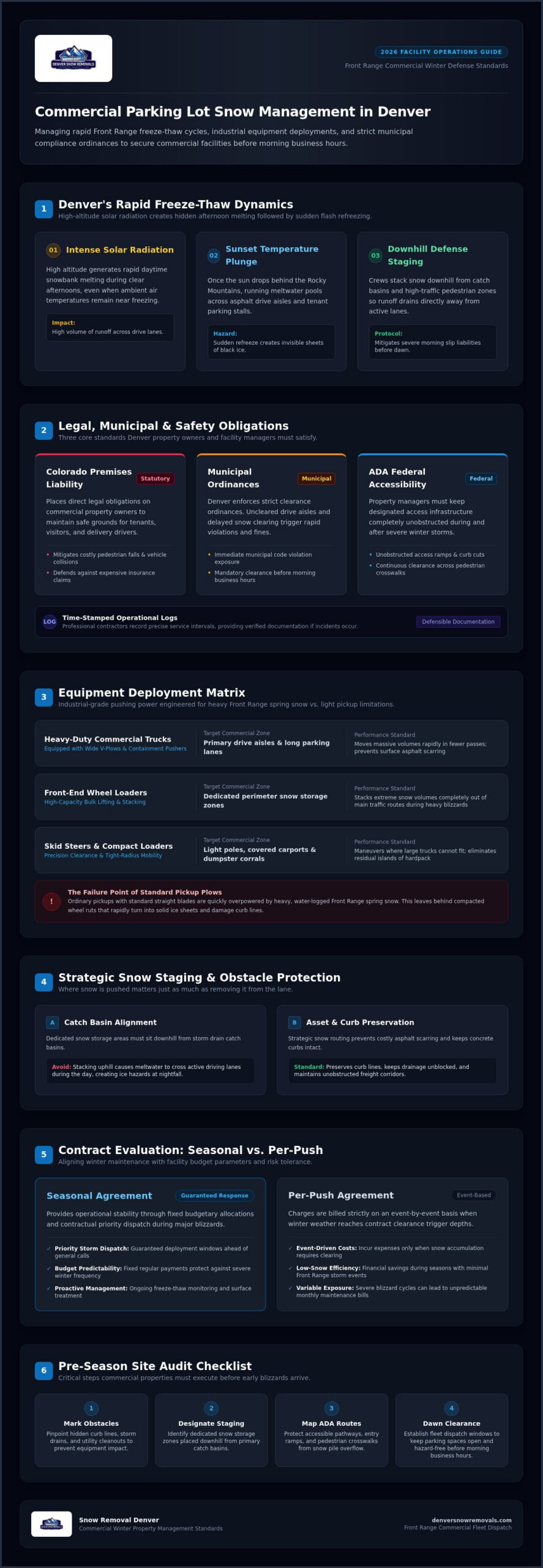
Pre-Season Commercial Parking Lot Preparation Checklist
Denver’s first measurable snowfall often lands by mid-autumn, catching unprepared facilities off guard. Waiting until the sky turns gray to organize your winter response invites severe operational disruption and safety hazards. A methodical autumn site evaluation guarantees seamless execution of commercial parking lot snow plowing denver properties depend on during surprise storms. Facility managers who conduct thorough pre-season audits protect their asphalt investment and align their operations with our complete roadmap for winter storm preparedness for Denver businesses.
Asphalt Inspection, Crack Sealing, and Drain Clearing
Before winter operations begin, walk your property to identify physical vulnerabilities:
- Seal open cracks and potholes: Sub-zero moisture expands inside pavement fractures, while heavy steel plow blades can snag crumbling expansion joints and tear up large asphalt sections.
- Clear storm drain catch basins: Remove accumulated leaves, trash, and sediment from grates so daytime meltwater drains freely without backing up into frozen sheets across driving lanes.
- Create photographic condition logs: Document existing curb scrapes, pavement flaws, and bent signposts before the first snowfall to prevent post-season repair disputes.
Mapping Traffic Flow and Tenant Priority Zones
Executing efficient commercial parking lot snow plowing denver sites require demands clear routing protocols tailored to your specific facility footprint:
- Clarify operating schedules: Identify shift change windows, morning retail openings, and freight delivery schedules so plow operators clear essential drive aisles first.
- Designate vehicle staging areas: Establish secondary parking zones where long-term or overnight tenant vehicles can relocate during forecasted blizzards.
- Outline primary pedestrian corridors: Mark clear pathways connecting main customer entrances directly to accessible handicap stalls before crews deploy.
Establish clear communication channels and dispatch triggers with your contractor well before freezing temperatures arrive. Lock in your operational plan today by visiting denversnowremovals.com to schedule your pre-season commercial consultation and secure your priority route.
Why Denver Businesses Choose Snow Removal Denver for Commercial Plowing
Navigating harsh Front Range winters demands a dedicated contractor equipped with industrial machinery, seasoned personnel, and immediate emergency readiness. Commercial facility directors cannot afford delayed responses or damaged curbs when sudden storms impact employee commutes and customer access. Choosing a reliable partner takes the anxiety and diligent work out of your winter risk management. For practical evaluation criteria when vetting service providers, consult our guide on how to choose a snow removal contractor.
Over 44 Years of Dedicated Local Denver Experience
Snow Removal Denver brings over 44 years of local Denver snow management experience directly to your property. Decades of clearing commercial facilities have given our crews an intimate understanding of regional snow conditions. We’ve weathered historic Front Range blizzards, sub-zero cold spells, and heavy, wet spring storms across Downtown Denver, the Denver Tech Center, and surrounding industrial hubs. As a family-owned business, our long-standing presence reflects a steady commitment to protecting local businesses and earning your professional trust year after year.
Heavy Equipment Fleet and 24/7 Reliable Dispatch
Managing extensive commercial square footage requires serious machinery designed to push deep drifts in minimal passes. Our dedicated commercial fleet includes:
- Heavy commercial trucks: Built to maintain continuous momentum across long traffic lanes and retail parking corridors.
- Front-end loaders: Deployed to lift, push, and stack massive volumes when severe snow events exceed regular blade capacity.
- Industrial snow blowers: Engineered to clear perimeter sidewalks, walkways, and loading docks quickly without throwing debris into cleared lanes.
Our on-call personnel operate 7 days and nights, continuously tracking incoming weather systems across the Front Range. When blizzards threaten morning traffic, crews mobilize hours before your first employees arrive. Partner with Snow Removal Denver to establish reliable commercial parking lot snow plowing denver facilities trust, keeping your business open, compliant, and accessible all winter long.
Secure Your Commercial Facility Before the First Front Range Blizzard Hits
Safeguarding your property through unpredictable Colorado winters requires proactive planning, industrial machinery, and vigilant freeze-thaw management. Effective winter maintenance isn’t just about pushing snow off driving lanes; it’s about protecting pedestrians, preventing costly slip-and-fall claims, and keeping ADA pathways fully compliant. Conducting thorough autumn site audits and locking in a transparent service agreement ensures your facility stays operational throughout relentless storms.
When severe weather strikes, dependable commercial parking lot snow plowing denver businesses trust keeps commerce moving without interruption. Snow Removal Denver provides over 44 years of dedicated local experience across the Denver Metro area. As a family-owned business, we maintain 24/7 on-call dispatch with a robust commercial fleet of heavy-duty trucks and front-end loaders prepared to clear your property before morning business hours. Take the diligence and anxiety out of your winter maintenance schedule. Request your free commercial parking lot snow plowing estimate today, and give your tenants, employees, and customers safe passage all winter long.
Frequently Asked Questions
When should a commercial property manager contract snow plowing services in Denver?
Property managers should finalize snow plowing agreements by late summer or early September, well before the initial autumn freeze. Waiting until October risks contractor route lockouts, leaving your site exposed to early blizzards. Securing agreements early guarantees route prioritization, site mapping walkthroughs, and prompt dispatch when Front Range snowstorms hit. It also ensures proper pre-season staging before severe weather disrupts normal business traffic.
What is the typical trigger depth for commercial parking lot plowing in Denver?
The standard trigger depth across commercial contracts is typically one to two inches of accumulation. Once snow reaches this threshold, dispatch teams deploy heavy machinery to clear drive aisles and parking spaces. Establishing a defined trigger prevents vehicle tires from compacting fresh snowfall into slick, hard-packed ice sheets. Dependable commercial parking lot snow plowing denver facilities schedule ensures lots remain clear throughout continuous, multi-hour winter events.
How do you prevent black ice formation after plowing commercial parking lots?
Black ice prevention requires combining mechanical clearing with proactive ice management applications. In Denver, afternoon sun melts snowbanks even during freezing temperatures, causing meltwater to flow across paved lots and refreeze overnight. Crews combat this by stacking snow downhill from catch basins and applying specialized de-icing treatments immediately after plowing. Continuous monitoring ensures walking corridors and drive aisles stay safe during volatile morning freeze-thaw cycles.
Can you plow commercial parking lots while business operations are actively open?
Yes, experienced contractors routinely clear lots during active business hours using coordinated, section-by-section routing. Operators isolate specific parking quadrants, clear them thoroughly, and guide vehicle traffic safely into opened bays. Skid steers and heavy commercial trucks maneuver with spotters or warning beacons to safeguard visiting customers and staff. Maintaining clear primary access routes during active storms prevents hazardous gridlock and keeps retail or office operations functioning smoothly.
Where is the plowed snow placed on commercial properties with limited lot space?
Operators designate low-priority perimeter dead zones, island borders, or unused rear corners away from main driving corridors. Crews must avoid stacking snow over handicap spaces, pedestrian access ramps, fire hydrants, or uphill drainage paths. For zero-lot-line properties or compact retail strips where on-site snowbanks would obstruct driver sightlines, commercial teams utilize front-end loaders and haul trucks to mechanically transport excess snow off-site.
Does commercial snow plowing include clearing building entrance walkways and ADA stalls?
Yes, comprehensive commercial agreements incorporate entrance sidewalks, ADA handicap parking bays, and accessible curb ramps alongside primary asphalt drive lanes. Keeping these high-risk pedestrian access areas clear down to bare pavement is critical for meeting federal accessibility guidelines and avoiding Denver municipal code citations. Commercial parking lot snow plowing denver teams integrate sidewalk crews with heavy plow operators to guarantee safe pedestrian passage from curb to doorway.
Why shouldn’t property managers rely on light-duty pickup trucks for commercial lots?
Light-duty pickup trucks lack the weight, blade capacity, and horsepower required to move heavy, wet Front Range snow accumulations efficiently. Standard truck plows often windrow heavy snow into parking bays, damaging concrete curbs and taking excessive passes to clear open acreage. Dedicated commercial fleets utilize heavy-duty trucks, front-end loaders, and commercial pushers that clear wide expanses rapidly without wearing out equipment or tearing up asphalt.