
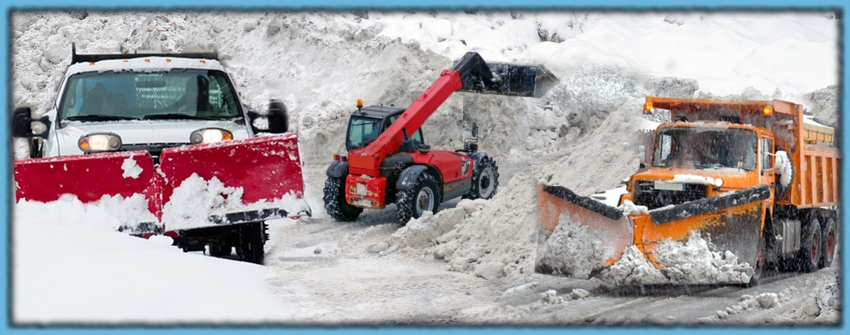



When a blizzard hits at 2 AM, finding reliable 24 hour snow removal in Denver CO isn’t just a convenience, it’s a legal necessity. Denver property owners face strict deadlines for clearing sidewalks, and the city’s plows will never touch your private driveway or commercial parking lot. This guide explains exactly how to get immediate, professional snow clearing at any hour, what the law requires of you in 2026, what emergency service actually costs, and how to separate dependable contractors from operations that will leave you buried.
Table of Contents
External link for Denver snow removal
See the Best Snow Plows of 2026 ❄️
- Why 24/7 Snow Removal Matters in Denver’s Climate
- Denver’s Snow Removal Laws You Must Know (2026 Update)
- What to Expect from a 24 Hour Snow Removal Service in Denver
- How Much Does Emergency Snow Removal Cost in Denver?
- How to Choose a Reliable 24 Hour Snow Removal Provider
- DIY Snow Removal vs. Hiring a Pro: Safety & Liability
- Frequently Asked Questions About 24 Hour Snow Removal in Denver
- Why Denver Property Owners Trust 24/7 Snow Removal Pros
Why 24/7 Snow Removal Matters in Denver’s Climate
Denver averages 60 inches of snow per year, and the storms that matter most rarely arrive during business hours. A heavy overnight accumulation can trap vehicles, block customer access, and create liability hazards before the sun comes up. The City and County of Denver deploys a fleet of 70 large plows to clear roughly 2,050 lane miles of main streets, but that effort stops at the curb. Residential side streets, private driveways, and commercial parking lots are entirely the owner’s responsibility.

When snow sits through a morning freeze-thaw cycle, it compacts into a layer of ice that is far more difficult and expensive to remove than fresh powder. A 24-hour service dispatches during or immediately after the storm, clearing surfaces before foot traffic and vehicle weight turn snow into a hazard. For businesses, this means employees and customers arrive to a safe, accessible lot. For homeowners, it means no frantic shoveling at 5 AM before a commute. The window for easy removal is short, and waiting until daylight often means paying more for ice remediation than you would have paid for plowing.
Denver’s Snow Removal Laws You Must Know (2026 Update)
Denver enforces its snow removal ordinances aggressively, and ignorance of the rules does not excuse non-compliance. The city’s legal framework places clear obligations on every property owner, and the deadlines are tighter than many people realize.
The 24-Hour Sidewalk Rule
Property owners must clear snow and ice from adjacent sidewalks within 24 hours after a snowfall ends. This applies to homeowners, landlords, and commercial property managers equally. The clock starts when the last flake falls, not when you notice the accumulation. If the city issues a notice of violation, the timeline compresses dramatically. Businesses receiving a notice have only 4 hours to clear the sidewalk before an inspector returns for a re-check. Residential properties retain the full 24-hour window from the time of notice, but failure to comply results in a $150 fine per violation. Repeat offenses can escalate, and the city does not waive fines for first-time offenders.
What About Driveways and Parking Lots?
The city does not plow private driveways, residential parking areas, or commercial lots. That responsibility falls entirely on the property owner or manager. Pushing snow from your driveway or lot into the street is illegal and can result in additional fines or liability if the snow obstructs drainage, traffic, or city plow operations. The Residential Snow Plow Program covers about 1,260 center lane miles of residential streets using 4×4 pickup trucks with plows, but those trucks are not clearing your driveway apron or walkway. Using a 24-hour service ensures your property is compliant before the city’s enforcement window closes, and it keeps snow where it belongs: piled on your property, not pushed into the right-of-way.
What to Expect from a 24 Hour Snow Removal Service in Denver
Not all snow removal services operate the same way, and understanding the difference between emergency call-outs and seasonal contracts will save you money and frustration when the snow starts falling.
Emergency Response vs. Seasonal Contracts
Emergency or on-call service is designed for property owners who do not want a seasonal commitment. You call when a storm hits, and a crew dispatches to your property. This model offers flexibility but comes with per-visit billing and a premium for overnight or immediate-response dispatch. During major storms, on-call customers may wait longer than contract holders, because seasonal clients receive priority routing.
Seasonal contracts operate on a flat-fee basis for the entire snow season. You pay a set price regardless of how many times it snows, and your property is automatically serviced during each qualifying event. Contract clients get priority dispatch during multi-day storms and typically receive pre-treatment applications before forecasted events. The trade-off is commitment: you pay whether the season delivers 20 inches or 80 inches. For commercial properties with liability exposure and customer traffic, seasonal contracts are the industry standard.
Services Included in a 24/7 Call-Out
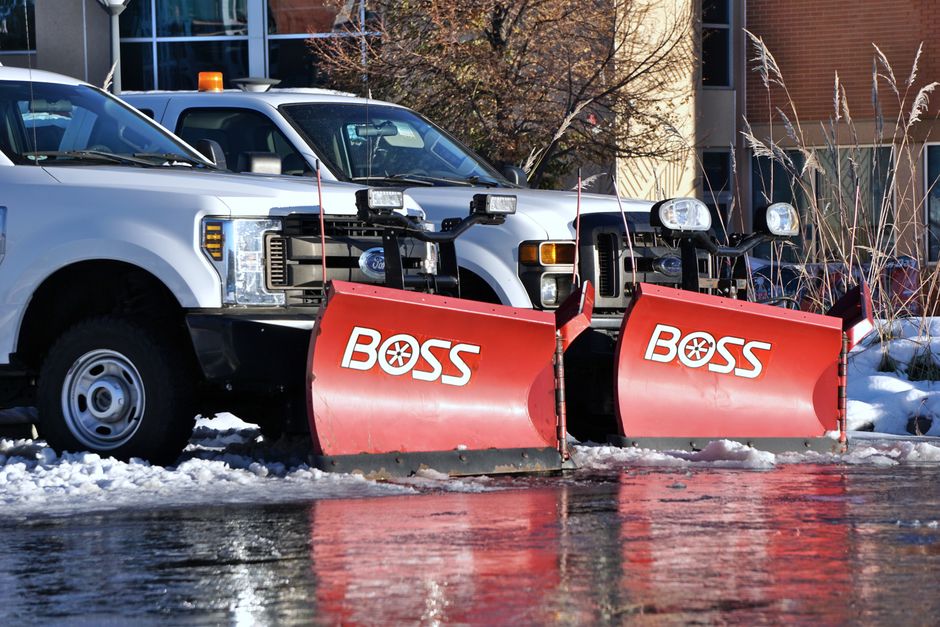
A full-service emergency call-out should include more than a single pass with a plow. Commercial parking lot plowing typically includes deicing with Ice Slicer, a solid deicer mined from Utah that contains over 90 percent chloride salts, or liquid magnesium chloride for sensitive areas like sidewalks and bike lanes. Residential call-outs cover driveway and walkway clearing, usually with 4×4 plow trucks that can maneuver in tight spaces without damaging landscaping or pavers.
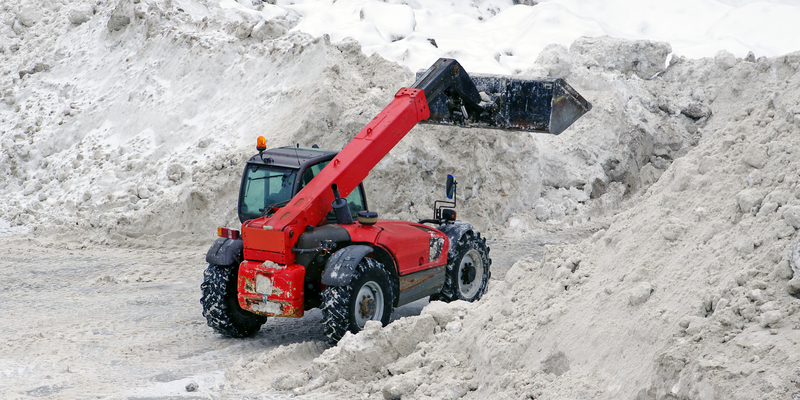
For properties with limited stacking areas, snow haul-away is a critical add-on service. When there is no room to pile snow on-site, a loader trucks the accumulation off the property entirely. This service prevents the gradual shrinking of parking capacity over the course of a snowy winter. Sanding for traction on steep driveways or sloped lots is another common inclusion, particularly for commercial properties where slip-and-fall liability is a constant concern.
Typical Response Times
Most established 24-hour providers guarantee dispatch within one to two hours of a call during active snowfall. Pre-treatment with liquid deicer can be applied before the storm arrives, which prevents ice from bonding to asphalt and makes post-storm plowing faster and more effective. The best time to call is before the storm peaks, when crews are already staged and routing through their contract properties.
How Much Does Emergency Snow Removal Cost in Denver?
Pricing transparency is rare in the Denver snow removal market. Most companies decline to publish rates, preferring to quote each job individually. Based on industry patterns and the cost structures that reputable providers discuss openly, here is what property owners should expect in 2026.
For residential driveways, per-visit pricing typically ranges from $50 to $150, depending on length, slope, and snow depth. A short, flat driveway in a central Denver neighborhood will fall at the low end. A long, steep driveway in the foothills will push toward the high end, especially during heavy, wet snow events. Commercial lots are priced differently. Small to mid-sized lots may run $150 to $500 or more per plow pass, with larger lots quoted per hour or per acre. Deicing as a standalone service, without plowing, generally costs $75 to $200 per application for a standard driveway or small lot.
Several factors drive costs higher. Overnight and immediate-response calls carry a premium. Heavy, wet snow takes longer to move and stresses equipment. Ice removal, as opposed to fresh snow plowing, requires more labor and material. Haul-away services add significant cost because they involve loaders, dump trucks, and disposal fees. The single best way to control costs is to request a written quote before the season begins. Providers who quote during fair weather are less likely to impose surge pricing when a storm is bearing down on the metro area.
How to Choose a Reliable 24 Hour Snow Removal Provider
Denver’s snow removal industry includes everything from solo operators with a plow on a pickup to multi-crew commercial fleets. Separating reliable contractors from those who will overpromise and underdeliver requires asking the right questions before the first flake falls.
What to Look For
Years of experience matter in Denver specifically. The city’s snow chemistry, freeze-thaw patterns, and municipal regulations create a unique operating environment. Look for providers with a decade or more of local history. Insurance and liability coverage is non-negotiable. Any contractor working on your property should carry general liability insurance and worker’s compensation. If a crew member is injured on your property and the contractor lacks coverage, you may be exposed to a claim. Ask for proof of insurance and verify it before signing anything.
The equipment fleet tells you what kind of service you will receive. Residential properties need 4×4 plow trucks that can clear driveways without tearing up turf or cracking concrete. Commercial lots require heavy loaders and spreaders capable of moving large volumes of snow and applying deicer efficiently. A provider running residential-grade equipment on commercial lots will struggle during major storms. Finally, verify that the company actually answers phones overnight. A 24/7 promise means nothing if calls go to voicemail at 3 AM. Test the dispatch line before you commit.
Red Flags to Avoid
A contractor who offers a flat per-season price with no snowfall cap may be a gamble. Unlimited plowing sounds attractive, but during a heavy snow year, the provider may stretch resources thin, delay service, or cut corners to avoid losing money on the contract. Written agreements should specify what triggers a service visit, typically a minimum snow depth, and what services are included. If deicing or ice management is absent from the proposal, that is a serious gap. Ice, not snow, is Denver’s biggest liability risk, and a plow-only service leaves your property dangerous after the first freeze-thaw cycle.
DIY Snow Removal vs. Hiring a Pro: Safety & Liability
Shoveling a Denver driveway is not the same as clearing a few inches of light powder. The city’s storms frequently deliver six to twelve inches of heavy, wet snow that strains both equipment and bodies. Emergency room visits for cardiac events and back injuries spike after major snowfalls, and property owners with underlying health conditions face real risk from manual clearing.
Equipment costs add up quickly. A quality two-stage snow blower capable of handling Denver’s snow loads costs between $600 and $1,500. For that price, a seasonal snow removal contract may cover an entire winter of service without the storage, maintenance, and fuel costs. Beyond the physical and financial math, liability is the factor most homeowners overlook. If a visitor, delivery driver, or mail carrier slips on ice you failed to clear within the 24-hour window, you may face a lawsuit. Professional services provide documentation of treatment and clearing, which creates a record of compliance that can be invaluable if a claim arises. The time savings are equally stark: a professional crew clears a typical residential driveway and walkway in 30 minutes, work that would take a homeowner two to three hours with a shovel or snow blower.
Frequently Asked Questions About 24 Hour Snow Removal in Denver
How much does emergency snow removal cost?
Prices vary by property type and storm severity, but residential driveways typically run $50 to $150 per visit, while commercial lots range from $150 to $500 or more. The best way to lock in a fair rate is to request a written quote before the snow season begins.
What are the snow removal laws in Colorado?
In Denver, sidewalks must be cleared within 24 hours after a snowfall ends. Businesses receiving a violation notice have 4 hours to comply before a re-check. The fine for non-compliance is $150 per violation. Pushing snow into the street is illegal statewide.
What is the longest Denver has gone without snow?
The longest recorded snowless streak in Denver is 71 days, set in 1889. For current records and 2026 data, the National Weather Service Denver/Boulder office maintains updated climate statistics.
Do I need a seasonal contract or can I call per storm?
Both options exist. Seasonal contracts provide priority dispatch and predictable pricing. Per-storm calls offer flexibility but may involve longer wait times during major events and higher per-visit rates for overnight service.
Why Denver Property Owners Trust 24/7 Snow Removal Pros
Denver’s most established snow removal providers bring over 44 years of combined experience to the metro area, operating fleets equipped for both residential driveways and large commercial lots. They use Ice Slicer for main surfaces and liquid magnesium chloride for sensitive areas like walkways and bike lanes, matching the materials the city itself deploys. When on-site snow stacking space runs out, haul-away service keeps lots functional through the entire winter. For property owners planning ahead, free estimates and seasonal contracts are available for the 2026 snow season, with 24-hour dispatch that answers when it counts.