
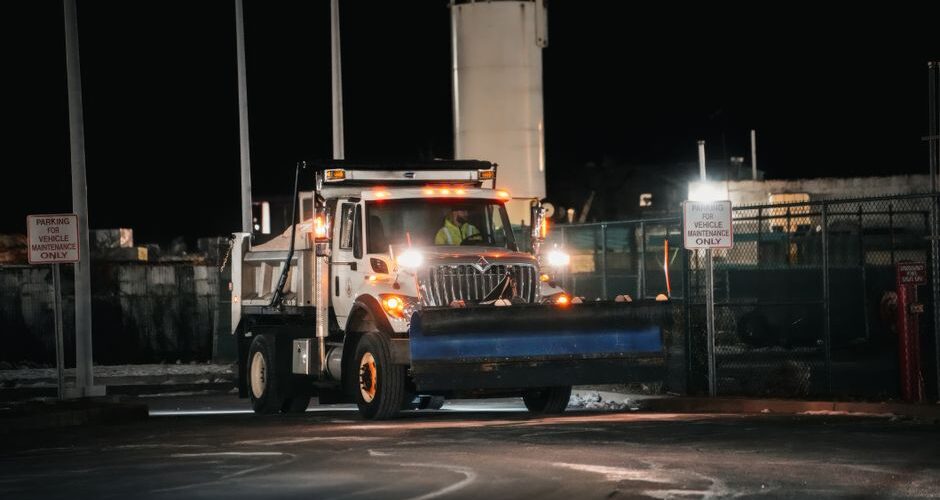

Emergency snow removal and plowing in Denver, Colorado
When a winter storm barrels down on the Front Range and you are staring at a parking lot buried under two feet of snow or a driveway blocked by an impassable berm, you do not have time to wait until Monday morning. You need a crew that answers the phone at 2 a.m. and dispatches a plow immediately. That is exactly what 24 hour emergency snow removal Denver CO means: a service built for the moments when the city’s plows have passed you by and the clock on your legal obligations is already ticking. This guide explains what triggers a snow emergency in Denver, what emergency clearing costs, and how to choose a contractor who will keep your property open, safe, and compliant no matter how hard it snows.
Table of Contents
- When a Snowstorm Becomes an Emergency in Denver
- Why You Need a 24 Hour Emergency Snow Removal Service in Denver
- Our 24/7 Emergency Snow Removal Services for Denver Properties
- How Much Does Emergency Snow Removal Cost in Denver?
- What to Look for in a Denver Emergency Snow Removal Contractor
- Frequently Asked Questions About Emergency Snow Removal in Denver
- Get Immediate Help: 24 Hour Emergency Snow Removal Denver CO
When a Snowstorm Becomes an Emergency in Denver
Not every snowfall qualifies as an emergency. A light dusting that melts by noon is a nuisance. A storm that drops six inches or more in a single push, especially when accompanied by plunging temperatures that turn slush into solid ice, is a different animal entirely. Denver’s Department of Transportation and Infrastructure treats snow response as emergency work, deploying 70 large plows across roughly 2,050 lane miles of main streets while residential plow trucks run between 3:00 a.m. and 3:00 p.m. to prevent deep ice rutting. For a property owner, the emergency threshold is often lower than the city’s operational definition.

The primary legal trigger is Denver’s sidewalk clearing ordinance. Property owners must clear snow and ice from sidewalks, ADA ramps, and adjacent bus stops within 24 hours after snow stops falling. Businesses face an even tighter standard: they must begin clearing immediately. If you receive a notice of violation, a business has just four hours to comply before re-inspection and potential fines. A residential owner gets the full 24 hours, but that window shrinks fast when you are out of town or physically unable to shovel.
An emergency call-out differs from a scheduled plow visit in several ways. Scheduled service happens on a predetermined route during normal business hours. Emergency service means a crew mobilizes after-hours, on weekends, on holidays, or while snow is still falling heavily. The risks of delaying that call are real: city fines, slip-and-fall liability if someone gets hurt on your unshoveled walkway, and blocked access for emergency vehicles. A 24-hour response team eliminates those risks by showing up when no one else will.
Why You Need a 24 Hour Emergency Snow Removal Service in Denver
Avoiding Costly City Fines and Liabilities
The Denver ordinance is not a suggestion. It is enforced, and the financial consequences of ignoring it compound quickly. Beyond the base fine for an un-shoveled sidewalk, the city reserves the right to clear the walkway itself and bill the property owner for the work. That bill will almost always exceed what a private contractor would have charged, and you have no say in the timing or quality of the job.
Professional emergency snow removal does more than move snow. It creates a record. Reputable companies document their work with time-stamped photographs and service reports that show exactly when the property was cleared. If a pedestrian files a slip-and-fall claim weeks later, that documentation is your first line of defense. It proves you met your legal duty within the required window. Emergency service is not a luxury for property owners who want to avoid shoveling. It is a financial and legal safeguard that pays for itself the first time it prevents a lawsuit or a city fine.
See the Best Snow Plows of 2026 ❄️
Protecting Your Property from Ice Damage and Snow Load
Denver’s heavy, wet spring snows are notorious for causing structural problems. Flat commercial roofs collect snow that can exceed load limits, leading to costly sagging or outright collapse. Ice dams form at the eaves when heat escapes from the building, trapping water that backs up under shingles and into interior walls. Frozen gutters tear away from fascia boards under the weight.
Emergency plowing addresses these risks at ground level before they escalate. When snow is removed promptly, it does not have time to be packed down by foot traffic and vehicle tires into a layer of ice that bonds to asphalt and concrete. That ice is exponentially harder and more expensive to remove later, often requiring chemical deicers or mechanical chipping that damages the surface. There is also the problem Denver’s own plows create: the dense, compacted berm that city trucks push across driveway aprons and onto sidewalks. A private emergency crew clears that berm immediately, restoring access that the city’s residential plow program, which makes a single center-line pass with no de-icing materials, cannot provide.
Our 24/7 Emergency Snow Removal Services for Denver Properties
Commercial Parking Lot Plowing and Ice Management
A retail center, office park, or apartment complex that cannot be accessed is a property that is losing money by the hour. Commercial emergency clearing goes far beyond a single pass with a truck-mounted plow. The goal is curb-to-curb clearing that opens every parking stall, fire lane, and loading dock so tenants can operate and customers can park safely.
De-icing is a critical part of the package. Denver’s own fleet uses Ice Slicer, a naturally mined product from Utah that is over 90 percent chloride salts, on main streets, and liquid magnesium chloride downtown where air quality concerns limit particulate matter. A professional commercial contractor applies the right material for the specific site: magnesium chloride for eco-sensitive areas near landscaping, Ice Slicer or calcium chloride for general lots where rapid melting is the priority. Commercial clients receive priority scheduling during storms, with the understanding that the lot must be clear before the first employee arrives or the doors open to the public. When you manage a property where liability exposure is high and tenant expectations are higher, emergency service keeps the business running no matter the hour.
Residential Driveway and Walkway Emergency Clearing
Homeowners often wonder if they can call someone to plow their driveway on short notice. The answer is yes, immediately. An emergency residential clearing differs from a standard plow visit in scope and intensity. A routine plow pass handles fresh snowfall. An emergency deep-clear addresses the packed snow and ice that have already accumulated, including the dense apron at the end of the driveway where city plows have deposited a frozen wall of snow.
The service extends to the sidewalks, ADA ramps, and bus stops that Denver ordinance requires you to maintain. Many homeowners do not realize they are responsible for the bus stop pad adjacent to their property, but the city’s enforcement does not make that distinction. A professional crew clears it all in one visit, so you wake up to a property that is fully accessible and fully compliant. For homeowners who travel frequently, manage rental properties, or simply cannot handle a heavy snowstorm on their own, emergency clearing is the difference between being trapped and getting on with the day.
Specialized Emergency Services: Roof and Ice Dams
Snow emergencies are not limited to the ground. Flat and low-slope commercial roofs accumulate snow that can exceed structural limits during a single heavy storm. Emergency roof clearing removes that load before damage occurs, using snow rakes, shovels, or steam equipment depending on the roof type and access. Ice dam removal is a related service that addresses the ridge of ice at the roof edge that traps meltwater. Steam is the preferred method because it removes the ice without damaging shingles or membrane roofing. These are not everyday services, but when a roof is at risk, they become the most urgent call a property owner makes.
How Much Does Emergency Snow Removal Cost in Denver?
The question that every property owner asks, and that few contractors answer publicly, is straightforward: how much does emergency snow removal cost? The honest answer is that emergency pricing runs higher than standard seasonal rates, and for good reason. After-hours labor, fuel surcharges, equipment wear in extreme conditions, and the simple economics of supply and demand during a major storm all push the price upward.
For a standard residential driveway in the Denver metro area, a single emergency plow visit typically falls in the range of $150 to $400, depending on driveway length, snow depth, and whether de-icing is required. A commercial lot is a larger variable. A small office lot might run $500 to $1,000 per visit, while a large retail center or apartment complex can exceed $2,000 for a full curb-to-curb clear with ice management. These are flat-rate emergency prices that cover heavy equipment, not the $44 per hour that TaskRabbit reports for labor-only shoveling. A shovel and a pickup truck cannot clear a commercial lot or a long driveway in a reasonable timeframe.
Comparing emergency per-visit pricing to a seasonal contract reveals the trade-off. A seasonal contract spreads the cost across the entire winter, with a fixed per-push or per-inch rate that is substantially lower than a one-off emergency call. The seasonal client also gets priority scheduling and proactive service. The per-visit emergency client pays more but carries no commitment and no monthly retainer. For a property owner who only needs help during the worst storms, that flexibility has value. The key is understanding the pricing model before the snow starts falling, because negotiating rates during a blizzard is not a position anyone wants to be in.
What to Look for in a Denver Emergency Snow Removal Contractor
The cheapest option is rarely the safest. When you hire a snow removal contractor, you are trusting them to protect your property and your liability exposure. The first thing to verify is insurance. The contractor should carry general liability insurance that covers property damage if a plow clips a gate, a curb, or a buried landscape feature. Workers’ compensation insurance is equally important. If an uninsured worker gets hurt on your property, that liability can land on you.
Response time matters more than almost anything else during an emergency. A reputable contractor will give you a guaranteed response window, typically on-site within two hours of your call for commercial clients and within four hours for residential during active storms. Equipment readiness separates professional operations from hobbyists. A company that handles Denver blizzards runs heavy-duty plows for commercial lots and 4×4 pickup trucks with plows for residential streets, mirroring the city’s own fleet configuration. If a contractor shows up with a single truck and a blade that looks like it came from a hardware store, they are not equipped for a major storm.
Read the contract carefully. Avoid auto-renewal clauses that lock you into another season without your explicit approval. Look for clear per-push or per-inch pricing language that defines exactly what triggers a billable visit. A two-inch trigger is common in Denver, meaning the contractor plows automatically when accumulation hits that threshold. Anything less transparent should raise a red flag. The goal is a partnership with a company that treats snow removal as a professional service, not a side hustle that disappears when the roads get bad.
Frequently Asked Questions About Emergency Snow Removal in Denver
Is snow removal considered an emergency in Denver?
Yes, both legally and operationally. The city treats snow response as emergency work, deploying plows at any hour of the day or night to keep main streets passable. For property owners, the emergency is defined by the 24-hour sidewalk clearing ordinance and the immediate liability created by un-shoveled walkways and parking lots. When a storm creates hazardous conditions that expose you to fines or lawsuits, it is an emergency.
How fast do you respond to an emergency call?
Response times depend on storm severity and call volume, but the standard target is on-site within one to two hours for commercial clients and two to four hours for residential clients during active snowfall. Calls placed between storms or after snow has stopped are often serviced even faster.
Do you offer free estimates for emergency services?
Yes. A transparent quote is provided before any work begins, based on property size, snow depth, and the specific services required. Pricing is dynamic during major storms, but there are no surprises after the plow is already on the ground.
What happens if the snow keeps falling after you plow?
This is a common concern during multi-day storms. Seasonal contracts typically include a return-to-service clause that brings the crew back when accumulation hits the trigger depth again. For one-off emergency calls, a second visit is scheduled and billed as a separate push. The dispatch team will advise you on the forecast and recommend a plan before the first visit concludes.
Do you clear bike lanes or sidewalks plowed by the city?
Yes. The berm that city plows leave across driveway entrances and on sidewalks is one of the most common reasons homeowners call for emergency help. The city’s residential plow program makes a single pass down the center of side streets and does not apply de-icing materials. The resulting packed snow at the curb line is the property owner’s responsibility to clear, and a professional crew handles it as part of any emergency visit.
Get Immediate Help: 24 Hour Emergency Snow Removal Denver CO
A blocked driveway or an impassable parking lot does not improve with time. Every hour that passes increases the risk of a fine, an accident, or property damage that could have been prevented. The dispatch team is available 24 hours a day, seven days a week, serving Denver and the surrounding metro area with heavy-duty equipment and crews who know how to handle a Colorado blizzard. Call now for a free quote and rapid dispatch. The plow is already running, and the crew is ready to roll.