
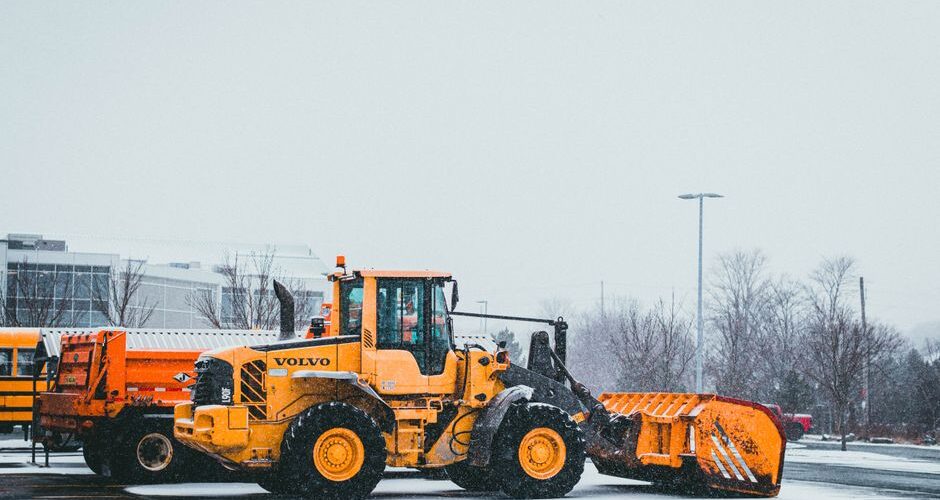

Snow removal in Denver, Colorado
Finding reliable HOA snow removal services Denver CO requires more than a quick internet search and a handshake. For board members and property managers across the Front Range, snow removal represents one of the largest line items in the annual operating budget and the single greatest source of winter liability exposure. Denver’s freeze-thaw cycles, the legal clock ticking on sidewalk clearing, and the sheer unpredictability of spring and fall storms make a written plan essential, not optional. This guide walks through the contract structures, legal obligations, pricing realities, and vendor vetting steps that every Denver HOA should have in place before the first flake falls in late 2026.
Table of Contents
See the Best Snow Plows of 2026 ❄️
- Why Denver HOAs Need a Dedicated Snow Removal Plan
- Understanding HOA vs. Homeowner Snow Removal Responsibilities
- The 3 Types of HOA Snow Removal Contracts: Denver Pricing and Pros
- How to Vet a Denver HOA Snow Removal Vendor
- The Three-Stage Snow Removal Framework for Denver HOAs
- Environmental and Eco-Friendly Snow Removal Options
- Emergency Storm Response and Communication Protocols
- Frequently Asked Questions About HOA Snow Removal in Denver
- Start Planning Your 2026 HOA Snow Removal Contract Today
Why Denver HOAs Need a Dedicated Snow Removal Plan
Residential Snow Plowing in Denver →
Denver does not experience winter the way Minneapolis or Buffalo does. High-altitude sun can melt four inches of snow off a parking lot by noon, only for the temperature to plummet after sunset and turn every puddle into a sheet of black ice. That daily freeze-thaw rhythm creates slip hazards that persist long after the plows have left, and it demands a removal strategy that accounts for both plowing and ice management as separate, equally important tasks.
Liability is the other driver no board can afford to ignore. Colorado law requires property owners to clear snow and ice from adjacent sidewalks within 24 hours after a snowfall ends. For an HOA, that means every common-area walkway, every shared parking lot, and every path leading to a mail kiosk or clubhouse falls under the association’s legal duty. A single slip-and-fall claim can dwarf the cost of a seasonal contract, and courts in Colorado have consistently looked at whether an HOA had a documented plan and a qualified vendor in place when assigning fault.
Resident expectations have also shifted. Homeowners track plow arrival times on their phones, post photos of untreated walkways to community forums, and expect the same response speed from their HOA that they see from municipal plows on arterial roads. A clear, communicated snow removal plan reduces those friction points before they become board-meeting grievances. Finally, improper plowing damages asphalt, scrapes curbing, and buries landscaping under compacted snow piles, creating repair bills that hit the reserve fund hard come spring. A dedicated plan protects both people and property.
Understanding HOA vs. Homeowner Snow Removal Responsibilities
What the HOA Must Cover
The association’s responsibility extends to every square foot of common area within the community. That includes private streets if the HOA owns them, shared parking lots, walkways leading to amenities, mail centers, and clubhouse entrances. Sidewalks that run along common property, such as the perimeter of a community park or a detention pond, also fall under the HOA’s obligation. Fire hydrant access and emergency vehicle routes within the community must remain clear, and in a gated community, the HOA typically bears full responsibility for all interior roads.
What Homeowners Must Cover
Individual homeowners are responsible for their own driveways, the walkway leading to their front door, and any steps, porches, or private patios attached to the unit. The sidewalk directly adjacent to their lot is also the homeowner’s responsibility under Colorado law, even if the HOA technically owns the strip of land where the sidewalk sits. Many HOAs reinforce this in their CC&Rs with explicit language requiring owners to clear their adjacent sidewalks and specifying fines for noncompliance.
The Legal Backstop: Colorado’s 24-Hour Rule
Colorado’s sidewalk clearing law gives property owners and HOAs exactly 24 hours after a snowfall ends to clear adjacent sidewalks. In Denver, enforcement runs through the Department of Transportation and Infrastructure, which responds to citizen complaints and conducts spot checks after major storms. Fines start at $50 to $150 per violation, but the real financial risk comes when the city contracts out the clearing work itself and bills the property owner for the service plus administrative fees. Repeat violations can escalate to municipal court, and for an HOA with hundreds of linear feet of sidewalk, a single storm can generate multiple citations. The 24-hour clock is non-negotiable, and it is one of the strongest arguments for a full-service contract that includes automatic post-storm sidewalk clearing.
The 3 Types of HOA Snow Removal Contracts: Denver Pricing and Pros
HOA snow removal contracts in Denver fall into three distinct categories, and choosing the wrong one for your community’s size and risk tolerance can lead to budget overruns or dangerous service gaps.
Per Push contracts, also called per-event contracts, charge the HOA only when a storm triggers service. The trigger is typically a minimum accumulation, most commonly two inches, though some HOAs set the threshold at four inches to reduce costs. This model works best for small associations under 20 units that see variable snowfall and want to avoid paying for a full season when Denver might only see a handful of qualifying storms. In the Denver market, per-push rates for a small HOA parking lot and common walkways generally run between $150 and $400 per event. The risk is that a heavy winter with frequent storms can push total costs well past what a seasonal contract would have cost.
Seasonal contracts lock in a fixed annual price over a two- or three-year term, regardless of how many storms hit. This is the most common model for mid-size HOAs with 20 to 80 units. The vendor assumes the weather risk, and the HOA gets budget certainty. Denver seasonal contracts for mid-size associations typically range from $8,000 to $20,000 per season. The $20,000 figure that surfaces in Colorado HOA discussions aligns with a 50- to 80-unit community on a comprehensive seasonal plan in higher snowfall zones like Cherry Creek or Washington Park.
Full-service seasonal contracts cover unlimited plowing and shoveling pushes plus pre-treatment with liquid brine or salt before storms and post-storm ice management including re-freeze callbacks. These contracts are built for large HOAs with 80 or more units, communities with significant pedestrian traffic, or any association where a slip-and-fall lawsuit would be catastrophic. Denver pricing for full-service contracts starts around $15,000 and can exceed $40,000 per season depending on the total paved area, the number of walkways, and whether the contract includes 24/7 on-site monitoring. The higher cost buys the HOA a vendor who treats the property proactively rather than reactively, which matters enormously during Denver’s overnight refreeze cycles.
How to Vet a Denver HOA Snow Removal Vendor
Insurance and Liability Checklist
Before signing anything, request a Certificate of Insurance directly from the vendor’s insurance agent, not from the vendor themselves. The policy should carry a minimum of $2 million in general liability coverage and $1 million in automobile liability, given that plow trucks operate on HOA property and public streets. Colorado law requires workers’ compensation coverage for any employee, and the vendor should provide proof without hesitation. The HOA should also be named as an additional insured on the vendor’s policy, which ensures the association receives direct notice if the policy lapses or is canceled mid-season.
Experience and Local Knowledge
Denver snow removal is not the same as snow removal in Parker or Boulder. A vendor needs to understand Denver’s residential parking patterns, the city’s plow-to-the-right street rules, and how DOTI snow routes affect access to HOA properties. Ask for references from Denver HOAs specifically, not just Front Range generalists, and call those references to ask about response times during the 2024 and 2025 seasons. Vendors with deep Denver track records, including companies that have managed commercial snow and ice in the city for decades, bring institutional knowledge that a newer operator simply cannot replicate. Confirm that the vendor runs 24/7 storm monitoring with a dedicated dispatch team rather than relying on a single owner checking weather alerts on a phone.
Contract Red Flags
Vague trigger language is the most common problem in HOA snow removal contracts. Phrases like “as needed” or “when conditions warrant” give the vendor too much discretion and the HOA too little certainty. Insist on a specific accumulation trigger, stated in inches, that automatically initiates service. The contract should also address ice management explicitly, including re-freeze callbacks after overnight temperature drops. Watch for exclusions that let the vendor walk away during major storms. Any clause that voids service during an “act of God” or a declared snow emergency is a clause that leaves the HOA stranded precisely when it needs help most.
The Three-Stage Snow Removal Framework for Denver HOAs
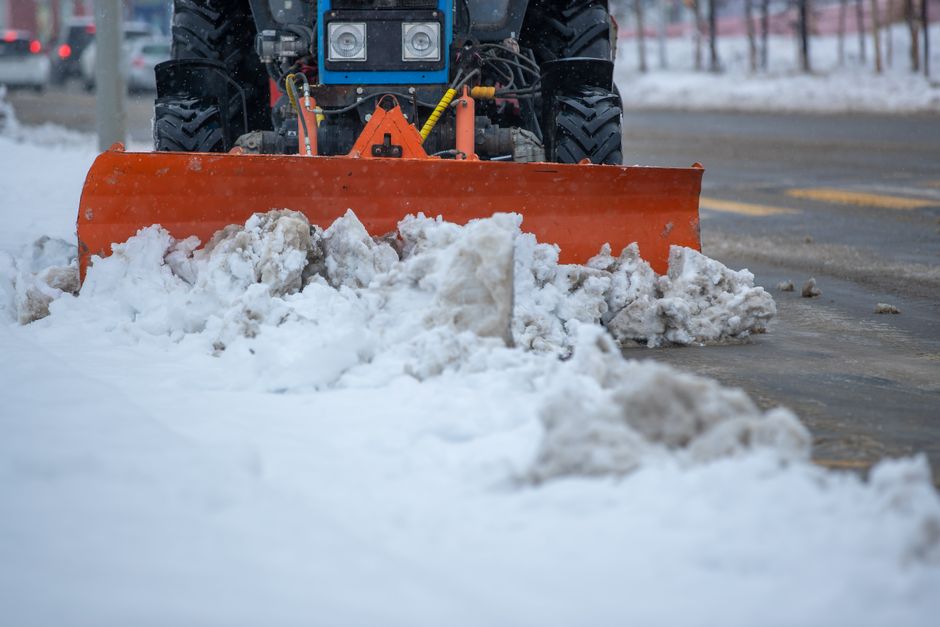
Effective snow removal follows a sequence, and skipping a stage creates liability. Stage one is plowing. Parking lots and private streets get cleared first, with priority given to emergency vehicle access lanes and main thoroughfares. Plowing should begin when accumulation reaches the contract trigger, typically two inches, and continue until the storm ends and the surface is passable.
Stage two is sidewalk shoveling. Every common-area walkway and HOA-maintained sidewalk must be cleared within the 24-hour legal window. This stage often requires hand crews working alongside plow trucks, and the contract should specify whether sidewalk clearing is included in the per-push rate or billed separately. Stage three is ice management, and in Denver this stage often matters more than the plowing itself. De-icer, whether rock salt, calcium chloride, or an eco-friendly alternative, must be applied to all pedestrian surfaces after shoveling. Critically, the vendor should plan to reapply after sunny afternoons melt snow that refreezes overnight. Liquid brine pre-treatment applied before a storm can reduce the total de-icer volume needed afterward and prevent ice from bonding to pavement in the first place. Ask any prospective vendor how they handle Denver’s specific freeze-thaw cycle, and listen for a detailed answer that goes beyond “we spread salt.”
Environmental and Eco-Friendly Snow Removal Options
Salt runoff from snow removal operations does not disappear when the snow melts. It flows into storm drains, damages Denver’s urban tree canopy, and contributes to groundwater contamination that violates EPA Clean Water Act guidelines. HOAs with retention ponds, landscaped common areas, or mature trees should be especially concerned about cumulative salt damage over multiple winters.
Several alternatives reduce environmental impact without sacrificing safety. Beet juice brine lowers the freezing point of water while adding far less chloride to the soil. Calcium magnesium acetate, or CMA, is a biodegradable de-icer that works well on concrete and around vegetation. Sand provides traction without any chemical runoff, though it requires spring cleanup. Some Denver snow removal companies now offer temperature-controlled brine application that cuts total salt usage by up to 50 percent by applying the right concentration for the actual pavement temperature rather than a one-size-fits-all mix. HOAs should ask vendors whether they offer green de-icing packages and budget for pre-treatment as a way to reduce total salt volume across the season.
Emergency Storm Response and Communication Protocols
Denver’s bomb cyclone events and late-spring heavy wet snowstorms can overwhelm even well-prepared vendors. An HOA’s snow removal plan must include an escalation chain that activates when a storm exceeds typical parameters. That chain should run from the vendor’s dispatch desk to the HOA’s property manager and then to the board president, with clear criteria for when each level gets notified.
Real-time communication technology has become standard among professional Denver snow removal services. Vendors should provide service notifications via text or a dedicated app that shows when crews are dispatched, when plowing is complete, and when ice treatment is applied. Platforms like SnowPlowTracker and Plowz & Mowz give property managers a dashboard view of all active service calls, which eliminates the need for board members to drive through the community checking on conditions.
Every HOA should also have a backup vendor agreement in place for storms exceeding 12 inches, which is the point at which primary vendors often fall behind on their routes. A pre-distributed snow removal map showing plow routes, priority zones, and resident parking restrictions reduces confusion during storms and helps homeowners understand why their section of the lot might be cleared last. For the 2026 season, primary vendor contracts should be signed by September 2025, with backup vendor agreements finalized by October 2025. Waiting until November means competing with every other HOA that delayed the same decision.
Frequently Asked Questions About HOA Snow Removal in Denver
Do HOAs have to pay for snow removal?
Yes. HOAs are legally and financially responsible for clearing snow and ice from all common areas, including private streets, shared parking lots, community walkways, and amenity access points. Homeowners pay for their own driveways and the walkways leading to their individual front doors.
What is the average cost for HOA snow removal in Denver?
Small HOAs with fewer than 20 units typically spend $2,000 to $5,000 per season on a per-push contract. Mid-size associations with 20 to 80 units fall in the $8,000 to $20,000 range for a seasonal contract. Large HOAs with more than 80 units on a full-service seasonal contract can expect to pay $15,000 to more than $40,000 per season, depending on total paved area and service scope.
Can an HOA fine homeowners for not shoveling?
Yes, if the CC&Rs include snow removal enforcement provisions. However, the HOA itself remains legally liable to the city for the sidewalk, so fines against homeowners do not transfer the association’s legal obligation. Many HOAs combine homeowner fines with a contracted service that clears noncompliant sidewalks and bills the cost back to the owner.
What happens if the HOA does not clear snow within 24 hours?
Denver DOTI can issue fines starting at $50 to $150 per violation and may contract out the clearing work, billing the HOA for the service plus administrative fees. Repeat violations can escalate to municipal court, and the pattern of noncompliance can be used against the HOA in any slip-and-fall lawsuit arising from uncleared walkways.
Start Planning Your 2026 HOA Snow Removal Contract Today
The difference between a stressful winter and a manageable one comes down to the contract sitting in the board’s files before the first storm. Denver HOAs have three viable contract structures to choose from, a firm 24-hour legal deadline to meet, and a vendor market that rewards early decision-making with better rates and guaranteed capacity. The vetting checklist, from insurance certificates to Denver-specific references, protects the association from operators who treat snow removal as a side hustle rather than a professional service.
For boards ready to move from planning to action, denversnowremovals.com provides commercial and residential snow plowing services across the Denver metro area with the local knowledge and storm response infrastructure that HOAs need. Request a free quote for HOA snow removal services Denver CO and secure 2025 pricing for the 2026 season by booking before September. Early planning is the simplest risk management tool any HOA has, and it costs nothing to start the conversation now.