Daily Archives: July 12, 2026


Parking Lot Snow Removal Denver Colorado | Commercial & Residential   Recently updated !

Denver winters demand more than a shovel and a bag of salt. When a storm drops six inches of heavy, wet snow overnight, a parking lot becomes a liability the moment the first car tries to pull in. For reliable parking lot snow removal Denver Colorado property owners trust, our team combines heavy-duty equipment with local expertise to keep your lots, driveways, and walkways open, safe, and compliant. Whether you manage a 200-space office park, a strip mall, or a single-family home in the Highlands, professional snow removal is the difference between a normal business day and a costly shutdown.


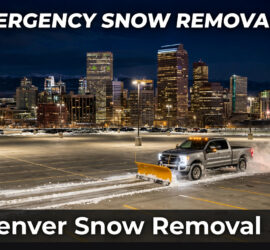
Emergency snow removal and snow plowing in Denver, Colorado

Emergency snow removal and snow plowing in Denver, Colorado


Table of Contents

Why Denver Property Owners Need Professional Parking Lot Snow Removal

Denver’s relationship with snow is complicated. The city can get walloped with a foot of wet spring snow one day and see it melt by noon the next. That unpredictability makes planning difficult, but the legal and financial stakes are constant.


See the Best Snow Plows of 2026 ❄️

Liability is the biggest reason to hire a pro. Denver law requires property owners to clear snow and ice from adjacent sidewalks within 24 hours after a snowfall ends. A slick parking lot or an unshoveled walkway invites slip-and-fall claims, and city fines can reach $150 per violation. Professional service transfers that risk to a licensed, insured contractor who knows the rules.


Residential Snow Plowing in Denver →

Then there is the reality of city services. Denver’s Department of Transportation and Infrastructure plows roughly 2,050 lane miles of main streets using a fleet of 70 large plows. Residential side streets get a single pass down the center between 3:00 a.m. and 3:00 p.m., with no de-icing materials applied. Private parking lots, driveways, and loading docks receive zero municipal attention. If you own or manage property in Denver, the responsibility is entirely yours.

For commercial properties, a snow-packed lot does more than annoy tenants. It deters customers, delays deliveries, and can shut down operations entirely. Every hour a lot sits unplowed is an hour of lost revenue. Professional crews arrive before business hours with the right equipment and a clear plan, so your property opens on time regardless of what fell overnight.

Our Parking Lot Snow Removal Services in Denver

Every property has its own layout, traffic patterns, and access challenges. We tailor our approach to the specific demands of your site, using a fleet that scales from compact ATVs to full-size plow trucks and skid steers.

Commercial Parking Lot Plowing

A commercial lot is not just a rectangle of asphalt. It has entrances, exits, loading zones, dumpster enclosures, fire lanes, and pedestrian crossings that all need to stay clear. Our crews use strategic plowing patterns that start with a center pass to open the main driving lane, then push snow to the outer edges in organized windrows. We pay special attention to sight lines at intersections, access to fire hydrants, and clearance around dumpster pads so waste collection stays on schedule.

We schedule commercial plowing before your business opens. For office parks and retail centers, that means crews are on site between 2:00 a.m. and 6:00 a.m., finishing before the first employees and customers arrive. For 24-hour facilities like hospitals or distribution centers, we work in phases to maintain continuous access. Our fleet includes heavy-duty plow trucks for large lots and skid steers for tighter spaces like parking garages or underground loading docks.

Residential Driveway and Walkway Clearing

Homeowners and condo associations need reliable service without the hassle of managing contractors. Our residential driveway and sidewalk visits start at $41.25 per visit, in line with Denver market averages. We offer seasonal contracts that lock in your rate for the entire winter, with options for per-push billing or flat-rate season passes that simplify budgeting.

Residential work demands a lighter touch. Our crews use smaller plows and ATVs that clear driveways without scraping pavers, cracking curbs, or tearing up landscaping. We also clear walkways, front steps, and mailroom access paths for multi-unit buildings. For HOAs and condo associations, we provide a single point of contact and a documented scope of work so every resident knows what to expect after a storm.

Ice Management and De-Icing

Plowing removes the bulk of the snow, but the real hazard is the layer of ice that forms when temperatures drop overnight. We apply Ice Slicer, a naturally-mined red deicer sourced from Utah that contains over 90 percent chloride salts plus 60 trace minerals. It works effectively at lower temperatures than plain rock salt and provides traction as it breaks down.

For pedestrian-heavy zones like building entrances, walkways, and ADA ramps, we use liquid magnesium chloride. This product reduces the fine particulate matter that dry salt can kick into the air, making it a better choice for enclosed or high-traffic areas. We also offer anti-icing pre-treatment before storms arrive, a service that prevents ice from bonding to the pavement in the first place. While pre-treating is not standard practice in Denver, it is available as a premium option for properties where absolute safety is non-negotiable.

How Much Does Parking Lot Snow Removal Cost in Denver?

Pricing transparency matters. Denver market rates for snow removal vary by equipment type, lot size, and service frequency. Here is what you can expect based on current local averages.

Equipment rates break down by the type of machine and crew needed. Plow trucks run approximately $95 per hour. Skid steers, which handle tighter spaces and heavier snow piles, average $65 per hour. ATVs for small lots, paths, and residential driveways also run about $65 per hour. Hand shoveling for stairs, walkways, and areas machines cannot reach costs around $40 per hour. Snow blowing services for sidewalks and pedestrian paths average $97.50 per hour, with a typical range of $73 to $122.

For a complete commercial lot visit, the total depends on square footage and complexity. A smaller lot with up to 50 spaces typically falls between $150 and $400 per visit. A large commercial lot with 100 or more spaces can range from $500 to over $1,200 per visit, especially if snow haul-away or extensive de-icing is required.

Several factors influence your final quote. The total square footage and number of parking spaces set the baseline. Properties that require snow haul-away because piles exceed available storage space will see additional charges. Your choice of service frequency, whether per-event, seasonal contract, or storm-triggered, also affects pricing. Additional services like de-icing, sidewalk clearing, and dumpster pad access are itemized so you know exactly what you are paying for.

We provide a free, no-obligation site walkthrough for every prospective client. We measure your lot, identify access challenges, and deliver a fixed-price written quote with no surprise fees.

Denver Snow Removal Laws Every Property Owner Must Know

Denver’s snow removal ordinances are specific, and ignorance does not excuse non-compliance. The city enforces these rules, and fines add up quickly.

The most important regulation is the 24-hour sidewalk rule. Property owners must clear snow and ice from all sidewalks adjacent to their property within 24 hours after a snowfall ends. This applies to homeowners, commercial property owners, and landlords equally. Failure to comply can result in fines up to $150 per violation, and repeated offenses may trigger additional penalties.

It is illegal to deposit snow on or next to a public highway, street, or bike lane. When you plow or shovel, snow must be pushed onto your own property, not into the street. This rule exists because snow piles in roadways create hazards for drivers and block drainage. If your property lacks space to store snow on site, you must arrange for haul-away services.

Bike lanes and trails have their own maintenance schedules. On-street bike lanes are plowed by the city when conditions allow, but they may become snow-packed during heavy events. Protected bikeways are cleared at least once every 24 hours. Off-street trails are plowed within 12 hours after snowfall ends if accumulation exceeds one inch. Property owners adjacent to these paths must not block them with snow from their own lots.

One common frustration is the windrow left by city plows at the end of driveways. Do not shovel or plow that snow back into the street. Wait for the city plow to finish its pass, then clear the windrow onto your property. Pushing it back into the roadway is a violation and creates a hazard for plow drivers on their next pass.

When Is Snow Haul-Away Necessary for Your Denver Parking Lot?

Most of the season, plowing snow to the edges of your lot works fine. But Denver winters sometimes deliver storm after storm with no melt in between, and those perimeter piles grow fast. When they start causing problems, snow haul-away becomes necessary.

Snow haul-away is the process of loading accumulated snow piles into dump trucks and transporting them to a designated disposal or melting site. It is a separate service from routine plowing and is billed accordingly, typically by the truckload or by the hour.

You need haul-away when snow piles exceed six to eight feet in height and begin blocking sight lines at intersections or entrances. Piles that encroach on parking spaces reduce your lot’s capacity, which frustrates tenants and customers. Snow stacked against fire lanes or blocking access to fire department connections is a code violation and a serious safety risk. For parking garages and elevated structures, accumulated snow adds significant weight, and removing it protects the structural integrity of the building.

Our crews monitor pile volume during every service visit. We proactively notify you when haul-away is advisable, before it becomes an emergency. This gives you time to budget and schedule the work rather than scrambling after a safety incident or a tenant complaint.

Why Choose denversnowremovals.com for Your Denver Property?

Denver has no shortage of plow trucks, but not every operator understands the city’s specific snow patterns, regulations, and service expectations. Our team brings local knowledge that directly affects the quality of your service.

We know how Denver storms behave. The heavy, wet snow that arrives in March and April requires different equipment and techniques than the dry powder of a January cold snap. We understand which neighborhoods get city plow service first and which side streets stay untouched for days. That knowledge shapes our routing, scheduling, and equipment choices so your property is not left waiting.

Our fleet is fully insured and maintained year-round, not pulled out of storage the night before a storm. We match equipment to lot size for maximum efficiency: large plow trucks for open commercial lots, skid steers for tight spaces and heavy piles, ATVs for residential driveways and paths, and hand crews for stairs and entryways.

Property managers and HOA boards receive dedicated account management. We provide detailed scope of work documents that define exactly what gets cleared, when, and to what standard. We also supply resident communication templates so you can set clear expectations about service timing and snow policies.

During multi-day storms and blizzards, we operate on 24/7 storm monitoring and dispatch. Our clients receive priority service with clear communication about when crews will arrive and what to expect. We do not disappear when the weather gets bad; that is when you need us most.

Our contracts are straightforward. Choose from seasonal flat-rate agreements, per-push billing, or storm-triggered service. Cancel anytime with 30 days’ notice. No hidden fees, no surprise surcharges after a heavy storm.

Frequently Asked Questions About Parking Lot Snow Removal in Denver

Q: How much does snow removal cost for a parking lot in Denver?

Costs depend on lot size, equipment required, and service frequency. A commercial lot with up to 50 spaces typically ranges from $150 to $400 per visit. Larger lots with 100 or more spaces can range from $500 to over $1,200 per visit. We provide a free site walkthrough and a fixed-price written quote tailored to your property.

Q: How to remove snow from a parking lot efficiently?

Start with a center pass to open the main driving lane, then push snow to the outer edges in organized windrows. Break large lots into smaller zones and clear each systematically. When accumulation exceeds six inches, remove the bulk snow in layers rather than trying to push it all at once. Our crews use this exact technique on every commercial property we service.

Q: What are the snow removal laws in Colorado?

Property owners must clear sidewalks within 24 hours after snowfall ends. It is illegal to push snow onto public streets or bike lanes. Fines for violations can reach $150. The full breakdown of Denver’s snow removal ordinances is covered in the section above.

Q: Do you offer seasonal contracts for commercial properties?

Yes. We offer seasonal flat-rate contracts with prepaid pricing and per-push agreements billed after each service event. Seasonal contracts include priority service during major storms and locked-in rates that protect you from price spikes during heavy snow years.

Q: What de-icing products do you use?

We use Ice Slicer, a naturally-mined red deicer from Utah, for parking lots and main driving surfaces. For pedestrian walkways and building entrances, we apply liquid magnesium chloride to reduce particulate matter and minimize staining. Anti-icing pre-treatment is available as a premium service before forecasted storms.

Get Your Free Parking Lot Snow Removal Quote Today

Do not wait for the next storm to test your current snow removal plan, or lack of one. A single unplowed lot can cost you tenants, customers, and peace of mind.

We provide a free, no-obligation site walkthrough within 24 hours of your call or online submission. You will receive a detailed written quote that outlines all services, equipment, pricing, and contract terms. Our service area covers all of Denver County, including downtown, Capitol Hill, Cherry Creek, the Highlands, and surrounding suburbs.

Protect your property, your tenants, and your bottom line. Contact us today to schedule your walkthrough and lock in service before the snow starts falling.


How Equipment Drives Affordable Snow Removal Costs

The role of equipment in affordable snow removal is the single biggest factor determining what you pay, how safe your property stays, and how fast snow gets cleared. Choose the wrong tools and you overspend on labor, risk injury, and still end up with icy walkways. Choose the right mix and you control costs without sacrificing safety. Denversnowremovals has operated in the Denver Metro area for over 44 years, and the pattern is consistent: homeowners who understand their equipment options make far better decisions about when to go DIY and when to call a professional.

What are the essential types of snow removal equipment?

Equipment selection is the foundation of cost-effective snow clearing. The industry groups snow removal tools into three broad categories: manual tools, mechanized equipment, and deicing products. Each category fills a specific role, and no single tool covers every scenario.

Manual tools include ergonomic shovels, snow pushers, and ice scrapers. Ergonomic shovels feature a bent shaft that reduces back strain during heavy lifting. Snow pushers move large volumes of light, fresh snow quickly without lifting. Ice scrapers and chippers handle the hard, bonded ice that forms after a freeze-thaw cycle.

Mechanized equipment covers single-stage snow blowers, two-stage snow blowers, and truck-mounted or ATV-mounted plows. Single-stage blowers work well on paved surfaces with up to 8 inches of snow. Two-stage blowers handle heavier accumulation and can clear gravel driveways without throwing rocks. Plows with interchangeable attachments let property managers clear large lots efficiently without running a full fleet of dedicated vehicles.

Overhead view of snow blowers and ergonomic shovels on driveway

Deicing products and equipment round out the kit. Calcium chloride, rock salt, and magnesium chloride each perform differently at different temperatures. Broadcast spreaders apply granular deicers evenly across wide surfaces. Liquid deicing systems, common in commercial operations, pre-treat pavement before a storm to prevent bonding.

Relying solely on snowblowers is inefficient. A combination of blowers, ergonomic shovels, roof rakes, and ice melt is necessary for complete snow management. That combination approach is what separates a property that stays accessible from one that becomes a liability.

Equipment type Best use Approximate cost Suitability
Ergonomic shovel Light snow, tight spaces $20–$115 Residential, small lots
Single-stage snow blower Paved driveways, up to 8 inches $305–$800 Residential
Two-stage snow blower Heavy snow, gravel surfaces $800–$1,800 Residential, small commercial
Broadcast spreader Deicer application $30–$150 All property types
Truck-mounted plow Large lots, roads $3,000+ Commercial, professional

Pro Tip: Buy an ergonomic shovel with a curved shaft even if you own a snow blower. Blowers cannot clear steps, tight corners, or areas near foundations. The shovel fills those gaps and costs under $50.

How do equipment costs and maintenance affect affordability?

Equipment purchase price is only part of the story. The true cost of ownership includes fuel, annual tune-ups, replacement parts, and storage preparation. Maintenance hidden costs such as fuel, spark plugs, belts, and oil changes typically add $50–$100 annually. Neglecting that maintenance leads to premature equipment failure, often at the worst possible moment.

Infographic showing snow removal equipment costs and maintenance

The break-even calculation matters for every homeowner considering a major equipment purchase. A high-quality two-stage snow blower requires two to three seasons of consistent use to break even compared to professional service costs. That math only works if your property gets enough snowfall to justify the machine every winter.

Professional snow removal services cost between $45 and $160 per visit, with seasonal contracts ranging from $300 to $700 depending on property size and regional snowfall. For a homeowner in a moderate-snowfall area who needs clearing six to eight times per season, a seasonal contract often costs less than buying and maintaining a two-stage blower over three years.

Physical injury is a cost that rarely appears in equipment budgets. Shoveling causes thousands of back injuries and cardiac events each year across the United States. DIY snow equipment carries real injury risk from both shoveling and snow blower use. A single emergency room visit erases years of savings from DIY clearing.

Pro Tip: Before buying any mechanized equipment, track how many times you clear snow in a full season. If the number is fewer than eight, a seasonal professional contract likely costs less than ownership over three years.

DIY versus professional services: which approach wins on equipment?

The right choice depends on four factors: property size, budget, physical health, and local snowfall frequency. Neither approach wins universally. The best decision comes from matching the approach to your specific situation.

Advantages of professional services:

  • Professional fleets use interchangeable attachment vehicles that reduce fleet size and operating costs, savings that translate to competitive service pricing.
  • Professionals carry liability insurance, which protects property managers from slip-and-fall claims.
  • 24/7 availability means clearing happens after overnight storms before residents or employees arrive.
  • No storage burden. Equipment does not sit in your garage consuming space for eight months.

Advantages of DIY equipment ownership:

  • You clear on your own schedule without waiting for a service window.
  • For high-snowfall properties with frequent clearing needs, ownership can pay off after two to three seasons.
  • You control which deicing products touch your landscaping and hardscaping. This matters if you have sensitive plantings near driveways.

Hybrid approaches work well for many property managers. Municipalities and large property managers use hybrid fleets combining owned equipment for regular tasks and rented machines for extreme events. A residential property manager might own a broadcast spreader and ergonomic shovels for routine maintenance while contracting professionals for major storms.

Key decision factors to weigh before committing:

  • Property size and linear feet of walkway and driveway
  • Average annual snowfall in your specific location
  • Physical ability to operate equipment safely
  • Budget for upfront purchase versus recurring service fees
  • Storage space available for off-season equipment

The APPA emphasizes that snow removal equipment is crucial not just for clearing snow, but for safety, access, and reducing liability. That framing shifts the conversation. Equipment is not just a convenience purchase. It is a risk management decision.

How can you optimize equipment use for safety and lower costs?

A kit approach beats a single-tool strategy every time. Efficient snow removal often fails when relying on a single tool. A thoughtfully assembled kit produces better results and fewer injuries.

Follow this sequence to build a cost-effective, safe equipment setup:

  1. Start with manual tools. Buy an ergonomic shovel and a snow pusher before anything else. These handle most residential clearing needs and cost under $150 combined.
  2. Add a snow blower matched to your climate. Single-stage blowers suit most residential driveways in moderate-snowfall regions. Two-stage blowers are worth the extra cost if you regularly see more than 10 inches per storm.
  3. Include a broadcast spreader and deicing product. Apply deicer after clearing to prevent refreeze. Match the product to your typical temperatures. Calcium chloride works at lower temperatures than rock salt.
  4. Add a roof rake for flat or low-pitch roof sections. Ice dams cause structural damage that costs far more than the rake itself.
  5. Invest in safety gear. Insulated, waterproof gloves, slip-resistant boots, and a back brace for shoveling reduce injury risk significantly.

Matching equipment to climate conditions and staff skills is essential. Advanced machines reduce labor but require more training and maintenance. A two-stage blower operated by someone unfamiliar with its controls creates safety risks and accelerates wear.

Proper cleaning after every use is critical to prevent corrosion and extend equipment life. Salt is corrosive to metal parts. Rinse metal components with fresh water after each use, dry them, and apply a light coat of lubricant before storage. This single habit can add years to equipment life.

Pro Tip: At the end of each season, run your snow blower until the fuel tank is empty, change the oil, and inspect belts for cracking. Off-season storage preparation prevents the most common spring startup failures.

For homeowners preparing their properties before winter arrives, a seasonal preparation checklist covers equipment inspection, supply stocking, and service scheduling in one place.

Key Takeaways

The right equipment mix, maintained properly and matched to your property’s needs, is the most direct path to affordable and safe snow removal.

Point Details
Equipment type determines cost Manual tools cost under $150; two-stage blowers run $800–$1,800 before maintenance.
Maintenance adds real expense Annual upkeep adds $50–$100 and prevents premature equipment failure.
Break-even takes time A quality snow blower takes two to three seasons to pay off versus professional service.
Kit approach outperforms single tools Combining shovels, blowers, and deicers covers every snow and ice scenario.
Professional services reduce liability Insured professionals protect property managers from slip-and-fall claims.

What I’ve learned after watching homeowners get equipment wrong

I’ve seen the same mistake repeat itself every winter. A homeowner buys a two-stage snow blower in october, uses it twice, and then pays for a professional service anyway because the machine sits broken in march. The break-even math only works when the equipment actually runs, gets maintained, and gets used consistently.

The other misconception I encounter constantly is that more expensive equipment automatically means lower total cost. A $1,800 commercial blower in the hands of someone who skips annual tune-ups and stores it with fuel in the tank will fail faster than a $500 single-stage unit that gets proper care. The equipment itself is only half the equation. The maintenance discipline is the other half.

What actually works is a layered approach. Keep manual tools for daily touch-ups and tight spaces. Use mechanized equipment for major storms. Call professionals when accumulation exceeds what your equipment or your body can handle safely. That balance is what why hiring a professional makes sense even for homeowners who own equipment. It is not either-or. It is knowing when each tool, including a professional service, is the right call.

— Jesse

Denversnowremovals: professional equipment, reliable results

Denversnowremovals operates truck-mounted plows, commercial-grade snow blowers, and broadcast deicing systems across the Denver Metro area. The team is available 24/7, which means your driveway and walkways get cleared before the morning rush, not hours after.

https://denversnowremovals.com

If you are weighing snow plowing versus snow blowing for your property, Denversnowremovals offers free estimates and flexible seasonal contracts. With over 44 years of experience deploying the right equipment for Denver’s specific snowfall patterns, the team removes the guesswork from winter property management. Contact Denversnowremovals to schedule a free estimate and get a plan built around your property’s actual needs.

FAQ

What equipment is most cost-effective for residential snow removal?

An ergonomic shovel combined with a single-stage snow blower and a broadcast spreader covers most residential needs at the lowest total cost. This kit handles light to moderate snowfall without the maintenance demands of commercial-grade equipment.

How much does professional snow removal cost per visit?

Professional snow removal costs between $45 and $160 per visit, with seasonal contracts ranging from $300 to $700. The national average runs approximately $138 per visit.

When does buying a snow blower make financial sense?

A two-stage snow blower makes financial sense when you clear snow eight or more times per season and can commit to annual maintenance. It typically takes two to three seasons of consistent use to break even against professional service costs.

How does equipment maintenance affect snow removal affordability?

Annual maintenance costs of $50–$100 are unavoidable for mechanized equipment. Skipping maintenance leads to early equipment failure, which eliminates any savings from DIY clearing and forces an unplanned equipment replacement.

What is the safest approach to snow removal for older homeowners?

Older homeowners should prioritize a broadcast spreader and deicing products for daily ice management, and contract professionals for major snow events. Shoveling carries significant cardiac and back injury risk, and professional services eliminate that exposure entirely.