
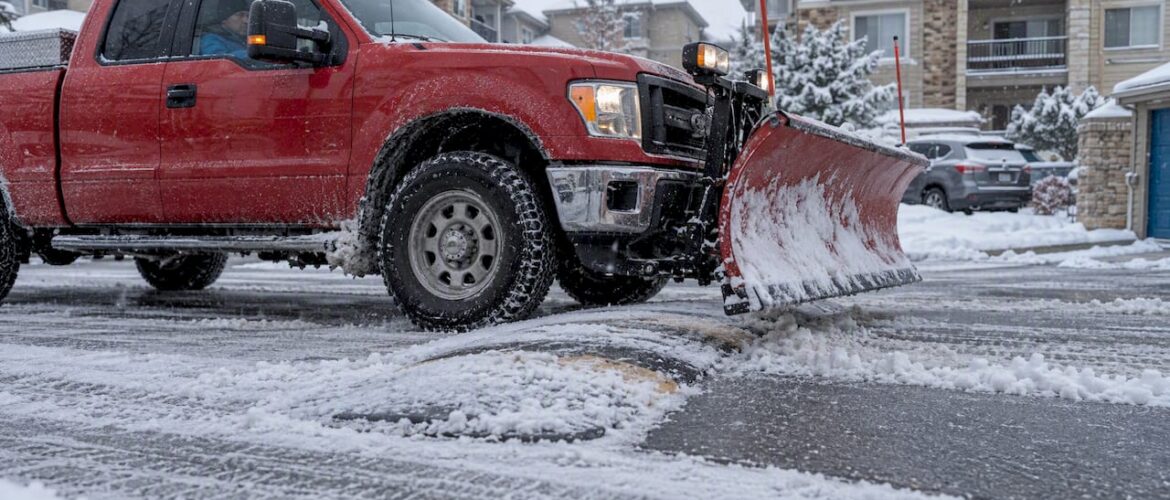
Yes, a plow can clear snow over a speed bump or speed hump, but only if the operator knows exactly where it is, slows down, and lifts the blade just enough to clear it. Most damage happens when snow hides the bump and the driver hits it at full speed. If you manage or own a Denver lot, the fix is mostly planning: mark every bump before the first storm, tell your plow contractor where each one sits, and choose bump types that tolerate winter.
TL;DR
- Speed humps are gradually sloped, so plow blades can go over them without damaging the hump or pavement. Short, steep speed bumps in parking lots are the real problem.
- Mark and map every bump before snowfall. Snow hides bumps, curbs and drains, and a hidden bump is what wrecks cutting edges and pavement.
- Slow down. Manufacturer guidance puts the maximum plowing speed at 10 mph for one popular plow line, and some trade advice is as low as 5 mph near obstacles.
- Plan extra time around each bump: snow packs on the uphill side and in the gaps, and it refreezes there.
- Put the bump locations in your snow contract and site map so every driver, including backup crews, knows them.
Table of Contents
- Speed bump or speed hump: why the difference matters in snow
- What happens when a plow hits a speed bump
- How to plow over a speed bump safely
- Finding bumps that snow has buried
- Choosing bumps that work with winter
- Who is responsible for snow around speed bumps in Denver
- Our perspective: the bump is a contract item
- Get your lot plowed right, bumps included
- Common mistakes to avoid
- FAQ
- Sources
Speed bump or speed hump: why the difference matters in snow
People use the two words interchangeably, but a plow operator feels the difference immediately.
A speed hump is a long, gently rounded rise on a street or drive aisle. Engineering guidance describes speed humps as 3 to 4 inches high and 12 to 14 feet wide in cross-section along the travel direction, which gives the blade a long ramp to ride up and over. A speed bump is much shorter front to back. It is built to make a driver nearly stop, and it presents a sharp angle to a plow blade. A patent for snowplow-compatible bumps notes that a conventional bump’s sharp angle is an obstacle for plows that requires careful operation to avoid damage.
In practice you will meet three setups in the Denver area:
| Feature | Typical location | What it does to a plow |
|---|---|---|
| Speed hump | Residential streets, long private drives | Gentle ramp, usually passable with the blade slightly raised |
| Speed bump (asphalt, rubber or plastic) | Parking lots, loading areas, apartment drives | Abrupt rise, can catch the cutting edge or throw the blade |
| Speed cushion or bolted modules | Streets and lots with gaps between pads | Snow collects in the gaps and needs separate attention |
Weather makes all of them harder to see. One industry guide points out that snow and rain reduce visibility of bumps and humps and that bumps are more of a nuisance to plows than humps are.
What happens when a plow hits a speed bump
Three things can go wrong, and each costs money.
The cutting edge catches. The blade stops while the truck keeps moving. That can bend the edge, stress the mounting and jolt the driver.
The bump is damaged. Asphalt bumps can be scraped or have their edges chipped. Bolted rubber or plastic modules can be sheared or have anchors pulled loose.
The pavement is gouged. A blade that drops after the bump can dig into the surface. If this is a recurring worry on your lot, our guide to preventing plow damage to asphalt covers it in more detail.
There is also a safety side. A bump that is not cleared leaves a ridge of packed snow, which then turns to ice overnight. Walkers and drivers cross exactly that spot at low speed, and that is where slips happen.
How to plow over a speed bump safely
This is the sequence experienced operators follow. It applies to pickups, skid steers and loaders alike.
- Know the site before the storm. Walk it and identify the bumps. Trade guidance from a plow accessory maker says to walk the site, mark speed bumps and hidden obstacles before snowfall.
- Approach slowly. Manufacturer guidance for one plow line says to keep plowing speed at or under 10 mph. Near a bump, many operators go well below that. The same plow-tips article recommends no more than 5 mph.
- Raise the blade slightly before the bump. A traffic-calming guide hosted by NACTO recommends raising the blade a little to avoid damaging the hump while still removing accumulated snow and ice.
- Lower the blade after the crest. Do it smoothly so the edge does not slam into the pavement on the downslope.
- Come back for the leftovers. The same guide says operators should reposition the blade and spend extra time on and around the hump, where snow builds up. Around speed cushions, the gaps between pads collect snow.
- Raise the blade at the end of a pass. This is standard advice from plow equipment guidance, and it keeps the edge from catching on the next obstacle as you reposition.
- Finish with de-icing where needed. Meltwater runs off the bump’s face and refreezes in the aisle. Treating that strip is part of the job, not an upgrade.
Blade and equipment settings that help
Some equipment is built to follow obstacles. A loader-mounted blade with a floating hinge, for example, is described by its maker as providing 8 inches of vertical cutting-edge travel, which lets a loader pass over a parking-lot speed bump without moving the boom while keeping the blade level.
Other settings matter too:
- Shoes and edges. Plow-accessory guidance suggests lower shoes on loose surfaces and raised or removed shoes on hard surfaces for closer scraping. Over bumps, a slightly raised edge is safer than a scraping one.
- Blade angle and width. In deeper snow, BOSS advises raising the plow a few inches to shear off the top layer and using less blade width as depth increases. A narrower, shallower pass gives an operator more control at a bump.
- Skid steers for tight spots. A compact machine with a pusher can work right up to the face of a bump and the corners a truck blade misses.
One caution from equipment makers: slamming into piles at high speed is reckless and hard on both operator and equipment, and the same logic applies to bumps. Slow wins.
Finding bumps that snow has buried
The most common cause of a plow-over-bump incident is a driver who did not know it was there, often a backup driver or a new subcontractor on a heavy night. The remedy is a routine you do once each fall.
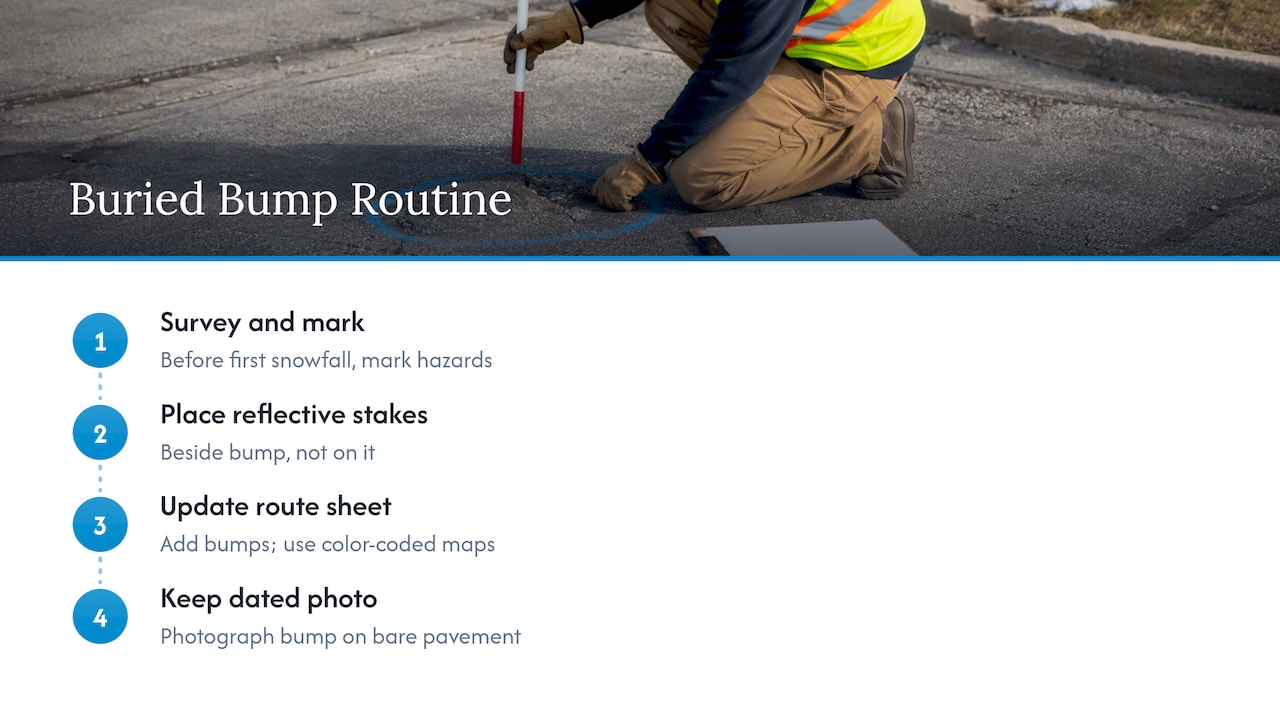
Survey and mark. Before the first snowfall, inspect the lot and mark hazards. A trade article on parking lots advises surveying and marking before the first snow because snow can conceal speed bumps, curbs and drains.
Use reflective stakes or markers. The Kolpin guidance recommends reflective markers or stakes at hazards and plowed-area boundaries, plus a map or blueprint of the site. Place stakes beside the bump, not on it, so a blade does not take them out on the first pass.
Put it on the route sheet. The Snow & Ice Management Association suggests noting speed bumps and storm drains on crew route sheets and using color-coded maps for subcontractors and backup drivers.
Photograph it. A dated photo of each bump in bare pavement helps in two ways. It shows a driver what to expect, and it settles arguments if a bump is damaged later.
A property manager’s checklist
If you oversee a parking lot, apartment community or office campus, this is the short version:
- Count and locate every bump, hump and speed table, including those in fire lanes and loading areas.
- Mark each with a stake or paint, and add them to a one-page site map.
- Give the map to your snow contractor before the season, and ask that it be on every driver’s route sheet.
- Check anchors on bolted rubber or plastic modules each fall.
- Decide where snow will be piled so it is not stacked against bumps, entrances, exits or storm drains. The parking-lot article above specifically advises keeping piles away from those points.
- Ask your contractor how they treat the refreeze strip below each bump.
Choosing bumps that work with winter
If you are installing or replacing bumps, winter performance belongs in the decision.
Gentler profiles. The patent literature behind snowplow-compatible bumps describes tapered ramp portions that lift a plow smoothly without jarring it or causing unacceptable wear. A speed hump with long ramps does the same job with less risk to the blade. The NACTO guide notes that progressive, sinusoidal slopes are easier for snow-removal vehicles.
Removable modules. In regions with regular plowing, a supplier notes that bolted rubber modules can be unbolted in fall and reinstalled in spring. Removal makes sense on a lot you plow often, though you give up speed control during the months you most need traction awareness.
Durability. Materials that survive freeze-thaw cycles and repeated blade contact last longer. For a look at options built for hard winters, see this overview of speed bump types built for cold climates.
Placement. Keep bumps out of the main plow path where you can, and avoid putting them right at an entrance where piles tend to form.
Who is responsible for snow around speed bumps in Denver
The answer depends on who owns the surface.
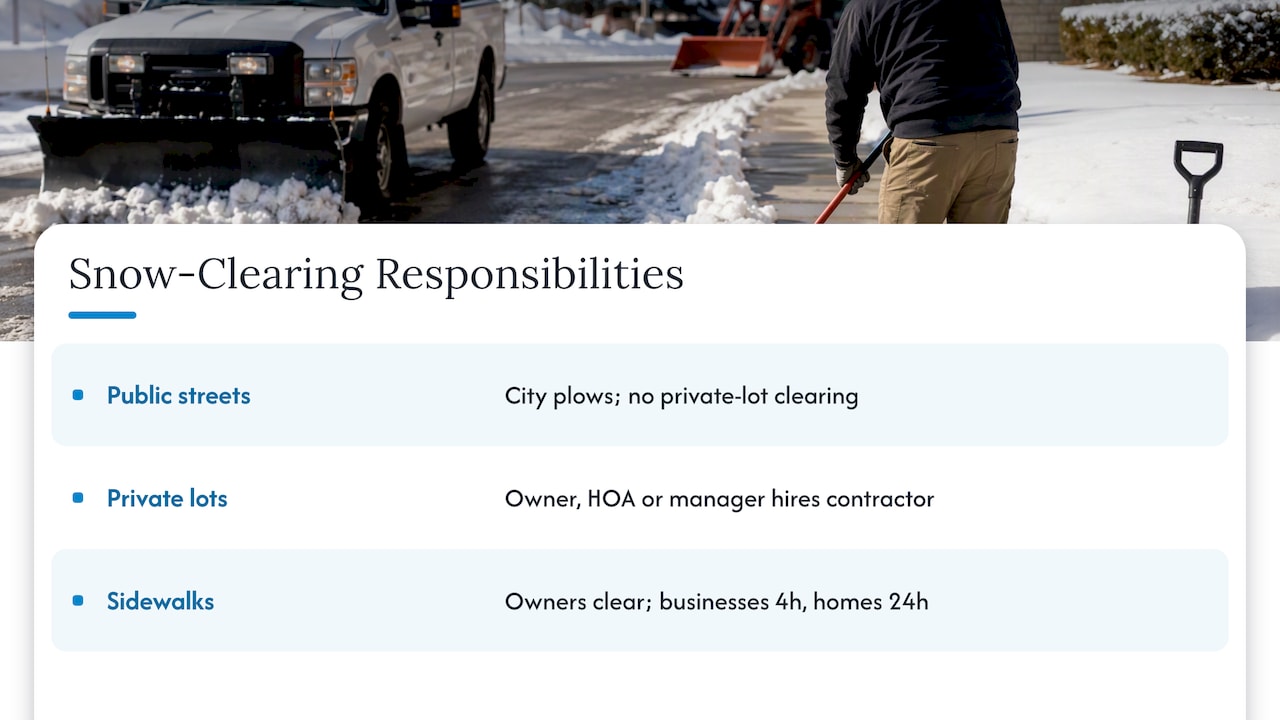
Public streets. The City and County of Denver’s Department of Transportation & Infrastructure uses large plows on main streets and 4×4 pickups with plows on residential streets. Residential plows deploy when there is enough accumulation to improve drivability, and they typically take a single pass down the center of each side street without bringing it to bare pavement. Expect a ridge of snow around a street hump, and do not expect the city to clear a private lot.
Private roads and lots. Clearing is up to the owner, HOA or property manager, and the contractor they hire. This is where bump planning lives. Our overview of who clears what in Denver breaks down the split.
Sidewalks beside the bump. Bumps often sit where a walking route crosses a drive aisle. Denver requires owners to clear sidewalks, and reporting says businesses have 4 hours after a notice and residences 24 hours before a $150 fine. For frontage specifics, see the Denver business frontage rules, and the Denver snow alert checklist for the timing.
Our perspective: the bump is a contract item
We have plowed Denver lots for over 44 years, and the speed bump problems we see rarely come from the bump. They come from a gap in information. A new driver covers a route on a night with 10 inches down, nobody told them about the raised strip by the dumpster enclosure, and the edge catches.
We treat bump locations the same way we treat storm drains and fire hydrants: they go on the site sheet before the season starts, and every driver, including backup crews, works from that sheet. We document visits so you can see what was cleared and when, which also matters for liability if someone slips on a crossing.
Our advice for property owners:
- Do not wait for the first storm to find out whether your contractor knows your lot. Do a walk-through with them in October.
- Ask where they plan to stack snow. Piles against a bump or an entrance create the exact icy strip you are trying to avoid.
- If your bumps are old, steep or loose, replace or modify them. Fixing a bump costs far less than repeatedly repairing blades and asphalt.
- Treat meltwater areas. A cleared bump with no anti-icing often refreezes within hours.
A bump should not be a reason for a contractor to skip a spot, and it should not be a reason for you to accept ridges of ice at crossings.
— Jesse
Get your lot plowed right, bumps included
Denver Snow Removal plows commercial, industrial, HOA and residential properties across the Denver metro, with 24/7 emergency dispatch, parking lot clearing, sidewalk de-icing, snow hauling and seasonal contracts that run September through May. We give free estimates and build the contract around your site, including where every bump and drain is.
For lots and commercial sites, start with our parking lot plowing services. Homeowners can get driveway and walkway clearing from $41.25 per visit, also listed there. For seasonal coverage across several properties, see the main services page, or compare options in our guide to seasonal versus per-push contracts.
Common mistakes to avoid
- Plowing the first pass at normal speed. The first pass is when you are least sure where the bump is.
- Leaving the blade down through the crest. This is the classic edge-catching move.
- Skipping the second pass. Snow packs on the near side and in the gaps, and one pass leaves it.
- Piling snow against a bump or drain. Meltwater then has nowhere to go but across the crossing.
- Relying on memory. Drivers rotate. A map does not forget.
- Ignoring mixed-use sites. Properties with retail, offices and residences often have bumps on several different routes. Our mixed-use snow removal guide goes through how to organize them.
FAQ
Can a snowplow go over a speed bump?
Yes. Plows routinely cross speed humps because the gradual slope lets the blade ride up and over them. Speed bumps are more awkward. The operator slows down, raises the blade slightly and lowers it again after the crest.
Do speed bumps damage snowplows or get damaged by them?
They can, mostly when the bump is hidden or the driver is moving fast. Sharp-angled bumps are the main risk to cutting edges, and a dropped blade can chip a bump or gouge pavement. Marking bumps and plowing slowly prevents most of it.
Should we remove speed bumps for winter?
Sometimes. Bolted rubber modules can be taken up in fall and reinstalled in spring where plowing is regular. Asphalt bumps cannot, so for those the better answer is clear marking, a slow approach and, if needed, a lower-profile replacement.
How do plow drivers find speed bumps under snow?
They rely on preparation: reflective stakes, painted markers, site maps and route sheets that list each bump. Walking the site before the first storm is the step that makes the rest work.
Who clears snow around a speed hump on a Denver street?
The city plows public streets, usually with a single pass down the center of a residential street. Private roads and parking lots are the owner’s job, normally handled by a hired contractor.
Sources
- Traffic Calming Speed Humps and Speed Cushions (NACTO-hosted)
- US5419652A, Snow plow compatible speed bumps
- Speed Bumps vs Speed Humps, Transline
- Fisher Plows operator manual
- Kolpin, Snow Clearing Planning & Practices
- HLA Snow Equipment brochure
- BOSS Snowplow, Plowing Tips
- Buyers Products plow document
- For Construction Pros, How to Safely Plow Parking Lots
- SIMA, Site smarts
- Speed bumps and snow plows
- City and County of Denver, Snow Removal
- Denver7, Denver snow removal sidewalk rules and fines
- Speed bump types for cold climates