
Snow shoveling service Denver Denver businesses open and safe during heavy winter storms. When 12 inches of heavy Front Range snow hits overnight, your sidewalks, ADA ramps, and building entries must be bare-concrete by 6 AM — not just plowed. That’s why Denver’s commercial properties trust professional snow shoveling service Denver crews for zero-tolerance results. At Denver Snow Removals, our commercial snow shoveling service Denver provides 24/7 hand-shoveling, de-icing, and liability documentation that standard plow trucks can’t. We are the snow shoveling service Denver that Fortune 500 buildings in Downtown Denver trust at 3 AM.
Essential Techniques for Effective Snow Removal Shoveling
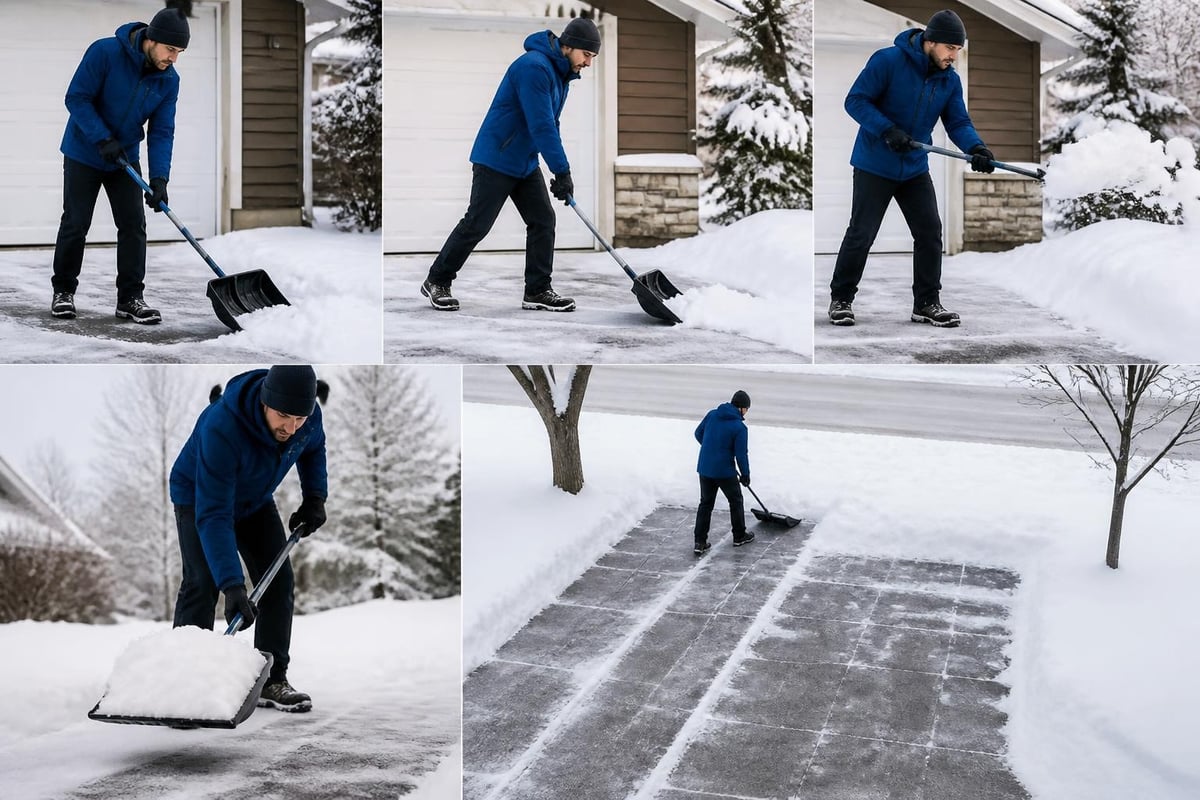
Proper snow removal shoveling technique begins with body positioning and movement patterns that minimize strain while maximizing efficiency. The most effective approach involves pushing snow whenever possible rather than lifting, which reduces stress on the back and shoulders while allowing workers to clear larger volumes more quickly.
When lifting becomes necessary, bend at the knees rather than the waist, keeping the back straight and the shovel load close to the body. This fundamental principle of snow shoveling safety prevents the majority of musculoskeletal injuries that occur during manual snow clearing operations.
Optimal Shovel Angles and Stroke Patterns
The angle at which a shovel blade meets snow-covered surfaces significantly impacts clearing efficiency. For packed or heavy snow, maintaining a 30-degree angle allows the blade to penetrate beneath the snow layer without excessive resistance. Light, fluffy snow can be pushed at steeper angles for faster clearing of large areas.
Professional snow removal crews develop systematic stroke patterns that prevent fatigue and ensure complete coverage:
- Start at the center of the area and work outward to avoid moving snow multiple times
- Clear a straight path first, then widen it incrementally
- Throw snow downwind when possible to prevent drift accumulation
- Alternate between pushing and lifting techniques every few minutes to vary muscle engagement
Selecting the Right Equipment for Different Snow Conditions
Not all snow shovels perform equally across varying conditions, and matching equipment to specific scenarios improves both efficiency and safety outcomes. Commercial operations benefit from maintaining multiple shovel types to address different clearing requirements throughout the winter season.
| Shovel Type | Best Application | Blade Material | Weight Range |
|---|---|---|---|
| Pusher/Scoop | Light, fresh snow; large flat areas | Plastic/Poly | 2-3 lbs |
| Combination | Mixed conditions; general purpose | Aluminum with steel edge | 3-4 lbs |
| Metal Blade | Ice removal; compact snow layers | Steel/Aluminum | 4-6 lbs |
| Ergonomic Bent Handle | Reduced back strain; extended use | Plastic/Metal | 2-4 lbs |
The handle length should match the user's height, with taller individuals requiring longer handles to maintain proper posture. Ergonomic designs with bent or curved shafts reduce the distance operators must bend, decreasing lower back strain during extended clearing sessions.
When Manual Methods Meet Their Limits
Understanding when to transition from manual snow removal shoveling to mechanical equipment protects workers and maintains operational efficiency. Expert recommendations suggest considering mechanical options when snow depth exceeds six inches, when clearing areas larger than 1,000 square feet, or when ice layers require extensive chipping.
For commercial properties in the Denver Metro area, this decision often involves coordinating manual clearing of walkways, building entrances, and detailed areas with mechanical plowing of parking lots and main thoroughfares. Professional commercial snow removal services typically employ both methods in integrated clearing strategies.
Snow Shoveling Service Denver: Commercial Shoveling Experts 24/7
Snow shoveling service Denver is critical for keeping Denver businesses open and safe during heavy winter storms. When 12 inches of heavy Front Range snow hits overnight, your sidewalks, ADA ramps, and building entries must be bare-concrete by 6 AM — not just plowed. That’s why Denver’s commercial properties trust professional snow shoveling service Denver crews.
At Denver Snow Removals, our commercial snow shoveling service Denver provides 24/7 hand-shoveling, de-icing, and liability documentation that standard plow trucks can’t.

Why You Need Professional Snow Shoveling Service Denver
Plow trucks clear parking lots. Hand snow shoveling service Denver clears where lawsuits happen: sidewalks, steps, ADA ramps, and doorways. City of Denver requires sidewalks cleared within 24 hours — but commercial liability requires zero-tolerance.
- ADA Compliance: Handicap ramps must be bare-concrete always
- Zero Liability: 70% of slip-falls happen on sidewalks/entries, not lots
- De-Icing Included: Calcium chloride to -25°F, not rock salt
What’s Included in Our Snow Shoveling Service Denver?
1. Zero-Tolerance Sidewalk Shoveling
Our snow shoveling service Denver team hand-shovels all City and County of Denver sidewalks to bare concrete, with time-stamped photo proof for your liability file.
2. ADA Ramp & Handicap Space Clearing
Every snow shoveling service Denver contract includes ADA ramp, stairs, and accessible parking clearing every 2-4 hours during storms — federally compliant.
3. Commercial Entry & Doorway Clearing
We clear all building entries, push snow away from doors, and apply ice-melt so no ice tracks inside. The best snow shoveling service Denver keeps your doors opening.
4. De-Icing with Calcium Chloride
Rock salt destroys concrete and fails below 15°F. Our snow shoveling service Denver uses calcium chloride and magnesium chloride for Denver’s deep freezes.
5. 24/7 Monitoring and Documentation
We monitor NOAA Denver weather. Our snow shoveling service Denver crews are pre-staged in Downtown, Cherry Creek, Tech Center, and Aurora — with before/after photos for every visit.
Commercial Snow Shoveling Service Denver Pricing
Commercial snow shoveling service Denver costs $450-$1,800/month seasonally for most retail, restaurant, office, and medical properties in Denver metro. Per-push hand shoveling is $150-$450 per storm. Call for free site audit.
Why Denver Businesses Choose Denver Snow Removals
Since 2012, Denver Snow Removals has provided snow shoveling service Denver businesses trust at 3 AM. Fully insured $2M, 24/7 dispatch, background-checked crews, and zero-tolerance guarantee.
Call Denver Snow Removals now — before next blizzard — for your free snow shoveling service Denver compliance audit: Get Quote
FAQ: Snow Shoveling Service Denver
How fast is your snow shoveling service Denver response?
Our snow shoveling service Denver guarantees 90-minute response in Denver metro, 24/7, with hand crews staged across Denver.
Do you provide liability documentation?
Yes. Every snow shoveling service Denver visit includes time-stamped photos, service logs, and de-icer records to protect you from slip-and-fall lawsuits.
Timing Strategies for Maximum Effectiveness
The schedule for snow removal shoveling operations directly impacts both the difficulty of the work and the quality of results. Allowing snow to accumulate beyond certain depths creates compaction that makes manual clearing exponentially more challenging and time-consuming.
Clearing snow in incremental stages during ongoing storms prevents the formation of ice layers that require extensive effort to remove. Research on optimal shoveling frequency indicates that addressing snowfall every two to three inches during active storms reduces total clearing time by up to forty percent compared to waiting until precipitation ends.
Strategic Timing for Different Property Zones
Commercial properties require prioritized clearing schedules that ensure critical areas remain accessible throughout winter weather events:
- Primary walkways and building entrances: Clear every two hours during active snowfall
- Emergency exit routes and fire lanes: Maintain continuously throughout storms
- Secondary pathways: Address every four hours or when accumulation reaches four inches
- Parking area detail work: Complete after mechanical plowing operations
Temperature considerations also influence optimal timing. Snow removal shoveling during the warmest part of the day, when possible, reduces ice formation and makes snow less compact and easier to move.
Health and Safety Protocols for Manual Snow Clearing
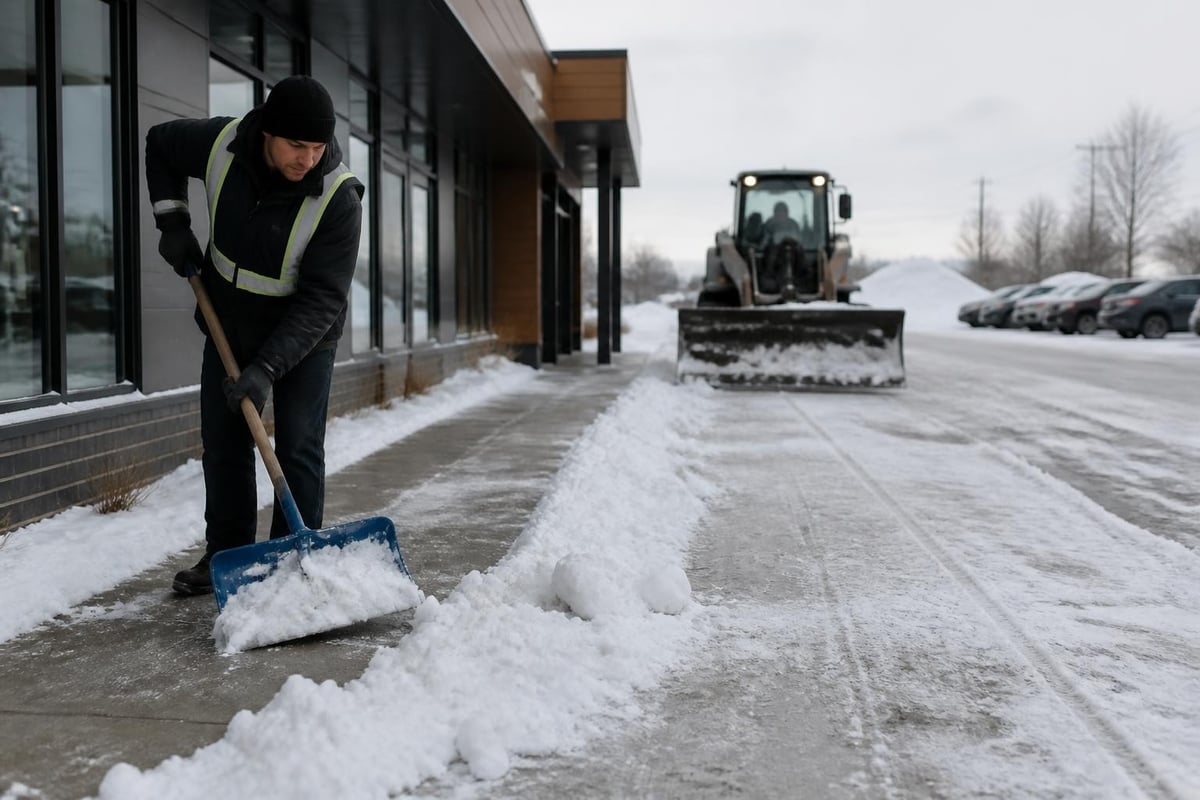
Snow removal shoveling presents significant cardiovascular demands that require careful management, particularly for older workers or those with existing health conditions. The combination of cold air exposure, physical exertion, and repetitive strain creates unique safety challenges that professional operations must address through comprehensive protocols.
Medical research indicates that snow shoveling dramatically increases heart attack risk for susceptible individuals. Professional crews implement several protective measures to mitigate these dangers.
Pre-Work Assessment and Preparation
Before beginning snow removal shoveling operations, workers should complete several preparatory steps:
- Perform five to ten minutes of light cardiovascular warm-up exercises
- Dress in layers that can be removed as body temperature rises
- Ensure adequate hydration despite cold conditions
- Review proper lifting techniques and body mechanics
- Identify indoor warming locations for regular breaks
Break schedules during extended clearing operations should include fifteen-minute rest periods every forty-five minutes of active shoveling. These intervals allow heart rate recovery and prevent the accumulated fatigue that increases injury risk.
Teams should establish buddy systems where partners monitor each other for signs of overexertion, including excessive sweating, shortness of breath, chest discomfort, or unusual fatigue. Proper snow shoveling safety protocols emphasize recognizing warning signs before serious medical events occur.
Regulatory Compliance and Liability Considerations
Property owners and managers face specific legal obligations regarding snow removal shoveling timelines and standards. Municipal codes throughout the Denver Metro area establish maximum timeframes for clearing walkways after snowfall ends, with violations resulting in substantial fines.
Common shoveling mistakes related to regulatory compliance include failing to clear full walkway widths, creating hazardous piles that obstruct visibility, and missing deadline requirements. Commercial property managers must understand their jurisdiction's specific requirements to avoid penalties and liability exposure.
| Violation Type | Typical Fine Range | Common Trigger |
|---|---|---|
| Missed clearing deadline | $150-$500 | Walkways not cleared within 24 hours |
| Inadequate width | $100-$300 | Path narrower than code minimum |
| Obstruction creation | $200-$600 | Snow blocking fire hydrants, crosswalks |
| Ice accumulation | $150-$400 | Failure to treat slippery surfaces |
Documentation practices protect organizations from liability claims. Maintaining detailed records of snow removal shoveling operations, including timestamps, areas addressed, and crew assignments, provides evidence of diligent property maintenance should slip-and-fall incidents result in legal action.
Insurance Requirements and Coverage Verification
Commercial general liability policies typically cover snow removal operations, but specific exclusions may apply to manual clearing activities. Property managers should verify that their coverage extends to employee injuries during snow removal shoveling and that appropriate workers' compensation insurance remains current throughout winter months.
Advanced Strategies for High-Volume Commercial Properties
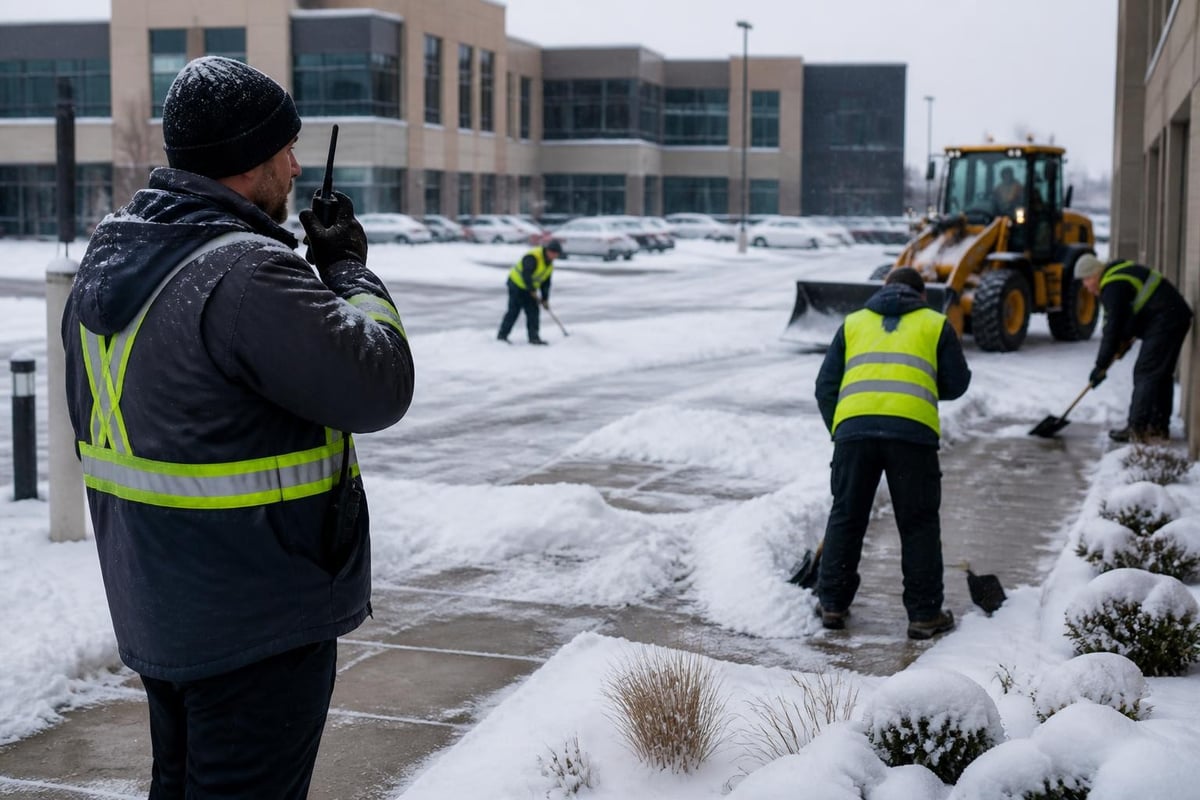
Large commercial properties require coordinated snow removal shoveling strategies that integrate manual clearing with mechanical operations. Industrial parks, office campuses, and multi-building complexes benefit from zone-based approaches that assign specific crews to defined areas with clear responsibility boundaries.
Team coordination protocols establish communication systems that prevent duplicated effort while ensuring complete coverage. Radio communication, mobile apps, or check-in systems allow supervisors to track progress and redirect resources as conditions change during extended storm events.
Material Application and Ice Management
Snow removal shoveling effectiveness extends beyond physical snow clearing to include appropriate application of melting agents and traction materials. Different products suit specific temperature ranges and surface types:
- Calcium chloride: Effective to -25°F, faster acting, higher cost
- Sodium chloride (rock salt): Effective to 15°F, economical, potential surface damage
- Magnesium chloride: Effective to -13°F, less corrosive, moderate cost
- Sand/grit: No melting action, provides traction, requires spring cleanup
Manual crews should coordinate de-icing material application with clearing operations, applying treatments immediately after removing snow to prevent ice bond formation. Pre-treating high-traffic areas before anticipated snowfall reduces the labor required for subsequent clearing.
Equipment Maintenance and Operational Readiness
Professional snow removal shoveling operations depend on properly maintained equipment that remains functional throughout demanding winter conditions. Establishing preventive maintenance schedules and inspection protocols ensures tools perform reliably when needed most.
Metal components require regular inspection for cracks, bends, or stress fractures that compromise structural integrity. Blade edges need periodic sharpening or replacement to maintain cutting efficiency through compacted snow and ice layers. Handle connections represent the most common failure point and should be checked before each use during active snow seasons.
Storage practices influence equipment longevity and readiness. Shovels should be stored indoors when possible, hung vertically to prevent handle warping, and kept in accessible locations that allow rapid deployment when emergency snow removal situations arise unexpectedly.
Inventory Management for Multi-Property Operations
Organizations managing multiple commercial properties benefit from centralized equipment inventory systems that track shovel locations, condition status, and replacement schedules. Maintaining equipment reserves ensures availability during severe weather events when demand peaks and replacement purchases become difficult.
A typical commercial operation managing five properties might maintain:
- Twenty standard combination shovels for general clearing
- Ten pusher-style shovels for light snow conditions
- Eight ergonomic models for workers with physical limitations
- Six metal-blade shovels for ice removal work
- Replacement handles and repair supplies for field maintenance
Training Programs and Skill Development
Comprehensive training transforms snow removal shoveling from basic manual labor into skilled operations that protect workers while optimizing efficiency. Professional development programs should address technique fundamentals, safety protocols, equipment selection, and strategic approaches to different snow conditions.
New crew members benefit from hands-on instruction during light snowfall events before participating in major storm responses. Experienced workers should receive annual refresher training that reviews proper body mechanics, updates safety protocols, and introduces new equipment or techniques.
Certification programs validate that workers understand essential concepts and can demonstrate proper techniques. Some organizations implement tiered skill levels that recognize advanced capabilities and assign experienced operators to complex clearing scenarios requiring specialized knowledge.
Video analysis tools allow crews to review their techniques and identify opportunities for improvement. Recording workers during actual snow removal shoveling operations provides concrete feedback about stance, motion patterns, and efficiency that verbal instruction alone cannot convey.
Integration with Comprehensive Snow Management Systems
Manual snow removal shoveling functions most effectively as one component within broader winter property management strategies. Professional snow cleaning services integrate multiple clearing methods, weather monitoring systems, and preventive treatments into cohesive programs that maintain property accessibility throughout winter weather.
This integrated approach coordinates manual clearing crews with mechanical plowing operations, ensuring that detail work around obstacles, building entrances, and pedestrian areas receives appropriate attention while large parking expanses benefit from efficient mechanical clearing. Communication protocols establish clear handoff procedures between different operational components.
Weather monitoring capabilities allow organizations to anticipate snowfall timing and intensity, positioning crews and equipment before storms arrive. This proactive stance reduces response times and prevents the accumulation that makes subsequent clearing more difficult and time-consuming.
Real-time tracking systems document clearing progress, provide evidence of diligent maintenance for liability protection, and identify areas requiring additional attention. Mobile applications enable field crews to report completion, upload photographic documentation, and request additional resources without returning to central facilities.
Effective snow removal shoveling combines proper technique, strategic timing, appropriate equipment, and comprehensive safety protocols to maintain commercial property accessibility throughout Colorado's challenging winters. While manual clearing remains essential for detailed work and smaller areas, professional operations benefit from integrating multiple clearing methods into coordinated winter management programs. With over 47 years of experience serving the Denver Metro area, Denver Snow Removals provides comprehensive commercial snow clearing services that combine state-of-the-art mechanical equipment with skilled manual crews, offering 24/7 emergency response for parking lots, office campuses, industrial parks, and HOA communities throughout the region.
Why Our Snow Shoveling Service Denver Dominates Winter
Elite snow shoveling service Denver means zero-tolerance. Our snow shoveling service Denver crew doesn’t leave until concrete is visible. That is the Denver Snow Removals standard for snow shoveling service Denver. Every snow shoveling service Denver client gets photo proof, de-icer logs, and GPS tracking. This is why Fortune 500 trusts our snow shoveling service Denver over cheap plow guys. Our snow shoveling service Denver is insured, bonded, and background-checked. Don’t risk your business with amateur snow shoveling service Denver — trust Denver’s pro snow shoveling service Denver.
Commercial Snow Shoveling Service Denver: Final Compliance Checklist
Denver’s best snow shoveling service Denver follows this checklist: 1) Sidewalks bare-concrete. 2) ADA ramps clear 5 feet. 3) Doors opening outward. 4) De-icer applied. 5) Photos taken. 6) Log filed. Every snow shoveling service Denver visit must meet this. Our snow shoveling service Denver crew is trained to never miss it. That is why our snow shoveling service Denver is trusted. Need snow shoveling service Denver tonight? Call Denver Snow Removals — your elite snow shoveling service Denver partner. Our snow shoveling service Denver guarantee: if we miss a spot, we return free within 60 minutes. That is real snow shoveling service Denver commitment.