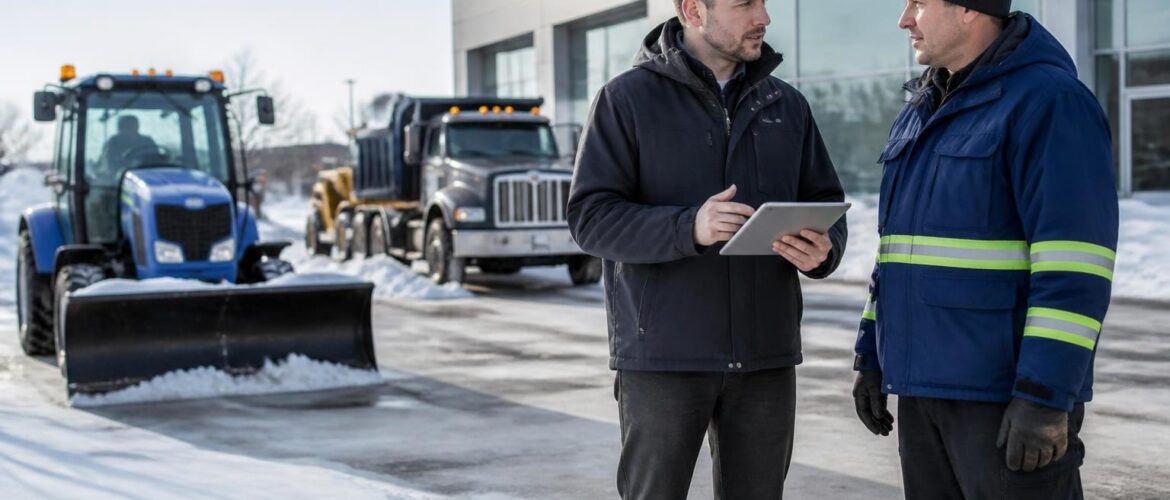
Winter storms can bring business operations to a standstill within hours. For commercial property managers, facilities directors, and HOA boards in snow-prone regions, partnering with a reliable snow shoveling company is not just about aesthetics-it's about safety, accessibility, and continuity. The right provider ensures parking lots remain navigable, walkways stay clear for employees and customers, and your organization meets its legal obligations during severe weather events. With the 2026 winter season approaching, understanding what separates exceptional snow removal services from unreliable contractors has never been more critical for protecting your investment and your reputation.
Understanding Commercial Snow Removal Services
A professional snow shoveling company offers far more than basic sidewalk clearing. Modern commercial snow removal encompasses a comprehensive suite of services designed to keep large properties operational throughout winter weather events.
Core Service Offerings
Commercial snow removal providers typically deliver multiple interconnected services:
- Pre-storm surface treatment with liquid or granular deicing agents
- Mechanical snow plowing for parking lots, access roads, and loading zones
- Hand shoveling and snow blowing for entryways, sidewalks, and tight spaces
- Post-storm ice management to prevent refreezing hazards
- Snow hauling and relocation when accumulation exceeds storage capacity
- Roof snow removal for structures at risk of collapse
The best providers coordinate these services seamlessly, deploying the appropriate method for each area of your property. A loading dock requires different equipment and technique than a pedestrian walkway, and experienced contractors understand these nuances.
Equipment and Technology Advantages
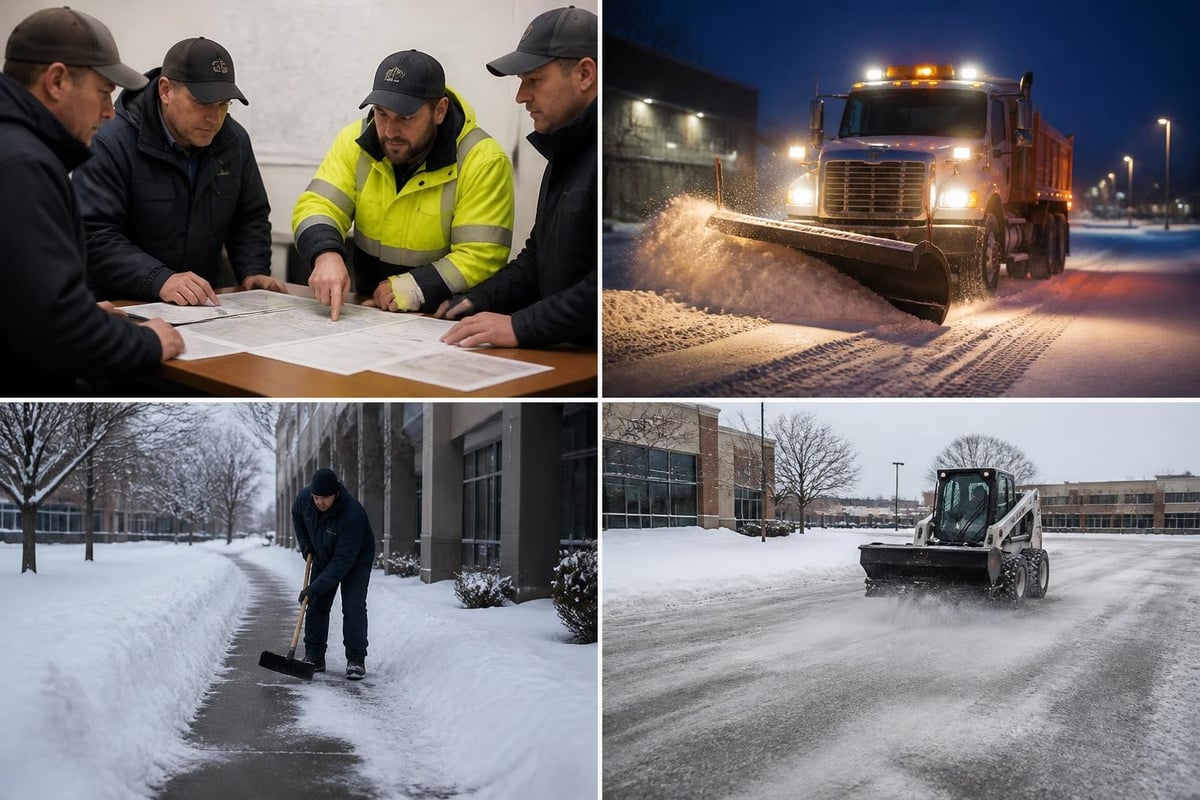
Professional snow removal companies invest significantly in specialized equipment that delivers results impossible with consumer-grade tools. Commercial-grade plow trucks can clear acres of parking surface in the time it would take a small crew with shovels to clear a single row. Skid steers with pusher boxes move massive snow volumes efficiently, while sidewalk tractors navigate narrow pathways that larger equipment cannot access.
Technology integration has transformed snow removal operations in recent years. GPS fleet tracking allows property managers to verify service completion in real-time. Weather monitoring systems trigger automatic crew deployment based on predetermined snowfall thresholds. Documentation platforms provide timestamped photo evidence of conditions before, during, and after service-critical for liability protection.
| Equipment Type | Typical Application | Efficiency Advantage |
|---|---|---|
| Plow Trucks | Parking lots, roadways | 2-5 acres per hour |
| Skid Steers | Stacking, tight corners | Precision placement |
| Sidewalk Tractors | Walkways, ramps | ADA-compliant clearing |
| Snow Blowers | Deep accumulation | Quick hand-crew support |
Evaluating Snow Shoveling Company Credentials
Not all snow removal providers operate with the same professionalism, capability, or reliability. Thorough vetting protects your property and limits your exposure to liability.
Insurance and Liability Coverage
Any snow shoveling company you consider must carry comprehensive insurance. General liability coverage protects against property damage and bodily injury claims. Workers' compensation ensures you're not liable if a crew member is injured on your property. Commercial auto insurance covers vehicle-related incidents during service.
Request current certificates of insurance naming your property or organization as additionally insured. Verify coverage limits meet your requirements-commercial properties typically need $2 million or higher aggregate limits. Contact the insurance carrier directly to confirm the policy remains active and in good standing.
The U.S. Department of Justice provides clear guidance on accessibility obligations under the Americans with Disabilities Act, which directly impacts snow removal priorities. Businesses must keep accessible routes clear, making contractor reliability a compliance issue, not just a convenience factor.
Experience and Track Record
Years in business reveal staying power, but specific experience matters more. A company with 15 years clearing residential driveways may struggle with the logistics of a 10-acre industrial campus. Look for proven experience with properties similar to yours in size, complexity, and usage patterns.
Request and check references from current commercial clients. Ask specific questions about response times, communication quality, and problem resolution. A pattern of complaints about missed service windows or inadequate clearing standards should disqualify a candidate immediately.
Service Level Agreements and Contract Structure
The contract with your snow shoveling company establishes expectations, accountability, and remedies when performance falls short. Vague agreements create disputes; detailed service level agreements (SLAs) prevent them.
Trigger Depths and Response Times
Your contract should specify exactly when service begins. Common triggers include:
- Automatic dispatch at 2 inches of accumulation
- Parking lot clearing completed within 4 hours of snowfall ending
- Pedestrian pathways cleared within 2 hours of sunrise
- Re-servicing intervals every 3 hours during ongoing storms
These metrics should align with your operational needs. A distribution center with overnight shifts needs immediate clearing when snow begins. An office complex might prioritize having lots clear before the 7 AM arrival rush.

Pricing Models and Budget Predictability
Snow removal contracts typically follow one of several pricing structures, each with distinct advantages:
Per-occurrence pricing charges for each service visit based on accumulation depth and time required. This model keeps costs low during mild winters but creates budget uncertainty and potential disputes about whether conditions warranted service.
Seasonal contracts establish a flat fee covering all services throughout winter regardless of snowfall totals. Property managers gain complete budget predictability and contractors have incentive to keep properties pristine (more snow means more profit erosion for them, encouraging efficiency).
Hourly billing works for properties needing only occasional attention but creates perverse incentives for contractors to work slowly.
| Pricing Model | Best For | Budget Predictability | Risk Distribution |
|---|---|---|---|
| Per-Occurrence | Variable needs | Low | Client bears snow risk |
| Seasonal Flat Rate | Budget certainty | High | Contractor bears snow risk |
| Hourly | Minimal service | Medium | Shared risk |
Many sophisticated property managers negotiate hybrid contracts with a seasonal base fee covering standard service plus per-occurrence charges for extreme events exceeding historical averages. This balances predictability with fairness during unprecedented winters.
Safety Standards and Risk Management
A snow shoveling company becomes your partner in liability management. Their practices directly impact your exposure to slip-and-fall claims, accessibility complaints, and property damage.
Deicing Product Selection
Salt (sodium chloride) remains the most common deicing agent due to low cost and effectiveness. However, its environmental impact, corrosion of concrete and metal, and damage to vegetation have driven many property managers toward alternatives.
Calcium chloride works at lower temperatures than salt and requires smaller application volumes. Magnesium chloride causes less concrete scaling. Organic products like beet juice blends offer eco-friendly options, though at premium prices.
The Environmental Protection Agency highlights environmental concerns associated with traditional road salt and deicing practices, information that helps property owners make informed decisions about sustainable winter maintenance approaches.
Your contractor should explain their deicing strategy, including product selection rationale, application rates, and environmental considerations. Proper application techniques prevent overuse while maintaining safety-skilled operators know that more salt does not equal safer surfaces.
Documentation and Liability Protection
Comprehensive documentation serves as your primary defense against slip-and-fall litigation. Your snow shoveling company should provide:
- Service logs with timestamps for each property visit
- Photographic evidence of conditions and completed work
- Weather data from reliable sources documenting precipitation
- Material application records showing deicing product usage
This documentation proves you exercised reasonable care in maintaining safe conditions. When claims arise months or years after an incident, contemporaneous records provide facts that memories cannot.
The Insurance Institute for Business & Home Safety offers valuable resources on commercial property protection and risk mitigation that complement professional snow removal services.
Operational Reliability During Extreme Events
Service quality during typical 3-inch snowfalls tells you little about contractor capability. Performance during severe weather reveals true capacity and commitment.
Fleet Size and Backup Capacity
A single plow truck and two crew members cannot handle multiple large commercial properties simultaneously. Ask detailed questions about equipment inventory:
- How many plow trucks operate in your service area?
- What backup equipment is available if primary units fail?
- Can the fleet handle all contracted properties concurrently during major storms?
- Do you subcontract overflow work, and if so, to whom?
Reputable contractors maintain excess capacity specifically for severe weather events. Emergency snow removal requires immediate response capabilities that only properly equipped providers can deliver when clients need it most.
Communication Protocols
During active weather events, communication becomes critical. Your snow shoveling company should provide:
Pre-storm briefings outlining expected timing, crew deployment plans, and any service modifications based on forecast conditions. Real-time status updates during service, particularly for properties with overnight operations or early opening requirements. Post-storm summaries documenting completion times, material usage, and any issues requiring attention.
Establish clear escalation paths for urgent needs. Know who to contact at 3 AM when an unexpected problem arises, and verify those contacts answer promptly.
Selecting the Right Partner for Your Property
Choosing a snow shoveling company requires balancing multiple factors specific to your property type, budget constraints, and risk tolerance.
Property-Specific Considerations
Different commercial properties present unique challenges:
Office campuses need pristine conditions before morning arrivals but can tolerate overnight accumulation. Retail centers require continuous attention during business hours to prevent customer falls. Industrial facilities with 24-hour operations demand immediate response regardless of time. HOA communities balance resident access needs with budget limitations.
Match contractor capabilities to your specific requirements. A provider specializing in retail snow removal understands the urgency of keeping entrances clear during shopping hours. An industrial specialist knows how to work around active loading docks and equipment staging areas without disrupting operations.
Building Long-Term Relationships
The most successful property-contractor relationships extend across multiple winter seasons. Contractors familiar with your property work more efficiently-they know drainage patterns, problem areas, and access points without supervision. They anticipate your needs and adjust service proactively.
Conversely, changing providers annually creates inefficiency and communication gaps. Each new contractor starts with zero property knowledge, requiring detailed orientation and increased oversight.
Multi-year agreements often secure preferential pricing while guaranteeing service availability. During severe winters when contractors turn away new clients, existing relationships ensure you receive priority attention.
Business Considerations for Service Providers
For entrepreneurs considering entering the snow removal industry, understanding the business fundamentals determines success or failure. The Small Business Administration provides comprehensive guidance on launching service businesses, covering essential topics from licensing to financing.
Equipment Investment and Depreciation
Starting a snow shoveling company requires significant capital investment. A single commercial plow truck with equipment costs $50,000-$75,000. Backup vehicles, snow blowers, shovels, and deicing materials add thousands more. Maintenance, fuel, insurance, and storage compound ongoing expenses.
Equipment sits idle 9-10 months annually, creating cash flow challenges. Successful operators develop complementary revenue streams-landscaping, parking lot maintenance, construction-that utilize equipment and retain skilled staff year-round.
Market Positioning and Growth Strategy
The commercial snow removal market segments clearly:
- Residential contractors handle driveways and small walkways with consumer equipment
- Small commercial providers service strip malls and small office buildings
- Enterprise contractors manage large portfolios for property management companies
- Municipal contractors bid government plowing contracts
Each segment requires different equipment, insurance levels, and operational capabilities. Attempting to serve all segments simultaneously dilutes focus and competitiveness. Successful businesses identify their ideal client profile and build specialized capabilities that create competitive advantage.
Small business storefront owners face unique challenges different from those encountered by industrial park managers, requiring providers to tailor approaches accordingly.
Sustainability and Environmental Responsibility
Modern property management increasingly emphasizes environmental stewardship. Forward-thinking property owners seek snow removal partners who share these values.
Reducing Chemical Footprint
Traditional deicing practices apply excessive salt that runs off into waterways, contaminates groundwater, and damages ecosystems. Progressive snow shoveling companies implement best practices that maintain safety while minimizing environmental impact:
- Calibrated spreaders apply precise material quantities, eliminating waste
- Liquid pre-treatment prevents ice bonding with less total chemical use
- Alternative products reduce chloride loading in sensitive areas
- Strategic application targets high-traffic zones rather than blanketing entire surfaces
These practices often reduce material costs while delivering superior environmental outcomes-a true win-win scenario.
Equipment Efficiency and Emissions
Diesel-powered snow removal equipment contributes to air quality concerns. While electric plow trucks remain impractical in 2026, some contractors invest in newer Tier 4 diesel engines that dramatically reduce particulate emissions. Proper maintenance keeps equipment running efficiently, minimizing fuel consumption and emissions per acre cleared.
Some innovative providers experiment with biodiesel blends during winter operations, reducing carbon footprint without sacrificing performance. As battery technology improves, electric sidewalk equipment becomes increasingly viable for pathway clearing applications.
Regional Considerations and Climate Adaptation
Snow removal needs and best practices vary dramatically by region. A snow shoveling company operating in Denver faces different challenges than one in Buffalo or Minneapolis.
Altitude and Temperature Effects
Denver's high altitude creates unique snow characteristics. Lower humidity produces lighter, fluffier snow that blows easily but also compacts less under traffic. Dramatic temperature swings-40°F afternoons following 15°F mornings-create freeze-thaw cycles that complicate ice management.
Contractors working at altitude must understand how these factors affect equipment performance, deicing product effectiveness, and service timing. Techniques that work perfectly in Wisconsin may fail in Colorado's unique climate.
Storm Pattern Adaptation
Some regions experience frequent light snowfalls. Others see less frequent but more intense storms. Your snow shoveling company should structure service around local weather patterns.
Areas with frequent light snow benefit from proactive anti-icing before each event. Regions experiencing infrequent major storms require contractors with surge capacity to mobilize large crews quickly when needed.
Technology Integration and Innovation
The snow removal industry continues embracing technology that improves efficiency, documentation, and customer service.
Fleet Management Systems
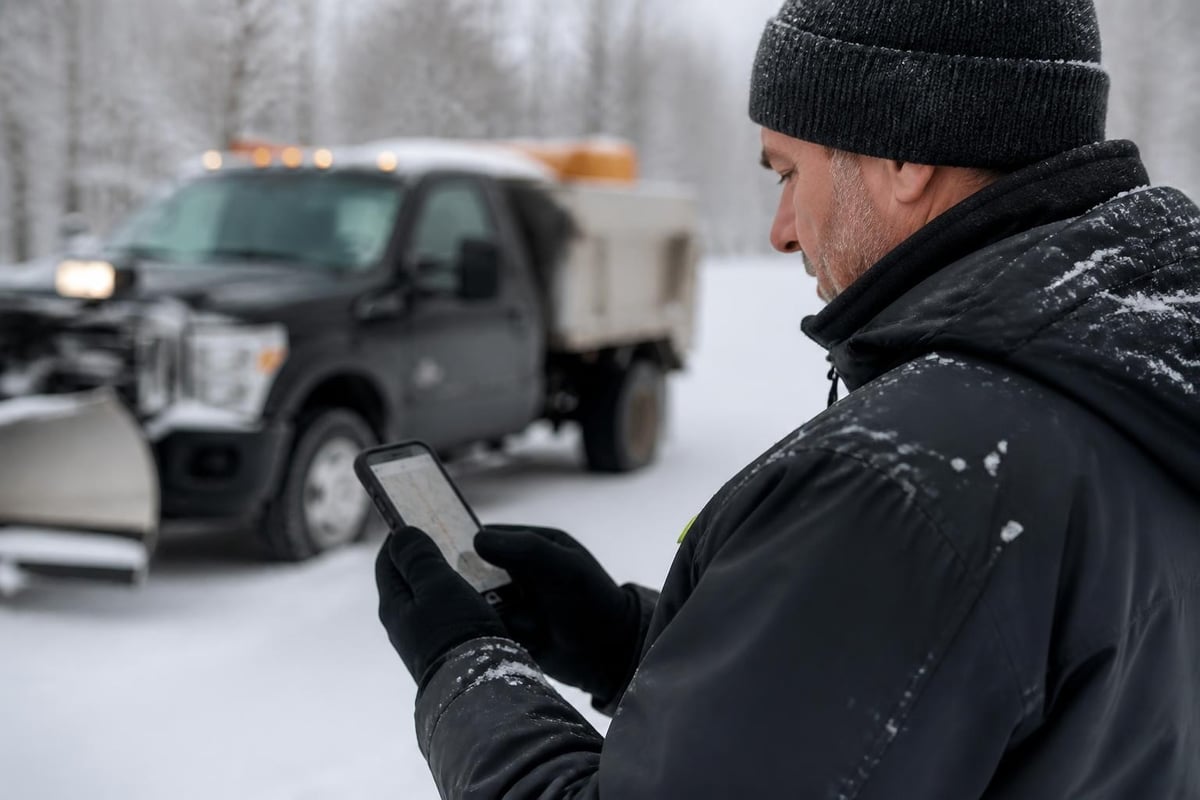
GPS tracking and telematics provide unprecedented visibility into snow removal operations. Property managers can view real-time equipment locations, verify service completion times, and access geofenced alerts when trucks enter or exit their property.
These systems benefit contractors equally, optimizing route efficiency and identifying underperforming equipment or operators. Fuel consumption tracking reveals waste. Idle time monitoring improves productivity.
Customer Portals and Communication Platforms
Modern snow shoveling companies provide client portals offering 24/7 access to service history, upcoming forecasts, and real-time status updates. Automated notifications alert property managers when crews arrive, complete service, or encounter issues requiring attention.
This transparency builds trust and reduces phone calls during busy weather events, allowing contractors to focus on service delivery rather than fielding status inquiries.
Selecting and partnering with a professional snow shoveling company requires careful evaluation of credentials, service capabilities, contract terms, and operational reliability to ensure your property remains safe, accessible, and compliant throughout winter weather events. With over 47 years of specialized experience clearing commercial properties throughout the Denver Metro area, Denver Snow Removals delivers the expertise, equipment capacity, and 24/7 emergency response that facility managers and property owners depend on when winter storms threaten operations. Contact their team today to discuss customized snow management solutions for your office campus, industrial park, or HOA community.