
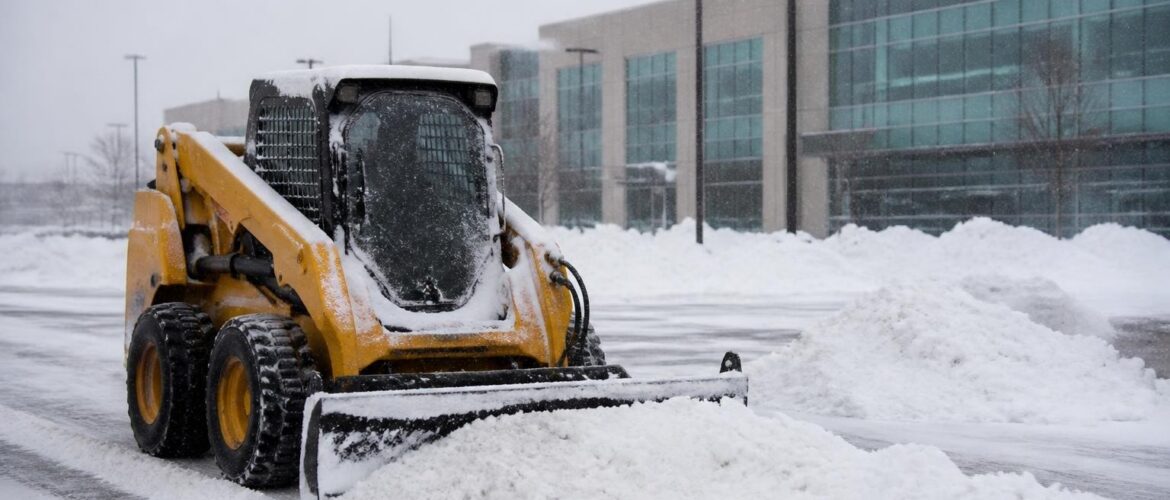
When winter storms blanket commercial properties across the Denver Metro area, efficient snow removal becomes critical for business continuity and safety. Skid steer loaders have emerged as the workhorses of commercial snow clearing operations, offering unmatched versatility, maneuverability, and power in tight spaces where larger equipment cannot operate. These compact machines deliver professional-grade performance for property managers, facility operators, and snow removal contractors who demand reliability during the most challenging weather conditions. Understanding how to maximize the capabilities of skid steers for winter work separates exceptional service providers from those who merely push snow around parking lots.
Equipment Selection and Specifications
Choosing the right skid steer for snow removal operations requires careful consideration of several critical factors that directly impact productivity and profitability throughout the winter season.
Operating Capacity and Power Requirements
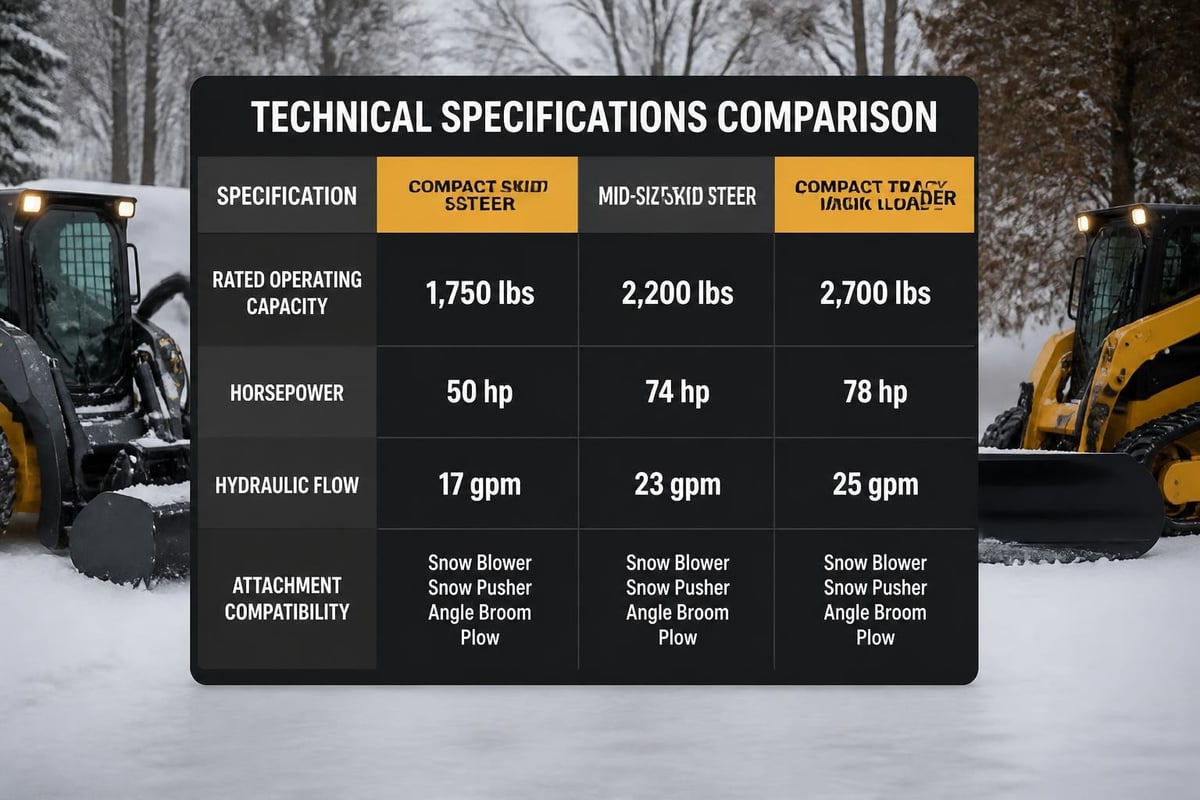
Rated Operating Capacity (ROC) determines how much weight your skid steer can safely lift and push. For commercial snow removal with skid steer applications, machines with ROC ratings between 1,800 and 3,300 pounds deliver the best balance of power and control. Higher capacity units handle larger snow pusher attachments and heavier wet snow without compromising stability.
Engine horsepower matters significantly when moving heavy snow loads. Most commercial operations benefit from skid steers equipped with 70 to 100 horsepower diesel engines that maintain hydraulic flow under sustained loads. Turbocharged models provide additional torque at lower RPMs, reducing fuel consumption during extended clearing operations.
Key specifications to evaluate:
- Hydraulic flow rate (minimum 20-25 GPM for snow attachments)
- Breakout force (for cutting through packed snow and ice)
- Ground clearance (8-10 inches prevents high-centering)
- Tire or track width (stability on slippery surfaces)
- Cab enclosure and heating system (operator comfort)
Wheeled versus Tracked Configurations
The wheeled versus tracked decision significantly affects performance in winter conditions. Wheeled skid steers offer superior maneuverability on plowed surfaces and faster travel speeds between properties. They excel on relatively flat parking lots and areas with good traction. However, preparing wheeled units for winter work requires installing proper tire chains or winter traction tires.
Tracked skid steers (also called compact track loaders or CTLs) distribute weight across a larger surface area, reducing ground pressure and improving traction on ice and packed snow. The continuous track design maintains stability on slopes and uneven terrain common in office campus environments and industrial parks.
| Feature | Wheeled Skid Steer | Tracked Skid Steer |
|---|---|---|
| Initial cost | Lower | Higher (15-25% premium) |
| Speed | Up to 12 mph | 6-8 mph maximum |
| Traction on ice | Requires chains/winter tires | Excellent native traction |
| Pavement wear | Minimal | Moderate (rubber tracks) |
| Best application | Flat lots, multiple sites | Slopes, rough terrain |
| Maintenance frequency | Lower | Higher (track inspection) |
Recent research from the California DOT on compact loader performance demonstrates that electric skid steers may soon offer viable alternatives for certain snow operations, though current battery technology limits their practicality for extended commercial clearing work in 2026.
Attachment Selection and Optimization
The versatility of snow removal with skid steer equipment lies in its ability to quickly switch between specialized attachments designed for different clearing tasks and snow conditions.
Snow Pushers and Box Plows
Snow pusher attachments represent the primary tool for commercial lot clearing. These attachments range from 8 to 14 feet wide and feature moldboard designs that contain snow while pushing, minimizing spillage and improving efficiency. Trip-edge models protect the attachment and machine from damage when encountering obstacles like parking bumpers or raised manhole covers.
Containment wings on pusher attachments prevent snow from spilling off the sides during forward motion. Adjustable side panels accommodate varying snow depths and allow operators to windrow snow when stacking in designated areas. Commercial-grade pushers constructed from 10-gauge steel or higher withstand impact with curbs and frozen debris throughout demanding winter seasons.
Box plow selection criteria:
- Width appropriate to lot layout (wider not always better)
- Cutting edge material (polyurethane for pavement protection)
- Quick-attach compatibility with your skid steer model
- Reinforced construction for pushing wet, heavy snow
- Replaceable wear components for season-long durability
Buckets and V-Plows for Detail Work
Standard buckets serve multiple functions beyond basic snow removal. A 72-84 inch bucket allows operators to load snow into dump trucks when storage areas fill, stack snow higher in windrows, and perform cleanup along building foundations where snow pushers cannot reach effectively.
V-plow attachments offer superior cutting action through packed snow and ice compared to straight-blade pushers. The angled blade configuration breaks through hard pack more effectively and provides better control when backdragging snow away from loading docks and overhead doors. Professional operators understand that the Association of Equipment Manufacturers provides comprehensive guidance on attachment classifications and proper application across different compact equipment categories.
Specialty Attachments for Comprehensive Service
Angle brooms prove invaluable for final cleanup after initial plowing, removing light accumulations from sidewalks, and sweeping away residual snow before applying deicing materials. The rotating brush action reaches into expansion joints and textured concrete surfaces where blades alone leave packed snow.
Snow blower attachments transform skid steers into powerful throwing machines capable of moving snow 30 to 50 feet from cleared areas. These attachments work best when storage space is limited and snow must be thrown over berms or into designated dump areas. Two-stage blowers handle wet, heavy snow more effectively than single-stage designs.
Salt and brine spreaders mount to skid steers for integrated deicing operations. Ground-driven spreaders eliminate the need for additional hydraulic circuits, while hydraulic models offer precise material control and variable spread patterns.
Operational Techniques and Best Practices
Maximizing productivity during snow removal with skid steer operations requires mastering specific techniques that reduce clearing time while protecting both equipment and property surfaces.
Systematic Clearing Patterns
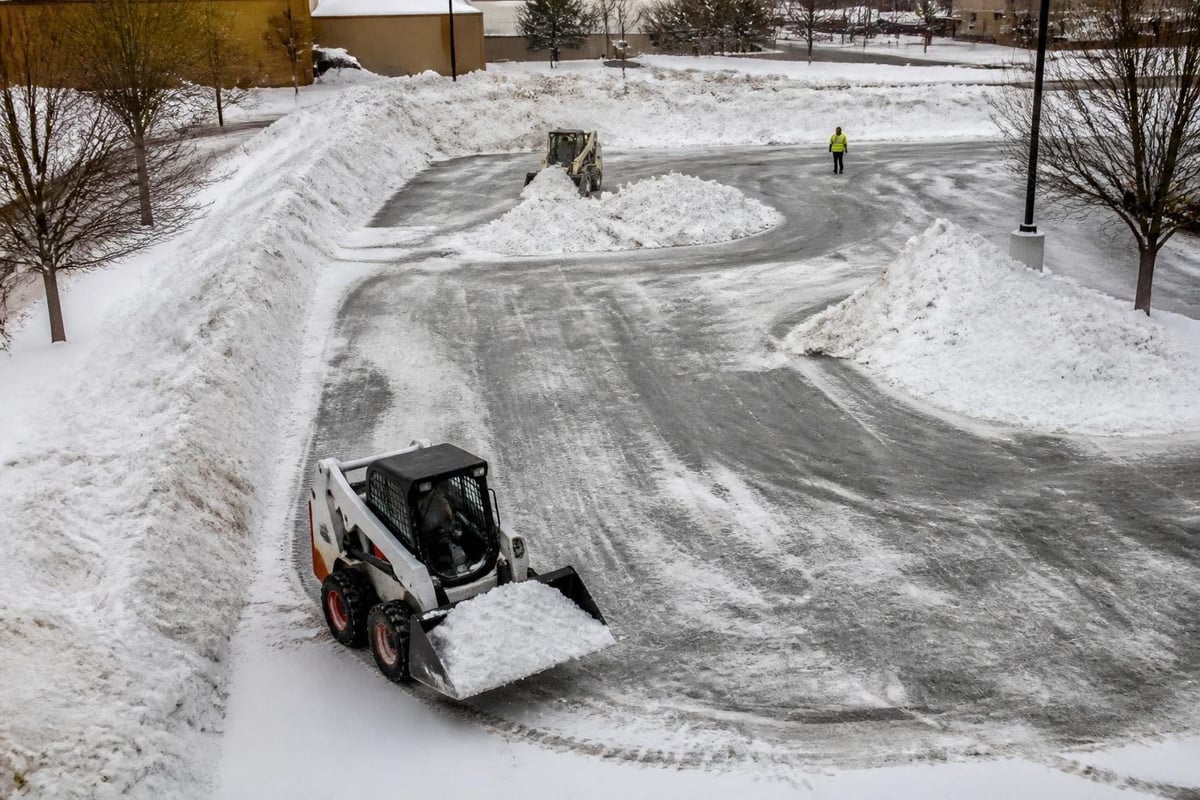
Efficient lot clearing begins with establishing push lanes that minimize backing and turning. Professional operators start at building edges and push toward designated stacking areas, working in a pattern that avoids crossing previously cleared sections. This systematic approach reduces the total number of passes required and decreases fuel consumption by 15 to 20 percent compared to random clearing patterns.
Recommended clearing sequence:
- Clear priority areas (fire lanes, emergency access, handicap spaces)
- Establish perimeter lanes around the lot edges
- Work from far end toward stacking area in parallel lanes
- Stack snow in designated areas away from drainage
- Perform detail work around islands, bollards, and entrances
- Final cleanup pass removing windrows and scattered snow
When clearing commercial properties throughout Denver, operators must account for drainage patterns to prevent meltwater from refreezing in critical traffic areas. Positioning snow stacks away from storm drains maintains proper site drainage throughout the thaw cycle.
Managing Different Snow Conditions
Light, powdery snow (1 to 4 inches) moves efficiently with wide snow pushers at higher ground speeds. Operators can clear large parking lots rapidly by maintaining forward momentum and using the full width of their attachment. Wet, heavy snow exceeding 6 inches requires reducing travel speed, taking narrower bite widths, and making multiple passes to avoid overloading hydraulic systems.
Packed snow and ice demand aggressive cutting edges and potentially switching to V-plow configurations. Dropping the blade and using the weight of the skid steer to break through surface ice proves more effective than attempting to push frozen accumulations. Salt or calcium chloride pre-treatment of problem areas improves cutting efficiency during subsequent clearing operations.
| Snow Condition | Recommended Attachment | Optimal Speed | Special Considerations |
|---|---|---|---|
| 1-4" powder | 10-12' pusher | 4-6 mph | Maximize width, minimize passes |
| 4-8" wet | 8-10' pusher | 2-4 mph | Reduce bite, avoid overload |
| 8-12" heavy | Bucket or 8' pusher | 1-3 mph | Multiple passes, strategic stacking |
| Packed/ice | V-plow or trip-edge | 1-2 mph | Aggressive angle, weight on blade |
Compliance with ADA and Safety Standards
Commercial properties must maintain accessible routes for individuals with disabilities throughout winter weather events. Understanding ADA-compliant snow and ice management strategies ensures that skid steer operations properly clear designated accessible parking spaces, ramps, and pedestrian pathways to required widths and surface conditions.
Skid steers excel at detail work around building entrances where larger equipment cannot safely operate. The compact footprint allows operators to clear within inches of building walls, removing snow that would otherwise require manual shoveling and creating slip hazards for building occupants.
Safety Protocols and Operator Training
Operating skid steers during winter conditions introduces specific hazards that require comprehensive safety programs and rigorous operator training protocols.
Pre-Season Equipment Preparation
Thorough pre-season inspection and maintenance prevents breakdowns during critical snow events. Penn State Extension’s operator training materials provide detailed checklists covering hydraulic system inspection, cutting edge examination, and cold-weather fluid requirements.
Critical preparation tasks include:
- Installing winter-grade hydraulic fluid (appropriate viscosity)
- Checking battery condition and charging system capacity
- Inspecting fuel systems for water contamination
- Testing heating systems and defrost functionality
- Examining tire or track condition and tension
- Verifying all lights and warning devices operate correctly
- Lubricating attachment quick-connect mechanisms
Operators should perform daily walk-around inspections before each shift, focusing on fluid levels, visible damage, and attachment security. Snow removal with skid steer operations demands equipment reliability, as breakdowns during active storms leave properties unprotected and expose businesses to liability.
Hazard Recognition and Mitigation
The OSHA safety bulletin on skid-steer loaders identifies specific hazards including rollover risk, poor visibility, and crushing injuries during attachment changes. Winter conditions amplify these baseline risks through reduced traction, frozen controls, and operator fatigue during extended emergency response operations.
Critical safety practices specific to snow operations:
- Maintain three-point contact when entering/exiting the cab
- Keep windshield and windows clear of snow and ice buildup
- Reduce travel speed on slopes and when turning on ice
- Avoid sudden movements that could trigger loss of traction
- Establish communication protocols with ground personnel
- Implement exclusion zones around operating equipment
- Use proper lighting during nighttime and low-visibility clearing
Additional guidance from Incident Prevention on skid-steer hazard awareness emphasizes the importance of rollover protective structures (ROPS) and seatbelt use. Operators must remain seated with restraints fastened at all times during operation, as ROPS only function when used in conjunction with proper restraint systems.
Comprehensive Crew Training Programs
Professional snow removal contractors invest in structured training programs that exceed basic equipment operation. The National Association of Home Builders provides toolbox talk resources suitable for brief pre-shift safety meetings covering specific topics like attachment changes, visibility challenges, and communication protocols.
Advanced training addresses site-specific factors including traffic management, customer property protection, and coordination with deicing teams. Operators learn to recognize when conditions exceed safe operating parameters and understand the procedures for suspending operations until conditions improve or additional resources arrive.
Many progressive contractors partner with programs like MnLTAP’s maintenance training resources to access simulator-based training and competency assessments that improve operator skills without equipment wear or safety risk. These programs develop muscle memory for emergency procedures and unusual operating scenarios before operators encounter them during actual storm responses.
Equipment Maintenance and Fleet Management
Preventive maintenance timeline showing daily, weekly, and seasonal service intervals for skid steer loaders in commercial snow removal fleets
Maintaining peak performance throughout demanding winter seasons requires disciplined preventive maintenance programs and proactive parts management strategies.
Seasonal Service Intervals
Winter operations accelerate normal wear patterns and introduce contamination from road salt, calcium chloride, and other deicing chemicals. Professional fleet managers implement aggressive service intervals during active snow season, often cutting standard maintenance schedules in half.
Enhanced winter maintenance schedule:
- Daily: Visual inspection, fluid checks, clean air filters
- Weekly (or every 20 hours): Grease all fittings, inspect hydraulic hoses
- Bi-weekly: Change engine oil and filter (premium synthetic)
- Monthly: Hydraulic system service, track or tire inspection
- End of season: Complete system flush, corrosion treatment, summer prep
Hydraulic systems require particular attention during winter operations. Cold temperatures increase fluid viscosity, reducing flow rates and decreasing attachment response speed. Using premium low-temperature hydraulic fluids maintains system performance and protects components from damage during cold starts.
Cost Management and ROI Analysis
Understanding the total cost of ownership for snow removal with skid steer equipment informs intelligent fleet decisions and pricing strategies. Purchase costs represent only 40 to 50 percent of lifetime ownership expenses, with fuel, maintenance, and operator wages constituting the majority of actual operating costs.
Tracking key performance metrics enables data-driven fleet optimization:
- Acres cleared per hour (productivity baseline)
- Fuel consumption per storm event
- Maintenance costs per operating hour
- Attachment lifespan and replacement timing
- Revenue per machine hour during snow season
For companies like Denver Snow Removals, managing mixed fleets of wheeled and tracked skid steers optimizes deployment across diverse commercial properties while controlling capital investment. Allocating tracked units to slope-intensive sites and wheeled machines to flat parking lots maximizes each configuration's strengths.
Strategic Deployment Across Property Types
Different commercial property types present unique challenges that influence equipment selection and operational approaches for skid steer snow removal.
Large Parking Lots and Retail Centers
Open parking lots represent the ideal application for snow removal with skid steer equipment. Wide snow pushers (10 to 14 feet) attached to high-capacity skid steers clear acres efficiently while maintaining the maneuverability needed around parking islands, cart corrals, and light poles.
Retail properties demand rapid response times to minimize business interruption. Deploying multiple skid steers in coordinated teams reduces total clearing time and allows staggered positioning of equipment for continuous operation during extended storms. This approach maintains access to high-traffic entrances throughout weather events rather than closing entire lots during clearing operations.
Office Campuses and Industrial Parks
Office campus environments combine large parking areas with pedestrian walkways, loading zones, and landscaped areas requiring varied equipment approaches. Skid steers handle the primary lot clearing while also performing detail work that would require additional specialized equipment.
The quick-attach system allows operators to complete initial clearing with snow pushers, then rapidly switch to angle brooms for sidewalk finishing and salt spreaders for anti-icing applications. This multi-function capability reduces the total number of machines required on-site and decreases labor costs compared to deploying specialized single-purpose equipment.
HOA Communities and Mixed-Use Developments
Homeowner association properties and mixed-use developments present complex layouts with narrow streets, tight turning radii, and numerous obstacles. Compact skid steers navigate these challenging environments effectively while delivering sufficient pushing power for residential-scale snow accumulations.
Managing snow storage becomes critical in space-constrained HOA environments. Operators must strategically stack snow in designated common areas without blocking resident access or creating sight-line hazards at intersections. The lifting capacity of skid steer buckets enables creating taller, more compact snow piles that preserve usable space throughout the property.
Technology Integration and Modern Capabilities
Current-generation skid steers incorporate technological advancements that enhance productivity, improve safety, and provide operational transparency for commercial snow removal operations.
Telematics and Fleet Tracking
GPS-enabled telematics systems provide real-time location tracking, operating hour logging, and maintenance interval alerts across entire skid steer fleets. These systems document clearing patterns and service completion times, creating verifiable records of work performed at each property.
Geofencing capabilities alert managers when equipment leaves designated service areas, preventing unauthorized use and enabling rapid response to theft situations. Fuel consumption tracking identifies operators who would benefit from additional efficiency training and helps detect mechanical issues before they cause breakdowns.
Operator Assist Technologies
Modern skid steers offer features like ride control systems that dampen bouncing when traveling across rough terrain with loaded attachments. This technology reduces operator fatigue during long shifts and improves material retention when carrying snow in buckets.
Intelligent hydraulic systems automatically adjust flow rates based on attachment requirements and load conditions. These systems optimize performance while reducing fuel consumption by up to 12 percent compared to conventional fixed-flow designs. For contractors managing commercial snow removal throughout the Denver Metro area, these efficiency gains translate directly to improved profitability across seasonal operations.
Camera Systems and Visibility Enhancement
Backup cameras and 360-degree visibility systems address the inherent blind spots in skid steer designs. Multiple camera feeds displayed on in-cab monitors allow operators to verify clearance around attachments and detect ground personnel or obstacles that would otherwise remain hidden.
LED lighting packages dramatically improve visibility during nighttime operations and early morning pre-opening clearing work. Modern systems provide daylight-quality illumination across wide areas, reducing eye strain and enabling operators to identify property hazards like parking bumpers and curbs before contact occurs.
Successful snow removal with skid steer equipment requires careful attention to machine selection, attachment optimization, operator training, and systematic maintenance protocols. By implementing these professional practices, commercial snow removal operations deliver reliable service that protects property accessibility and safety throughout winter weather events. Denver Snow Removals combines 47 years of industry expertise with modern skid steer capabilities to provide comprehensive commercial clearing services across the Denver Metro area-contact us today to discuss customized snow management solutions for your property.