When winter storms blanket the Denver Metro area, finding a reliable snow blowing service near me becomes a top priority for facility managers, property owners, and HOA boards. The decision impacts not only daily operations and accessibility but also liability exposure, tenant satisfaction, and regulatory compliance. Professional snow removal services have evolved significantly over the past decade, incorporating advanced equipment, real-time weather monitoring, and comprehensive service agreements that go far beyond simply clearing pathways after a snowfall.
Understanding Professional Snow Blowing Services
Professional snow blowing services differ fundamentally from residential snow removal in scope, equipment, and contractual obligations. Commercial operations utilize industrial-grade snow blowers capable of clearing thousands of square feet per hour, paired with truck-mounted plows, loaders, and specialized anti-icing equipment. These services typically operate under formal contracts that specify response times, accumulation triggers, and service boundaries.
When searching for a snow blowing service near me, commercial property managers should understand the three primary service models. Seasonal contracts provide unlimited service throughout winter at a fixed price, offering budget certainty but potentially higher costs during light snow years. Per-occurrence contracts bill for each storm event based on accumulation and time spent, which can be cost-effective in mild winters but unpredictable for budgeting. Hourly-rate agreements charge for equipment and labor time, offering flexibility but requiring careful oversight to control costs.
Service Scope and Equipment Capabilities
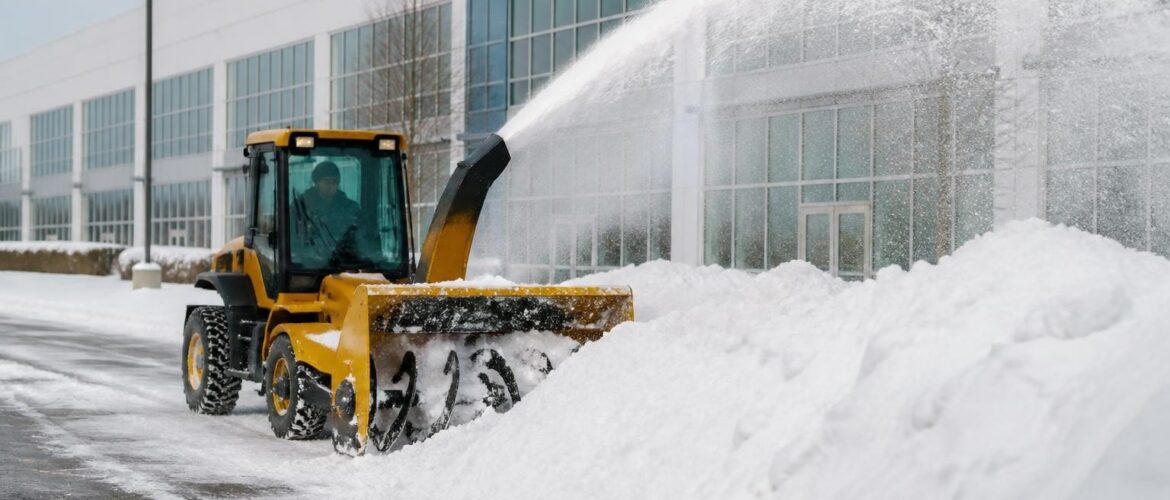
The equipment a contractor deploys directly impacts clearing speed, thoroughness, and surface protection. Modern commercial snow blowers range from walk-behind units for sidewalks and tight spaces to tractor-mounted blowers that can clear 30-foot swaths in a single pass. Property managers should verify that prospective contractors maintain equipment appropriate for their site's specific needs.
| Equipment Type | Best Application | Clearing Rate | Typical Cost Factor |
|---|---|---|---|
| Walk-behind blowers | Sidewalks, entryways | 1/4 acre/hour | Lower |
| Truck-mounted blowers | Mid-size lots, drives | 1-2 acres/hour | Medium |
| Tractor-mount blowers | Large lots, campuses | 3-5 acres/hour | Higher |
| Loader + blower combo | Industrial parks | 5-10 acres/hour | Premium |

According to the Snow & Ice Management Association’s industry standards, contractors should document their equipment inventory, maintenance schedules, and backup capacity as part of any comprehensive service proposal. This transparency helps property managers assess whether a vendor can handle peak-demand situations when multiple storms occur in rapid succession.
Evaluating Local Service Providers
The phrase "snow blowing service near me" yields dozens of results in most metro areas, making systematic evaluation essential. Start by verifying that each candidate maintains proper licensing, general liability insurance (minimum $2 million recommended for commercial properties), and workers' compensation coverage. Request certificates of insurance naming your property as an additional insured.
Response Time and Availability
Response time commitments separate professional operations from casual providers. Most commercial contracts specify a response window measured from when accumulation reaches a contractual trigger (typically 2-3 inches). Elite providers commit to beginning service within 2-4 hours of trigger accumulation. Standard providers promise 4-6 hour response windows. Economy services may only guarantee same-day response without specific timeframes.
For properties that must maintain 24/7 accessibility, such as medical facilities, emergency services, or senior living communities, response times become critical liability considerations. Denver Snow Removals and similar premier contractors maintain dedicated equipment and crews specifically allocated to time-sensitive accounts, ensuring response even during widespread storm events when demand peaks across all service areas.
Geographic Service Boundaries
When vetting a snow blowing service near me, confirm that your property sits well within their primary service area rather than at the outer edge. Contractors often accept jobs outside their core territory during slow periods but may deprioritize those sites during major storms when closer properties demand immediate attention.
Contract Terms and Pricing Structures
Effective snow removal contracts balance cost predictability with performance accountability. The most sophisticated agreements incorporate weather-trigger clauses, performance guarantees, and detailed scope-of-work specifications that eliminate ambiguity about what services are included.
Seasonal fixed-price contracts work best for properties requiring budget certainty and frequent service. These agreements typically range from $1,800 to $8,500 per season for medium-sized commercial lots (1-3 acres), depending on location, expected snowfall, and service frequency. Properties in areas prone to heavy, consistent snowfall often achieve better value with seasonal contracts.
Per-occurrence pricing generally ranges from $250 to $1,500 per storm event for similar-sized properties, varying with accumulation depth and service scope. This model appeals to properties in areas with sporadic snowfall or businesses willing to accept budget variability in exchange for paying only for actual services rendered.
Additional Service Components
Beyond basic snow removal, comprehensive contracts often include:
- Pre-storm anti-icing applications that prevent snow from bonding to pavement
- Post-clearing deicing treatments for pedestrian safety and black ice prevention
- Snow hauling and relocation when on-site storage capacity is exhausted
- Roof snow removal for structures at risk of collapse under heavy loads
- Sidewalk detail clearing with walk-behind equipment and hand shoveling
The University of Maryland Extension’s guidance on responsible salt use emphasizes that modern deicing strategies balance effectiveness with environmental stewardship. Professional contractors increasingly offer alternative products like calcium magnesium acetate or beet-juice-enhanced brines that minimize damage to landscaping, concrete, and waterways while maintaining safety standards.
Regulatory Compliance and Liability Considerations
Denver property owners must navigate specific municipal requirements when contracting snow removal services. The Denver sidewalk snow removal ordinance mandates that property owners clear public sidewalks within 24 hours of snowfall cessation, with violations resulting in fines starting at $150 and escalating for repeat offenses.
Professional snow blowing services include sidewalk clearing in their scope of work to help clients maintain compliance. However, property managers should verify that contracts explicitly assign responsibility for public sidewalk areas and specify how the contractor documents completion times.
Environmental and Stormwater Regulations
Commercial properties increasingly face scrutiny regarding snow removal's environmental impact. The EPA’s guidance on snow and ice management addresses stormwater permit requirements and best management practices for deicing chemical applications. Properties operating under MS4 permits must demonstrate that snow removal contractors follow approved protocols for material application rates and runoff management.
Forward-thinking property managers request that contractors provide:
- Application rate documentation for all deicing materials
- Product specification sheets showing environmental certifications
- Training records demonstrating crew knowledge of proper application techniques
- Equipment calibration logs ensuring accurate material dispensing
Technology Integration and Service Verification
Modern snow blowing services leverage technology to improve service quality and documentation. GPS tracking systems on every piece of equipment create timestamped service records proving when crews arrived, where they worked, and how long they spent on-site. This data protects both contractors and property owners in liability disputes.
Photo documentation systems require crews to capture before, during, and after images of each service visit, uploaded automatically to client portals. Property managers can review these images remotely, confirming service completion without site visits during overnight or early-morning clearing operations.
Weather monitoring integration connects service dispatch to hyperlocal weather stations and forecasting models. Advanced contractors begin mobilizing equipment and crews before snowfall starts, positioning resources for rapid response the moment accumulation reaches contractual triggers.
| Technology Feature | Benefit to Property Owner | Industry Adoption Rate |
|---|---|---|
| GPS fleet tracking | Verified service timing | 78% of major providers |
| Photo documentation | Visual proof of work | 65% of major providers |
| Client web portals | Real-time status updates | 52% of major providers |
| Mobile crew apps | Faster issue reporting | 71% of major providers |
Recent industry reporting on technology adoption highlights how contractors using these tools reduce customer complaints by 40% and resolve billing disputes 60% faster than those relying on manual documentation methods.
Selecting the Right Service Provider
After researching snow blowing service near me options, property managers should request formal proposals from at least three qualified contractors. Comprehensive proposals include site-specific service plans rather than generic templates, demonstrating that the contractor conducted a physical site assessment and understands unique challenges like drainage patterns, snow storage areas, and high-priority clearing zones.
Proposal Evaluation Criteria
Weight these factors when comparing competing proposals:
- Financial stability: Request references from properties similar to yours that the contractor has served for multiple consecutive seasons
- Equipment redundancy: Verify backup equipment availability in case of mechanical failures during critical service periods
- Crew capacity: Confirm adequate staffing to maintain service quality during extended storm events requiring 72+ continuous hours of operation
- Communication protocols: Understand how the contractor provides status updates, handles service requests, and escalates urgent issues
- Performance guarantees: Review remedies available if the contractor fails to meet contractual response times or service standards
The Consumer Reports snow blower buying guide provides useful context for understanding equipment quality and maintenance requirements that separate professional-grade operations from marginal providers. While focused on consumer equipment, the testing methodology and performance criteria translate directly to commercial applications.

Emergency Services and Storm Preparation
24/7 emergency availability distinguishes premium providers from standard services. When unexpected storms strike outside normal operating hours or accumulation exceeds forecast predictions, dedicated emergency services ensure properties remain accessible and safe. Denver Snow Removals and similar premier contractors maintain on-call supervisors and reserve equipment specifically for emergency deployment.
Pre-storm preparation begins 48-72 hours before predicted snowfall. Professional contractors review weather forecasts multiple times daily during winter months, adjusting crew schedules and equipment deployment plans as models refine predictions. The most sophisticated operations maintain relationships with private meteorologists who provide hyperlocal forecasting for the Denver Metro area, improving preparation accuracy.
Multi-Day Storm Protocols
Extended storm events lasting 48+ hours require different strategies than single-event clearing. Contractors must rotate crews to prevent fatigue-related safety incidents and equipment failures. Property managers should verify that service agreements address multi-day storm scenarios, specifying how frequently the contractor will return to clear accumulation during ongoing snowfall.
For critical-access properties, the best practice involves clearing parking lots and drives every 3-4 hours during active snowfall rather than waiting until the storm ends. This approach prevents compaction, reduces total clearing time, and maintains safer conditions throughout the event.
Specialized Service Considerations
Different property types require tailored snow removal approaches. Office parks prioritize early-morning clearing before employee arrival, typically requiring service completion by 7:00 AM. Retail centers need continuous monitoring and spot clearing throughout operating hours to maintain customer access and minimize slip-and-fall liability. Industrial facilities often operate 24/7, demanding around-the-clock access to loading docks and truck routes.
Healthcare facilities and senior living communities face the highest liability exposure from snow-related accidents. These properties typically specify the most aggressive service triggers (1-2 inch accumulation) and fastest response times (2 hours or less). Many also require specialized treatments for black ice prevention during the critical early-morning hours when temperatures drop and residual moisture freezes.
HOA and Multi-Property Portfolios
Homeowners associations and property management companies overseeing multiple locations benefit from consolidated service agreements. Portfolio contracts provide consistent service quality across all properties while often securing volume discounts of 15-25% compared to individual site contracts. Denver Snow Removals specializes in these arrangements, deploying dedicated account managers who coordinate service across entire property portfolios.
Portfolio agreements also simplify administrative burden by consolidating invoicing, insurance compliance tracking, and performance monitoring across all locations. Single-point-of-contact communication streamlines emergency coordination during major storm events affecting multiple properties simultaneously.
Service Quality Monitoring and Performance Management
Effective snow removal partnerships require ongoing performance monitoring beyond simply verifying that snow gets cleared. Property managers should conduct regular site inspections during and immediately after service visits, documenting issues like missed areas, surface damage from equipment, or excessive deicing material application.
Monthly performance reviews during winter months create accountability and continuous improvement. These sessions should cover:
- Response time compliance rates for all service events
- Quality issues identified through inspections or tenant complaints
- Material usage rates compared to industry benchmarks
- Equipment incidents or property damage claims
- Recommendations for service plan adjustments
Documentation from GPS systems, photo logs, and inspection reports supports objective performance evaluation. When contractors consistently meet or exceed standards, property managers can offer contract renewals or expanded scope. When performance lags, documented evidence supports either corrective action plans or contract termination.
Long-Term Partnership Development
The most successful snow removal relationships extend beyond single-season contracts. Multi-year agreements (typically 3-5 years) provide contractors with revenue stability that supports equipment investment and crew retention. In return, property owners secure pricing stability and preferential service priority during peak-demand periods.
Long-term partnerships enable contractors to develop site-specific expertise. Crews learn optimal clearing patterns, problem areas requiring extra attention, and property-specific protocols for accessing gated areas or coordinating with security personnel. This institutional knowledge improves service quality while reducing the training burden and miscommunication risks associated with annual contractor changes.
When evaluating whether to extend contracts beyond initial terms, property managers should consider total relationship value rather than just price. A contractor charging 10% more but delivering consistent quality, rapid response, and zero liability incidents often provides better value than the lowest bidder requiring constant oversight and generating tenant complaints.
Insurance and Risk Management
Snow removal operations carry significant liability exposure for both contractors and property owners. Comprehensive insurance programs must address:
- General liability coverage for third-party bodily injury and property damage claims
- Completed operations coverage for incidents occurring after service completion
- Environmental liability for chemical spills or improper deicing material application
- Commercial auto insurance covering all vehicles and equipment operated on-site
- Excess/umbrella policies providing additional protection above primary policy limits
Property owners should require contractors to maintain minimum coverage of $2 million general liability and $1 million commercial auto. For large commercial properties or portfolios, $5 million general liability and $2 million umbrella coverage provides more appropriate protection.
Beyond insurance verification, effective risk management includes written safety protocols, crew training documentation, and incident response procedures. When slip-and-fall accidents occur despite professional snow removal services, documented evidence of contractor selection due diligence and service monitoring protects property owners from negligence claims.
Finding the right snow blowing service near me requires careful evaluation of equipment capacity, response capabilities, and contractual terms that align with your property's specific needs. Whether you manage a sprawling office campus, a retail center, or an HOA community, professional snow removal protects accessibility, reduces liability, and ensures compliance with Denver's municipal requirements. Denver Snow Removals brings 47 years of commercial snow removal expertise to the Denver Metro area, offering 24/7 emergency services, advanced equipment, and customized service agreements that keep your property safe and accessible throughout Colorado's challenging winter months.