
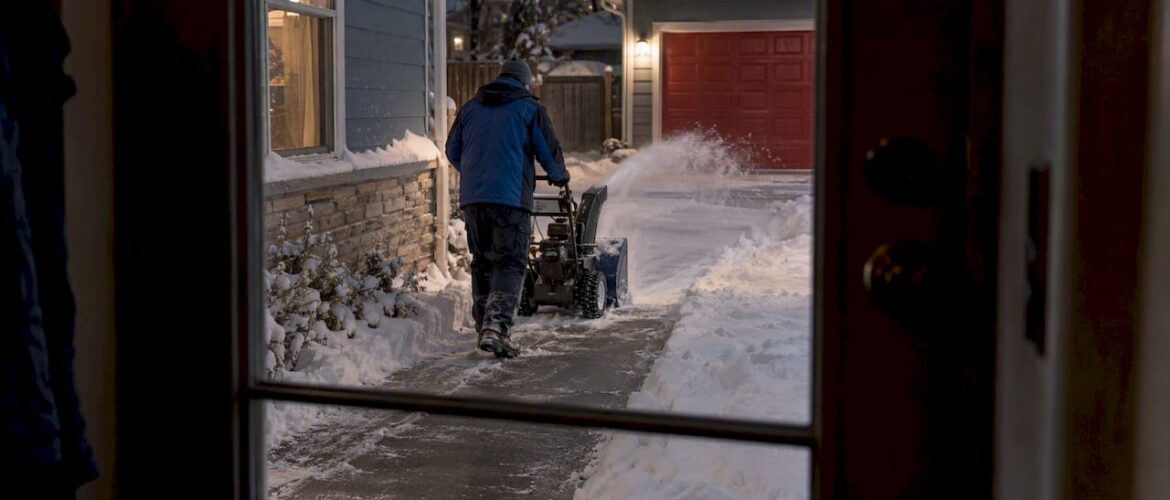
If a plow woke you at 5 a.m. or a neighbor’s snow blower kept running after dark, Denver’s noise code has an answer, and it is more lenient toward snow removal than most people expect. Snow-removal equipment is carved out of the ordinary sound limits at certain times, including during snowfall, so many complaints about it go nowhere. Others are legitimate, mostly when the work is unnecessary, badly timed or the equipment is poorly maintained. This guide explains where the line sits, how to raise a problem, and how property owners can keep crews working without making enemies.
TL;DR
- Denver exempts snow-removal equipment from ordinary sound limits from 7:00 a.m. to 10:00 p.m., during snowfall or declared snow emergencies, and in specified post-event periods.
- “Snow-removal equipment” is defined broadly: plows, blowers, sweepers and shovels, whether mechanical, electrical or manual.
- Denver recommends talking to the source first. If that fails, call 3-1-1 with the address, type of noise, dates and times.
- Property owners who hire a contractor should agree on timing, equipment and communication in writing before the first storm.
- Sidewalk deadlines are real, so a quiet plan beats a late one.
Table of Contents
- What counts as snow-removal noise under Denver’s code
- The numbers: ordinary limits and the snow exemption
- When a snow removal noise complaint can succeed
- How to raise the problem before you file a complaint
- Making a formal complaint in Denver
- Perspective: how a snow contractor thinks about noise
- Choosing a service that fits a noise-sensitive property
- Your clearing duties still apply
- Quieter ways to handle the same job
- Plowing with a plan from Denver Snow Removal
- FAQ
- Sources
What counts as snow-removal noise under Denver’s code
Denver regulates noise in Chapter 36 of its municipal code. The chapter defines snow-removal equipment as any equipment used to remove snow from land or building surfaces, including snow plows, blowers, sweepers and shovels, whether mechanical, electrical or manual. That covers the pickup with a blade, the skid steer in a retail lot, the two-stage blower on a driveway, and even a scraping shovel.
The city’s noise program treats noise as unwanted sound judged against code standards. Its guidance says the rules address ongoing or recurrent noise that crosses from one property to another, and it lists snow removal among the ordinance’s specific exemptions. The same page says sound is measured in A-weighted decibels with a fast-response sound-level meter.
Two ideas matter here:
- Recurrent, cross-property noise is what the program is built for. One pass of a plow at 6 a.m. is a very different thing from a leaf blower used on a dry driveway every morning.
- Exemptions have conditions. An exemption for snow equipment does not make every use of a machine acceptable at every hour.
The numbers: ordinary limits and the snow exemption
For context, Denver’s ordinary residential limits at the receiving property are 55 dB(A) from 7:00 a.m. to 10:00 p.m. and 50 dB(A) from 10:00 p.m. to 7:00 a.m., measured at or within the property line of the neighbor who is receiving the sound. A running gas blower or a diesel plow truck can easily exceed those numbers at a close property line, which is why the exemption matters so much.
The code exempts snow-removal equipment on residential, commercial or industrial premises, including adjoining sidewalks, in these situations:
| Situation | Ordinary sound limits apply? |
|---|---|
| 7:00 a.m. to 10:00 p.m., on the premises or adjoining sidewalks | No, snow-removal equipment is exempt |
| During snowfall | No, exempt |
| During a declared snow emergency | No, exempt |
| Specified periods after a snow event | No, exempt |
| Operated by or for the City and County of Denver | No, exempt |
| Overnight with no snowfall, emergency or post-event period | Ordinary limits can apply |
All of those rows come from the same code chapter. The exact length of the post-event periods is spelled out in the code text, so read it or ask the city before you rely on a specific hour count. Anyone planning overnight work in clear weather should treat the exemption as uncertain.
That last row is the practical risk. A neighbor running a blower at 2 a.m. on a dry night, long after the last flake, is the person most likely to draw a legitimate complaint.
When a snow removal noise complaint can succeed
Because so much snow work is exempt, a complaint tends to succeed only in narrower cases. These are the patterns worth documenting:
- Work well outside storm windows. Equipment running late at night or before dawn when it is not snowing and the post-event periods have passed.
- Equipment misused or poorly maintained. Nuisance noise from a machine that is not doing snow work at all, such as a blower used to move dry leaves, falls outside the snow exemption.
- Recurring non-snow noise on the same site. Idling trucks, backup alarms or loading activity at a commercial lot that continue long after plowing is finished are a separate matter from plowing itself.
- Work that is not tied to the property. The exemption speaks of premises and adjoining sidewalks, so noise that is plainly unrelated to clearing snow gets no special treatment.
If your issue is a plow pass at 6 a.m. during a storm, expect the answer to be that the equipment is exempt. That is not the city dismissing you; it reflects the safety logic behind the rule. Denver’s snow and ice fact sheet requires businesses to begin clearing sidewalks immediately after snowfall stops and residences to clear sidewalks by the next day, so that pedestrians, people with disabilities, parents with strollers and mail carriers can get through. Crews cannot meet those deadlines in silence.
How to raise the problem before you file a complaint
Denver’s noise program recommends speaking to the neighbor or noise source first, because a friendly request often settles it before anything formal starts. That advice works for snow, too, and each situation has a slightly different path.
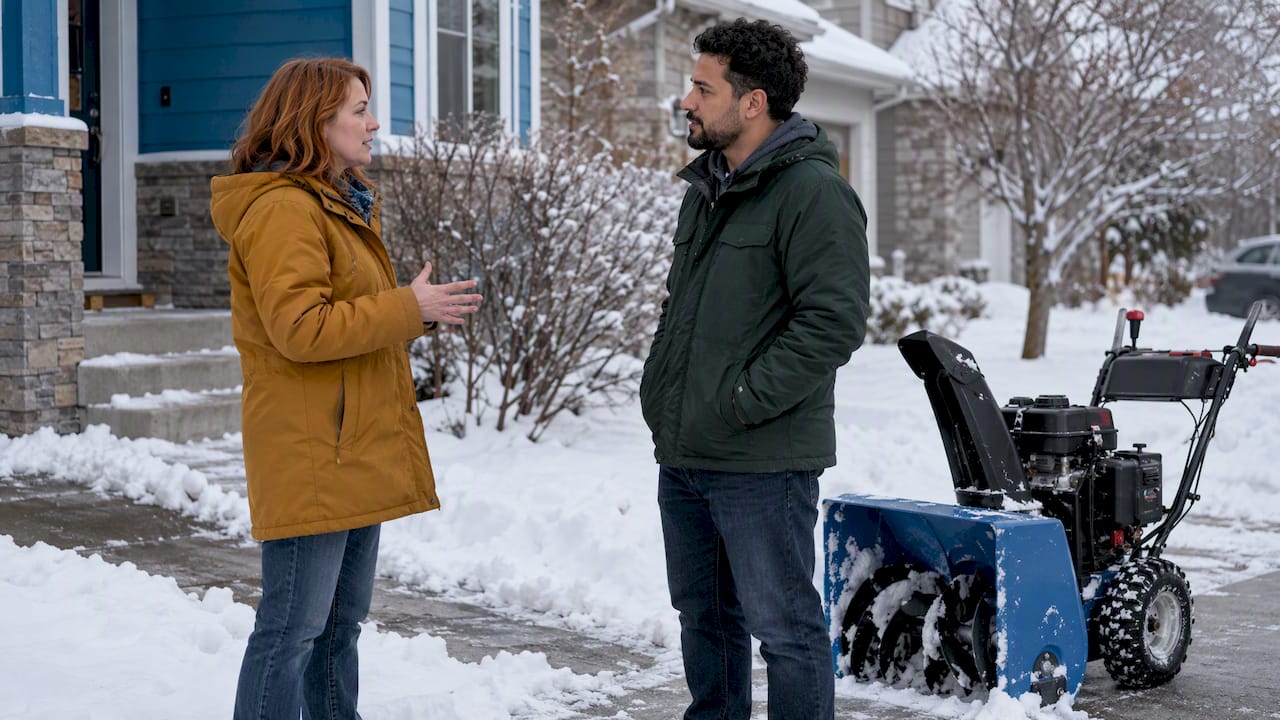
If it is a neighbor
Keep it short and specific. “Your blower was running at 5 a.m. and it comes through my bedroom wall. Could you wait until 7 if the storm has stopped?” is easier to accept than a note on the windshield. Many people do not realize how far a two-stage blower carries. Offering a trade can help: some neighbors would happily start later if they knew their walk would still be cleared by the deadline.
If it is a business or property manager
Call the manager or the number posted for the property, not the plow driver. Describe what you heard, when, and how often. A manager who hears “the lot was plowed at 4 a.m. three nights in a row without any snowfall” can ask the contractor to change the schedule. A manager who hears “your plow is too loud” has nothing to act on.
If it is your HOA or condo association
Check the governing documents and the snow contract. Many associations can adjust service windows in the next contract or adopt a written communication protocol. Raise it with the board, not the crew.
Making a formal complaint in Denver
If talking does not work, the city’s guidance is to call 3-1-1 and give your contact details plus the source’s address, the type of noise, and the dates and times it occurred. From outside Denver, routine noise complaints go to 720-913-1311, or you can file online.
What happens next, per the city:
- The Denver Department of Public Health & Environment (DDPHE) assigns an inspector to investigate.
- DDPHE says it responds to a noise complaint within 72 business hours, so a storm may be over long before anyone arrives.
- If the complaint is legitimate and the noise excessive, the source may receive a verbal or written warning to reduce the noise to a legal level.
- If the problem continues, the result can be an administrative citation or a court summons.
The police are a different channel. The Denver Police Department may also enforce the noise ordinance, and for immediate help the city points residents to the non-emergency line at 720-913-2000, with 9-1-1 reserved for emergencies. A plow doing exempt work in a storm is not a reason to call either.
Build a record that helps an inspector
A complaint with facts is far easier to act on. Keep a simple log:
- Date, start time and end time of each incident
- Whether it was snowing at the time
- What equipment you saw or heard
- The address where it came from
- Anything you already tried, such as a conversation or a call to the manager
Snow-timing details matter more here than in a typical party-noise complaint, because they decide whether the exemption applies.
Perspective: how a snow contractor thinks about noise
We have plowed Denver lots, driveways and sidewalks for more than 44 years, and we have taken our share of calls from people startled awake by a blade scraping at dawn. We understand the frustration. We also know why the work happens when it does.
A commercial lot has to be usable by the time tenants and customers arrive. Sidewalks carry legal deadlines, and an unplowed entrance is a slip-and-fall claim waiting to happen. When snow is still falling, waiting rarely helps: a lot that gets one pass while accumulation is manageable is quicker and quieter than one cleared after it has packed down and needed repeated passes. That is why we run true 24/7 dispatch and commercial-grade equipment meant to clear lots in as few passes as possible.
Here is what we tell property managers and HOA boards who ask how to keep complaints down:
- Put timing in the contract. Decide what the trigger depth is, what hours routine service runs, and how storm-time exceptions work.
- Ask for documented visits. A log with times shows a resident exactly when the crew was on site and why. It also protects you if a slip-and-fall claim arrives.
- Separate plowing from the extras. Hauling and pile removal are loud, and they do not have to happen at 3 a.m. Schedule them for daytime when you can.
- Give residents a contact. A name and number that actually answer prevent most calls to 3-1-1.
We would rather hear “can you start the back lot later?” than see a complaint go to the city. Most of the time we can adjust.
— Jesse
Choosing a service that fits a noise-sensitive property
If your property sits next to bedrooms, a care facility or a quiet cul-de-sac, ask potential contractors a few direct questions:
- How do you dispatch during overnight storms, and who answers the phone?
- Can routine passes be limited to certain hours when there is no active snowfall?
- What equipment will be used on this site, and how many passes does a typical clearing take?
- Will you document each visit with times?
- How do you handle hauling or pile removal near residences?
The equipment choice shapes the sound as well as the result. Our comparison of a snow blower versus a snow plow service walks through when each makes sense for a Denver property. For driveways specifically, professional driveway plowing usually means one vehicle and one visit rather than an hour of blower noise at the property line.
Your clearing duties still apply
Worried about noise, some owners are tempted to wait until midmorning or skip a pass. The city’s deadlines do not move: businesses start clearing sidewalks immediately after snowfall stops, and residences have until the next day, according to the city fact sheet. Falling behind trades a noise problem for a liability one.
To see who is responsible for what on your parcel, read our guide to who clears what on Denver properties, and for downtown owners, the sidewalk shoveling rules. If your contractor misses a storm entirely, our plow no-show emergency guide covers the next steps.
Quieter ways to handle the same job
Noise is partly a function of how many passes and how much equipment a storm needs. A few things reduce both:
- Pre-treat before the storm. Anti-icing on pavement helps snow release, so plows scrape less and ice builds up less. Our commercial anti-icing guide explains the approach.
- Clear early in the storm on busy sites. Smaller accumulations are faster to move.
- Haul in daytime. Where piles outgrow the lot, off-site snow hauling can be scheduled outside sleeping hours.
- Hand tools near bedrooms. A shovel or a de-icing application on a short walk is almost silent. Any of these is still snow-removal equipment under the code, but it is the quietest option.
Plowing with a plan from Denver Snow Removal
We provide snow plowing and removal for commercial, industrial, HOA and residential properties across the Denver metro area, with free estimates, tailored seasonal contracts (September to May) and emergency service around the clock. Residential driveway and walkway clearing starts from $41.25 per visit, one-off. If you manage a property where timing and neighbors matter, tell us at the estimate and we will build the schedule around it.
See our service and contract options or the driveway and parking lot clearing page to request an estimate.
FAQ
Is it legal to use a snow blower at night in Denver?
Often yes while it is snowing, during a declared snow emergency, or in the post-event periods the code sets out, because snow-removal equipment is exempt in those situations. Outside them, ordinary sound limits of 50 dB(A) overnight can apply at the neighbor’s property line. Check the code text for the details of your situation.
Can I call the police about a plow or blower that is too loud?
Yes, though it depends on urgency. Denver directs people to the police non-emergency line at 720-913-2000 for immediate help and to 9-1-1 only for emergencies. Routine complaints generally go to DDPHE through 3-1-1. Equipment working inside the exemption is unlikely to produce an enforcement response.
What happens after I file a noise complaint?
DDPHE assigns an inspector and says it responds within 72 business hours. A legitimate complaint can lead to a verbal or written warning, and continued noise can lead to an administrative citation or court summons. Give dates, times, the address and the type of noise to speed things up.
Should I talk to my neighbor or property manager first?
Yes. Denver’s own guidance recommends it, and a friendly request often resolves things faster than a formal process. For a business or HOA, contact the manager and ask about the contractor’s service window.
Does the quiet-hours exemption cover hand shoveling?
Denver’s definition of snow-removal equipment includes shovels, whether manual, mechanical or electrical. So the exemption is not limited to engines, although a shovel is rarely the source of a complaint.
Sources
- Chapter 36 – Noise Control, Denver Code of Ordinances
- Noise Program, City and County of Denver
- Noise Complaints, City and County of Denver
- Snow & Ice Build-Up Fact Sheet, Denver City Council