

Snow removal businesses represent one of the most reliable seasonal service industries in regions that experience regular winter weather. As property managers, facility directors, and homeowners' associations demand professional clearing services, companies that combine operational excellence with responsive customer service find themselves positioned for sustainable growth. Whether you're launching a new venture or expanding an existing operation, understanding the fundamentals of this industry will determine your long-term success in a competitive marketplace.
Understanding the Snow Removal Business Model
Snow removal businesses operate on a fundamentally different model than most service industries, with revenue concentrated in a compressed seasonal window. The business structure typically revolves around securing contracts before winter arrives, maintaining equipment during the off-season, and executing flawless service delivery when weather events strike.
Service Categories and Market Segments
Professional snow removal companies typically divide their offerings into distinct service tiers, each requiring different equipment, staffing levels, and pricing structures.
Commercial snow removal forms the backbone of most established operations. These contracts cover:
- Office parks and corporate campuses
- Retail centers and shopping plazas
- Industrial facilities and warehouses
- Healthcare facilities and medical complexes
- Educational institutions and universities
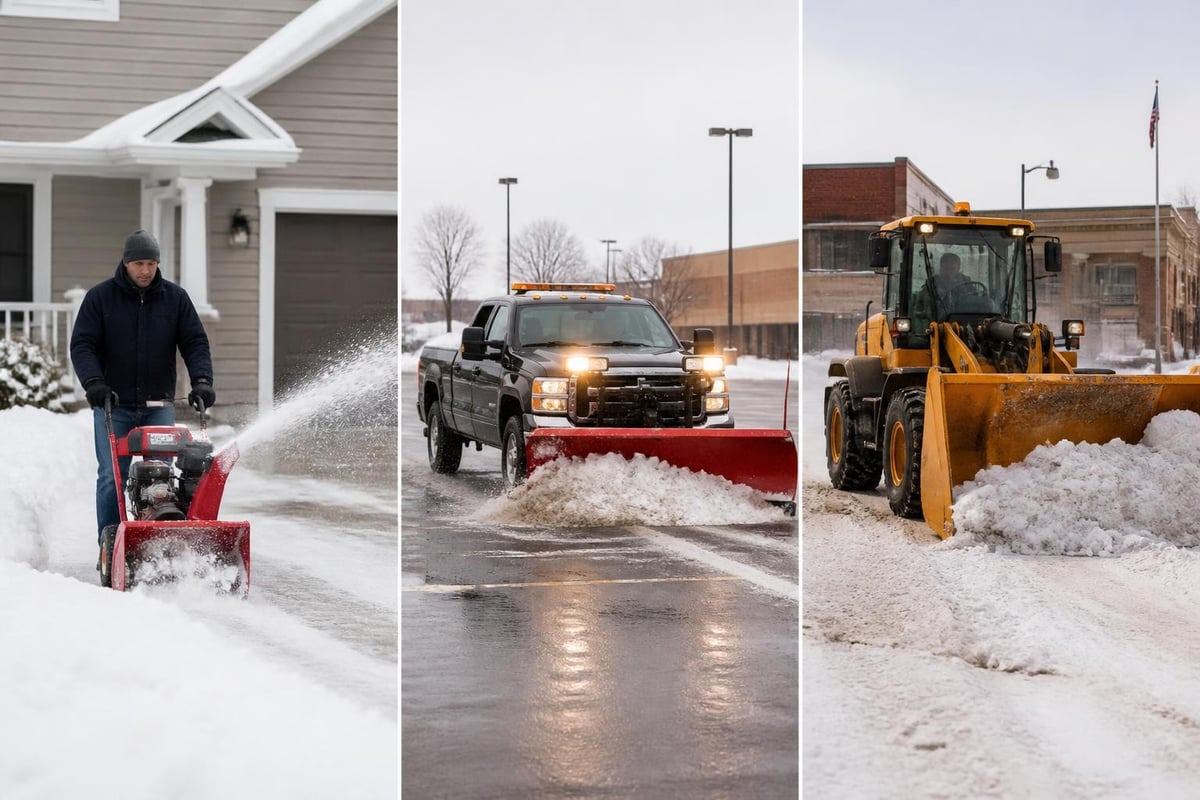
Residential services include individual driveways, townhome communities, and smaller homeowners' associations. While these contracts generate lower per-job revenue, they offer volume opportunities and can fill gaps in commercial route schedules.
Municipal and institutional work represents the highest-value segment but comes with stringent requirements, bidding processes, and often slower payment cycles. Many snow removal businesses build their foundation on commercial work before pursuing government contracts.
| Service Tier | Equipment Required | Typical Contract Value | Payment Terms |
|---|---|---|---|
| Residential | Pickup trucks, small plows | $300-800/season | Prepaid or per-event |
| Commercial | Heavy-duty trucks, loaders | $3,000-25,000/season | Monthly or seasonal |
| Municipal | Large equipment, specialized gear | $50,000-500,000/season | Net 30-90 days |
Building a Foundation for Your Snow Removal Operation
Starting a snow removal business requires careful planning across multiple operational dimensions. The U.S. Small Business Administration provides comprehensive guidance on business structure, permitting, and startup planning that applies directly to seasonal service companies.
Legal Structure and Insurance Requirements
Choosing the right business entity impacts liability protection, tax treatment, and growth potential. Most snow removal businesses structure as limited liability companies (LLCs) or S-corporations to separate personal assets from business obligations while maintaining favorable tax treatment.
Insurance represents the single largest risk-management expense. Commercial general liability coverage protects against property damage and bodily injury claims. Given the high-risk nature of winter operations, insurance carriers scrutinize snow removal contractors carefully, examining safety protocols, equipment maintenance records, and driver qualifications before extending coverage.
Beyond general liability, comprehensive policies should include:
- Commercial auto insurance for all vehicles
- Workers' compensation for employees
- Garage keeper's liability for equipment storage
- Professional liability for contract disputes
- Umbrella coverage for catastrophic claims
Equipment Investment Strategy
Equipment represents the largest capital investment for snow removal businesses. A strategic approach balances capability with cash flow constraints, especially for new operations.
Starter equipment packages typically include:
- Heavy-duty pickup truck (3/4-ton or larger)
- Snow plow attachment (8-9 feet)
- Salt/sand spreader
- Backup vehicle for redundancy
- Hand tools for detail work
As operations scale, additional equipment might include front-end loaders, skid steers, dump trucks for snow hauling, and specialized sidewalk machines. Many successful companies lease equipment during startup years to preserve capital and maintain newer, more reliable machinery.
Securing Commercial Contracts and Clients
The foundation of profitable snow removal businesses rests on securing quality contracts before the first snowflake falls. Commercial property managers typically finalize winter service agreements between August and October, making late summer the critical sales period.
Contract Types and Pricing Models
Snow removal businesses employ several pricing structures, each with distinct advantages and risk profiles.
Per-event pricing charges clients based on actual service calls. This model transfers weather risk to the client but can create revenue uncertainty for the contractor. Typical triggers include accumulation thresholds (2 inches, 4 inches, 6 inches) with corresponding price points.
Seasonal contracts provide predictable revenue regardless of snowfall totals. Contractors analyze historical weather data, calculate expected service calls, and quote a fixed seasonal rate. This approach offers budgeting certainty for clients while requiring accurate forecasting from contractors.
Hourly rates work well for complex sites or supplemental services like snow hauling and ice management. Equipment-plus-operator pricing typically ranges from $95 to $200 per hour depending on machinery type and market conditions.
| Pricing Model | Client Appeal | Contractor Risk | Cash Flow Pattern |
|---|---|---|---|
| Per-event | Budgeting certainty | Low (weather risk on client) | Variable, event-driven |
| Seasonal flat | Highly predictable | High (weather dependent) | Steady, often prepaid |
| Hourly | Transparency | Medium | Variable, tracked time |
Marketing and Lead Generation
Successful snow removal businesses begin marketing efforts in spring, capturing leads during the off-season when competition is minimal. Digital marketing channels deliver the highest return on investment, with search engine optimization, Google Business Profile management, and targeted advertising reaching decision-makers researching winter services.
Seasonal marketing campaigns should focus on relationship-building during warm months, transitioning to contract renewals and new client acquisition as fall approaches. Email newsletters featuring case studies, equipment updates, and early-bird discounts keep your brand visible year-round.
Referral programs reward existing clients for introductions to property managers in their professional networks. Given the relationship-driven nature of commercial property management, personal recommendations carry significant weight in contractor selection decisions.
Operational Excellence and Service Delivery
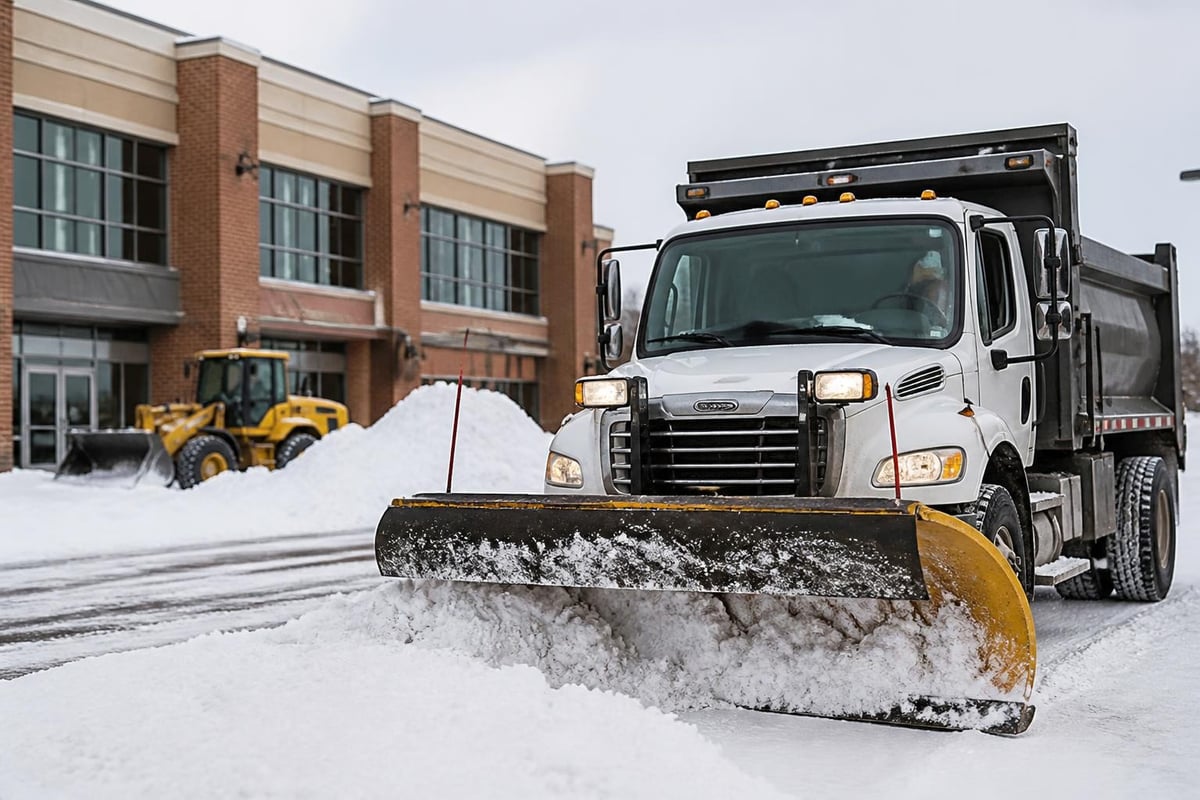
Once snow removal businesses secure contracts, operational execution determines profitability and client retention. Systematic approaches to route planning, communication protocols, and quality control separate industry leaders from struggling operations.
Route Optimization and Crew Management
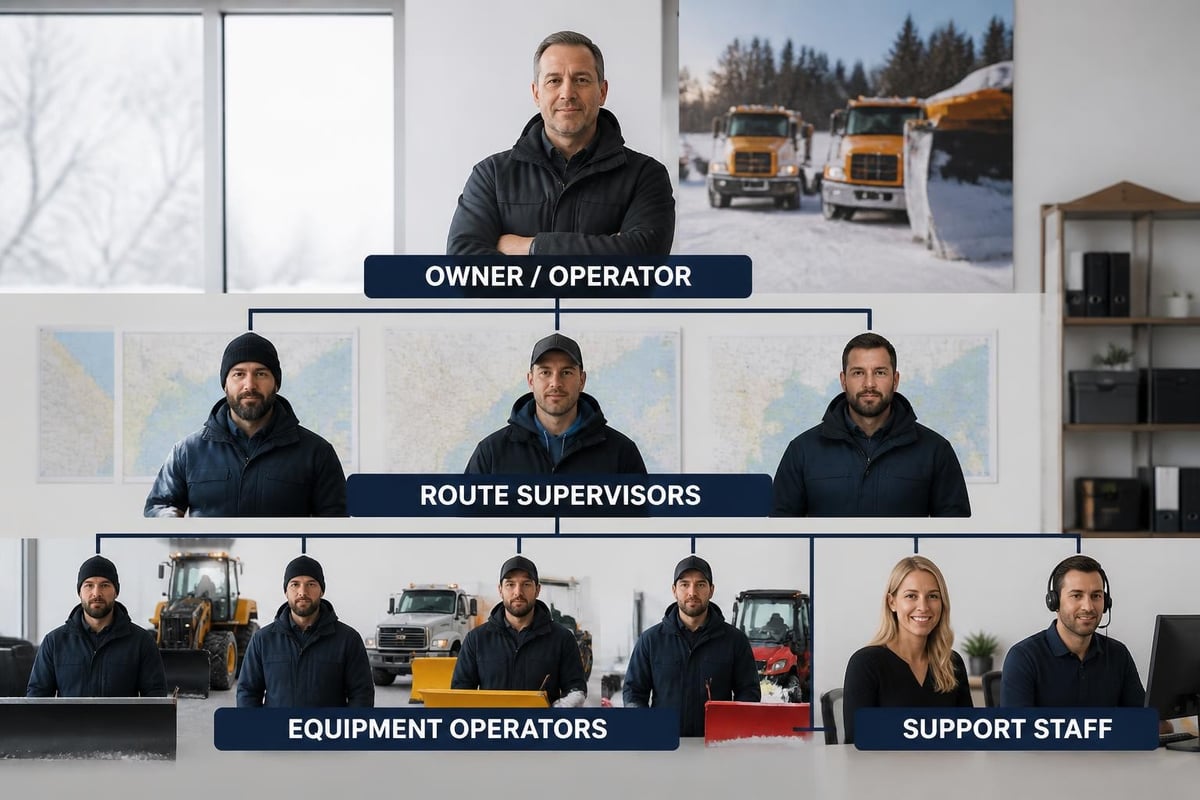
Efficient routing minimizes drive time between properties while ensuring timely service delivery across all contracted sites. Geographic clustering groups nearby properties under single crew assignments, reducing fuel costs and maximizing productivity during storm events.
Priority systems rank clients based on contract terms, liability exposure, and business hours. Medical facilities, 24-hour businesses, and high-traffic retail require clearing before standard office properties. Clear documentation of service windows prevents disputes and aligns crew deployments with contractual obligations.
Crew supervision presents unique challenges during overnight and early-morning operations. GPS tracking, photo documentation, and time-stamped service logs provide accountability while protecting against fraudulent claims. Many operators equip trucks with dash cameras to document conditions and verify completed work.
Material Management and Environmental Compliance
Salt, sand, and liquid deicers represent recurring operational expenses requiring careful inventory management. Bulk purchasing reduces per-unit costs, but storage facilities must protect materials from moisture and contamination.
Environmental regulations increasingly govern deicing operations, with EPA guidance on stormwater management establishing best practices for salt application and runoff control. Responsible contractors calibrate spreaders to apply minimum effective rates, reducing environmental impact while controlling costs.
Alternative deicing products including calcium chloride, magnesium chloride, and organic blends offer performance benefits in extreme cold but command premium prices. Product selection should balance effectiveness, environmental considerations, and budget constraints specific to each property type.
Workforce Development and Seasonal Staffing
Labor management represents one of the most complex challenges facing snow removal businesses. The seasonal nature of work, overnight hours, and physically demanding conditions create recruitment and retention difficulties across the industry.
Hiring and Training Protocols
Commercial drivers' licenses (CDL) may be required depending on equipment size and local regulations. Even when not legally mandated, CDL holders typically demonstrate higher skill levels and professional commitment. Background checks, motor vehicle record reviews, and drug screening protect company reputation and insurance eligibility.
Comprehensive training programs should cover:
- Equipment operation and safety procedures
- Property-specific requirements and restrictions
- Communication protocols and documentation
- Chemical handling and application rates
- Customer service standards and professionalism
Seasonal employees require clear expectations around on-call availability, response times, and performance standards. IRS guidance on seasonal employment clarifies tax withholding, classification requirements, and reporting obligations that snow removal businesses must follow when staffing for winter operations.
Retention and Compensation Strategies
Keeping skilled operators returning season after season reduces training costs and improves service quality. Competitive compensation packages often include:
- Base hourly rates ($18-35/hour depending on role)
- Premium pay for overnight and holiday work
- Performance bonuses tied to customer satisfaction
- Off-season employment in complementary services
- Equipment operator certifications and career development
Some snow removal businesses diversify into year-round property maintenance, landscaping, or construction services to retain key personnel through all seasons. This strategy stabilizes workforce availability while spreading fixed costs across multiple revenue streams.
Technology and Industry Resources
Modern snow removal businesses leverage technology to improve operational efficiency, documentation accuracy, and customer communication. Industry associations provide resources, training, and advocacy that benefit companies at all experience levels.
Software Solutions and Digital Tools
Route management software optimizes crew assignments, tracks service completion, and generates client reports automatically. GPS integration provides real-time location data, verifying service delivery and supporting billing accuracy. Mobile applications enable crews to photograph conditions, timestamp arrivals, and document material applications from the field.
Weather monitoring services deliver hyperlocal forecasts, accumulation predictions, and event timing crucial for crew mobilization. Paid subscriptions to professional meteorological services often prove cost-effective compared to relying on consumer weather apps that lack the precision required for operational planning.
Customer portals allow property managers to review service history, submit special requests, and access invoices without phone calls or emails. Self-service functionality reduces administrative burden while improving client satisfaction through transparency and control.
Professional Development and Best Practices
The Snow & Ice Management Association (SIMA) serves as the industry's leading professional organization, offering certification programs, educational resources, and networking opportunities. Their comprehensive resource center provides regularly updated guidance on operations, safety, equipment selection, and business management topics specifically tailored to snow removal professionals.
Industry certifications demonstrate professional competence and commitment to best practices. The Certified Snow Professional (CSP) designation requires passing examinations covering operational procedures, client management, and business fundamentals. Many commercial property managers prefer or require contractors holding professional credentials when selecting service providers.
SIMA’s downloadable resources include contract templates, safety checklists, equipment maintenance logs, and operational guidelines that save companies countless hours developing proprietary systems. These materials reflect decades of collective industry experience and legal review, providing solid foundations for company policies and procedures.
Financial Management and Profitability
Sustainable snow removal businesses master the unique financial dynamics of seasonal revenue concentration, equipment depreciation, and weather-dependent cash flow. Strategic financial planning separates thriving companies from those struggling through lean snow years.
Revenue Forecasting and Budget Planning
Historical snowfall data provides the baseline for revenue projections, though year-to-year variability creates forecasting challenges. Analyzing the previous ten winters reveals patterns in event frequency, accumulation totals, and seasonal timing that inform contract pricing and capacity planning.
Conservative budgeting assumes below-average snowfall when projecting revenue from per-event contracts. Seasonal agreements provide predictable income streams that anchor financial planning, while per-event work represents upside potential during heavy winters.
Fixed costs in snow removal businesses include:
- Equipment payments or lease obligations
- Insurance premiums (often paid annually)
- Storage facility rent
- Year-round administrative staff
- Marketing and technology subscriptions
Variable costs scale with activity levels:
- Fuel and maintenance supplies
- Deicing materials (salt, sand, liquids)
- Seasonal labor wages
- Equipment repairs and parts
- Subcontractor fees for overflow work
| Expense Category | Percentage of Revenue | Management Strategy |
|---|---|---|
| Labor | 30-45% | Performance-based scheduling, cross-training |
| Equipment | 20-30% | Preventive maintenance, strategic replacement |
| Materials | 15-25% | Bulk purchasing, application optimization |
| Insurance | 8-12% | Safety programs, claims management |
| Overhead | 10-15% | Technology automation, process efficiency |
Pricing Strategy and Profit Margins
Competitive pricing requires understanding true operational costs, including equipment depreciation, insurance allocation, and administrative overhead often overlooked by inexperienced operators. Underpricing to win contracts creates unsustainable businesses that fail during the first equipment breakdown or insurance renewal.
Target profit margins in snow removal businesses typically range from 15% to 30% depending on service mix, market conditions, and operational efficiency. Premium services commanding higher margins include emergency response, specialized equipment capabilities, and comprehensive ice management programs.
Value-based pricing emphasizes the cost of service failures (slip-and-fall liability, business interruption, reputation damage) rather than competing solely on per-event rates. Commercial clients increasingly recognize that reliable, professional snow removal businesses deliver risk mitigation worth premium pricing.
Growth Strategies and Scaling Operations
Established snow removal businesses face strategic decisions around geographic expansion, service diversification, and capacity increases. Growth requires capital investment, operational systems, and management depth that extend beyond founder capabilities.
Geographic Expansion Considerations
Expanding service areas increases market opportunity but introduces logistical complexity, response time challenges, and competitive dynamics. Successful expansion typically follows a hub-and-spoke model, establishing satellite operations in adjacent markets while maintaining centralized management and major equipment storage.
Market analysis should evaluate snowfall patterns, competitive intensity, commercial development density, and average contract values before committing resources to new territories. Some regions offer higher revenue potential with fewer established competitors, while others present saturated markets requiring significant differentiation to gain share.
Equipment staging locations in expansion markets reduce response times and fuel costs but require additional investment in facilities, inventory, and local personnel. Many companies begin with subcontractor relationships in new markets before committing to direct operations, testing demand and profitability before full deployment.
Service Line Diversification
Year-round revenue streams reduce dependence on winter weather while retaining seasonal employees in complementary services. Common diversification strategies include:
- Spring and fall landscape cleanup
- Lawn maintenance and landscaping
- Parking lot sweeping and maintenance
- Line striping and pavement repair
- Commercial property maintenance
These services leverage existing client relationships, equipment assets, and operational expertise developed through snow removal operations. Cross-selling to established accounts proves more cost-effective than acquiring entirely new customer bases for each service line.
Some snow removal businesses pursue vertical integration, adding salt distribution, equipment repair, or subcontractor management to capture additional value within the winter services ecosystem. These strategies work best when companies achieve sufficient scale to support specialized divisions and dedicated management.
Risk Management and Safety Culture
Winter operations present inherent dangers from equipment operation, adverse weather conditions, and overnight work in freezing temperatures. Professional snow removal businesses prioritize safety through systematic protocols, ongoing training, and a culture that values incident prevention above production speed.
Safety Programs and Accident Prevention
Comprehensive safety programs address equipment operation, personal protective equipment, communication procedures, and emergency response protocols. Regular safety meetings reinforce proper techniques while reviewing near-misses and incidents to prevent recurrence.
Equipment maintenance schedules prevent mechanical failures that compromise safety and service reliability. Pre-season inspections identify wear items requiring replacement before winter demands peak performance. Daily pre-trip checks catch developing problems before they escalate into breakdowns or accidents.
Driver fatigue represents a significant safety risk during multi-day storm events requiring continuous operations. Mandatory rest periods, crew rotation schedules, and backup operator availability prevent exhausted personnel from making dangerous decisions. Some snow removal businesses implement fatigue monitoring systems or require supervisor approval for shifts exceeding specified durations.
Liability Mitigation and Claims Management
Despite best efforts, incidents occur in snow removal operations. Prompt claims reporting, thorough documentation, and professional communication minimize financial exposure and preserve client relationships. Service logs, photographs, and weather data provide evidence supporting contractor positions when disputes arise.
Clear contract language defining service triggers, completion standards, and client responsibilities protects both parties when expectations misalign. Specifications addressing accumulation thresholds, response times, and areas of responsibility prevent ambiguity that leads to conflicts.
Regular communication with insurance carriers keeps policies current with operational changes, equipment additions, and revenue growth. Annual policy reviews ensure coverage limits remain adequate as business scale increases and contractual obligations expand.
Building and operating successful snow removal businesses demands expertise across operations, client management, financial planning, and risk mitigation. By implementing systematic approaches to contract acquisition, service delivery, and workforce development, companies position themselves for sustainable growth regardless of seasonal weather variability. Whether you're managing residential properties or large commercial complexes, partnering with experienced professionals ensures reliable clearing when winter storms strike. Denver Snow Removals brings 47 years of commercial snow removal expertise to the Denver Metro area, delivering 24/7 emergency response for parking lots, office campuses, and HOA communities with the equipment and experience that keep properties safe and accessible throughout winter.