

Snow pushing represents one of the most effective methods for clearing large commercial properties during winter weather events. Unlike traditional snow plowing that simply moves snow to the side, snow pushing involves using specialized equipment to systematically push accumulated snow across expansive surfaces like parking lots, industrial sites, and campus grounds. This technique offers superior efficiency for commercial operations, allowing crews to clear substantial areas quickly while maintaining control over where snow is deposited. For property managers and facility operators in the Denver Metro area, understanding the fundamentals of snow pushing can make the difference between operational continuity and costly downtime during severe winter storms.
Understanding Snow Pushing Equipment and Attachments
The foundation of effective snow pushing begins with selecting appropriate equipment for your specific application. Commercial snow pushers come in various configurations, each designed to handle different snow depths, surface types, and property layouts.
Box Pushers and Containment Wings
Box pushers feature tall side panels that contain snow while moving it across surfaces, preventing spillage and maximizing efficiency. These attachments typically range from 8 to 30 feet in width, with commercial operations often deploying multiple sizes based on area characteristics.
Key advantages of box pusher designs include:
- Superior snow containment during transport across long distances
- Reduced need for multiple passes over the same area
- Efficient stacking capabilities when depositing snow in designated areas
- Minimal snow trail-off compared to traditional plow blades
Modern box pushers incorporate wear-resistant polyethylene or steel construction, with replaceable cutting edges that maintain performance throughout the season. The best practices for snow pusher operations emphasize regular inspection of these components to ensure optimal results.
Skid Steer and Loader Attachments
Skid steers and wheel loaders equipped with pusher attachments provide exceptional maneuverability for complex property layouts. These compact machines excel in areas requiring precision work around obstacles, tight corners, and loading dock approaches.
| Equipment Type | Typical Width | Best Application | Average Clearing Speed |
|---|---|---|---|
| Skid Steer Pusher | 8-14 feet | Tight spaces, walkways | 1-2 acres/hour |
| Wheel Loader Pusher | 14-20 feet | Medium lots, drives | 3-5 acres/hour |
| Large Loader Pusher | 20-30 feet | Expansive parking areas | 6-10 acres/hour |

Tractor-Mounted Systems
Agricultural and industrial tractors fitted with pusher attachments offer versatility for properties with varied terrain. These systems provide excellent traction and power for deep snow conditions while maintaining fuel efficiency across extended operating periods.
The power-to-weight ratio of tractor-based systems makes them particularly effective for initial clearing passes during active snowfall events. Operators can adjust hydraulic down pressure to accommodate different snow densities and surface conditions.
Operational Techniques for Maximum Efficiency
Successful snow pushing requires strategic planning and systematic execution. Commercial operators develop clearing patterns that minimize equipment repositioning while ensuring complete coverage of assigned areas.
Establishing Clearing Patterns
Professional snow pushing operations begin with comprehensive site mapping that identifies optimal push directions, snow storage locations, and potential obstacles. The most efficient pattern depends on property configuration, available storage areas, and access point priorities.
Straight-line pushing works best for rectangular lots with clear sight lines to designated snow storage areas. Operators make parallel passes across the property, pushing snow directly to perimeter locations. This method minimizes turning and maximizes productivity.
Circular or spiral patterns suit properties with central features or limited perimeter access. Crews work from outer edges toward the center, consolidating snow for subsequent removal or strategic placement.
Property managers should coordinate with snow removal professionals to develop site-specific strategies that account for traffic flow, emergency access requirements, and landscape protection. Denver Snow Removals develops customized clearing plans for each commercial property based on these operational considerations.
Snow Depth Management
Different snow depths require adjusted approaches to maintain efficiency and equipment safety. Light accumulations of 2-4 inches allow for rapid clearing with minimal equipment strain, while deeper snow demands strategic layering techniques.
- Initial pass: Remove the top 6-8 inches of deep accumulation
- Secondary pass: Clear remaining snow down to pavement level
- Final pass: Detail work around obstacles and defined edges
- Quality check: Verify complete coverage and address missed sections
This staged approach prevents equipment overload while maintaining forward progress during significant storm events. Operators monitor snow density and adjust speed accordingly, as wet, heavy snow requires slower advancement than light, powdery accumulation.
Safety Protocols and Risk Management
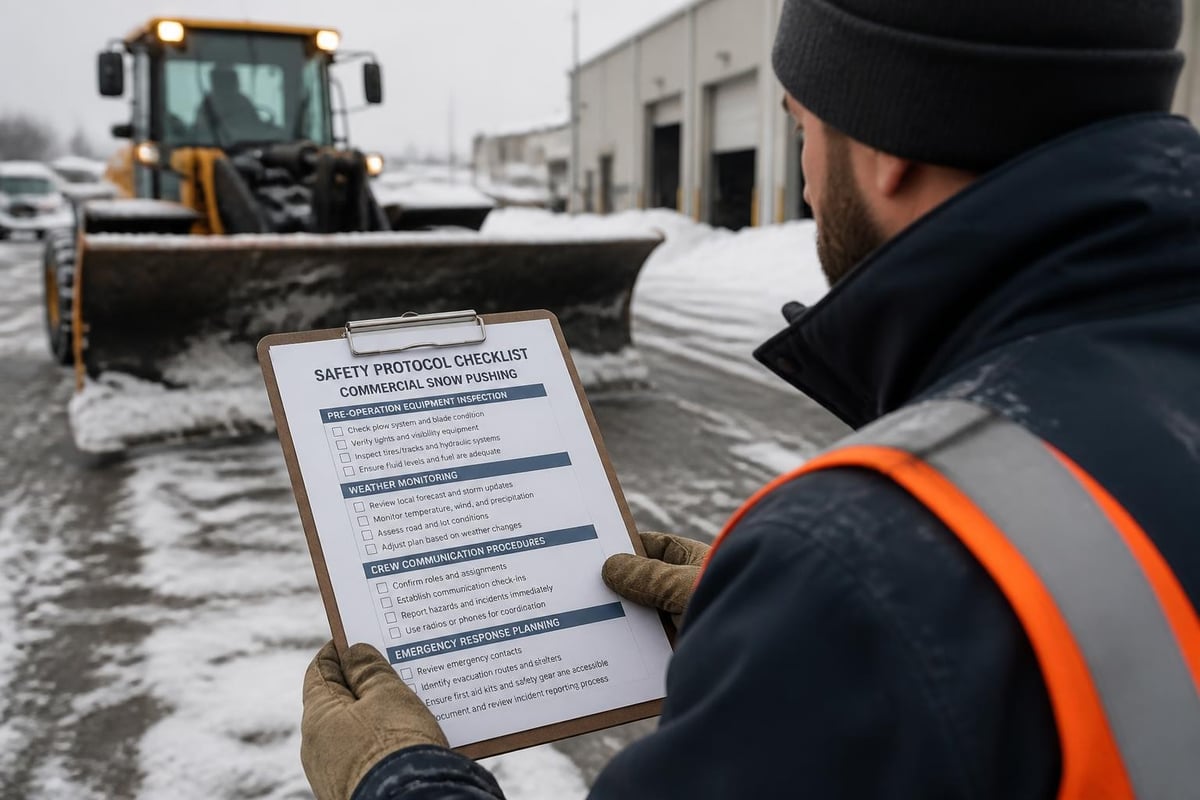
Snow pushing operations involve inherent hazards that require comprehensive safety measures. Commercial operators must address equipment operation risks, environmental factors, and worker protection to maintain safe working conditions.
Equipment Safety Standards
Proper equipment maintenance forms the foundation of safe snow pushing operations. Pre-season inspections should verify hydraulic system integrity, cutting edge condition, and visibility enhancement features like lighting and backup alarms.
The OSHA winter weather hazards guidelines outline essential precautions for outdoor winter work, including equipment operation in reduced visibility conditions. Operators must maintain situational awareness of pedestrians, vehicles, and fixed obstacles throughout clearing operations.
Essential safety equipment includes:
- High-visibility clothing rated for low-light conditions
- Properly maintained communication devices for crew coordination
- Emergency shutdown systems accessible from operator positions
- Backup cameras and proximity sensors for large equipment
Environmental Hazard Recognition
Winter weather creates dynamic working conditions that change rapidly throughout storm events. Black ice formation, reduced visibility during active snowfall, and temperature fluctuations all impact operational safety.
Experienced operators recognize warning signs of deteriorating conditions and adjust techniques accordingly. Understanding how to clear snow safely includes recognizing when conditions warrant modified procedures or temporary suspension of activities.
Worker Health Considerations
Extended exposure to cold weather combined with physical demands of snow pushing operations creates significant health risks. Commercial operators implement rotation schedules that limit continuous exposure and provide warming facilities for crew members.
Musculoskeletal injury prevention becomes particularly important during multi-day storm responses when fatigue accumulates. Proper ergonomics, adequate rest periods, and hydration protocols help maintain crew performance while reducing injury risk.
Snow Storage and Disposal Strategies
Effective snow pushing extends beyond initial clearing to include strategic placement that accommodates subsequent storm events and eventual melt-off. Commercial properties require designated storage areas that don't interfere with operations or create liability issues.
Designated Storage Location Selection
Property managers identify snow storage zones during pre-season planning, considering factors like drainage patterns, landscaping protection, and seasonal capacity requirements. Ideal locations provide adequate volume for accumulated seasonal snowfall while facilitating natural melt drainage.
Critical storage area criteria:
- Sufficient distance from building foundations and underground utilities
- Adequate drainage to prevent ice dam formation or flooding
- Minimal impact on parking inventory during business operations
- Accessibility for removal equipment if off-site hauling becomes necessary
The Denver Metro area typically experiences 60-80 inches of seasonal snowfall, requiring storage capacity planning based on local climate patterns and property size. Properties with limited on-site storage may require professional snow removal services that include off-site hauling capabilities.
Stacking and Consolidation Techniques
Proper snow stacking maximizes storage capacity while maintaining stability. Commercial operators create compacted piles through systematic layering, with each pass adding to pile height while maintaining structural integrity.
| Stacking Method | Capacity Factor | Stability Rating | Best Use Case |
|---|---|---|---|
| Linear windrow | 1.0x | High | Perimeter storage |
| Consolidated pile | 1.8x | Medium | Corner locations |
| Compacted stack | 2.5x | Medium-High | Limited space areas |
Advanced techniques involve pushing snow up existing piles using the containment features of box pushers. This vertical stacking approach conserves valuable property area while creating dense, stable formations less prone to spreading.
Equipment Maintenance and Fleet Management
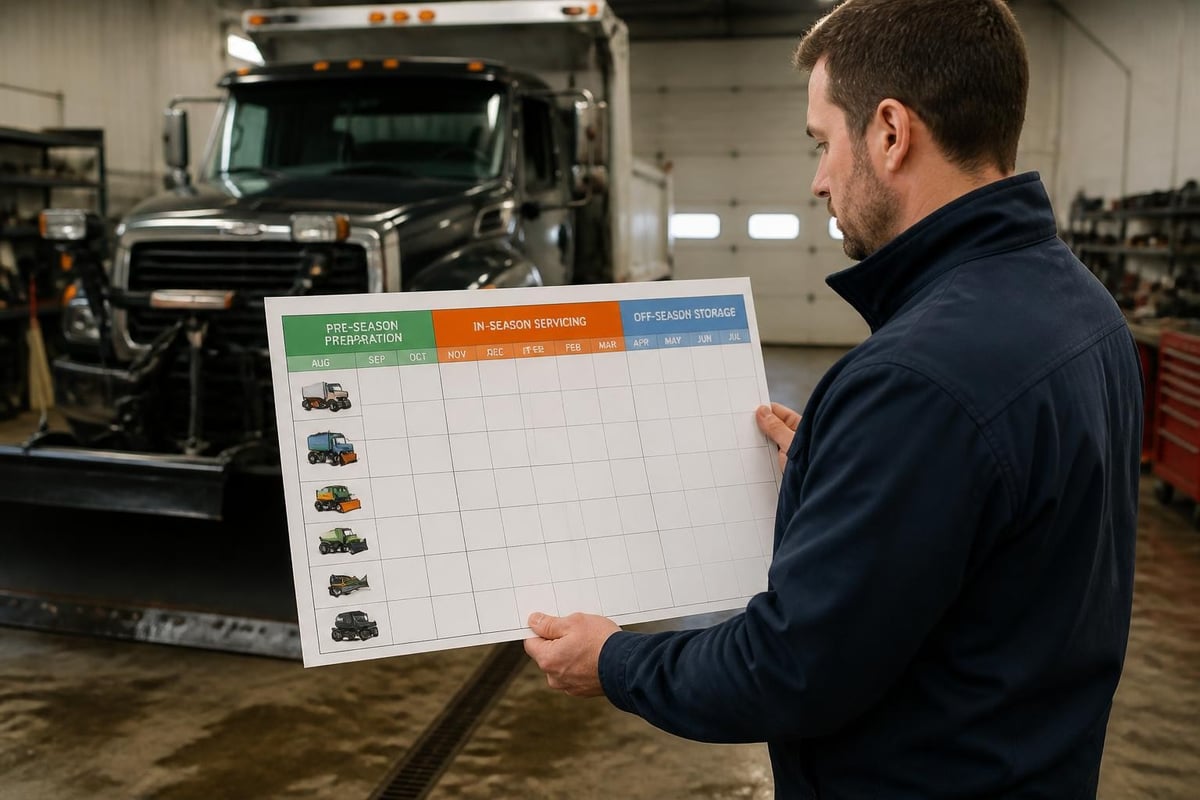
Reliable snow pushing operations depend on well-maintained equipment ready for immediate deployment when winter weather strikes. Commercial operators implement comprehensive maintenance programs that address both seasonal preparation and in-season servicing.
Pre-Season Preparation
Thorough pre-season preparation identifies potential failures before they impact operations. Maintenance teams inspect hydraulic systems, replace worn components, and verify all safety features function correctly.
Equipment staging involves positioning machines near assigned properties, stocking replacement parts, and ensuring fuel supplies remain accessible throughout storm events. This preparation enables rapid response when snow accumulation begins.
In-Season Servicing Protocols
Active winter seasons demand ongoing maintenance between storm events. Quick-turnaround servicing addresses minor issues before they escalate into major failures during critical operational periods.
- Post-storm inspection of cutting edges and wear surfaces
- Hydraulic fluid level verification and leak detection
- Lighting system functionality checks for night operations
- Lubrication of moving components and pivot points
- Documentation of hours operated and fuel consumption
Fleet managers track equipment performance metrics to identify patterns that indicate developing problems. This data-driven approach optimizes maintenance scheduling while minimizing unexpected downtime.
Technology Integration and Performance Optimization
Modern snow pushing operations leverage technology to enhance efficiency, improve documentation, and optimize resource deployment. GPS tracking, real-time weather monitoring, and automated reporting systems transform commercial snow management.
GPS Tracking and Route Optimization
Fleet management systems using GPS technology provide real-time visibility into equipment location and operational status. Dispatchers monitor clearing progress, identify areas requiring additional attention, and coordinate multi-crew deployments across extensive property portfolios.
These systems generate detailed service records that document when clearing occurred, equipment utilized, and time invested at each location. This documentation proves invaluable for billing accuracy and liability protection.
Weather Monitoring and Predictive Planning
Advanced weather monitoring integrates multiple data sources to provide accurate forecasts specific to service areas. Commercial operators use this intelligence to pre-position equipment, schedule crews, and communicate proactively with property managers.
Real-time precipitation tracking enables dynamic deployment adjustments during storms, ensuring resources concentrate where accumulation occurs most rapidly. This responsive approach maintains service quality while optimizing operational costs.
Performance Metrics and Quality Assurance
Data collection throughout winter seasons enables continuous improvement of snow pushing operations. Key performance indicators track clearing times, fuel efficiency, equipment utilization, and service quality metrics.
Essential operational metrics include:
- Average clearing time per acre for different snow depths
- Fuel consumption rates across various equipment types
- Equipment downtime percentages and repair frequency
- Customer satisfaction scores and service response times
Commercial operators analyze these metrics to identify optimization opportunities and justify capital equipment investments. Properties requiring consistent, reliable service benefit from contractors who demonstrate commitment to measurable performance improvement.
Specialized Applications and Unique Challenges
Different commercial property types present unique snow pushing challenges requiring specialized approaches. Understanding these variations enables operators to deliver appropriate service levels across diverse client portfolios.
Industrial Parks and Distribution Centers
Large industrial facilities prioritize continuous operational access for shipping and receiving functions. Snow pushing operations at these locations must coordinate with active logistics operations, maintaining clear truck routes while avoiding interference with loading dock activities.
Wide-open spaces allow deployment of the largest pusher equipment, maximizing efficiency across expansive paved areas. Strategic timing of clearing activities during lower traffic periods minimizes disruption while ensuring safety for all site users.
Office Campus Environments
Multi-building office campuses require detailed attention to walkway connections, entrance areas, and visitor parking zones. Snow pushing at these properties balances large-area efficiency with precision work around landscaping features and architectural elements.
Coordination with building management ensures clearing schedules align with occupancy patterns, prioritizing areas based on expected usage patterns throughout business days.
HOA Community Roadways
Residential community snow management involves clearing street networks while protecting parked vehicles and landscape features. Snow pushing in these environments requires experienced operators who navigate tight quarters while maintaining efficiency across miles of roadway.
Communication protocols keep residents informed about clearing schedules, parking restrictions, and expected service completion times. This transparency reduces conflicts and supports smooth operations throughout winter seasons.
Mastering snow pushing techniques, equipment selection, and safety protocols enables commercial property managers to maintain operational continuity throughout Denver's winter months. Professional snow removal operations combine specialized equipment with strategic planning and experienced crews to deliver reliable results when winter weather impacts business operations. With over 47 years of experience clearing commercial properties throughout the Denver Metro area, Denver Snow Removals provides 24/7 emergency response and customized snow management solutions for parking lots, industrial parks, office campuses, and HOA communities.