
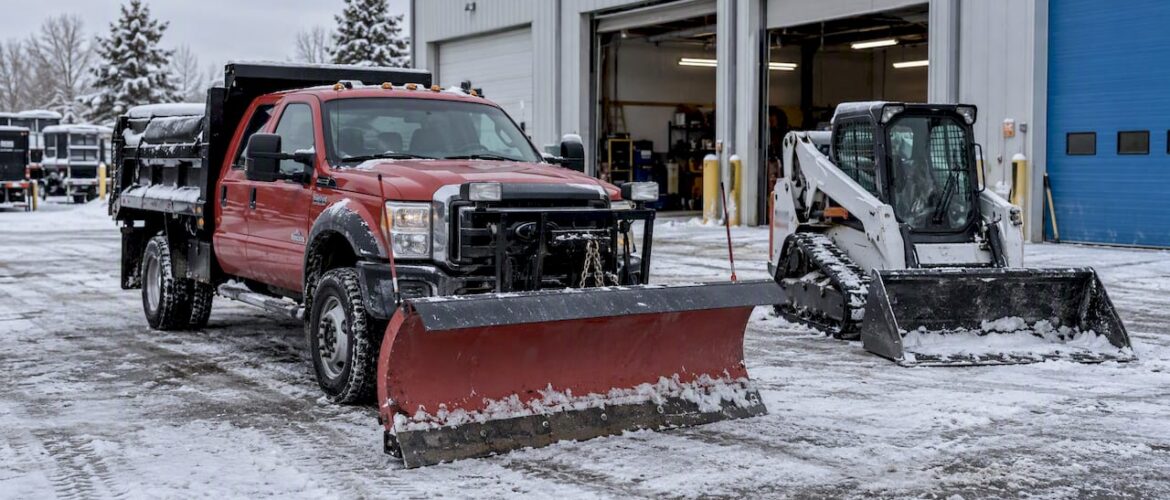
Snow equipment redundancy means that when one plow, loader or operator fails mid-storm, another is ready to take over, so your property stays open. In practice that comes down to three things: spare parts and standby machines, a clear point at which routine plows give way to heavy equipment, and a backup for every critical person in the chain. If you manage a lot, a campus or an HOA in Denver, this is the question to ask any contractor before the first storm of the season.
TL;DR
- Redundancy is a backup for every critical piece: spare parts, standby plows and skid steers, and a named substitute for each operator and dispatcher.
- Professional guidance points to standardized fleets, so cutting edges, electrical parts and hoses can be swapped fast during a storm.
- Escalate to heavy equipment (loaders, blowers, haul trucks) as depth grows. Aurora’s plan, for example, does it at 6 inches or more.
- Denver expects sidewalks clear at all times, and inspectors check business areas the same day after snow stops, so a breakdown is your problem too.
- Ask any contractor three questions: what is your backup, how fast does it arrive, and who answers the phone at 3 a.m.?
Table of Contents
- What redundancy actually means in snow removal
- Why it matters for access and liability
- Layer one: spare parts and a standardized fleet
- Layer two: standby machines for different jobs
- Layer three: people and communication
- When to escalate from plows to heavy equipment
- Safety limits when you add machines
- Inspection and contingency planning before the first storm
- Questions to ask a snow contractor about redundancy
- Our perspective
- How we can help
- FAQ
- Sources
What redundancy actually means in snow removal
The plainest definition comes from a municipal report in Warman, Saskatchewan. It describes operational redundancy as having a second snowblower so residential snow clearing can continue if the existing unit is down for mechanical failure or maintenance during significant snowfall (Snow Clearing Future Equipment Needs Report). The setting is a small Canadian city, but the logic carries to a Denver parking lot: the storm does not wait for the repair.
For a private property, redundancy has layers:
- Parts. The small items that stop a machine: cutting edges, electrical components, hoses.
- Machines. A second plow truck, a spare spreader, a skid steer on standby.
- People. An operator who can step in, a dispatcher who can reroute, a repair contact who picks up.
- Method. A plan for when the job outgrows the equipment sent first.
Most property managers only see the third layer, the moment a crew does not show up. The first two are what decide whether it happens.
Why it matters for access and liability
A lot that is half-cleared at 6 a.m. is a problem for tenants, delivery trucks and employees arriving for the first shift. It is also a legal one. Denver’s neighborhood inspections page states that property owners must keep sidewalks clear at all times, including while it is snowing. After snowfall stops, business areas are checked the same day and residential areas the following day (City and County of Denver, Neighborhood Inspections).
That timeline leaves little room for a truck stuck in a yard with a failed hydraulic hose. If you want the full picture of who is responsible for what, our guide to Denver property owner snow obligations covers it, and the Denver sidewalk ordinance rules and fines explain what a missed deadline can cost.
Redundancy is how a contractor keeps its promise when the unexpected happens. A contract that says “24/7” without naming a backup is promising availability, not capacity.
Layer one: spare parts and a standardized fleet
The Snow & Ice Management Association (SIMA) recommends planning ahead for spare parts such as cutting edges, electrical components and hoses, along with backup equipment such as extra plows, salters and skid steers (SIMA, Essential preseason equipment planning). The same guidance says fleet standardization lets crews stock uniform parts for fast repairs during a storm.
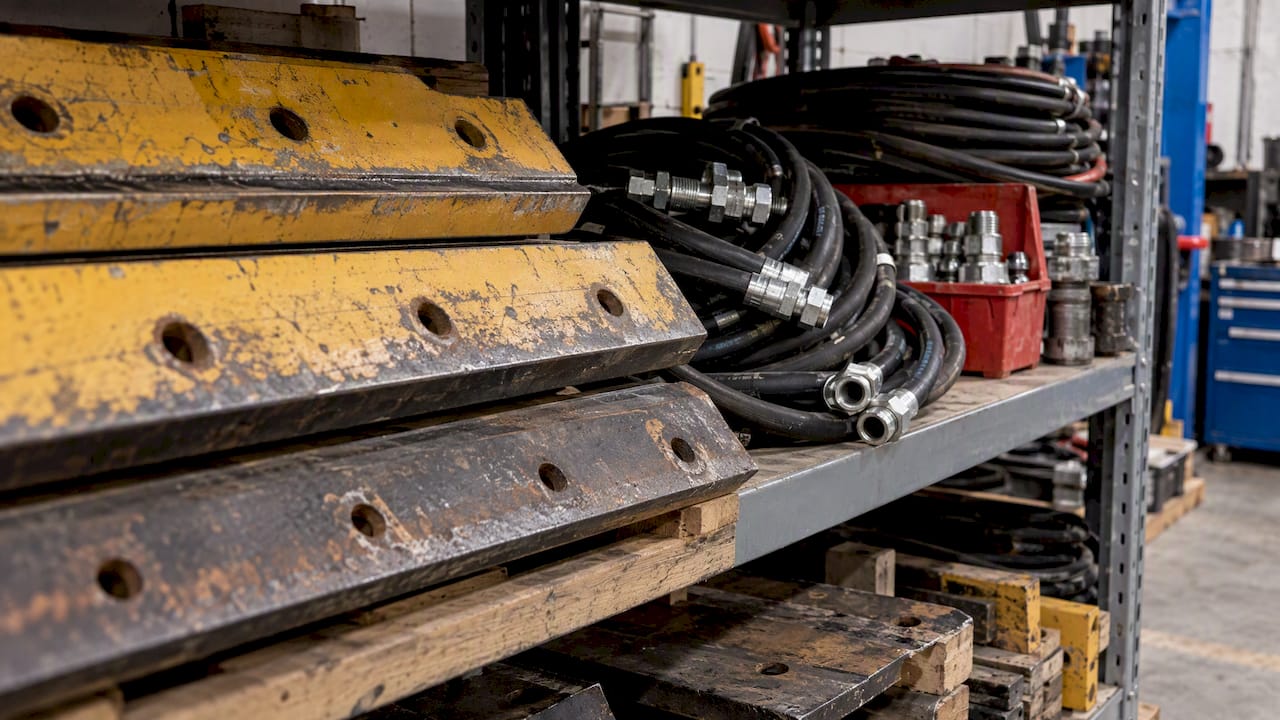
Standardization is the unglamorous half of redundancy. If every truck carries the same plow frame and the same hose fittings, one shelf of parts covers all of them. A mixed fleet needs a separate stock for each machine, and the part you need is always the one you did not buy.
Government Fleet magazine makes a related point: fleet managers should spec vehicles around the plow configuration that suits the job, and the frame and plow assembly can be mounted on other vehicles (Government Fleet, Winter Strategies to Keep Snow-Removal Equipment Running). In plain terms, a plow that can move to another truck turns a dead truck into a lost hour, not a lost route.
What a good spare kit includes
- Cutting edges and shoes for each plow type in the fleet
- Hydraulic hoses, fittings and fluid
- Batteries, fuses, lighting and wiring components
- Chains, straps and recovery gear
- A backup spreader or ice-melt application setup
This is a planning list drawn from the categories SIMA names, not a guarantee of any one company’s inventory. When you interview a contractor, ask to see theirs.
Layer two: standby machines for different jobs
Not every failure needs the same replacement. A pickup with a blade and a skid steer with a bucket do different work, and the backup should match the site.
SIMA notes that for zero-tolerance commercial sites, dedicated loaders and pushers on-site ensure immediate service (SIMA). A hospital entrance, a grocery store lot or a distribution center that must stay open all night is that kind of site. A small office park that can open an hour late is not.
| Site type | Typical risk | Backup worth planning |
|---|---|---|
| Apartment or HOA community | Many drives, tight turns, parked cars | Second plow truck, skid steer for tight corners, sidewalk crew |
| Retail or office parking lot | Large open area, customer traffic | Second plow, loader for piling, de-icing unit |
| Industrial park or warehouse | Long drive lanes, truck traffic, dock areas | Loader or pusher, haul trucks for stacked snow |
| Garage deck or sloped lot | Limited space, ice risk | Compact equipment, ice-melt and anti-icing capacity |
| Single residence | One driveway and walkway | Second crew or a rerouted truck |
The point of the table is that redundancy is matched to risk. It is not about owning every machine. It is about having the right second option for the site in front of you.
Layer three: people and communication
Equipment redundancy fails if there is no one to run the backup. ServiceOps, a business-planning publisher, says a solid backup plan should name a substitute for every critical role: equipment operators, sidewalk crews, dispatchers and repair contacts (ServiceOps, Snow Removal Business Plan template). SIMA adds that operations should vet employees and provide adequate relief shifts.
Fatigue is a real constraint. The National Safety Council’s guidance on highway snow and ice control lists checking equipment before each use, using two-way radios and watching for fatigue as basic practices, and notes that 12 continuous hours on duty is fairly common in public works agencies (National Safety Council). The same document advises that all heavy equipment and snow removal vehicles carry two-way radios so dispatch can manage the storm.
What this means for a contractor: a crew that has been plowing for twelve hours is not your backup. A rested crew is.
When to escalate from plows to heavy equipment
The second half of redundancy is knowing when the first-choice equipment is no longer enough. Public plans give useful benchmarks, even though a private lot is not a city street.
Aurora, Colorado’s 2025-2026 Snow and Ice Control Plan calls for heavy equipment in Category III storms (6 to 12 inches) and Category IV storms (more than 12 inches), with regional superintendents deciding which personnel and equipment go out for each storm (City of Aurora Snow Plan 2025-2026). The same plan allows the Streets Operations Manager to recommend contracted forces and equipment in extreme conditions, such as deep snow or a shortage of equipment or personnel, and says that decision should be made as soon as possible, possibly during initial planning.
That last point is worth borrowing. Bringing in extra capacity at the forecast, not after the lot is buried, is cheaper and safer than a scramble.
The National Safety Council adds that for heavy snowfall or drifting, operations should plan to deploy heavy equipment such as four-wheel-drive loaders, snow blowers, dump trucks and motor graders (National Safety Council).
A practical escalation ladder for a private property
This is our working framework for Denver properties, adapted from the public benchmarks above:
- Light snow: standard plow trucks and sidewalk crews, with anti-icing where refreeze is likely.
- Moderate snow (about 6 inches or more): add skid steers or loaders to push and pile, and a second plow on large lots.
- Heavy or drifting snow (12 inches or more): loaders, pushers and, where piles run out of room, hauling trucks.
- Piles with no space left: off-site hauling, which needs loading, transport and disposal capacity.
Snow hauling deserves a note. ServiceOps cautions that companies should not take on large-site or hauling work until they have accounted for the logistics of loading, transportation and disposal, because these add significant time. For a property manager, that is a reason to ask early: if your site needs hauling, confirm that your contractor has the trucks and loaders on its own schedule. Our pages on snow stacking and relocation and snow hauling in winter contracts explain how this is planned.
Safety limits when you add machines
More equipment on a site means more ways to get hurt. A few operating limits from the sources:
- Speed. Aurora’s plan sets a maximum plowing speed of 20 miles per hour (City of Aurora). On a lot with pedestrians and parked cars, slower is the rule.
- Weather stops. The City of Virginia, Minnesota, says operations may be delayed or stopped when severe weather, such as strong wind or poor visibility, endangers crews and equipment (City of Virginia snow policy). A good contract acknowledges this honestly.
- Sidewalk grates. OSHA says employers must determine whether local building codes allow heavy machinery on sidewalk grates and ensure the grates can support its weight, or prevent machinery from operating on them (OSHA Safety and Health Information Bulletin). Downtown properties with vault lights or grates should raise this with the contractor before a storm, not during one.
If you manage a downtown building, the downtown sidewalk shoveling rules are a useful companion to this section.
Inspection and contingency planning before the first storm
Breakdowns during a storm are usually decided in October. Public guidance in this area is thin, so here is what we do and recommend, in order:
- Inspect before each use. The National Safety Council lists pre-use equipment checks as a core practice.
- Service everything before the season. Fluids, batteries, hydraulics, lights, cutting edges.
- Stock the spares. Use the kit above, matched to the fleet.
- Pre-assign substitutes. Name who covers each route and each operator.
- Walk the sites. Mark hydrants, drains, curb ramps and grates so a replacement operator does not need to guess.
- Set the trigger. Decide the snow depth at which extra equipment goes out without a phone call.
A written plan matters because the person covering a route at 4 a.m. was not on the walk-through. The more the plan lives on paper and in the dispatch system, the less it depends on one person’s memory.
Questions to ask a snow contractor about redundancy
You do not need to understand hydraulics to test a contractor. Ask:
- What happens to my site if your lead truck breaks down at 2 a.m.?
- Which backup machines do you own or control, and how long to reach my lot?
- At what snowfall do you send a loader or skid steer, and is that in the contract?
- Who is the named dispatcher, and do operators carry two-way radios?
- Do you keep service records of each visit, and what liability protection do you carry?
On that last point, our commercial snow removal insurance checklist lists what to request, and the five contract essentials for property managers show how to write it down.
Our perspective
Most breakdowns we see on other properties are not surprises. A truck sits idle because a part was not on the shelf, or a lot gets plowed twice because no one decided early enough to send a loader.
After 44 years in the Denver area, our approach is to treat the equipment list and the contact list as one plan. We run commercial-grade equipment designed to clear a lot in a single pass, we keep a dedicated team on call around the clock, and we document each service visit so you have a record if a slip-and-fall claim ever comes up.
Our advice to a property manager is simple: put redundancy in the contract, not in a verbal promise. Ask for the backup, the trigger depth and the dispatch number in writing. We will give you the same in our estimates, free and up front.
Jesse
How we can help
We provide snow plowing and removal for commercial, industrial, HOA and residential properties across the Denver Metro area, with 24/7 emergency dispatch, parking lot clearing, sidewalk de-icing, snow hauling, skid steer push and pile work, and seasonal contracts that run September through May. Estimates are free, and same-day service is available for new and existing clients. Residential driveway and walkway clearing starts from $41.25 per visit.
If you want a site-specific backup plan, see our commercial snow removal and plowing services or the parking lot plowing and de-icing page, and ask for a free estimate. For ice-prone entrances, our sidewalk ice control with anti-icing page explains the pre-treatment side.
FAQ
What is snow equipment redundancy?
It is having backup equipment, parts and people so snow clearing continues when a machine or operator is unavailable. A municipal example is a second snowblower kept so work can continue if the first one fails during a significant snowfall. For a private property, it also covers spare parts, standby skid steers or loaders, and named substitutes for operators and dispatchers.
When should a contractor switch to heavy equipment?
It depends on depth, drifting and site size. As a public benchmark, Aurora’s plan calls for heavy equipment in storms of 6 to 12 inches and above 12 inches. Ask your contractor to write the trigger depth into your contract so no one has to decide in the middle of the storm.
Does Denver require me to keep sidewalks clear during a storm?
Yes, according to the city’s neighborhood inspections page, owners must keep sidewalks clear at all times, including when it snows. After snow stops, business areas are checked the same day and residential areas the next day. A backup plan helps you meet that timeline.
Is a 24/7 promise the same as redundancy?
No. A 24/7 phone line means someone answers. Redundancy means there is a second machine and a rested operator behind that call. Ask how fast backup equipment reaches your lot, and what happens if the first truck is down.
Sources
- Snow Clearing Future Equipment Needs Report, Warman
- SIMA, Essential preseason equipment planning
- ServiceOps, Snow Removal Business Plan template
- Government Fleet, Winter Strategies to Keep Snow-Removal Equipment Running
- City of Aurora Snow Plan 2025-2026
- National Safety Council, Snow removal and ice control on highways
- OSHA Safety and Health Information Bulletin
- City of Virginia snow and ice control policy
- City and County of Denver, Neighborhood Inspections