
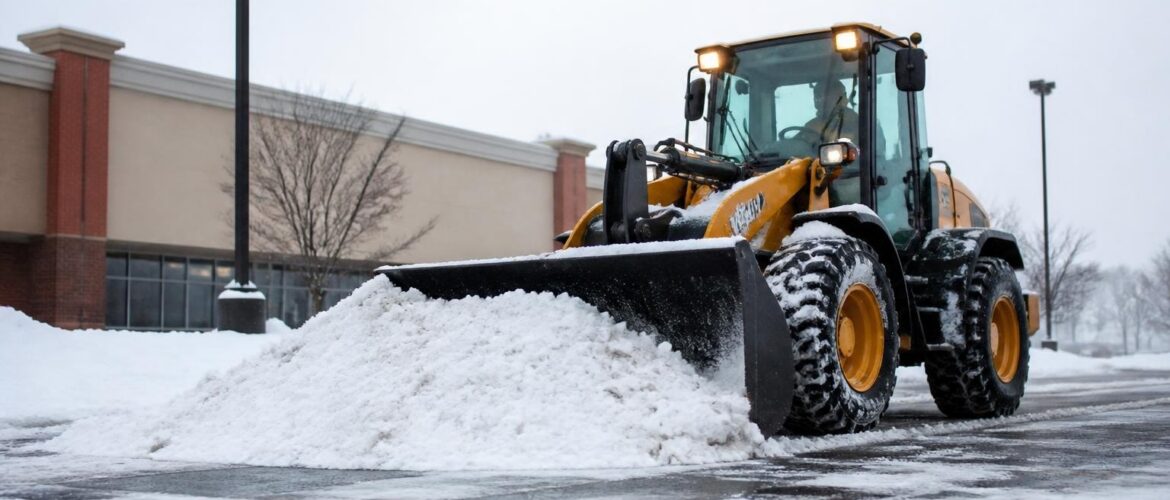
Winter weather presents serious operational challenges for commercial property owners and managers across the Denver Metro area and beyond. When snowfall threatens business continuity, access, and safety, professional snow clearing contractors become essential partners in maintaining operational standards. Selecting the right contractor requires understanding industry standards, service capabilities, equipment requirements, and contract structures that protect both property owners and service providers. This comprehensive guide explores the critical factors that distinguish exceptional snow removal partners from basic service providers.
Understanding the Role of Professional Snow Clearing Contractors
Snow clearing contractors provide far more than simple plowing services. These specialized professionals manage comprehensive winter maintenance programs that include pre-storm preparation, active storm response, post-storm cleanup, and ongoing maintenance throughout winter months.
Core responsibilities typically encompass:
- 24/7 monitoring of weather conditions and forecasts
- Pre-treatment and anti-icing applications before storm events
- Active snow removal during precipitation events
- Post-storm cleanup and hauling when necessary
- Ice management and surface treatment
- Documentation and reporting for liability protection
The scope of work varies dramatically based on property type, usage patterns, and client expectations. Large commercial properties demand different approaches than small retail centers, while industrial facilities require specialized equipment and techniques that residential contractors cannot provide.
Service Categories and Specializations
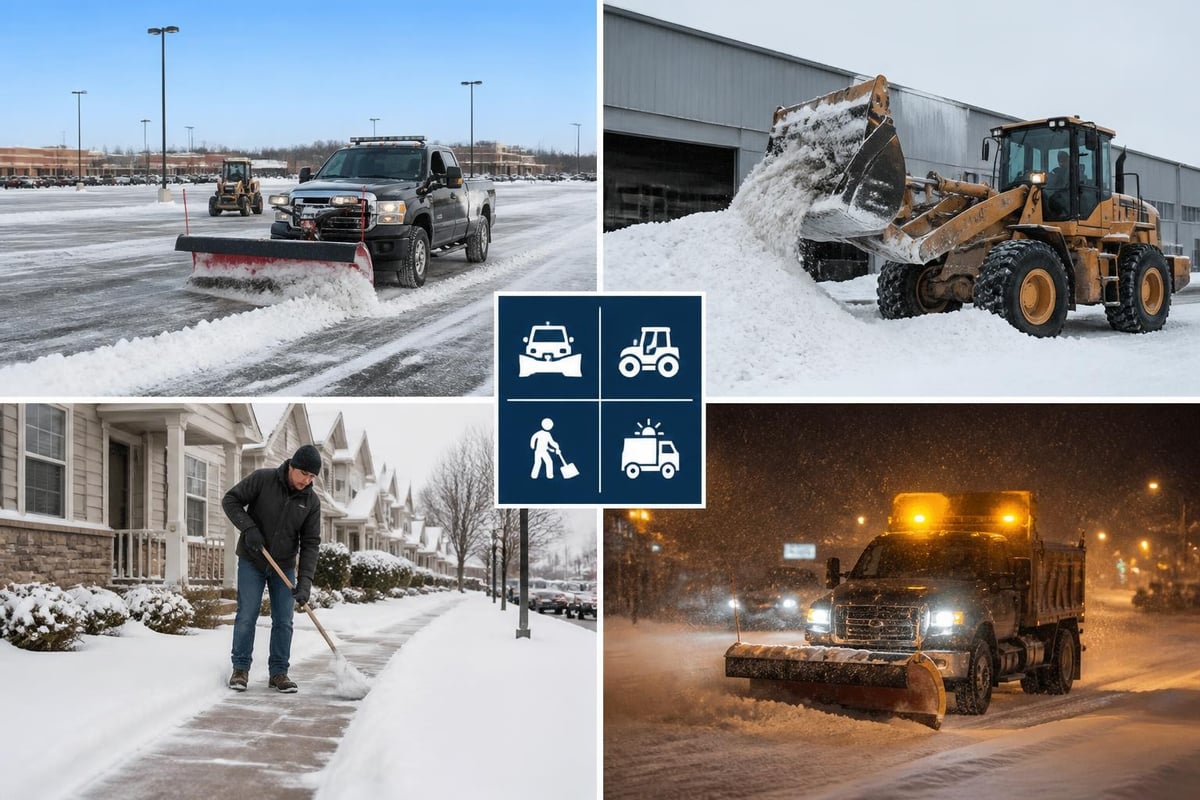
Commercial snow clearing contractors organize their offerings around specific property types and service levels. Understanding these distinctions helps property managers align contractor capabilities with actual needs.
| Service Category | Property Types | Typical Equipment | Response Time |
|---|---|---|---|
| Large Commercial | Shopping centers, office parks | Heavy loaders, large plows | 2-4 hours |
| Industrial | Manufacturing, distribution centers | Specialized equipment, hauling | 1-3 hours |
| HOA/Multi-family | Residential communities, apartments | Mid-size equipment, sidewalk crews | 3-6 hours |
| Priority/Emergency | Hospitals, emergency services | Dedicated equipment, priority dispatch | Under 2 hours |
Professional contractors typically specialize in one or two categories rather than attempting to serve all markets. This specialization allows them to maintain appropriate equipment fleets, develop relevant expertise, and deliver consistent service quality.
Evaluating Contractor Qualifications and Experience
Credentials and track record separate established professionals from inexperienced operators. Property managers should conduct thorough due diligence before entering service agreements, particularly for multi-year contracts.
Essential Qualifications Checklist
Experience matters significantly in snow removal operations. Contractors with decades of service have weathered various storm patterns, equipment failures, and operational challenges that newer companies have yet to encounter. Companies like Denver Snow Removals demonstrate how 47 years of specialized experience translates into reliable service delivery and crisis management capabilities.
Verify these fundamental qualifications:
- Valid business licenses and contractor registrations
- Comprehensive general liability insurance (minimum $2 million recommended)
- Commercial auto insurance covering all equipment
- Workers compensation coverage for all employees
- Professional certifications from industry organizations
- Equipment ownership documentation and maintenance records
Insurance coverage deserves particular attention. Inadequate coverage can transfer liability to property owners when incidents occur. Request certificates of insurance naming your property as additional insured, and verify coverage directly with insurance carriers rather than accepting documents at face value.
Industry Certifications and Training
Professional development through industry associations demonstrates commitment to best practices and continuous improvement. The Snow & Ice Management Association offers resources and training that help contractors stay current with evolving standards and techniques.
Certifications worth noting include:
- Certified Snow Professional (CSP) designation
- Fleet maintenance certifications for equipment reliability
- Environmental stewardship training for responsible chemical use
- Safety training programs for crew members
Training in salt management has become increasingly important as environmental awareness grows. EPA guidance on salt resources provides contractors with science-based approaches to minimizing environmental impact while maintaining safety standards.
Equipment Requirements and Fleet Management
Equipment capabilities directly determine service quality and response efficiency. Snow clearing contractors must maintain diverse fleets capable of handling various property configurations and storm intensities.
Critical Equipment Categories
Modern commercial snow operations require specialized machinery beyond basic pickup trucks with plow attachments. Large parking lots, loading docks, and campus environments demand industrial-grade equipment.
Essential fleet components include:
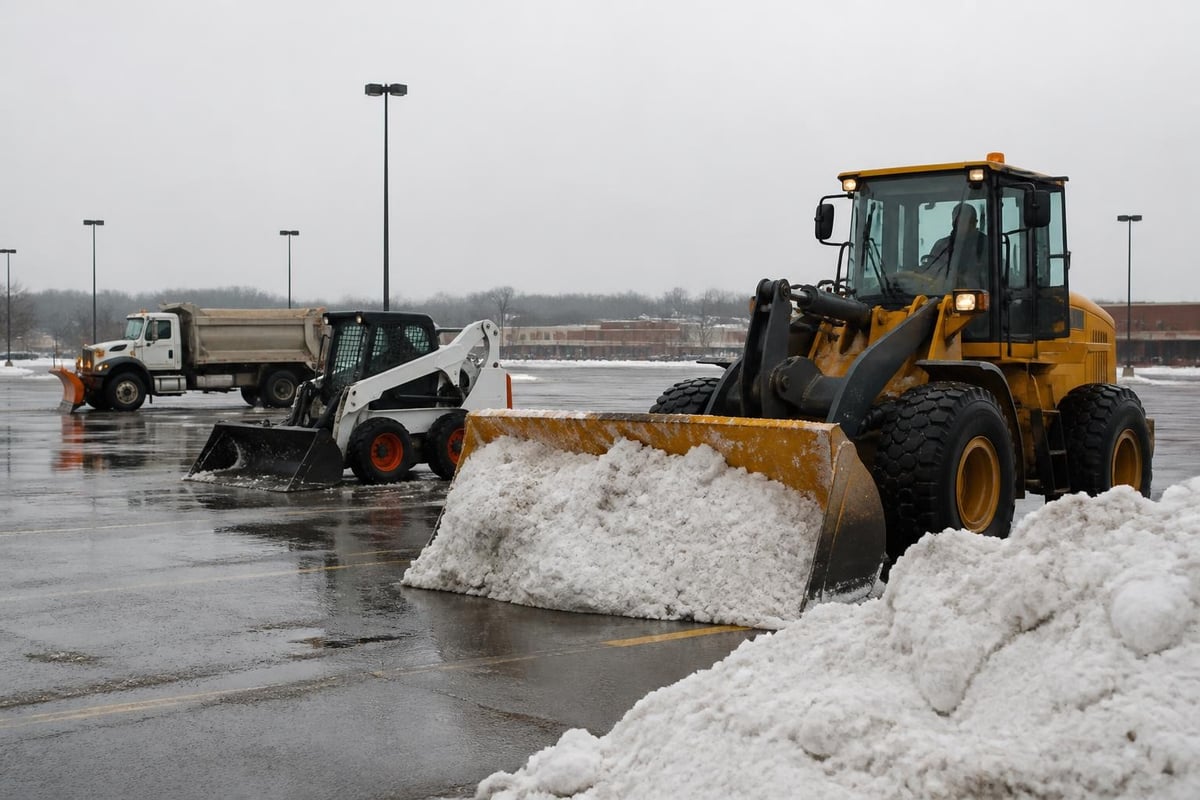
- Heavy-duty wheel loaders (1-5 yard capacity) for large area clearing
- Skid steers with pusher boxes for tight spaces and docks
- Commercial dump trucks for snow hauling and relocation
- Salt spreaders and liquid application systems
- Sidewalk equipment including blowers and small plows
- Backup equipment for all primary categories
Equipment redundancy protects against mechanical failures during critical storm events. Contractors operating single pieces of equipment in each category cannot guarantee consistent service when breakdowns occur at peak demand periods.
| Equipment Type | Primary Use | Backup Required | Maintenance Frequency |
|---|---|---|---|
| Wheel Loaders | Parking lot clearing | Yes (minimum 1:3 ratio) | Daily during season |
| Skid Steers | Detail work, corners | Yes | Weekly inspection |
| Spreader Trucks | Salt/sand application | Yes | Pre-storm check |
| Sidewalk Equipment | Pedestrian areas | Partial | Weekly |
Maintenance Standards and Equipment Age
Fleet age and maintenance practices reveal contractor investment in quality service. Equipment older than 10-15 years increases breakdown risk, while poor maintenance schedules create preventable failures during storms.
Request maintenance documentation during contractor evaluation. Well-managed companies maintain detailed service records, conduct pre-season inspections, and replace aging equipment on regular schedules. These practices minimize service interruptions and demonstrate professional operations management.
Contract Structures and Service Agreements
Contract terms define expectations, responsibilities, and financial arrangements between property owners and snow clearing contractors. Well-structured agreements protect both parties while establishing clear performance standards.
Common Pricing Models
Snow removal contracts typically follow one of several pricing structures, each with distinct advantages and risk allocations. Understanding these models helps property managers select arrangements aligned with budget certainty needs and risk tolerance.
Per-occurrence pricing charges for each service visit based on actual work performed. This model provides cost predictability for light snow years but can create budget uncertainty during heavy winters. Per-occurrence contracts work well for properties with adequate contingency funds and tolerance for variable costs.
Seasonal contracts establish fixed prices covering all services regardless of storm frequency. Property owners gain budget certainty while contractors assume weather risk. These agreements require careful pricing by contractors to ensure profitability across various winter scenarios.
Hourly pricing with caps combines elements of both approaches, charging hourly rates up to predetermined seasonal maximums. This hybrid structure balances budget predictability with fair compensation for actual work performed.
Service Level Specifications
Contract clarity prevents disputes and aligns expectations. Detailed specifications should address triggering depths, response times, completion standards, and documentation requirements.
The SIMA procurement standard provides comprehensive guidance on defining service expectations and performance metrics. This industry-recognized framework helps both property managers and contractors establish clear, measurable standards.
Essential contract elements include:
- Trigger depths (when services begin)
- Response time guarantees (arrival after trigger depth reached)
- Completion standards (bare pavement vs. passable lanes)
- Re-service protocols (return visits during extended storms)
- Communication requirements (arrival notices, completion reports)
- Documentation standards (photos, timestamps, material usage)
Service level agreements should account for property-specific factors including operating hours, traffic patterns, and special requirements. A 24/7 industrial facility demands different response parameters than a standard office building operating Monday through Friday.
Environmental Responsibility and Chemical Management
Modern snow clearing contractors balance safety requirements with environmental stewardship. Excessive or improper chemical application damages landscapes, contaminates water systems, and creates long-term ecological harm.
Best Practices for Deicing Materials
Salt and chemical deicers remain necessary for winter safety, but application rates and methods significantly impact environmental outcomes. Professional contractors calibrate equipment, train operators, and monitor application rates to minimize material use while maintaining effective ice control.
EPA resources on snow and ice management outline environmental considerations and alternative approaches that responsible contractors incorporate into operations. These practices include targeted application, liquid pre-treatments, and alternative products for sensitive areas.
Environmentally conscious practices include:
- Pre-wetting salt to improve effectiveness and reduce quantities needed
- Anti-icing applications before storms to prevent bonding
- Calibrated spreaders to control application rates
- Alternative products for landscaped or environmentally sensitive areas
- Proper material storage to prevent contamination
Research from institutions like the University of Maryland Extension on salt-smart practices demonstrates that proper techniques reduce material consumption by 20-30% while maintaining safety standards. These reductions benefit both environmental outcomes and operating costs.
Material Application Documentation
Professional snow clearing contractors document material usage for multiple reasons including cost control, environmental compliance, and liability protection. This documentation proves appropriate application rates and demonstrates responsible environmental stewardship.
Material logs should track:
- Application locations and times
- Product types and quantities used
- Weather conditions during application
- Surface temperatures and precipitation rates
This data supports continuous improvement initiatives and provides evidence of reasonable care in legal proceedings.
Operational Standards and Safety Protocols
Safety drives all aspects of professional snow removal operations. Contractors must protect their employees, property users, and the general public while delivering efficient service.

Crew Training and Certification
Properly trained operators improve both safety outcomes and service quality. Professional contractors invest in comprehensive training programs covering equipment operation, chemical handling, site safety, and customer communication.
Training programs should address:
- Equipment-specific operation procedures
- Site hazard identification and mitigation
- Proper chemical application techniques
- Traffic management in active parking areas
- Communication protocols and documentation
- Emergency response procedures
Ongoing training throughout winter seasons helps crews maintain skills and adapt to changing conditions. Weekly safety meetings, pre-storm briefings, and post-incident reviews create cultures of continuous improvement.
Insurance and Liability Management
Comprehensive insurance coverage protects against the significant risks inherent in commercial snow operations. Property damage, personal injuries, and slip-and-fall incidents create substantial liability exposure for both contractors and property owners.
Snow clearing contractors should maintain coverage levels appropriate to their operational scale and client base. Minimum recommended coverage includes:
| Coverage Type | Recommended Minimum | Purpose |
|---|---|---|
| General Liability | $2,000,000 | Property damage, bodily injury |
| Commercial Auto | $1,000,000 | Vehicle accidents, equipment damage |
| Workers Compensation | Statutory limits | Employee injury protection |
| Professional Liability | $1,000,000 | Errors and omissions |
Additional insured endorsements should name property owners on contractor policies, providing direct coverage for incidents arising from contractor operations. This protection proves particularly important given the frequency of slip-and-fall litigation involving winter conditions.
Technology Integration and Service Documentation
Modern snow clearing contractors leverage technology for weather monitoring, dispatch coordination, service documentation, and client communication. These systems improve response efficiency while creating detailed records for quality assurance and liability protection.
Weather Monitoring and Forecasting Systems
Accurate weather intelligence drives proactive service delivery. Professional contractors subscribe to specialized forecasting services providing hyperlocal predictions, precipitation timing, and accumulation forecasts specific to service areas.
Advanced weather monitoring enables:
- Pre-treatment decisions 12-24 hours before storms
- Crew scheduling based on predicted storm timing
- Equipment deployment to optimal staging locations
- Client communications regarding expected service timing
- Resource allocation across multiple properties
The Federal Highway Administration’s winter maintenance resources describe how government agencies use weather intelligence for route optimization and treatment decisions. Commercial contractors adapt these same principles to property-specific operations.
GPS Tracking and Documentation Systems
Fleet tracking technology provides real-time visibility into equipment locations, service completion, and material application. These systems generate time-stamped records proving service delivery and supporting billing accuracy.
Technology benefits include:
- Real-time service status updates for property managers
- Automatic completion notifications and reports
- GPS-verified arrival and departure times
- Material usage tracking and calibration data
- Historical service records for multi-year analysis
Documentation becomes particularly valuable during liability claims. GPS records and time-stamped photos demonstrate service timing relative to incidents, often providing decisive evidence in legal proceedings.
Selecting the Right Snow Clearing Partner
Choosing among snow clearing contractors requires systematic evaluation of qualifications, capabilities, contract terms, and cultural fit. Property managers should develop structured selection processes that prioritize long-term partnership potential over lowest price.
Request for Proposal Development
Comprehensive RFPs communicate requirements clearly while enabling valid comparisons among competing proposals. Detailed specifications reduce ambiguity and help contractors provide accurate pricing.
Effective RFPs should include:
- Property description and site maps
- Service level expectations and trigger depths
- Preferred contract structure and term length
- Equipment and insurance requirements
- References and qualification criteria
- Evaluation criteria and selection timeline
The ANSI procurement standard provides templates and guidance for developing comprehensive procurement documents. Using standardized approaches ensures all critical elements receive appropriate attention.
Reference Checks and Site Visits
Past performance predicts future results better than any proposal document. Speaking with current clients and visiting active job sites reveals operational realities that marketing materials cannot convey.
Ask references about:
- Response time consistency across multiple winters
- Communication quality during storm events
- Problem resolution when issues arise
- Invoice accuracy and billing practices
- Equipment condition and operator professionalism
- Overall satisfaction and contract renewal intentions
Site visits during active operations provide direct observation of equipment condition, crew professionalism, and service quality. Watching contractors work reveals operational standards and attention to detail that determine day-to-day performance.
Multi-Year Partnership Considerations
Long-term relationships with snow clearing contractors provide benefits beyond simple service delivery. Established partnerships create institutional knowledge, improve communication efficiency, and align incentives between property owners and service providers.
Contract Duration and Renewal Options
Multi-year contracts (typically 2-5 years) provide stability for both parties. Contractors can invest in property-specific equipment and training, while property owners gain pricing predictability and service consistency.
Multi-year contract advantages:
- Pricing stability with modest annual increases (typically 2-3%)
- Reduced procurement effort and transition risks
- Improved service quality through property familiarity
- Equipment and material pre-positioning
- Stronger contractor accountability and responsiveness
Renewal options should include performance review provisions allowing property owners to address concerns before exercising renewal rights. Annual performance evaluations create structured opportunities for feedback and service improvement.
Performance Metrics and Continuous Improvement
Measuring contractor performance against defined metrics supports accountability and drives continuous improvement. Objective data focuses discussions on results rather than subjective assessments.
Key performance indicators might include:
| Metric | Target | Measurement Method |
|---|---|---|
| Response Time | 95% within contract window | GPS timestamp analysis |
| Completion Time | 90% within 2 hours of arrival | Service log review |
| Re-service Rate | Under 10% of events | Dispatch records |
| Material Efficiency | Within 5% of targets | Application logs |
| Client Satisfaction | 4.5/5.0 or higher | Quarterly surveys |
Regular performance reviews create opportunities for collaborative problem-solving and process refinement. The best contractor relationships function as partnerships focused on shared success rather than adversarial enforcement of contract terms.
Selecting and managing snow clearing contractors requires careful evaluation of qualifications, equipment capabilities, contract structures, and operational standards that ensure reliable winter property maintenance. Professional contractors bring specialized expertise, appropriate equipment, and systematic approaches that protect property access, safety, and liability exposure throughout winter months. Denver Snow Removals combines nearly five decades of commercial snow removal experience with comprehensive equipment fleets and 24/7 emergency response capabilities, serving large parking lots, industrial facilities, office campuses, and HOA communities across the Denver Metro area. Contact their team to discuss your specific winter maintenance requirements and develop a customized service plan for the upcoming season.