
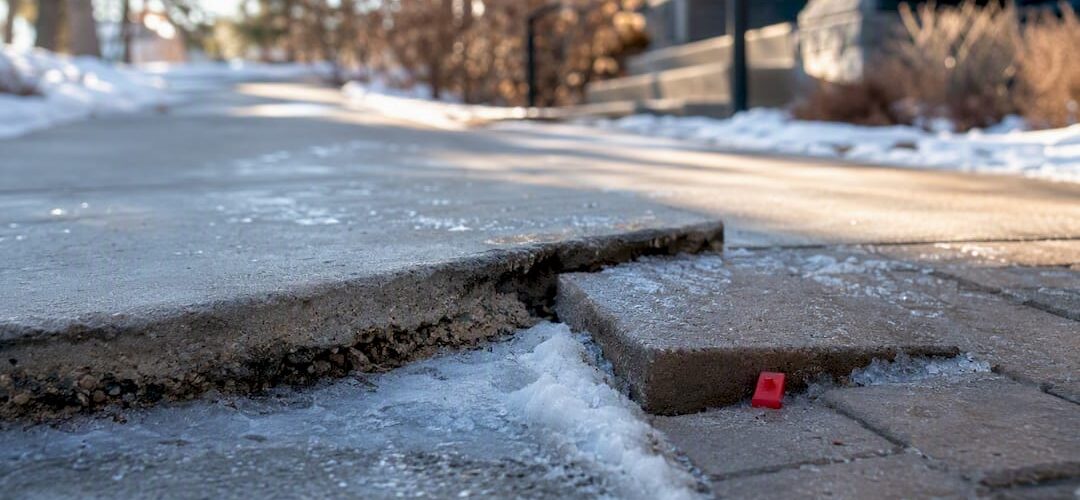
Fixing surface defects, keeping walkways dry and clear, and controlling ice are the three actions that prevent the most sidewalk slip-and-falls. Surface problems alone account for more than half of all such injuries, according to the ISHN, which makes repair the highest-leverage fix available to any property owner. The rest of this guide breaks that verdict into a checklist, a maintenance schedule, and the winter controls that matter most.
TL;DR:
- Addressing surface defects and controlling ice are the most effective measures for preventing sidewalk slip-and-fall injuries, which account for over half of such incidents.
- Quickly fixing hazards like debris, tripping obstacles, and structural issues minimizes injury risk before they worsen or cause falls.
- Pre-treating surfaces before storms and promptly removing snow reduces ice bonding and refreezing, especially on shaded or poorly drained areas.
- Proper sidewalk design, including adequate width, textured finishes, and good lighting, can prevent many hazards during construction or renovation.
- Regular inspections and documented maintenance records are essential for liability protection and timely repairs, especially after winter or during active seasons.
Table of Contents
- How Do You Prevent Sidewalk Slip and Fall Accidents Today?
- What Sidewalk Defects Count as a Fall Hazard?
- What’s the Best Way to Handle Snow and Ice on Sidewalks?
- Can Sidewalk Design Actually Prevent Falls Before They Happen?
- How Often Should Sidewalks Be Inspected and Maintained?
- What Should You Do Immediately After a Sidewalk Fall?
- Does Weather Beyond Winter Create Slip Hazards Too?
- What Frontline Snow Crews Learn About Fall Prevention
- Get Professional Help Clearing and Treating Your Sidewalks
- Sources
- FAQ
How Do You Prevent Sidewalk Slip and Fall Accidents Today?
Start with what you can fix in an afternoon, then schedule what needs a contractor. This order reflects how fast a hazard turns into an injury.
- Clear debris and temporary obstacles first: loose branches, trash, hoses, or toys create the same trip risk as a cracked slab.
- Flag hazards you can’t fix yet with sand, a bright cone, or a sheet of plywood as a temporary ramp over a gap.
- Call a contractor for structural problems like root heave, a slab tilted more than a quarter inch, or a settled section pulling away from the curb.
- Wear shoes with a defined tread pattern, not smooth-soled dress shoes or worn sneakers, especially on wet or icy days.
- Walk with shorter, flatter steps on any surface you’re unsure of, rather than your normal stride.
Pro Tip: Walk your own sidewalk once a week with a phone camera and take a photo of anything that looks off. A dated photo folder becomes free evidence if someone ever claims they were hurt on your property.
What Sidewalk Defects Count as a Fall Hazard?
Cracks, heave, settlement, gaps between slabs, and loose or rocking pavers are the five defects that cause most trips. Each works differently: a crack catches a toe, heave creates a ledge, settlement drops one slab below its neighbor, and a loose paver shifts underfoot exactly when someone puts weight on it.
The industry benchmark for “this needs fixing” is a vertical change of a quarter inch or more between adjoining surfaces, according to The Hartford’s design guidance, though some municipal codes set the trigger at half an inch. Contractors typically bevel transitions in that quarter-to-half-inch range and install a ramp when the gap runs larger.
Material choice affects how often you’ll face this problem:
- Concrete lasts decades but cracks under freeze-thaw cycles and tree root pressure.
- Asphalt patches cheaply but degrades faster and can rut under heavy foot traffic.
- Pavers look better and allow spot repairs without matching old concrete, but individual units loosen over time and need periodic resetting.
Keep dated photos and repair invoices for every fix, and consider using specialized safety meeting software for public works to organize maintenance and recordkeeping efficiently. Those records are what separate a property owner who acted in good faith from one who ignored a known problem, and they’re the first thing an insurance adjuster asks for after any incident.
What’s the Best Way to Handle Snow and Ice on Sidewalks?
Ice, not fresh snow, causes most winter injuries, because it bonds to the surface and hides under a thin layer of new snow. Handling it well comes down to timing and choosing the right product for the surface.
- Pre-treat before the storm hits. Applying an anti-icing product before snowfall keeps ice from bonding to the concrete, which makes the eventual cleanup far easier. Prioritize entrances, ramps, and any section that gets foot traffic first, a sequence the Slip. Trip. Fall. Toolkit recommends for any property managing multiple walkways.
- Clear snow promptly, then re-check for refreeze. Melting snow that runs and refreezes overnight creates black ice, often invisible until someone is already down.
- Choose a concrete-safe deicer, not a generic rock salt that can pit and spall concrete over repeated seasons. Sand or a traction aid works well on steps and shaded spots where salt loses effectiveness in extreme cold.
- Check drainage before winter arrives. A downspout dumping water across a walkway will refreeze there every single cold night.
For anyone walking on ice regardless of how well it’s treated, the Scientific American advises a “penguin walk”: flat feet, short steps, knees slightly bent, hands free to catch a fall.
Pro Tip: Keep your arms out of your pockets on icy walkways. Free hands cut reaction time when you catch a slip, and that split second is often the difference between a stumble and a fall.
Can Sidewalk Design Actually Prevent Falls Before They Happen?
Prevention through Design, often shortened to PtD, means fixing drainage, slope, and surface finish at construction or renovation time instead of chasing problems after the fact. The Hartford’s PtD framework treats this as cheaper over the long run than ongoing patch repairs, because it removes the hazard rather than managing around it.
A few design choices carry outsized weight:
- Width matters more than most owners assume. The Federal Highway Administration recommends 5 to 6 feet for standard two-way pedestrian traffic and 8 to 10 feet near schools or other high-traffic zones, wide enough that one person’s misstep doesn’t crowd another into a hazard.
- Textured, low-gloss finishes shed water faster than smooth troweled concrete and reduce the shine that hides ice.
- Lighting at every grade change matters because most falls at steps or ramps happen when someone doesn’t see the transition coming.
Community walk audits, which the NHTSA’s walkability checklist outlines, give neighborhoods a structured way to flag hazards and push local public works toward repair priorities instead of waiting for a complaint to trigger action.
How Often Should Sidewalks Be Inspected and Maintained?
A realistic cadence beats an ambitious one nobody follows. Here’s the schedule that keeps most properties out of trouble:
- Weekly: Walk the full sidewalk length looking for new cracks, debris, or standing water. Property managers can assign this to maintenance staff; homeowners can do it themselves in under ten minutes.
- Pre-winter (September to October): Book anti-icing pre-treatment, inspect and clear all drains and downspouts, and confirm your snow removal contract is signed before the first storm.
- Spring: Sweep away leftover sand and salt residue, which turns slick when it mixes with spring rain, and inspect for winter cracking that showed up under snow cover.
- Summer: Check for root heave near mature trees, since roots grow fastest in warm months and often lift slabs unevenly by fall.
- Anytime a defect exceeds a quarter inch: Schedule a professional repair rather than a temporary patch, and log the date, photo, and contractor invoice.
Rank every open issue by severity. A slab lifted two inches near a school entrance outranks a hairline crack in a rarely used side path, even if the crack was noticed first.
What Should You Do Immediately After a Sidewalk Fall?
Check for injury first and call 911 if there’s any sign of a head injury, fracture, or inability to bear weight. Once the person is safe, documentation becomes the priority.
- Photograph the exact spot, the surrounding area, and any ice, debris, or defect involved.
- Note the weather conditions and the footwear the person was wearing.
- Get contact information from any witnesses before they leave.
- Pull maintenance logs or service records covering that location and date.
- Report the incident to your insurance carrier promptly and keep every receipt tied to the repair or treatment history.
Liability after a sidewalk fall depends heavily on local ordinances and who’s responsible for that stretch of walkway, so a property owner facing a claim should consult an attorney rather than guess at their exposure. Time-stamped maintenance records, the kind a documented snow and ice service keeps automatically, are consistently what settles disputes fastest.
Does Weather Beyond Winter Create Slip Hazards Too?
Ice gets the attention, but rain and fallen leaves cause a steady stream of injuries the rest of the year. Wet concrete alone drops traction significantly, and a light rain on a warm sidewalk can be more dangerous than people expect, because the surface looks dry from a distance while still holding a thin, slick film.
Fall brings a hazard that’s easy to underestimate: wet leaves. A pile of damp leaves behaves almost like a patch of ice, and their color often hides a crack or a curb edge underneath. Clearing leaves from sidewalks weekly during peak leaf drop, rather than waiting for a big cleanup, keeps that risk from stacking up in one spot.
Spring rain exposes a different problem: drainage that failed all winter without anyone noticing, because the ground stayed frozen. Once thaw sets in, water that used to just sit now runs, and if it’s running across a walkway instead of into a gutter, you’ve got a hazard every time it rains.
A few habits handle most of this:
- Sweep leaves and organic debris off walkways at least weekly in fall.
- Re-check drainage grading each spring after frost heave has had a chance to shift it.
- Treat any consistently damp or shaded section of sidewalk as a standing risk, since it dries slower and grows algae or moss that’s slicker than plain wet concrete.
- Keep gutters and downspouts clear year-round, not just before winter, since clogged gutters cause the same runoff problem in a summer thunderstorm.
None of these fixes require special equipment. They require noticing the pattern and acting on it before it becomes a claim.
What Frontline Snow Crews Learn About Fall Prevention
Working sidewalks across Denver for decades taught us that the same handful of spots cause most incidents: shaded entryways that refreeze after the sun clears the rest of the lot, and drains nobody checked before the first storm. Documented, time-stamped service visits consistently protect property owners better than any single repair, because they prove ongoing care rather than neglect. A signed seasonal contract, paired with realistic response expectations rather than promises of instant service, is what actually keeps a property safe through an entire Denver winter.
— Jesse
Get Professional Help Clearing and Treating Your Sidewalks
Professional snow removal services offer commercial-grade equipment, 24/7 emergency dispatch, and documented service visits that can provide liability protection if a fall is disputed.
Between the checklist above and a Denver winter, the gap is usually timing. Homeowners and property managers who wait for the first storm to call around are the ones who end up with unlit, untreated walkways when it matters most. We offer residential driveway and walkway clearing from $41.25 per visit, along with commercial anti-icing pre-treatment and parking lot plowing for property managers and HOA boards who need broader coverage.
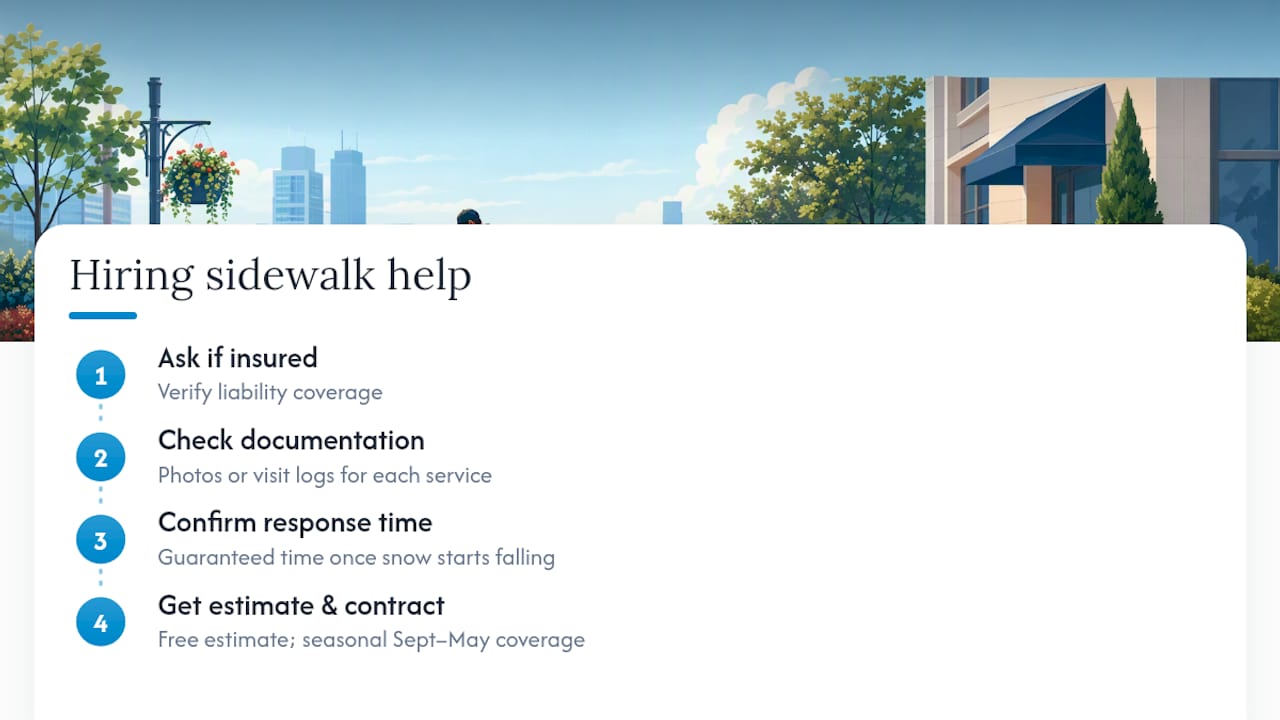
Before hiring anyone for sidewalk clearing, ask three questions: are they insured, do they document each visit with photos or logs, and what’s their guaranteed response time once snow starts falling. Our seasonal snow contracts run September through May and cover exactly that scope, with free estimates so you know the cost before committing. If you manage a commercial property, our page on preventing slip-and-fall liabilities walks through how documented contracts hold up if a claim ever comes in. Request your free estimate today and get your property covered before the next storm.
Sources
For readers who want the primary guidance behind this article: OSHA’s slip and fall standards cover surface maintenance protocols, the FHWA’s pedestrian facility guide sets sidewalk width standards, The Hartford’s PtD guidance covers design-stage prevention and repair thresholds, Scientific American explains safe winter walking technique, and the ISHN breaks down surface hazards as the leading injury cause.
- The Hartford — Slip, Trip & Fall Prevention Through Design (PtD)
- FHWA — Guide for safe pedestrian facilities / sidewalk recommendations
- ISHN — How to identify & prevent walking surface hazards
FAQ
Can Someone Sue if They Slip on Your Sidewalk?
Yes, a person injured on your sidewalk can file a claim if they believe you failed to maintain the surface reasonably. Whether that claim succeeds depends heavily on local ordinances, who’s legally responsible for that section of walkway, and whether you have documentation showing you addressed known hazards.
What Are the 5 P’s for Fall Prevention?
There’s no single, universally recognized “5 P’s” framework in sidewalk safety guidance, and definitions vary depending on the source. Instead of relying on an acronym, focus on the concrete steps that actually work: surface repair, dryness, ice control, lighting, and documentation.
Does Homeowners Insurance Cover Slips and Falls on the Sidewalk?
Most homeowners’ policies include liability coverage that can apply to a fall on your sidewalk, but coverage details, exclusions, and limits vary by policy and insurer. Review your specific policy or ask your agent directly, and keep maintenance records, since insurers weigh documented upkeep heavily when evaluating a claim.
How Much Compensation for a Fall on Pavement?
Compensation for a pavement fall varies enormously based on injury severity, medical costs, lost income, and local liability rules, so there’s no standard figure. An attorney familiar with premises liability in your area can give a realistic estimate based on the specific facts of the incident.
What Does Denversnowremovals Charge for Sidewalk Clearing?
Residential driveway and walkway clearing starts from $41.25 per visit. Commercial sidewalk clearing, de-icing, and seasonal contract pricing are available on request through a free estimate.