
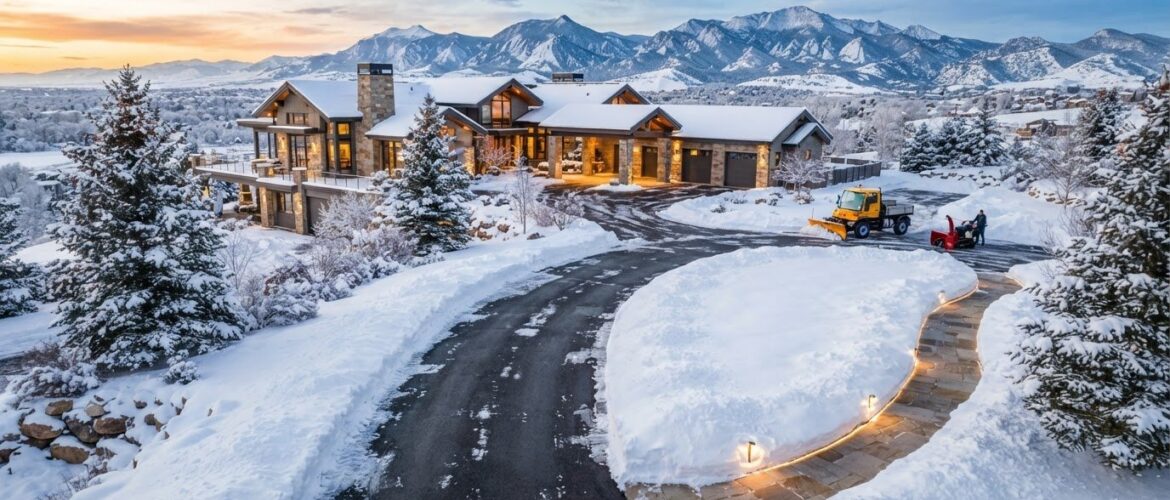
For Denver estates, snow planning starts with the driveway, walkways, and areas that need clearing. Residential snow removal for custom homes may mean arranging per-visit service, a seasonal contract, or clearing after a set snowfall threshold. Other options include using snow-clearing equipment or installing a heated driveway system. The right choice depends on the property layout and how much work you want to manage yourself.
Long approaches, broad entrances, and multiple walkways can make snow clearing more involved than a typical property. A practical plan helps keep important routes accessible and reduces the pressure to handle every snowfall yourself.
This guide compares the main residential snow removal options for Denver homes and estates. You’ll learn what each approach can cover, which property details matter, and how professional snow removal and ice management can fit into a practical winter plan.
Key Takeaways
- Compare per-service, seasonal, annual, and multi-year agreements to find a plan that suits your winter needs and preferred level of commitment.
- Assess driveways, entrances, walkways, and snow storage areas to identify what a home or estate needs cleared.
- Understand how service location affects planning, including the distinction between South Denver Metro and Colorado Springs.
- See when professional snow removal, snow plowing, or ice management can help keep access routes clear and safer to use.
Residential Snow Removal Services: What Are Your Options?
Denver homeowners can choose one-time clearing, recurring seasonal service, or longer agreements. Compare coverage, snow triggers, response expectations, and property access before choosing.
Agreement Types and Service Length
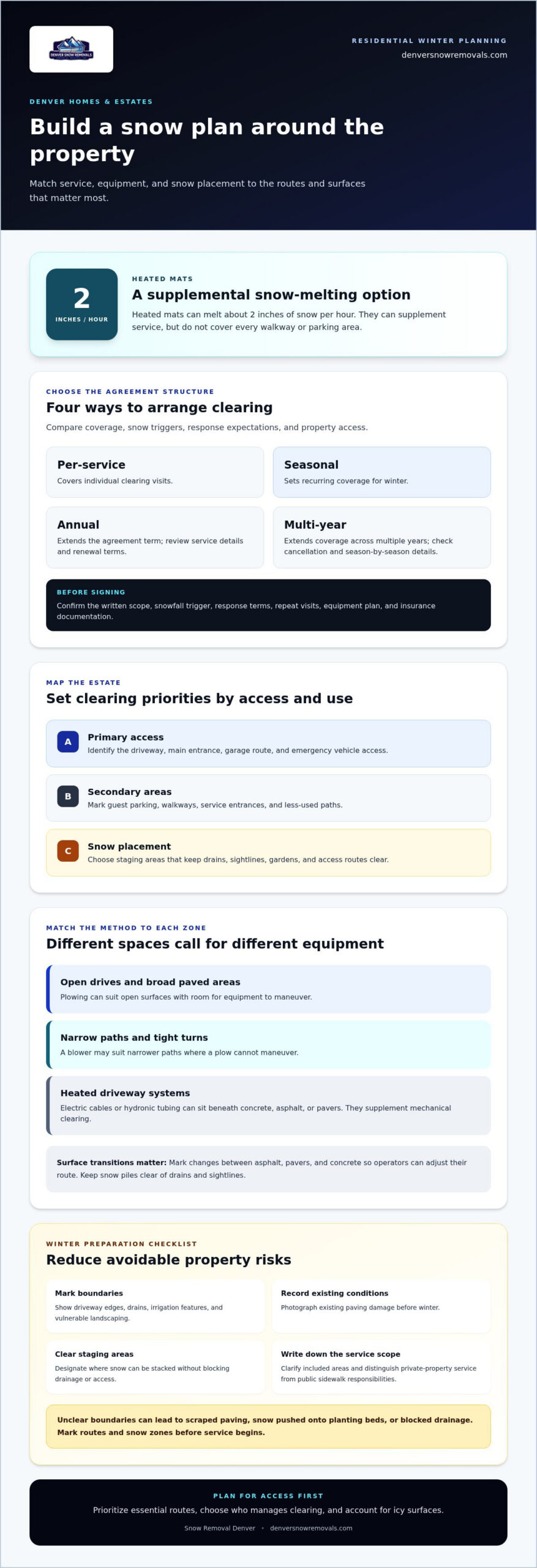
Per-service agreements cover individual visits, while seasonal plans set recurring coverage for winter. Annual and multi-year agreements extend the term, so review renewal, cancellation, and service details for every season. For residential snow removal for custom homes, list driveways, walkways, parking areas, and snow-stacking locations. Bundled packages may combine driveway plowing with walkway clearing; heated mats can supplement service, melting about 2 inches of snow per hour.
Service Areas and Provider Availability
Denver, South Denver Metro, and Colorado Springs are distinct service-area searches; confirm the location named in a service agreement matches the property. Snow Removal Denver operates locally to serve the metropolitan area, ensuring reliable coverage compared to unrelated markets. For a Denver estate, compare the stated coverage for each property area, including private drives and parking. Heated driveway systems can sit beneath concrete, asphalt, or pavers, alongside professional snow plowing.
Contractor Selection and Contract Terms
Review the written service scope, equipment plan, insurance documentation, and any snowfall trigger or response terms. Clarify which areas are included, whether repeat visits are covered, and how the plan handles heavy snow. Local sidewalk rules can vary, so distinguish public sidewalk responsibilities from private-property service terms. Put the scope and expectations in writing before winter.
Property Damage Risks and Winter Preparation
Plows can scrape paving, push snow onto planting beds, or block drainage if boundaries are unclear. Before winter, mark driveway edges, drains, irrigation features, and vulnerable landscaping, and photograph existing paving damage. Clear designated snow-stacking zones and identify routes that must stay accessible. These preparations help direct snow away from gardens and drainage systems.
Residential snow removal for homes and estates
A custom property may include a long approach, motor court, guest parking, several walkways, and separate service access. Map these areas before winter and rank them by use. Prioritize the route to the main entrance and garage, then consider secondary parking and decorative paths. This creates a practical clearing sequence for storms and heavy accumulation.
A residential snow removal plan for custom homes should account for the layout, surfaces, and snow-storage areas. A blower may suit narrower paths where a plow cannot maneuver, while open drives may be easier to clear by plowing. Mark transitions between asphalt, pavers, and concrete so operators can adjust their route. Keep snow piles clear of drains and sightlines.
- Primary access: Identify the driveway, main entrance, and emergency vehicle route.
- Secondary areas: Mark guest parking, walkways, and service entrances.
- Snow placement: Choose staging areas that don’t block drainage or access.
During recurring snowfall, clearing in sections can limit buildup and keep priority surfaces accessible. Start with a safe walking route, then move to less-used areas. Broad paved spaces may call for equipment suited to open surfaces, while tight turns and narrow paths need a different approach. Match the method to each zone instead of treating the property as one flat driveway.
A heated driveway is another option during construction or a major surface renovation. Systems can use electric cables or hydronic tubing beneath concrete, asphalt, or pavers. They supplement mechanical clearing and do not address every walkway or parking area. Commercial properties have different traffic and parking needs, so a residential plan should focus on household access and guest routes.
For a property with multiple access points, outline the routes and priority areas before selecting a service. Professional residential snow clearing can help cover the driveway and access areas that are difficult to manage during winter storms.
Snow Removal Denver: Commercial Snow Plowing
Snow Removal Denver provides residential snow removal for homes that need help clearing driveways and access routes through winter weather. For properties with recurring snow and ice concerns, residential snow removal and ice management address different needs: clearing accumulated snow and managing icy surfaces. Commercial snow plowing serves business properties with parking areas and access routes that need clearing.
Match the snow plan to the property. Snow Removal Denver serves commercial properties, including parking areas and access routes, with snow removal and ice management. Its commercial service is not intended for a private custom home.
Contact Snow Removal Denver to discuss your property’s snow removal needs, or visit denversnowremovals.com.
Set Your Winter Plan in Motion
Before the next storm, set priorities for the property: identify essential routes, decide who will manage clearing, and plan for icy conditions. A clear plan helps coordinate access and prepare for changing winter weather. For residential snow removal for custom homes, these decisions can help keep the property functional without leaving every task until snowfall begins.
Snow Removal Denver offers Residential Snow Removal and Ice Management for residential snow and ice concerns. Commercial Snow Plowing is available for business properties that need a separate plan for parking areas and access. The right next step is to match the service to the property and the work you need handled.
Contact Snow Removal Denver to discuss your snow removal needs. A thoughtful plan can make winter easier to manage.
Frequently Asked Questions
How much does residential snow plowing cost?
Residential snow plowing costs depend on the area cleared, snowfall conditions, and how often service is needed. For a custom property, define whether the work covers a long drive, guest parking, or multiple entrances. Those details affect the scope and equipment required. In Denver, distinguish a private home’s needs from an HOA or commercial property before comparing service estimates.
Quick answer: How much should you charge for snow removal in 2026?
Set your 2026 charge by calculating labor, equipment use, travel, snow volume, and the areas included. For example, clearing a broad estate drive with separate paths involves a different workload than clearing one compact access route. Decide whether your rate applies per visit, by measured area, or through a seasonal agreement, then state how repeat clearing and ice management are handled.
What equipment is best for snow removal on custom driveways, pavers, and heated surfaces?
A snow blower may clear narrow paths where a plow cannot maneuver, while open drives may suit plowing. Mark transitions between pavers, asphalt, and concrete so operators can adjust their route. Heated driveway systems supplement mechanical clearing.