
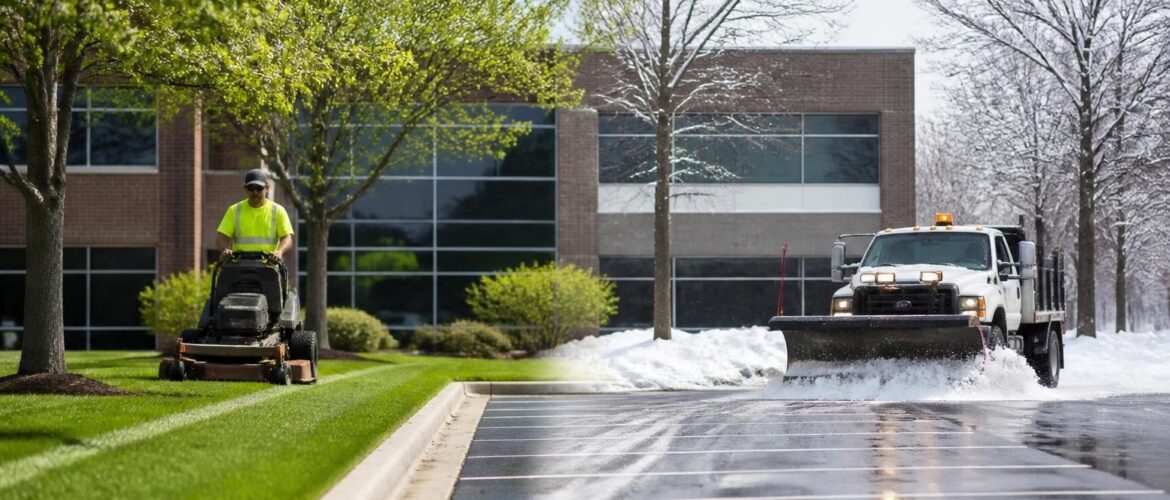
Property managers and facility directors face a continuous cycle of outdoor maintenance challenges throughout the year. While summer demands attention to turf health and landscape aesthetics, winter brings the critical responsibility of safe, accessible surfaces. Understanding the relationship between lawn maintenance and snow removal helps organizations plan resources, budget effectively, and maintain property value across all seasons. Commercial properties require a strategic approach that integrates warm-season landscape care with cold-weather emergency response capabilities.
Seasonal Transitions in Commercial Property Management
The shift from lawn maintenance and snow removal seasons doesn't happen overnight. Commercial properties in regions with distinct winters must navigate several transitional periods that require specialized knowledge and preparation.
Fall Preparation for Winter Operations
September through November represents a critical window for dual-focus property management. Turf still requires attention through late-season mowing and aeration, while snow removal equipment needs inspection and readiness testing.
Key fall activities include:
- Final fertilization applications following lawn maintenance calendar recommendations
- Overseeding thin areas to establish strong spring growth
- Equipment maintenance for both mowers and snow plows
- Staff training on winter safety protocols
- Contract finalization for seasonal services
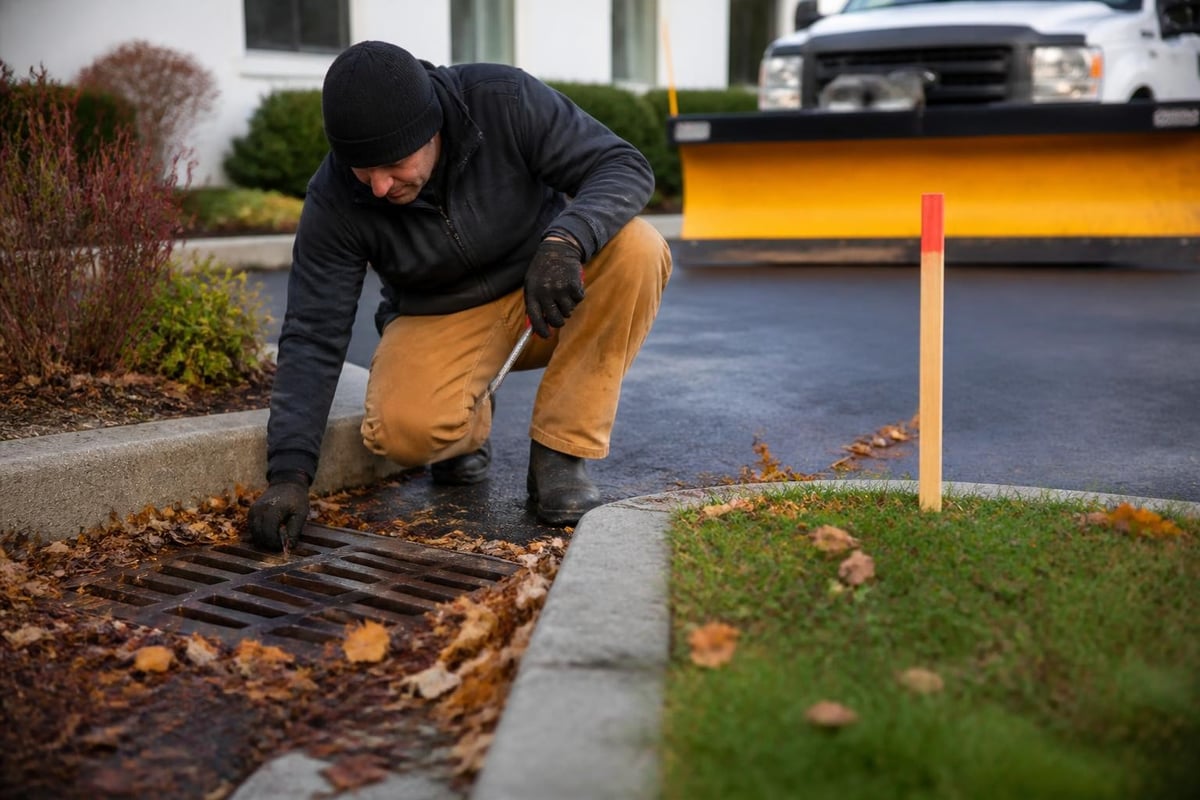
Property managers should conduct thorough walkthroughs to identify potential winter hazards such as drainage issues that could create ice patches or landscaping features that may obstruct snow removal operations. This dual perspective ensures smooth transitions between seasonal priorities.
Spring Recovery and Lawn Restoration
The transition back to lawn maintenance and snow removal planning begins as temperatures rise. Commercial properties often sustain turf damage from winter operations, requiring systematic restoration efforts.
March through May demands assessment of:
| Damage Type | Common Causes | Restoration Approach |
|---|---|---|
| Salt burn | Deicing chemicals | Flush with water, reseed bare patches |
| Compaction | Snow plow traffic | Core aeration, topdressing |
| Crown damage | Ice formation | Overseed with hardy varieties |
| Edge deterioration | Plow blade contact | Regrade, install protective barriers |
According to Iowa State Extension overseeding guidance, spring overseeding helps commercial properties recover quickly from winter stress, though fall overseeding typically yields better results for cool-season grasses common in northern climates.
Integrated Planning for Year-Round Services
Commercial properties benefit significantly from partnering with providers who understand both aspects of seasonal maintenance. The equipment, logistics, and site knowledge required for effective lawn maintenance and snow removal share considerable overlap.
Equipment and Resource Optimization
Organizations that manage both warm and cold-season services can optimize capital investments and operational efficiency. Heavy-duty trucks used for snow plowing can pull aerators and spreaders during lawn maintenance seasons. Storage facilities serve dual purposes, and staff expertise transfers between seasonal roles.
Shared infrastructure includes:
- Vehicle fleet capable of multiple attachment configurations
- Communication systems for dispatch and emergency response
- Weather monitoring and forecasting subscriptions
- Property mapping and GIS databases
- Safety equipment and personal protective gear
This integrated approach reduces overhead costs compared to contracting separate specialists for each season. Facility managers gain the advantage of working with teams who intimately know their property layout, drainage patterns, and unique challenges.
Site-Specific Knowledge Accumulation
Year-round service providers develop irreplaceable institutional knowledge about each property. Understanding where snow tends to drift informs decisions about where to reinforce turf or install hardscaping. Knowing which areas struggle with drainage during spring thaw helps identify targets for soil amendment and grading corrections.
A comprehensive lawn management approach throughout growing months reveals patterns that inform winter preparation. Low spots that hold water during summer rainstorms will become ice hazards in winter. Turf areas damaged by heavy foot traffic in warm months may not withstand snow removal equipment stress.
Best Practices for Commercial Lawn Maintenance
Professional turf management for commercial properties extends beyond residential lawn care in scope, scale, and expectations. Large parking lot islands, office campus greenspaces, and HOA common areas require specialized programs.
Soil Testing and Fertility Management
Commercial properties benefit from soil testing every 2-3 years to optimize fertilizer applications and avoid waste. The University of Minnesota Extension soil testing resources explain how proper testing prevents over-fertilization, which wastes money and contributes to environmental runoff issues.
Commercial fertility programs should:
- Apply nutrients based on actual soil test results
- Time applications to match turf growth patterns
- Use slow-release formulations to reduce application frequency
- Calibrate equipment for consistent, accurate coverage
- Document all applications for regulatory compliance
For properties that experience heavy winter salt exposure, spring soil tests help identify sodium accumulation and guide remediation strategies. Elevated sodium levels inhibit turf recovery and may require gypsum applications or increased irrigation to flush salts below the root zone.
Mowing and Turf Density Management
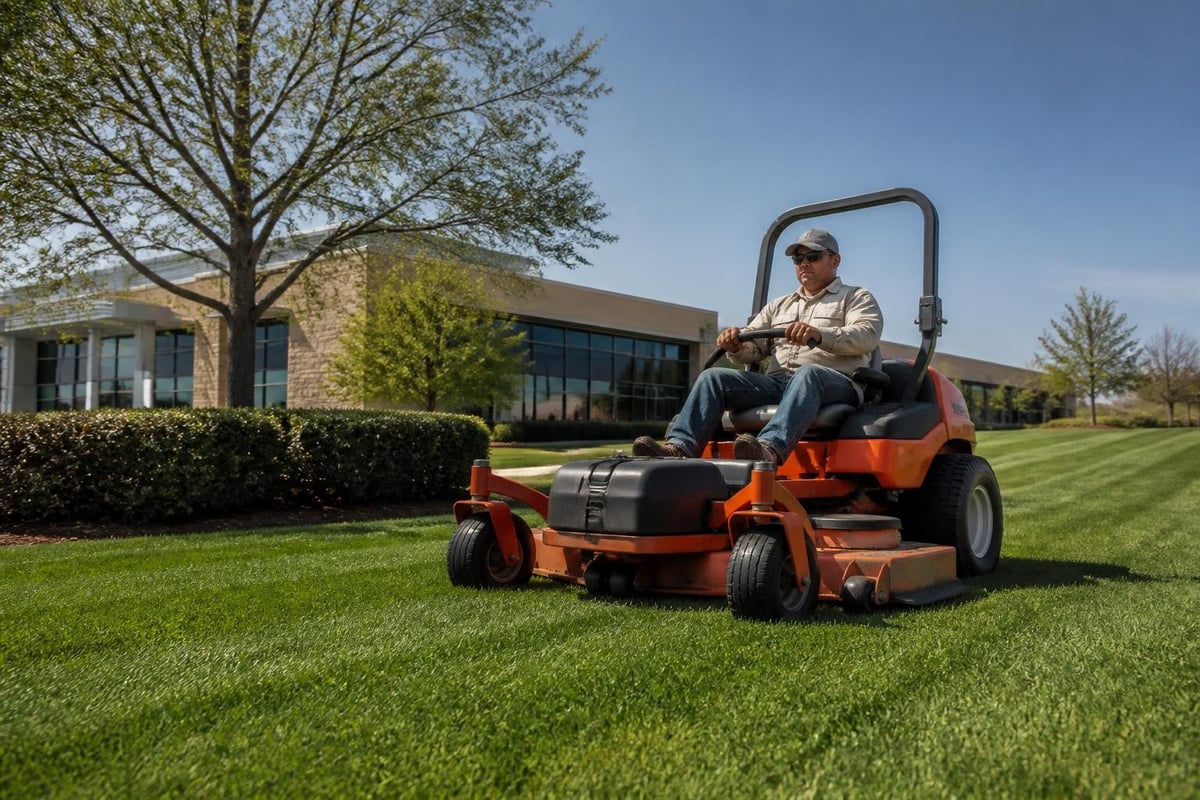
Commercial mowing operations focus on maintaining consistent appearance while promoting turf health and density. Dense, healthy turf withstands winter stress better than thin or weak stands.
| Grass Type | Optimal Height | Mowing Frequency | Winter Hardiness |
|---|---|---|---|
| Kentucky Bluegrass | 2.5-3.5 inches | Every 5-7 days | Excellent |
| Tall Fescue | 3-4 inches | Every 7-10 days | Very good |
| Perennial Ryegrass | 2-3 inches | Every 5-7 days | Good |
| Fine Fescue | 2.5-3.5 inches | Every 7-10 days | Excellent |
Properties should maintain higher cutting heights than residential lawns, particularly in areas that will receive winter traffic or salt exposure. Taller grass develops deeper root systems and maintains better density under stress.
Professional Snow Removal Operations
Winter weather demands rapid response and systematic execution to maintain safe, accessible commercial properties. Professional lawn maintenance and snow removal providers integrate weather monitoring, equipment deployment, and material management into cohesive operational plans.
Pre-Season Planning and Anti-Icing Strategies
Modern snow removal emphasizes prevention over reaction. Anti-icing applications before storm events reduce ice bond formation and decrease the total amount of deicing material needed throughout winter.
The Federal Highway Administration’s technical guidance on winter maintenance demonstrates how pre-treatment strategies reduce material use by 25-75% compared to traditional post-storm deicing. Commercial properties benefit from these efficiency gains through lower material costs and reduced environmental impact.
Effective anti-icing programs require:
- Accurate weather forecasting and storm timing predictions
- Properly calibrated liquid application equipment
- Treatment decision protocols based on pavement temperature
- Site-specific application rate adjustments
- Documentation systems for quality control
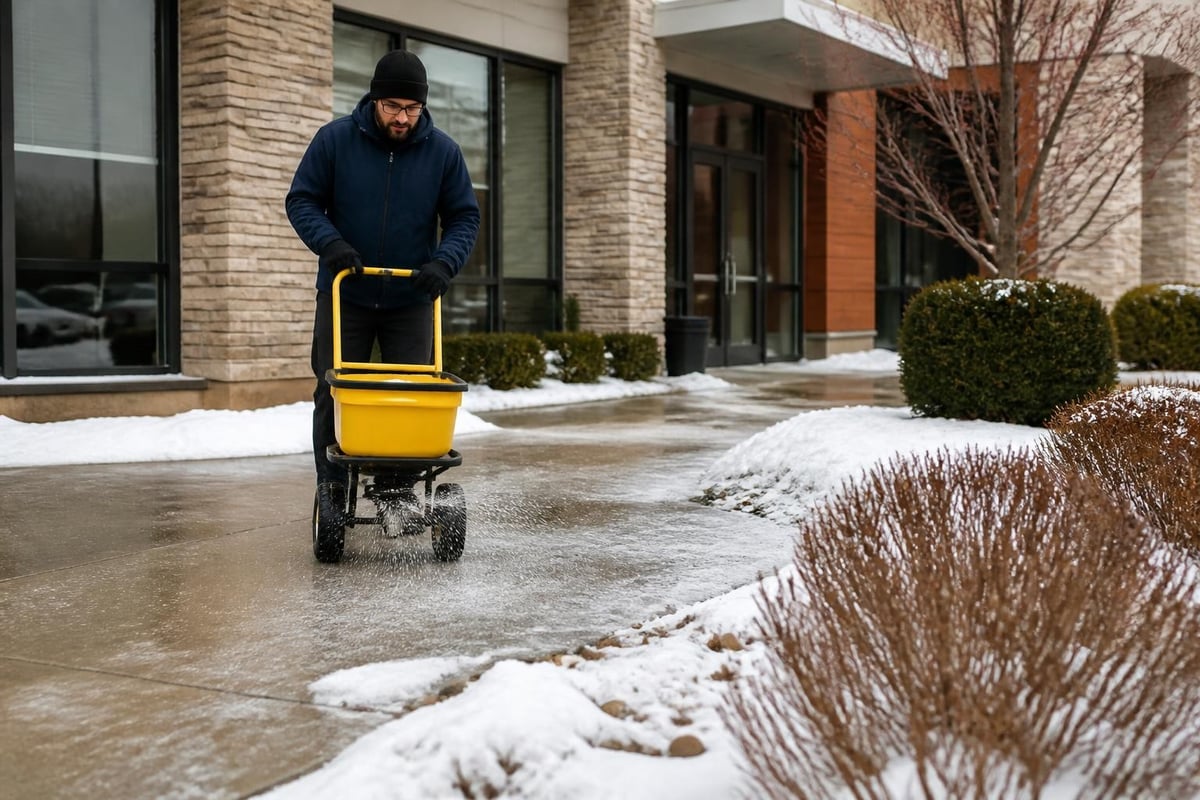
Properties with sensitive landscaping or turf areas adjacent to treated surfaces should discuss application zones and material selection with their service provider. Some deicing products cause less vegetation damage than traditional rock salt.
Equipment Selection and Deployment
Commercial properties require equipment scaled to their specific layout and snow clearance needs. Large parking lots benefit from loader-mounted pusher boxes that move substantial snow volumes efficiently, while smaller areas and sidewalks need compact equipment that can navigate tight spaces.
According to PennDOT winter maintenance guidance, proper equipment maintenance prevents breakdowns during critical storm response periods. Commercial providers maintain backup equipment and cross-train operators to ensure service continuity.
Environmental Stewardship in Deicing Operations
The environmental impact of deicing chemicals represents a growing concern for property managers balancing safety requirements with sustainability goals. Research from the EPA on road salt impacts documents freshwater salinization challenges in regions with heavy winter salt use.
Environmentally responsible snow removal includes:
- Calibrated spreaders that deliver precise application rates
- Pre-wetting systems that reduce total salt consumption
- Alternative deicing products for sensitive areas
- Proper storage of deicing materials to prevent runoff
- Staff training on application best practices
The Wisconsin DOT winter maintenance report showcases how advanced techniques reduce environmental impacts while maintaining safety. Commercial properties can request similar data-driven approaches from their service providers.
Landscape Alternatives for Reduced Maintenance
Some commercial properties explore landscape modifications that reduce both lawn maintenance and snow removal challenges. Strategic hardscaping, native plantings, and low-maintenance ground covers offer alternatives to traditional turf in specific applications.
Native Grass and Meadow Installations
The California Native Plant Society resources on native grass alternatives provide frameworks applicable across climates. Native meadow installations reduce mowing requirements, eliminate fertilization needs, and provide habitat benefits while maintaining professional appearance.
For commercial applications, native plantings work well in:
- Perimeter areas with minimal foot traffic
- Stormwater management zones
- Buffer strips between parking and buildings
- Slopes and areas difficult to mow safely
These installations don't eliminate winter maintenance needs but may reduce snow storage area requirements and minimize salt exposure to sensitive plants.
Strategic Hardscaping Integration
Expanding hardscaped areas reduces lawn maintenance requirements while creating defined snow storage zones. Properly designed parking lot islands with decorative rock or mulch beds require no mowing and tolerate salt exposure better than turf.
Property managers should work with landscape architects to balance aesthetics, functionality, and maintenance efficiency. Some areas benefit from turf's cooling effects and water infiltration properties, while others perform better as low-maintenance hardscape.
Staffing and Training Considerations
Quality lawn maintenance and snow removal services depend fundamentally on skilled, well-trained personnel. Commercial providers invest in ongoing education, safety certification, and equipment operation training.
Seasonal Workforce Management
Many providers maintain core year-round staff supplemented by seasonal workers during peak periods. This model ensures institutional knowledge retention while providing flexibility to scale operations.
Effective workforce strategies include:
- Cross-training employees on multiple equipment types
- Safety certification programs for equipment operators
- Clear communication protocols for emergency callouts
- Performance metrics and quality assurance programs
- Competitive compensation to reduce turnover
Properties benefit from consistency in service crews who understand site-specific requirements and can identify emerging issues before they escalate.
Emergency Response Protocols
Commercial properties often require 24/7 availability during winter weather events. Service level agreements should clearly specify response times, communication procedures, and escalation protocols for severe storms.
Professional providers maintain dispatcher coverage, real-time weather monitoring, and GPS-equipped vehicles to optimize response efficiency. Property managers should understand their provider's capabilities and limitations, particularly during region-wide storm events that strain all available resources.
Documentation and Quality Assurance
Professional lawn maintenance and snow removal services include systematic documentation that protects both property owners and service providers. Digital record-keeping has transformed quality assurance and liability management.
Service Verification Systems
Modern providers use GPS tracking, time-stamped photography, and digital reporting to document all services performed. Property managers can access real-time dashboards showing when crews arrived, which areas received treatment, and material quantities applied.
Documentation benefits include:
- Verification of contract compliance
- Evidence for liability claims or disputes
- Data for optimizing future service plans
- Budget forecasting based on actual usage
- Environmental reporting for sustainability programs
Properties should request access to these systems and incorporate service data into facility management platforms for comprehensive property oversight.
Continuous Improvement Programs
Leading providers analyze performance data to refine operations each season. Snow removal efficiency metrics, material usage trends, and client feedback inform equipment upgrades, process modifications, and training priorities.
Property managers contribute to these improvements by providing specific, timely feedback about service quality, emerging concerns, and changing property needs. Collaborative partnerships between properties and service providers yield superior results compared to purely transactional relationships.
Long-Term Planning and Budget Optimization
Commercial properties that view lawn maintenance and snow removal as integrated components of facility management make more strategic decisions about investments, contracts, and property improvements.
Multi-Year Service Agreements
Longer-term contracts benefit both properties and service providers through pricing stability, guaranteed capacity, and alignment of interests. Three to five-year agreements with annual adjustment provisions allow providers to invest in equipment specifically suited to each property's needs.
Multi-year contracts should address:
- Base pricing with defined escalation formulas
- Scope adjustments for property changes
- Equipment upgrade schedules
- Performance standards and remedy procedures
- Termination provisions protecting both parties
Properties gain predictable budgeting while providers secure revenue streams that justify capital investments in specialized equipment or technology platforms.
Capital Improvement Coordination
Property improvements should consider both summer and winter operational impacts. Parking lot expansions affect mowing perimeters and snow storage capacity. Landscape additions create obstacles for snow removal equipment or require protective measures during plowing operations.
Facility managers should involve their lawn maintenance and snow removal provider in planning discussions for site modifications. Professional input during design phases prevents costly operational conflicts and identifies opportunities to enhance both aesthetic appeal and functional efficiency.
Successful commercial property management requires year-round attention to outdoor spaces, from maintaining healthy, attractive turf during growing seasons to ensuring safe, accessible surfaces throughout winter weather events. Strategic integration of these complementary services optimizes resources while maintaining property value and occupant satisfaction. Denver Snow Removals brings 47 years of commercial property expertise to parking lots, industrial parks, office campuses, and HOA communities throughout the Denver Metro area, delivering comprehensive solutions backed by 24/7 emergency response capabilities. Contact our team today to discuss customized service programs that address your property's unique seasonal challenges.