
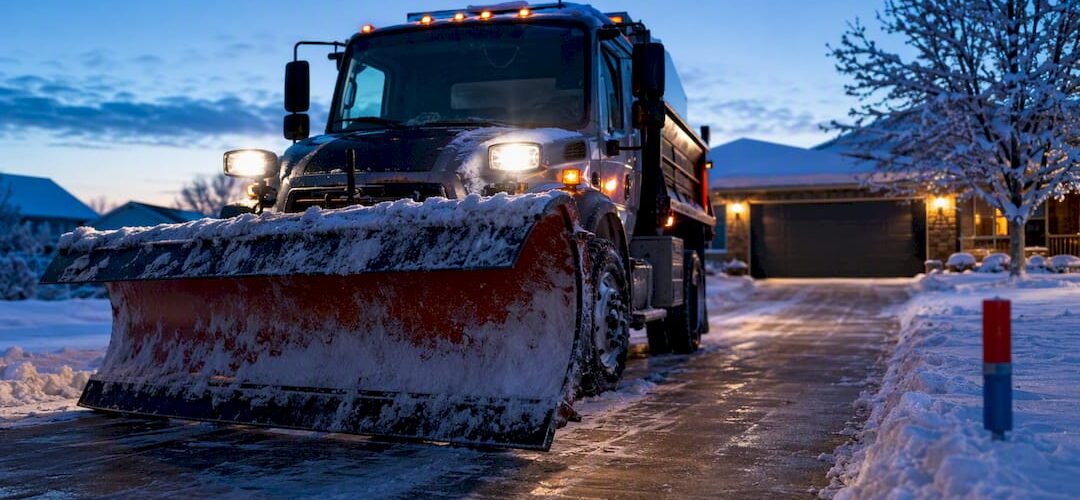
A typical emergency snow removal visit in Denver runs $40 to $150 for residential properties, depending on driveway size and access, while seasonal contracts typically fall between $350 and $1,000. If your street gets plowed more than three or four times a season, a contract almost always beats paying per storm. Expect an after‑hours or emergency surcharge on top of any one‑time call, plus a minimum charge regardless of how small the job is.
TL;DR:
- Seasonal snow removal contracts in Denver generally cost between $350 and $1,000, offering automatic dispatch for 1 to 2 inches of snow and priority response during major storms.
- Emergency per-visit prices for residential driveways vary from $40 to $150 depending on driveway size, snow depth, and timing, with extra charges for after-hours calls and additional services like de-icing.
- Heavier, wetter snow and complex property layouts increase the cost, as additional passes and equipment are necessary, sometimes requiring separate charges for sidewalk shoveling and snow hauling.
- Commercial snow removal costs are higher per square foot, averaging $0.05 to $0.25, due to more passes, liability documentation, and greater legal risks involved.
- Local experience and documented service records can greatly impact responsiveness and liability protection, especially during unpredictable Denver winter storms.
Table of Contents
- How Much Does Emergency Snow Removal Cost in Denver?
- What Changes the Price of Emergency Snow Removal?
- How Does Commercial Snow Removal Pricing Differ?
- What Happens When You Call for Emergency Snow Removal?
- Contract vs. Per-Visit: Which Actually Saves Money?
- Why Local Experience Matters for Emergency Calls
- What Most Denver Homeowners Should Do Next
- Get an Emergency Snow Removal Quote in Denver
- Sources
- FAQ
How Much Does Emergency Snow Removal Cost in Denver?
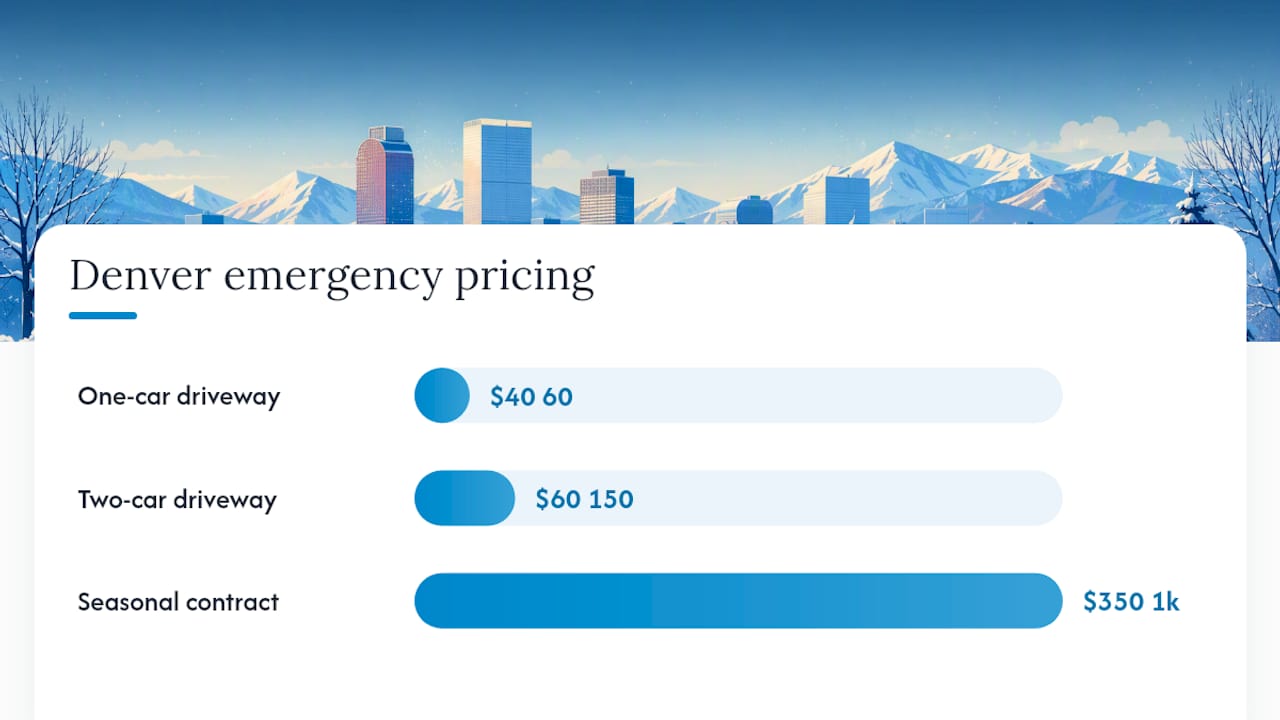
Denver homeowners calling for a single emergency visit should budget based on driveway size, not just “snow removal” as a flat category. A one‑car driveway typically runs $40 to $60 per push nationally, though Denver local pricing tends to sit at the higher end of that range once you add emergency dispatch. Two‑car driveways commonly land between $60 and $150 per visit, and that gap widens fast if the crew also has to clear a walkway, porch, or side entrance.
Hand clearing for sidewalks and porches is billed by the hour with typical minimums to cover drive time and fuel, since sending a two‑person crew out for ten minutes of shoveling doesn’t cover the drive time or fuel. If you need both a plowed driveway and a shoveled front walk, ask upfront whether that’s one combined price or two separate line items. It usually is the latter.
Seasonal contracts change the math entirely. Rather than paying per event, you lock in a flat rate for the whole snow season, generally September through May in Colorado. Denver seasonal pricing typically ranges from $350 to $1,000, with the wide spread driven by property size, driveway length, and how many “pushes” (individual clearing visits) the contract includes.
What a typical Denver seasonal contract specifies:
- A trigger depth, usually 1 to 2 inches, that automatically dispatches a crew without you calling
- A set number of included pushes per month or per season, with overage pricing for anything beyond that
- Whether sidewalk de‑icing or ice melt application is bundled in or billed separately
- Priority response status during major storms, which per‑visit customers typically don’t get
The national average for per‑visit pricing sits at $30 to $75, with seasonal contracts averaging $350 to $600. Denver’s prices tend to be higher than national averages due to heavier snowfalls and increased resource needs, which means crews need more trucks, more labor, and more fuel per event than milder climates require.
What Changes the Price of Emergency Snow Removal?
Two homeowners on the same block can get quotes that differ by $50 or more for what sounds like the same job. The difference almost always comes down to a handful of specific factors, not contractor markup.
- Snow depth and type: Six inches of light, fluffy snow clears faster than three inches of wet, heavy snow. Heavier snow demands more passes and more time, which shows up directly in labor cost.
- Property layout: Long driveways, steep grades, and multiple access points (a front walk plus a back gate, for example) all add time. A curved or narrow driveway that can’t fit a full‑size plow blade also slows the job down.
- Surface type: Gravel driveways require a higher blade setting to avoid gouging the surface, which can leave a thin layer of snow behind and sometimes calls for a second pass or hand finishing near edges.
- Timing: Calls placed at 2 a.m. during an active blizzard cost more than a scheduled morning visit. Dispatching a crew outside normal hours means overtime labor and pulling a truck off another route.
De‑icing and snow hauling add separate line items too. If a storm leaves several feet of piled snow with nowhere to go, on a small city lot for instance, hauling it offsite becomes its own charge, priced by load or by hour.
Pro Tip: Ask any contractor whether their quote includes de‑icing or ice melt application. A driveway that’s plowed but not treated can refreeze overnight into a sheet of ice, which often means paying for a second visit the very next morning.

How Does Commercial Snow Removal Pricing Differ?
Property managers and business owners face a different pricing structure than homeowners, built around square footage and liability exposure rather than a flat per‑driveway rate.
Commercial pricing in Denver typically runs $150 to $500 per push for small commercial lots, with per‑square‑foot rates commonly landing between $0.05 and $0.25. A larger retail lot or office campus with tens of thousands of square feet can push total costs well beyond what any single residential quote would suggest, simply because of scale.
Commercial jobs cost more per square foot than residential work for a few concrete reasons:
- Multiple passes: Parking lots need clearing between rows, around light poles, and near entrances, which takes more equipment time than a straight driveway push.
- Documentation requirements: Commercial contracts typically require timestamped service logs and salt application records to protect against slip‑and‑fall claims.
- Liability exposure: A retail parking lot that isn’t cleared and salted properly creates real legal risk for the property owner, which is priced into the service.
Before signing any commercial agreement, property managers should confirm three things in writing: the guaranteed response window after a snow trigger, what documentation the contractor provides for each visit, and whether there’s a cap on emergency surcharges during a major storm. Without that cap, a single blizzard can turn a routine seasonal budget into a surprise bill. Property managers juggling multiple vendors during winter, from snow crews to on-site package coordination for apartment communities, tend to do better when every contract spells out response times upfront rather than assuming “as soon as possible” means the same thing to every provider.
What Happens When You Call for Emergency Snow Removal?
Calling a snow removal company at 6 a.m. after eight inches fell overnight sets a specific sequence in motion, and knowing what to expect helps you judge whether a company is actually responsive or just claims to be.
- Dispatch and route prioritization. Crews work through pre‑planned routes, and seasonal contract clients typically get priority over one‑time emergency callers during major storms, since the contractor already has them scheduled into the route.
- Response window. A realistic emergency response during a moderate storm runs a few hours; during a major regional storm, it can stretch longer simply because every crew in the metro area is stacked with calls.
- Minimum charges apply. Most companies bill a minimum for after‑hours dispatch, often in the $20 to $150 range depending on urgency and distance from the crew’s existing route.
- Documentation matters. Ask for a timestamped service log and, if de‑icing was applied, a record of it. That paperwork protects you if a slip‑and‑fall claim ever comes up later.
Before you decide to clear snow yourself instead of calling, the Consumer Product Safety Commission warns that snow shoveling carries real injury risk, particularly for anyone with heart or back conditions. Heavy, wet snow is deceptively strenuous work.
Contract vs. Per-Visit: Which Actually Saves Money?
The math is simpler than most homeowners expect. If your seasonal contract costs $600 and per‑visit emergency calls average $75 each, you break even at eight visits for the season. Denver typically sees well more than eight measurable snowfalls between September and May, so for most homes, a contract wins on pure cost.
- Estimate your season’s storm count. Front Range winters vary, but eight or more plowable events in a season is common.
- Compare against your per‑visit quote. Multiply the number of expected storms by your quoted per‑push rate, then compare to the flat seasonal price.
- Negotiate the details that matter most, including trigger depth, number of included pushes, and whether you get priority response during major storms.
Pro Tip: Ask specifically whether emergency response priority is written into the contract, not just implied. Contractors favor seasonal clients because predictable routes let them plan staffing and equipment, and that priority should be a stated term, not a verbal assumption.
Locking in a seasonal snow removal contract before the first snowfall also protects you from mid‑season price increases that sometimes hit new per‑visit customers once demand spikes.
Why Local Experience Matters for Emergency Calls
Not every snow removal company can actually deliver on a 24/7 promise once a storm hits. Denversnowremovals has operated in the Denver Metro area for more than 44 years, which means the dispatch team has planned routes through decades of Front Range storm patterns, not just a single mild winter.
That experience translates into specific capabilities relevant to an emergency call:
- 24/7 dispatch, not a call center that routes you to voicemail during a blizzard
- Commercial‑grade equipment built to clear lots and long driveways in fewer passes
- Documented service visits that give homeowners and property managers a paper trail for liability protection
- Flexible arrangements, from single emergency calls to full seasonal contracts
For a property manager weighing five different bids, a track record spanning that many Denver winters is worth more than a lower quote from a company that’s never handled a 20‑inch storm event.
What Most Denver Homeowners Should Do Next
For most Denver homeowners, the smartest move is checking your expected storm count against a seasonal contract price before winter starts, not after the first emergency call. Lead with one question: what’s your guaranteed response window, and how many pushes are included? Always ask for a service log or timestamp on every visit, whether it’s a one‑time emergency call or part of a contract.
— Jesse
Get an Emergency Snow Removal Quote in Denver
Some snow removal companies offer crews with extensive Front Range experience, 24/7 dispatch, and commercial-grade equipment designed to clear most driveways and lots in a single pass.
Whether you need a one‑time emergency visit or want to lock in a seasonal contract before the next storm rolls in, free estimates are available for both residential and commercial properties. Have your driveway size, access points, and any special surface concerns (gravel, steep grade, multiple entries) ready when you call, since that speeds up an accurate quote. Every visit comes with documented service records, giving you the liability protection you need whether you’re a homeowner or managing a commercial property. If you’re ready to stop guessing what the next storm will cost, request your free estimate today and get on the schedule before the snow starts falling.
Sources
- Snow Removal Price Guide 2026: Costs, Rates & Formulas
- Average Snow Removal Costs in Denver, CO: Price Ranges by Job and Scenario 2026 – LatestCost
- Commercial Snow Removal Pricing Guide | DMH Site Services Denver, CO
- Snow Removal Cost Factors and Pricing Guide — Buffalo example (used for break‑even math)
- Let it snow and play it safe this winter — CPSC tips to prevent injuries
FAQ
What’s a fair price for shoveling a driveway in Denver?
For a standard one‑car driveway, $40 to $60 per push is a fair range for hand shoveling or single‑visit plowing. Two‑car driveways typically run higher, often $60 to $150, depending on length and whether a walkway is included.
How much should I charge for a 600 square foot driveway?
A 600 square foot driveway falls into the standard residential range, generally $40 to $150 per visit depending on snow depth and access. Emergency or after‑hours calls typically add a surcharge on top of that base price, often $20 to $150 depending on urgency.
Should a 70-year-old shovel snow themselves?
The Consumer Product Safety Commission warns that snow shoveling carries meaningful injury risk, particularly for older adults or anyone with heart or back conditions. Hiring a professional crew for heavy or wet snow removes that risk entirely and is generally the safer choice for seniors.
What’s the longest Denver has gone without snow?
Denver’s snowfall timing varies significantly year to year, and dry stretches of several weeks aren’t unusual even during peak winter months. That unpredictability is actually one reason seasonal contracts with a set trigger depth tend to work better than trying to time individual storms yourself.
Does Denversnowremovals charge extra for emergency calls?
Emergency and after‑hours service typically carries a surcharge industrywide, and current Denversnowremovals pricing for specific services like residential driveway clearing starts from $41.25 per visit. For an exact quote on emergency dispatch or seasonal contracts, request a free estimate directly through the company’s site.