
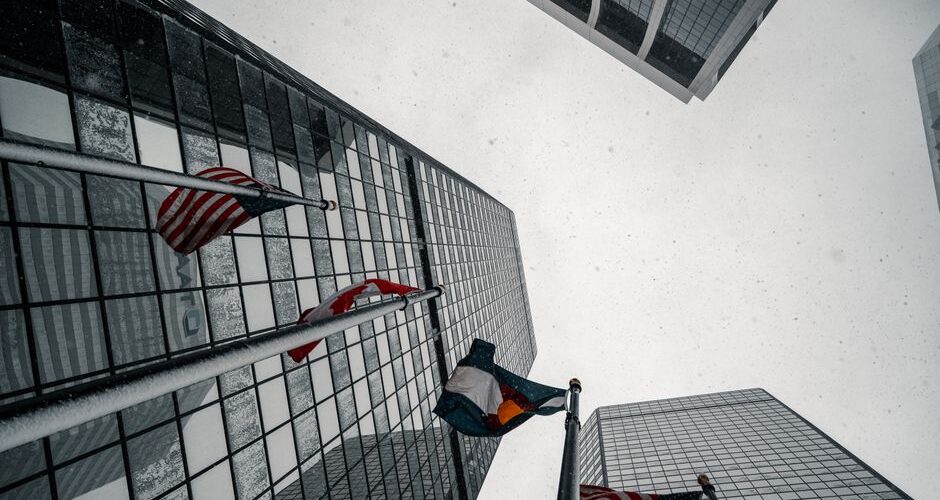
Downtown Denver snow removal is a commercial-first problem because office towers, parking garages, retail storefronts, hotels, restaurants, and medical buildings in the CBD, LoDo, Union Station, and Cherry Creek North cannot wait for a city plow. Denver's own fleet is built for main streets and residential side streets, not private lots and sidewalks. denversnowremovals.com is a family-owned Denver County operation running licensed and insured W-2 crews since 1974, with 24/7 dispatch, a two-hour core response, GPS tracking, and photo proof. The sections below explain how downtown commercial snow removal works, what the city requires, and what private contractors handle.
Table of Contents
- What does Denver law actually require of downtown businesses after a snowfall?
- Why can't downtown Denver businesses just rely on the city's plows?
- What is commercial snow removal in downtown Denver, and what does it include?
- How does denversnowremovals.com handle downtown Denver snow removal?
- How do you choose a downtown Denver snow removal contractor?
- What does downtown Denver snow removal cost, and how are contracts structured?
- What about sidewalks, ice, and the parts of a downtown property a plow can't reach?
- Key Takeaways
- References
What does Denver law actually require of downtown businesses after a snowfall?
Denver businesses must begin clearing their sidewalks immediately once snow stops falling, while residences get until the next day, according to the City and County of Denver. That immediate-start rule is the core legal obligation for any commercial property in the CBD, LoDo, Union Station, or Cherry Creek North.
Enforcement is active, not passive. Denver inspectors leave time-stamped notices at properties with unshoveled sidewalks. After a notice is posted, businesses have four hours to clear the sidewalk before an inspector returns for a re-check. Residences have 24 hours for the same re-check window, according to the City and County of Denver.
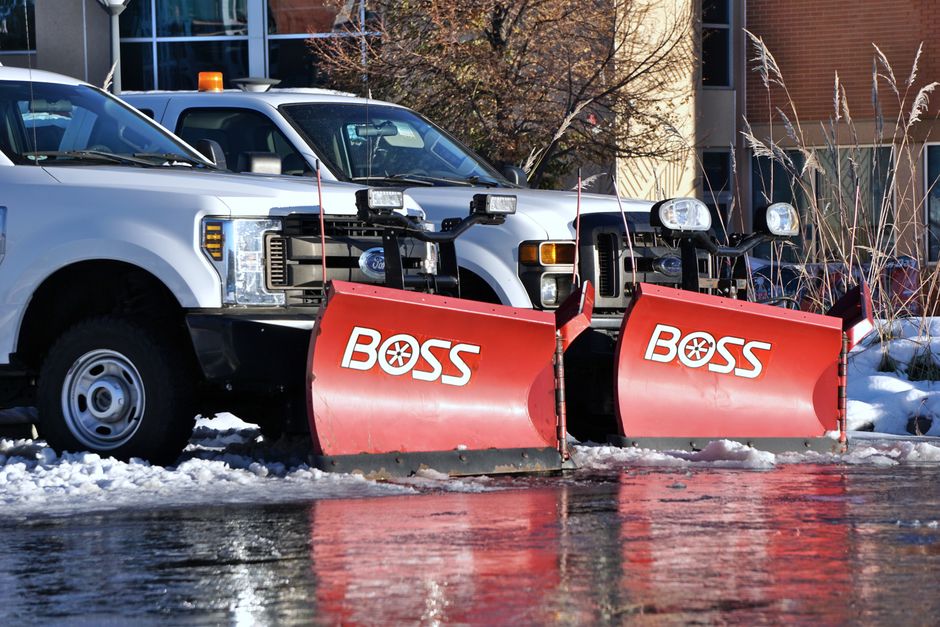
The fine after a notice is $150, based on reporting from Denver7 in March 2024. That figure should be attributed to that reporting rather than treated as today's confirmed number, since the research pack does not state a more current dollar amount. Inspectors actively patrol for violations, so a missed sidewalk push can become a citation within hours.
Denver also prohibits pushing, plowing, or depositing snow into public streets, alleys, and other rights-of-way, according to Zenith Services Co.. That rule directly shapes how private lots must be cleared and where snow can go. Downtown properties with tight lot lines often have no legal place to stack snow on site, which makes offsite hauling a practical necessity rather than an optional add-on.
Why can’t downtown Denver businesses just rely on the city’s plows?
Denver businesses cannot rely on the city's plows because the city's fleet is sized for public streets, not private property. The Denver Department of Transportation and Infrastructure, known as DOTI, serves roughly 2,050 lane miles of main streets with a fleet of about 70 large plows, and that same fleet is also tasked with plowing around schools, according to the City and County of Denver.
The Residential Snow Plow Program, created during the blizzards of 2006-07, covers about 1,260 center lane miles of residential streets and runs between 3:00 a.m. and 3:00 p.m. Those residential plows make one pass down the center of every side street and carry no de-icing materials, so they leave the edges, parking lanes, and driveway aprons untouched, according to the City and County of Denver.

Downtown de-icing uses a different material than the rest of the city. In the downtown area, Denver uses liquid magnesium chloride, while the general solid deicer is Ice Slicer, a naturally mined Utah product that is more than 90 percent chloride salts, according to the City and County of Denver.
The practical conclusion is that city service stops at the public right-of-way. Every private lot, garage ramp, sidewalk, and entryway in the CBD, LoDo, Union Station, and Cherry Creek North remains the property's responsibility. A city plow passing on the street does nothing for a parking garage entrance, a loading dock, or a storefront walkway.
What is commercial snow removal in downtown Denver, and what does it include?
Commercial snow removal in downtown Denver means contracted, on-call service for private property rather than public street clearing. That includes parking lots and garages, sidewalks, storefront entries, loading zones, and plaza areas, according to Zenith Services Co.. The property owner or manager signs a contract before the season so crews are committed to the site when snow arrives.
The service set for a downtown property typically includes parking lot plowing, sidewalk clearing, ice slicing, de-icing, and snow hauling offsite when there is nowhere left to stack it. Snow hauling matters more downtown than in the suburbs because tight lots, garage decks, and alley access leave little room for pushed piles. A suburban lot can push snow to a back corner; a LoDo block cannot.
Contract structures in the Denver market include per-push/per-event, seasonal flat rate, per-inch tiers, and time and materials, according to Zenith Services Co.. Contracts are typically arranged before the season, from late summer through autumn. A September or October signing is standard for a property that wants guaranteed service by the first storm.
The research pack does not give pricing for named Denver snow removal providers, and it does not state the average price for snow removal in Denver. For that reason, this article explains contract structures rather than quoting dollar figures. A property manager comparing bids should look at service scope, response commitment, and hauling provisions rather than a single number.
How does denversnowremovals.com handle downtown Denver snow removal?
denversnowremovals.com handles downtown Denver snow removal as a family-owned Denver County operation that has been sweeping Denver off its feet for more than 50 years, since 1974. The company runs licensed and insured W-2 Denver employees with no subcontractors. That staffing model matters downtown, where a missed 4:00 a.m. lot push becomes a $150 sidewalk notice by mid-morning.
Dispatch runs 24/7 with a two-hour core response for downtown properties. GPS tracking and photo proof are part of the service, so a property manager can verify a lot was cleared without driving to the site. That documentation is useful for compliance records and for answering tenant or ownership questions after a storm.
Services cover parking lot plowing, sidewalk clearing, ice slicing, de-icing, snow hauling offsite, and HOA contracts. That is the full set a CBD tower, LoDo storefront row, Union Station hotel, or Cherry Creek North retail block needs. The same crews handle residential overflow in Denver County neighborhoods including Cherry Creek, Hilltop, Country Club, Washington Park, Belcaro, and Central Park Stapleton.
The pre-season contract is the standard path for downtown properties. Property managers can call or text 303-591-2089 for a downtown Denver pre-season contract. The contract-timing context sits alongside the market norm that Denver snow contracts are typically arranged before the season, from late summer through autumn, according to Zenith Services Co..
How do you choose a downtown Denver snow removal contractor?
Choosing a downtown Denver snow removal contractor starts with asking whether crews are W-2 employees or subcontractors. Downtown response times collapse when a contractor is brokering the work out on a heavy snow night. A company with its own Denver-based employees can commit to a response window; a broker cannot guarantee who shows up or when.
Confirm insurance and licensing in writing before signing. A downtown lot push involves vehicles, pedestrians, and building infrastructure in close quarters. Liability exposure is real, and a contractor without proper coverage puts the property owner at risk. The contract should name the insured entity and the coverage limits.
Ask for the response-time commitment in writing and how it is measured. A two-hour core response only means something if the contractor can show GPS tracking and photo proof. Verbal promises do not hold up when a storm hits at 3:00 a.m. and every property in the CBD is calling at once.
Ask where the snow goes. Offsite hauling requires a plan and a disposal arrangement, and Denver prohibits pushing snow into public streets, alleys, or rights-of-way, according to Zenith Services Co.. A contractor without a hauling plan may be tempted to push snow into an alley, which creates a code violation for the property.
Ask about de-icing materials and how they are applied. Downtown Denver's own approach uses liquid magnesium chloride, while the city's general solid deicer is Ice Slicer, a naturally mined Utah product over 90 percent chloride salts, according to the City and County of Denver. The contractor should explain what it uses on concrete, garage ramps, and entries.
The research pack does not provide a definitive list of reputable snow removal companies with ratings or reviews, so this section is framed as a vetting checklist rather than a ranking. A property manager should evaluate each candidate against the same written criteria and compare documented capabilities.
What does downtown Denver snow removal cost, and how are contracts structured?
Downtown Denver snow removal pricing is not published as a standard rate, and the research pack does not state the average price for snow removal in Denver. The sources also do not give pricing for named Denver providers. For that reason, this section explains how contracts are structured and how to compare bids without inventing a dollar figure.
Denver snow contracts are typically arranged before the season, from late summer through autumn, according to Zenith Services Co.. Pricing conversations belong in September and October rather than the first week of a storm. A property that waits until snow is falling will pay emergency rates or go unserviced.
The four common structures are per-push/per-event, seasonal flat rate, per-inch tiers, and time and materials, according to Zenith Services Co.. Each shifts risk differently between the property and the contractor. Per-event billing favors properties with unpredictable exposure, while a seasonal flat rate favors owners who want a fixed line item across the budget year.
Per-inch tiers add complexity but can align cost with actual snowfall. A property pays one rate for a two-inch event and a higher rate for an eight-inch event. Time and materials puts all cost risk on the property but can work for small sites with simple needs.
The real cost driver downtown is not the plow pass but the hauling, sidewalk labor, and de-icing materials that tight urban sites require. A suburban parking lot may need one plow pass. A downtown garage with a ramp, a storefront sidewalk, and no snow storage needs a crew, a loader, a hauling truck, and de-icing material.
What about sidewalks, ice, and the parts of a downtown property a plow can’t reach?
Sidewalks, ice, and tight spaces are the parts of a downtown property that a plow cannot reach, and they are where compliance risk concentrates. Denver's sidewalk clock starts the moment snow stops for businesses, and inspectors issue time-stamped notices that trigger a four-hour re-check window, according to the City and County of Denver.
Hand shoveling is the standard method for staircases, small walkways, and tight corridors where equipment cannot fit, according to Denver Sprinkler Services. That constraint is real on LoDo storefronts, hotel entries, and garage stairwells. A plow can clear a lot but cannot clear a six-foot-wide walkway between buildings.
Ice slicing and de-icing are separate services from plowing. They matter most on north-facing sidewalks, garage ramps, and shaded entries that refreeze after a daytime melt. A property can pass a morning inspection and still have dangerous ice by evening if de-icing is not part of the contract.
One equipment caution worth noting: Sno Plow should not be used on concrete that has cured less than one full year, according to Denver Sprinkler Services. That is relevant for newly poured downtown sidewalks and garage aprons. A contractor should know the concrete age before running equipment over it.
Denver residents can dial 311 to report ice accumulation on streets, and the Snow Angel program at 720-913-SNOW (7669) assists older and disabled residents who need sidewalk help, according to Denver7. That context is useful for mixed-use properties with residential tenants. The research pack does not state the current status or funding of Denver's Snow Angel program.
Key Takeaways
- Denver businesses must start clearing sidewalks immediately after snow stops, and inspectors give businesses four hours after a time-stamped notice before a re-check and a $150 fine, per March 2024 reporting.
- DOTI's roughly 70 large plows cover about 2,050 lane miles of main streets, and the residential program's approximately 1,260 center lane miles get one center pass with no de-icing materials, so private lots and sidewalks are the property's job.
- Denver prohibits pushing, plowing, or depositing snow into public streets, alleys, and rights-of-way, which is why offsite snow hauling is a core downtown service.
- Denver snow contracts are typically signed before the season, from late summer through autumn, and use one of four structures: per-push/per-event, seasonal flat rate, per-inch tiers, or time and materials.
- denversnowremovals.com is a family-owned Denver County operation running since 1974 with licensed and insured W-2 Denver crews, no subcontractors, 24/7 dispatch, a two-hour core response, GPS tracking, and photo proof.
- Downtown service covers parking lot plowing, sidewalk clearing, ice slicing, de-icing, snow hauling offsite, and HOA contracts, with residential overflow handled in Cherry Creek, Hilltop, Country Club, Washington Park, Belcaro, and Central Park Stapleton.
- The research pack does not state average Denver snow removal pricing or current provider rates, so the article explains contract structures instead of quoting dollar figures.
References
- Snow Removal – City and County of Denver — date unknown
- Commercial Snow Removal & Ice Management in Denver, CO – Zenith Services Co. — date unknown
- Denver Snow Removal Services – Denver Sprinkler Services — copyright 2023
- Denver snow removal: Sidewalk rules, fines and where to get help in the metro – Denver7 — 2024-03-15, updated 2024-03-20