
Winter weather poses significant operational challenges for businesses across the United States, particularly in regions prone to heavy snowfall. Professional commercial snow removal companies serve as critical partners for organizations seeking to maintain safe, accessible properties throughout the winter months. These specialized service providers employ trained crews, industrial-grade equipment, and strategic planning to ensure parking lots, walkways, and loading docks remain clear regardless of weather conditions. Understanding how these companies operate and what services they deliver helps property managers and business owners make informed decisions about winter maintenance strategies.
Understanding the Commercial Snow Removal Industry
Commercial snow removal companies operate within a substantial market serving businesses, municipalities, and property management firms. According to comprehensive snow removal industry statistics, the sector generates billions in annual revenue, with commercial services representing a significant portion of total market activity. These companies differ fundamentally from residential providers through their scale of operations, equipment capabilities, and contractual obligations.
The typical commercial snow removal service provider maintains fleets of specialized vehicles including heavy-duty plow trucks, skid steers, loaders, and salt spreaders. This equipment investment allows these companies to handle large-scale properties efficiently. Many commercial snow removal companies operate 24/7 during winter months, maintaining constant readiness to respond when snowfall threatens business operations.
Market Dynamics and Growth Patterns
The commercial segment continues experiencing steady demand driven by liability concerns and operational requirements. Businesses recognize that impassable parking lots and hazardous walkways directly impact revenue, employee safety, and legal exposure. This awareness fuels consistent demand for professional services even during milder winters.
Geographic concentration significantly influences market characteristics. Companies serving Denver, Minneapolis, Buffalo, and similar snow-prone metropolitan areas maintain year-round operations supporting commercial clients. These firms build expertise specific to their regional climate patterns, understanding optimal response timing and technique variations required for local conditions.

Essential Services Provided by Professional Operators
Commercial snow removal companies deliver comprehensive winter maintenance solutions extending far beyond basic plowing. Understanding the full service spectrum helps businesses evaluate potential providers effectively.
Core Snow Management Services:
- Parking lot plowing and clearing across multi-acre facilities
- Sidewalk and pedestrian pathway maintenance using specialized equipment
- Loading dock and delivery area prioritization for operational continuity
- De-icing and anti-icing applications preventing hazardous conditions
- Snow hauling and relocation when on-site storage becomes problematic
- Emergency response services providing rapid deployment during severe weather
Specialized Equipment and Technology
Modern commercial snow removal companies invest heavily in equipment portfolios designed for efficiency and thoroughness. Essential commercial snow removal equipment includes various machinery types optimized for specific tasks and property configurations.
| Equipment Type | Primary Application | Key Advantage |
|---|---|---|
| Heavy-duty plow trucks | Large open areas | Speed and capacity |
| Skid steers with attachments | Tight spaces, detailed work | Maneuverability |
| Wheel loaders | Snow stacking and relocation | Power and efficiency |
| Walk-behind snowblowers | Sidewalks and narrow paths | Precision clearing |
| Salt/sand spreaders | Ice prevention and treatment | Coverage consistency |
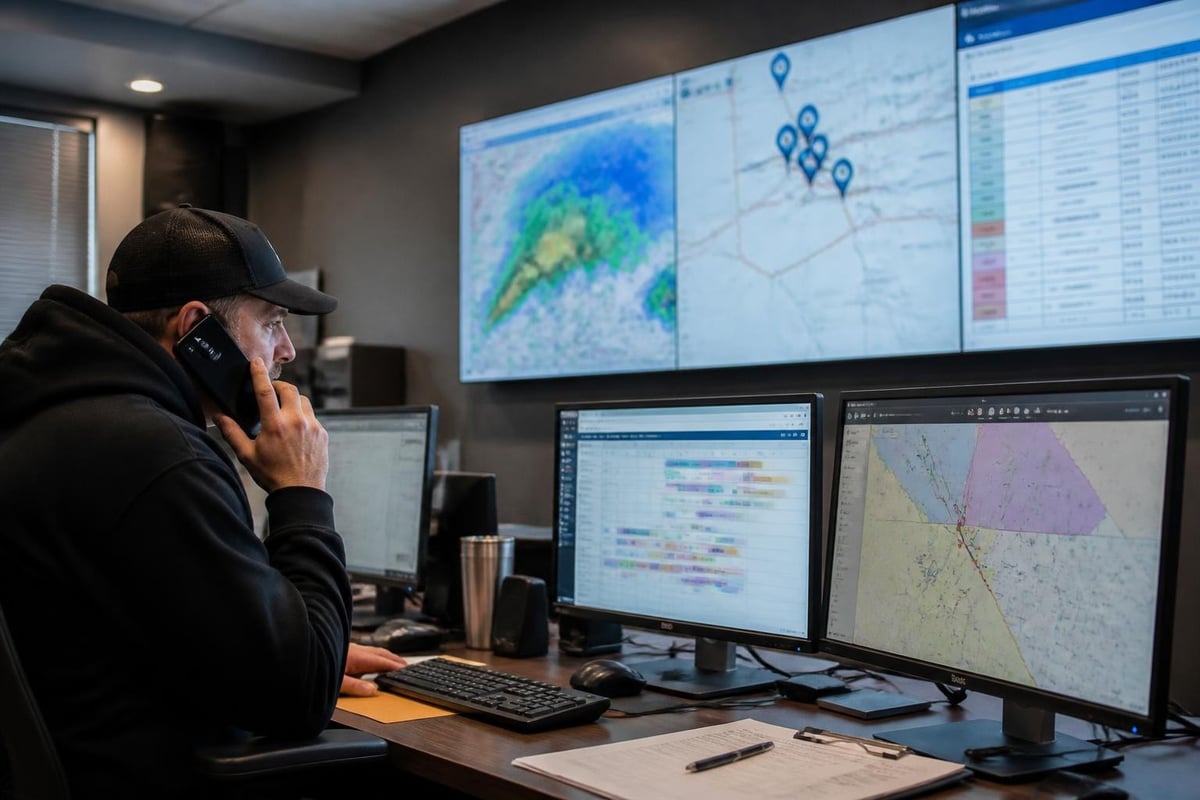
Increasingly, commercial snow removal operations integrate technology including GPS tracking systems, weather monitoring software, and digital documentation platforms. These tools enable real-time crew coordination, proof-of-service reporting, and data-driven decision making regarding treatment applications.
Contract Structures and Pricing Models
Commercial snow removal companies typically offer multiple contract arrangements, each presenting distinct advantages depending on client needs and risk tolerance. Understanding these structures proves essential when negotiating service agreements.
Per-Push Pricing
This straightforward model charges clients each time service occurs. Rates vary based on snowfall amounts, with trigger depths specified contractually. Per-push arrangements benefit properties in areas with inconsistent snowfall patterns, as clients pay only for actual services rendered. However, this model creates budget unpredictability during severe winters.
Seasonal Contracts
Seasonal agreements establish fixed pricing for unlimited service throughout winter months. These contracts transfer weather risk to the service provider while offering clients budget certainty. Commercial snow removal companies carefully price seasonal agreements based on historical snowfall data, property characteristics, and required service levels.
Typical Seasonal Contract Components:
- Defined service area boundaries and priorities
- Trigger depths initiating plowing operations
- Response time guarantees from snowfall start
- De-icing material application protocols
- Documentation and reporting requirements
- Equipment backup provisions
Hourly and Hybrid Models
Some commercial snow removal companies offer hourly billing for smaller properties or supplemental services. Hybrid contracts combine seasonal base fees with per-push charges exceeding specified event counts, balancing predictability with fairness during unusual weather years.
Understanding different contract types helps property managers select arrangements aligning with their operational priorities and financial planning approaches.
Selecting the Right Commercial Provider
Choosing among commercial snow removal companies requires systematic evaluation across multiple criteria. The selection directly impacts winter operational continuity, liability exposure, and budget management.
Experience and Track Record
Longevity within the commercial sector indicates operational stability and accumulated expertise. Companies serving commercial clients for decades understand the unique pressures these properties face. They've refined response protocols, equipment maintenance schedules, and crew management systems through years of real-world application.
Request references from properties similar to yours in size, complexity, and usage patterns. Direct feedback from current clients reveals service consistency, communication quality, and problem-resolution effectiveness.

Insurance and Liability Coverage
Professional commercial snow removal companies maintain substantial insurance portfolios protecting both their operations and client interests. Verify general liability coverage at minimum $2 million limits, workers' compensation insurance, and commercial auto policies covering the entire equipment fleet.
Request certificates of insurance naming your property specifically. This documentation proves coverage exists and often satisfies property insurance carrier requirements regarding contracted winter maintenance.
Equipment Capacity and Redundancy
Assess whether prospective providers maintain equipment sufficient for your property scale. A company adequately serving a 50,000-square-foot parking lot may lack resources for 500,000-square-foot industrial parks. Equipment redundancy ensures backup availability when primary machinery experiences mechanical issues during critical storms.
Operational Best Practices and Property Preparation
Successful commercial snow removal requires collaboration between service providers and property managers. Advance preparation significantly enhances efficiency while reducing damage risks and service costs.
Property managers should prepare commercial properties for snow removal by clearly marking curbs, landscaping features, and underground utilities. Reflective markers prevent plow damage to expensive infrastructure elements while enabling crews to work safely during low-visibility conditions.
Pre-Season Preparation Checklist:
- Mark all parking lot curbs, islands, and landscape beds
- Identify and flag fire hydrants, valve boxes, and utility access points
- Document existing pavement damage to prevent contractor liability disputes
- Designate snow storage areas away from drainage systems
- Establish communication protocols for service requests and updates
- Review and update emergency contact lists
Common Mistakes and How to Avoid Them
Commercial snow removal safety suffers when property managers delay clearing operations until accumulation becomes severe. This approach increases accident risks, clearing difficulty, and potential ice formation. Professional commercial snow removal companies recommend pre-storm treatments and proactive clearing when snowfall begins rather than waiting for completion.
Another frequent error involves inadequate snow storage planning. Properties with limited stockpile space require hauling services as winter progresses. Neglecting this reality creates accessibility problems and drainage issues when melting occurs.
| Common Mistake | Consequence | Prevention Strategy |
|---|---|---|
| Delayed service initiation | Compacted snow, ice formation | Clear at 2-inch triggers |
| Blocked designated snow piles | Drainage problems, repeat plowing | Plan adequate storage areas |
| Unclear property boundaries | Incomplete clearing, disputes | Mark service areas clearly |
| Poor contractor communication | Missed service needs | Establish 24/7 contact protocols |
Service Level Expectations and Performance Monitoring
Commercial snow removal companies should establish clear service level agreements defining performance expectations. These specifications create accountability while giving property managers objective assessment criteria.
Response time guarantees represent critical SLA components. Professional providers commit to beginning clearing operations within specified timeframes from snowfall start or notification. Two-hour response windows suit most commercial properties, though high-priority facilities may require 30-60 minute commitments.
Documentation and Reporting
Advanced commercial snow removal companies provide detailed service documentation including timestamps, material application rates, photographic evidence, and crew notes. This information serves multiple purposes from billing verification to liability defense in slip-and-fall claims.
Digital platforms enable real-time service tracking where property managers monitor crew locations, service completion percentages, and estimated finish times. This transparency builds trust while enabling coordination with facility operations.
Key Performance Indicators:
- Average response time from trigger event
- Complete clearing duration for specified areas
- De-icing material application consistency
- Property damage incidents per season
- Customer satisfaction scores
- Contract obligation fulfillment percentage
Regional Considerations for Denver-Area Properties
Properties throughout the Denver Metro area face unique winter challenges requiring specialized commercial snow removal expertise. The region experiences variable snow patterns with frequent temperature fluctuations causing rapid freeze-thaw cycles. This creates ice management challenges distinct from consistent cold-weather regions.
Commercial snow removal companies serving Denver must understand microclimate variations across the metro area. Properties at higher elevations or exposed locations require different approaches than those in protected valley positions. Local expertise accumulated over decades provides invaluable insights regarding optimal treatment timing and technique selection.
The Denver snow removal market includes numerous providers, though significant capability differences exist between companies. Established firms with comprehensive equipment fleets and trained crews deliver reliability that newer or smaller operators struggle matching during major storm events.
Weather Monitoring and Proactive Planning
Professional commercial snow removal companies integrate sophisticated weather monitoring systems tracking multiple data sources. These platforms provide precise snowfall predictions, temperature forecasts, and precipitation timing enabling proactive crew deployment and material pre-positioning.
For Denver-area properties, this capability proves especially valuable given the region's unpredictable weather patterns. Storms develop rapidly along the Front Range, requiring service providers to mobilize quickly based on evolving forecasts rather than waiting for visible accumulation.
Cost Factors and Budget Planning
Understanding cost drivers helps property managers develop realistic budgets and evaluate competitive proposals from commercial snow removal companies. Multiple variables influence pricing beyond simple property square footage.
Primary Cost Determinants:
- Property size and configuration affecting clearing time requirements
- Service frequency expectations and trigger depth specifications
- Priority level and response time guarantees demanded by operations
- De-icing material quantities based on property exposure and traffic
- Snow storage availability determining hauling requirement frequency
- Geographic location relative to provider's operational base
Seasonal contract pricing for commercial properties typically ranges from $0.50 to $2.00 per square foot annually depending on service scope and market conditions. Per-push services cost $100-$300 minimum for small properties, scaling upward based on size and snow depth.
Property managers should request detailed proposals breaking costs into components. This transparency enables meaningful comparison between commercial snow removal companies while revealing potential hidden charges or service limitations.
Value Beyond Price Alone
The lowest-cost provider rarely delivers optimal value when considering total operational impact. Service reliability, equipment quality, and organizational stability justify premium pricing for established commercial snow removal companies. A missed clearing event costing thousands in lost business revenue and potential litigation far exceeds seasonal savings from budget providers.
Evaluate proposals holistically, weighing response guarantees, insurance coverage, equipment redundancy, and track record alongside pricing. Long-term partnerships with capable providers deliver superior results compared to annual bid cycling prioritizing only cost reduction.
Industry Trends and Future Developments
The commercial snow removal sector continues evolving through technology adoption, equipment innovation, and changing customer expectations. Snowplow industry statistics indicate growing interest in electric equipment, autonomous operation capabilities, and data analytics platforms improving operational efficiency.
Commercial snow removal companies increasingly leverage liquid de-icing products delivering superior performance at lower environmental impact compared to traditional rock salt. These materials work effectively at colder temperatures while reducing concrete damage and vegetation harm. Advanced companies maintain diverse product portfolios selecting optimal solutions for specific conditions.
GPS tracking and route optimization software enable commercial providers to manage larger property portfolios efficiently. These systems automatically assign crews to properties based on location, priority level, and real-time conditions. The resulting efficiency improvements benefit clients through reduced response times and stabilized pricing.
Sustainability and Environmental Considerations
Environmental stewardship concerns influence commercial snow removal practices as property owners seek reduced ecological impact. Professional companies adopt precision application techniques minimizing chloride discharge while maintaining safety standards. This includes pre-treatment strategies, proper calibration of spreading equipment, and strategic product selection.
Some commercial snow removal companies offer sustainability reporting documenting material usage, application rates, and environmental protection measures. This transparency supports corporate sustainability initiatives and demonstrates responsible winter maintenance practices.
Selecting the right commercial snow removal partner significantly impacts business continuity, safety outcomes, and winter operational budgets throughout the challenging months ahead. Successful partnerships combine thorough provider evaluation, clear service agreements, collaborative property preparation, and ongoing performance monitoring. Denver Snow Removals brings over 47 years of commercial snow removal expertise to Denver Metro properties, delivering reliable 24/7 emergency services backed by professional equipment and trained crews. Contact Denver Snow Removals today to discuss comprehensive winter maintenance solutions protecting your commercial property throughout the 2026-2027 winter season.