
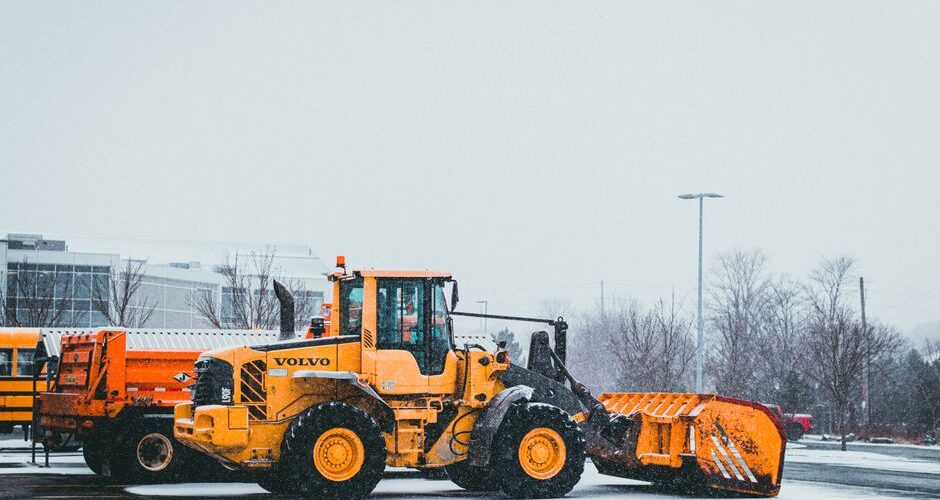
Commercial parking lot snow plowing in Denver runs $250 to $800 per push in 2026, while residential driveway clearing costs $65 to $150 per push, with sidewalks priced separately. These ranges shift based on lot square footage, driveway length, trigger depth, and whether you choose per-push or seasonal billing. This guide breaks down the real numbers by property type and contract structure. The pricing comes from Jesse, owner of Denver Snow Removals, a local, family-owned operation with W-2 crews, GPS tracking, and photo proof on every push, not a national cost aggregator.
Table of Contents
- Why Is Snow Removal Pricing Different for Commercial Parking Lots vs. Residential Driveways in Denver?
- How Much Does Commercial Parking Lot Snow Plowing Cost in Denver in 2026?
- How Much Does Residential Driveway and Sidewalk Snow Removal Cost in Denver in 2026?
- What Do Cheap Snow Removal Bids in Denver Hide?
- Why Do GPS Tracking and Photo Proof Matter for Both Commercial and Residential Snow Removal?
- How Does Denver Snow Removals Price Commercial Lots and Residential Driveways?
- What Should You Ask Before Hiring a Snow Removal Company in Denver?
- Key Takeaways
- References
Why Is Snow Removal Pricing Different for Commercial Parking Lots vs. Residential Driveways in Denver?
Commercial parking lot plowing costs more than residential driveway work because the job is fundamentally different in scale, equipment, and risk. A commercial lot requires trucks with plows and often skid steers to clear thousands of square feet efficiently. A residential driveway is typically a single plow pass with a standard truck. According to Denver Snow Removals, commercial plowing in Denver runs $125 to $800 per push depending on square footage, while residential driveways sit in a much narrower band.
Liability exposure is the second major cost driver. Commercial property owners face slip-and-fall claims, tenant complaints, and insurer requirements that residential homeowners rarely encounter. Commercial snow removal contracts carry higher insurance minimums, and that coverage is priced into every push. Residential work has lower liability thresholds, which keeps per-visit pricing more modest.

Contract structure also separates the two markets. Commercial accounts lean on per-push and seasonal agreements with defined accumulation triggers, typically 2 inches. Residential work is often per-visit or a bundled seasonal rate with a 3 to 4 inch trigger. According to Douglas County Snow Removal, common triggers are 2 inches for higher-cost commercial service, 3 to 4 inches for standard residential, and 6+ inches for lower-cost agreements.
The 2026 market context adds another layer. The 2025-2026 winter season has seen modest price increases of 5 to 8 percent over the prior year in the Denver metro area, according to Douglas County Snow Removal. Denver averages 10 to 15 significant snow events per year, which means pricing must account for unpredictable call volume across a compressed season.
Commercial work also carries 24/7 overnight obligations that residential pricing rarely bundles the same way. A business lot must be clear before employees arrive at 6 a.m., which means crews run through the night during storms. De-icing is typically included in commercial contracts. Residential customers usually pay separately for ice melt application or have it quoted as an add-on.
How Much Does Commercial Parking Lot Snow Plowing Cost in Denver in 2026?
Commercial parking lot snow plowing in Denver costs $250 to $800 per push in 2026, with the range determined primarily by square footage. Small properties under 10,000 square feet run $125 to $350 per push. Medium properties between 10,000 and 50,000 square feet run $300 to $800 per push, according to Denver Snow Removals.
Per-push pricing is the most common structure for commercial lots because it aligns cost with actual snowfall. Seasonal contracts are also available and typically use a 2-inch trigger, meaning the crew deploys whenever accumulation reaches 2 inches. A higher trigger, such as 3 to 4 inches, lowers the per-visit cost because the crew deploys less often. According to Douglas County Snow Removal, a 2-inch trigger costs more per visit than a 6+ inch trigger for this reason.

Commercial pricing should include more than just plowing. De-icing is standard in most commercial agreements because packed snow and ice create immediate liability for business owners. Overnight and 24/7 response is also expected, since commercial properties must be accessible before business hours. Liability coverage is built into the rate, and photo proof documentation should be included so property managers have a service record for tenants and insurers.
Hourly rates are an alternative to per-push pricing for unusual properties or one-off jobs. Commercial hourly snow removal rates in Denver usually run $90 to $175 per hour, according to Denver Snow Removals. Salting costs run $150 to $350 per acre, according to HomeGuide. One acre requires 500 to 1,000 pounds of salt, and bulk snow salt costs $100 to $200 per ton.
Photo proof protects business owners in a specific way. When a slip-and-fall claim lands, the property owner needs documentation that the lot was cleared at a specific time and to a specific standard. Time-stamped photos show what was done and when. Without that record, a claim becomes a word-against-word dispute. Denver Snow Removals includes photo proof on every commercial push for exactly this reason.
How Much Does Residential Driveway and Sidewalk Snow Removal Cost in Denver in 2026?
Residential driveway snow removal in Denver costs $65 to $150 per push in 2026, with sidewalks and porches priced as add-ons. Most Denver homeowners pay between $45 and $160 per visit, with an average around $105, according to Denver Snow Removals. The national average is similar at $105 per visit, with most homeowners paying $45 to $160, according to Lawn Love.
Driveway size is the main variable. A standard 2-car driveway sits at the lower end of the range, typically $65 to $100 per push. Extended driveways of 100 feet or more run $85 to $150 per visit, according to Douglas County Snow Removal. Long driveways require more plow passes and more time, which pushes the rate up.
Denver's sidewalk rule makes sidewalk clearing a practical necessity, not an optional add-on. The City and County of Denver requires property owners to clear sidewalks within 24 hours after snow stops falling. Non-compliance can carry a $150 fine, according to Denver Snow Removals. Bundling driveway, sidewalk, and porch clearing into one service call is the most practical choice because it satisfies the city requirement and keeps the property walkable in a single visit.
Residential customers can choose per-push or seasonal billing. The average seasonal contract costs about $700, with most homeowners paying $300 to $1,000, according to Lawn Love. In a heavy winter with 18 events, a per-visit rate of $50 costs $900 versus a $500 seasonal contract, saving $400, according to Douglas County Snow Removal. Seasonal pricing wins in heavy winters, while per-push wins in light ones.
Ice melt application should be included or quoted clearly. Salt applications typically cost $20 to $50 per visit, according to Lawn Love. GPS tracking plus time-stamped photo proof confirms the walk was actually cleared within the 24-hour window, which matters if a fine dispute or liability question ever comes up.
What Do Cheap Snow Removal Bids in Denver Hide?
Cheap snow removal bids in Denver typically hide four things: missing insurance, no backup trucks, subcontracted crews instead of W-2 employees, and no photo proof of service. A low number looks good until a storm hits and the service fails. According to Denver Snow Removals, these are the most common red flags behind unusually low quotes.
The real cost of an uninsured operator lands on the property owner. If a plow damages a curb, a car, or a pedestrian is injured, the claim goes to whoever owns the property when the operator lacks coverage. Commercial properties face the highest exposure, but residential homeowners can also be pulled into liability disputes. Insurance is not a line item to skip.
The backup-truck problem is specific and predictable. A one-truck operator disappears during a 12-inch storm because the truck breaks down or the operator gets overwhelmed. Your lot or driveway waits while the snow packs down and turns to ice. According to Douglas County Snow Removal, Denver sees 10 to 15 significant snow events per year, which means breakdowns are a question of when, not if.
Subcontracted crews produce inconsistent quality and no accountability trail. A subcontractor has no direct relationship with the property owner and no incentive to protect the company's reputation. W-2 crews are trained, supervised, and held to a standard. The difference shows up in missed corners, half-cleared sidewalks, and no one answering the phone when a problem arises.
Photo proof plus GPS is the accountability standard that cheap bids almost never include. A bid that cannot show when the crew arrived and what was cleared is a bid that cannot prove the work happened. Denver Snow Removals includes GPS tracking and time-stamped photo proof on every push, which is why the pricing reflects the actual cost of doing the job right.
Why Do GPS Tracking and Photo Proof Matter for Both Commercial and Residential Snow Removal?
GPS tracking and time-stamped photos document three things: when the crew arrived, what was cleared, and how deep the snow was at service time. That record turns snow removal from an unverifiable claim into a documented service event. According to Denver Snow Removals, photo proof is included on every push for both commercial and residential accounts.
For commercial properties, photo proof supports liability defense. If a slip-and-fall claim is filed, the property owner can show the lot was cleared at a specific time and to a specific standard. That documentation verifies contract fulfillment and gives property managers a service record for tenants and insurers. Without it, a claim becomes a dispute over what actually happened.
For residential properties, photo proof confirms the sidewalk was cleared within Denver's 24-hour window. The City and County of Denver can issue a $150 fine for non-compliance, according to Denver Snow Removals. A time-stamped photo shows the sidewalk was done, the porch was cleared, and the walk was treated, not just the driveway plowed.
Documentation also settles billing disputes before they start. A customer who questions a charge can see exactly what the photos show. The service record matches the invoice. That transparency is rare in the snow removal industry and is a direct reason why GPS-tracked, photo-documented service costs more than a cash quote from an unverified operator.
How Does Denver Snow Removals Price Commercial Lots and Residential Driveways?
Denver Snow Removals prices commercial parking lot plowing and residential driveway, sidewalk, and porch clearing per push or on a seasonal basis, quoted per property. Commercial lots are priced by square footage. Residential driveways are priced by length, with sidewalk and porch footage added to the quote. A free bid is available at denversnowremovals.com.
The service structure uses a 2-inch trigger standard for commercial accounts, meaning crews deploy when accumulation reaches 2 inches. De-icing is included in commercial pricing. Overnight and 24/7 response is standard for commercial lots, since businesses need clear access before opening hours. Residential accounts include driveway plowing with sidewalk and porch clearing as bundled options.
Every push is completed by W-2 crews, not subcontractors. GPS tracking records when the crew arrived and how long the job took. Time-stamped photo proof is captured on every push and provided to the customer. That documentation protects commercial owners from liability claims and proves residential sidewalks were cleared within Denver's 24-hour rule.
Denver Snow Removals is a local, family-owned operation, not a national plow-chasing dispatch. The pricing reflects Denver's snow patterns, Denver's sidewalk rules, and the actual cost of running reliable equipment with trained crews. Straight talk from a Denver operator means the quote explains what is included and what is not, with no hidden line items.
What Should You Ask Before Hiring a Snow Removal Company in Denver?
Ask these seven questions before hiring a snow removal company in Denver. The answers separate reliable operators from cheap bids that fail mid-storm.
-
Are you insured? A good answer names the coverage amount and provides a certificate. A red flag is hesitation or a vague "we're covered."
-
Are your crews W-2 employees or subcontractors? W-2 crews are trained and supervised. Subcontractors create accountability gaps and inconsistent quality.
-
How many backup trucks do you run? A good answer names a specific number. A one-truck operation disappears when the truck breaks down during a 12-inch storm.
-
Do you provide GPS tracking and time-stamped photo proof? A good answer is yes, on every push. No photo proof means no way to verify the work happened.
-
What is your trigger depth? A 2-inch trigger costs more per visit but means the property is cleared before snow packs down. A 6+ inch trigger is cheaper but leaves snow sitting longer.
-
Is de-icing included? Commercial contracts should include it. Residential quotes should state it clearly as included or as an add-on.
-
What is your response time during a major storm? Denver has 16 listed snow pros with a median response time of 17 minutes, according to Denver Snow Removals. A good answer names a specific window and explains how crews are staged before storms.
A bid that can answer all seven questions is priced where it is for a reason. The cost reflects insurance, equipment redundancy, trained labor, and documentation. A bid that cannot answer them is cheaper because something is missing, and that missing thing usually shows up during the first big storm.
Key Takeaways
- Commercial parking lot plowing in Denver runs $250 to $800 per push in 2026, with small lots under 10,000 sq ft at $125 to $350 and medium lots at $300 to $800.
- Residential driveway plowing in Denver runs $65 to $150 per push, with sidewalks and porches priced as add-ons.
- Denver's sidewalk rule requires clearing within 24 hours, and non-compliance can carry a $150 fine.
- A 2-inch trigger costs more per visit than a 3 to 4 inch or 6+ inch trigger, but it means the property is cleared before snow packs down.
- Cheap bids typically hide missing insurance, no backup trucks, subcontracted crews, and no photo proof of service.
- GPS tracking plus time-stamped photos protect commercial owners from liability claims and prove residential sidewalks were cleared on time.
- Denver Snow Removals quotes commercial lots and residential driveways per push or seasonal, with W-2 crews, de-icing included, and photo proof on every job.
References
- How Much Does Snow Removal Cost in Denver in 2026? — Denver Snow Removals
- How Much Does Snow Removal Cost in 2026? — Lawn Love
- 2026 Snow Removal Prices | Plowing Rates, Services & Calculator — HomeGuide, 2024-12-17
- Snow Removal Cost Guide for Douglas County | 2026 Pricing — Douglas County Snow Removal