Most dealerships do best with a seasonal commercial snow contract, backed by a hybrid of limited in-house tactics for show lanes and customer entrances. This combination clears main drive aisles fastest, keeps liability exposure down, and protects inventory access during peak shopping hours. The single next step is simple: request a seasonal contract estimate or confirm a storm-response service level agreement with your current vendor before the first flake falls.
TL;DR:
- Seasonal contracts with clear snow trigger and response windows help dealerships avoid reacting piecemeal to storms and protect operational flow.
- Use large equipment like truck plows for open lanes and turbines or blowers for heavy snowfall on large lots, while smaller tools suit tight spaces and display vehicles.
- Conduct pre-storm mapping, plan storm-day clearing priorities, and manage snow piles post-storm to maintain visibility and safety without disrupting sales.
- Verify vendors have dealership experience, are insured, and provide documented, reliable storm response, avoiding vague SLAs and unproven subcontractors.
- Regularly document inspections and safety measures, including de-icing and signage, to reduce liability and meet OSHA safety guidelines during winter storms.
Table of Contents
- What dealership snow removal needs to accomplish
- Equipment and methods that fit a dealership lot
- Safety and compliance obligations dealerships cannot skip
- Budgeting and service models for a dealership contract
- Choosing and contracting a snow removal vendor
- Pre-season, storm-day, and post-storm checklist
- Why a seasonal contract changes the math for dealerships
- How Denver Snow Removal fits into your winter plan
- Sources
- FAQ
What dealership snow removal needs to accomplish
A dealership lot is not a parking garage or a warehouse yard. Customers need to walk rows of inventory, sales staff need clear sightlines to vehicles, and service drive-throughs cannot sit blocked after a storm. Efficient snow removal protects three things at once: safety, access, and the showroom experience.
Set measurable goals rather than vague ones. A reasonable target is clearing main aisles and customer parking within an appropriate timeframe after snowfall stops, keeping sidewalks and entrances free of ice buildup, and preventing melted snow from turning showroom floors into a slip hazard.
- Time-to-clear for main drive lanes and customer parking after snow stops.
- Sidewalk and entrance clearance to prevent slip-and-fall incidents.
- Interior floor management as melting snow tracks in on customer and staff shoes.
Contracting out tends to make sense for large lots, overnight storms, and dealerships without a maintenance crew. In-house tactics work better for small touch-up jobs, like clearing snow off display vehicles between vendor visits.
Equipment and methods that fit a dealership lot
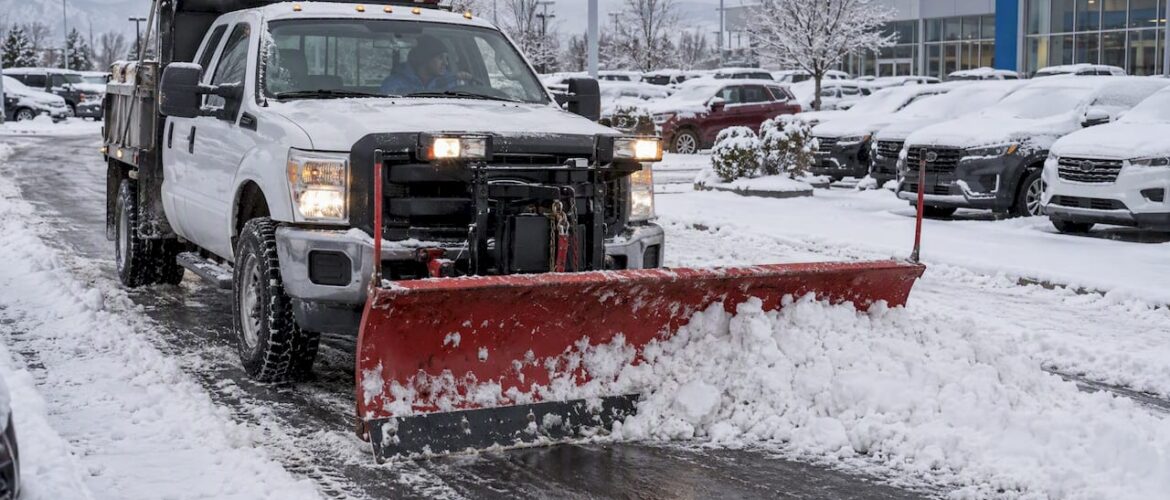
The right tool depends on lot size, snowfall volume, and how fast you need access restored. Truck-mounted plows handle large asphalt lots efficiently in light to moderate snow, while skid steers and loaders with buckets or pushers are better suited to tight rows between display vehicles where a full-size plow truck cannot maneuver safely.
For heavy, repeated snowfall, a commercial snow blower or turbine can outperform multiple plow passes. Manufacturer product pages show that higher-capacity blowers can be more efficient per horsepower on large commercial lots, and dealerships commonly combine plows for main lanes with turbines or loaders for pile management depending on lot size and snowfall volume. These units need staging space and trained operators to run safely, so they fit larger properties better than compact lots.
Walk-behind blowers and shovels still have a place for show lanes, customer entrances, and the areas between parked inventory where powered equipment risks scraping paint.
De-icing rounds out the equipment picture. Liquid brine applied before a storm reduces how tightly ice bonds to pavement, which lowers salt use and rework later. Rock salt remains the standard post-storm treatment, while liquid de-icers work faster in marginal temperatures but cost more per application.
- Truck plows for open lanes, skid steers for tight rows between vehicles.
- Commercial blowers or turbines for heavy, repeated snowfall on large lots.
- Brine pre-treatment before a storm, rock salt or liquid de-icer after.
When snow volume exceeds what a lot can absorb in piles, hauling becomes necessary. Ask any vendor where hauled snow goes, how they document load counts, and whether hauling fees are included in a seasonal rate or billed separately. For a deeper look at the equipment side, see this commercial snow equipment guide.
Pro Tip: Walk your lot before the season starts and mark curb lines and islands with stakes, since buried curbs are the most common cause of equipment damage during plowing.
Safety and compliance obligations dealerships cannot skip
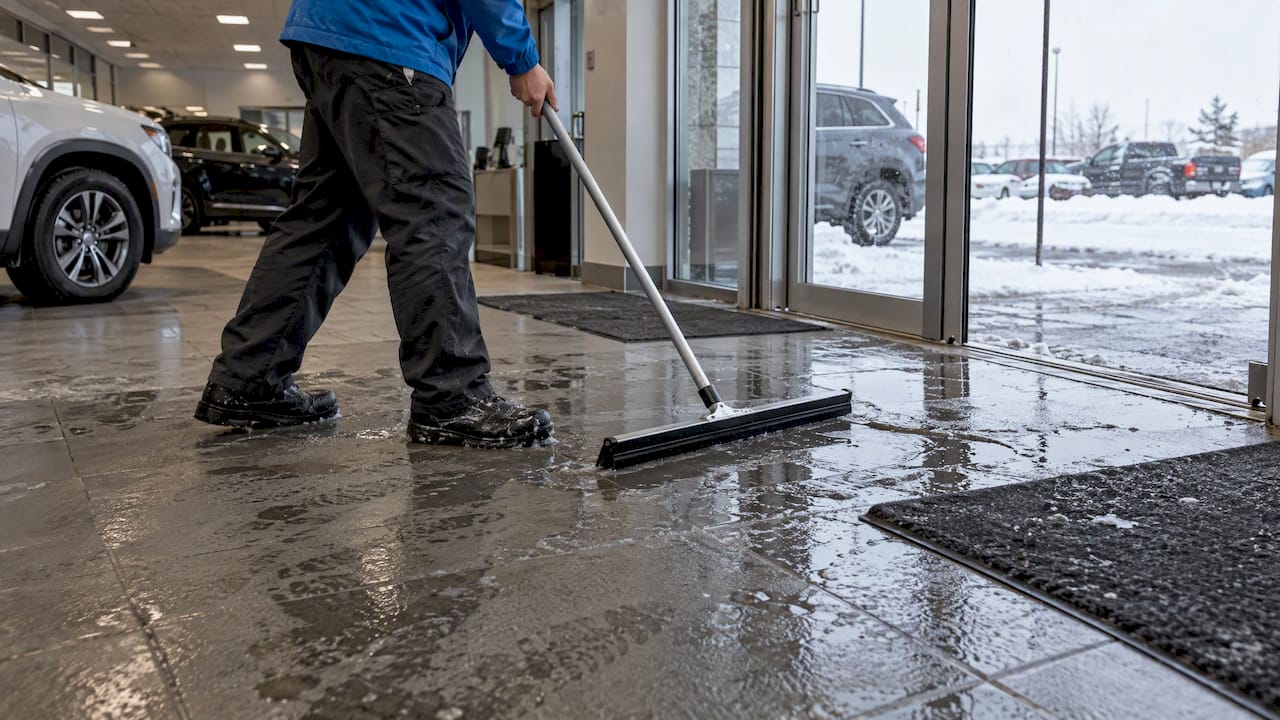
Snow removal is a workplace safety issue, not just a maintenance task. OSHA’s winter weather guidance directs employers to clear snow and ice from walking surfaces and spread deicer as quickly as possible after a storm to prevent slips and falls. That obligation extends indoors: OSHA’s interpretation of 29 CFR 1910.22(a)(2) covers wet floors caused by vehicles carrying melting snow into a building, which means showroom and service bay entrances often need housekeeping beyond the normal schedule during storms.
Rooftop snow removal carries its own risk. OSHA’s hazard bulletin notes that falls are the leading cause of fatalities during rooftop snow removal, and recommends avoiding roof access where possible, using fall protection when it is unavoidable, and inspecting the structure first. Powered equipment adds its own hazards: require lockout procedures for clearing jams, safe refueling practices away from running engines, and proper guarding on blower intakes.
Shoveling is more physically demanding than it looks. Shoveling guidance from OSHA recommends pushing snow rather than lifting it, taking frequent warm breaks, and rotating workers to avoid cold stress and cardiovascular strain.
- Clear walking surfaces and apply deicer promptly after every storm.
- Avoid rooftop snow removal; when it is unavoidable, require fall protection and an inspection first.
- Document post-storm inspections and post wet-floor signage to limit liability.
Budgeting and service models for a dealership contract
Snow removal vendors typically price work one of a few ways: a flat seasonal contract covering the whole winter, per-storm pricing triggered by a snowfall threshold, hourly or time-and-materials billing for ad hoc work, and separate hauling fees when piles need to leave the property.
Several factors drive the final number: lot size, average local snowfall, how fast you need the lot cleared, how often de-icing is applied, and whether hauling is part of the scope. For a breakdown of how these pricing models typically work, this commercial snow plowing guide walks through the common contract structures.
Hidden costs matter as much as the quoted rate. A slip-and-fall claim, a closed section of lot during a weekend sales event, or an aging plow truck breaking down mid-storm can cost more than a season of service.
- Seasonal flat rate, per-storm, hourly, and separate hauling fees are the common pricing structures.
- Lot size, snowfall volume, response time, and de-icing frequency drive the quote.
- Slip-and-fall claims and lost sales from blocked lots are real costs that rarely show up in a bid.
When comparing quotes, request the same trigger inches, the same response window, and the same documentation requirements from every bidder, or the numbers will not be comparable.
Choosing and contracting a snow removal vendor
A vendor evaluation should go beyond price. Look for documented experience with commercial or dealership-scale lots, a clear storm-response SLA, proof of insurance, the equipment types they actually run, and references you can call.
- Confirm the vendor has worked dealership or similar commercial lots before, not just residential driveways.
- Require a written SLA stating the snowfall trigger, response window, and priority order for clearing.
- Verify insurance coverage and ask for proof of operator training on the equipment listed in the contract.
- Require documentation, photos or time-stamped logs after every storm, plus indemnity language covering slip-and-fall incidents.
- Ask what backup plan exists if their primary equipment fails mid-storm.
During the interview, ask direct questions: how many dealership or commercial accounts do they currently service, what happens if two storms hit back to back, and who handles hauling when piles outgrow the lot. For contract language examples, see this guide for property managers.
Pro Tip: A vague SLA like “we’ll get to you as soon as we can” is a red flag. Insist on a specific trigger depth and a specific response window in writing.
Watch for uninsured subcontracting and vendors with no documented backup equipment. Both leave you exposed exactly when you need coverage most.
Pre-season, storm-day, and post-storm checklist
Build a standard operating procedure around three phases.
- Pre-season: Map lot priorities, mark curbs and islands, confirm your contract or SLA in writing, and pre-treat vulnerable walkways before the first storm.
- Storm-day: Clear main drive lanes and customer entrances first, maintain communication with your vendor or crew, document conditions with photos, and check for ice buildup near entrances and service bays.
- Post-storm: Manage snow piles so they do not block sightlines to inventory, run a second pass if drifting continues, reapply de-icer where needed, and verify the vendor’s invoice against the SLA terms.
Keep a short staffing and equipment checklist on hand: enough trained operators for your lot size, traction footwear for anyone walking exterior surfaces, and a stocked supply of ice melt for high-traffic zones. For a fuller version of this checklist, see the commercial property snow guide.
Why a seasonal contract changes the math for dealerships
A dealership that handles snow removal piecemeal usually ends up reacting to storms instead of controlling the outcome. The conventional advice to “just call someone when it snows” ignores how quickly a blocked lot translates into lost foot traffic on a dealership’s busiest weekend of the month. A written seasonal contract with a clear trigger and response window turns snow from a scramble into a scheduled operational task, which is a better use of a sales team’s time than shoveling a customer entrance at 7 a.m.
— Jesse
How Denver Snow Removal fits into your winter plan
A typical snow removal company offers Seasonal Snow Contracts (Sept-May) alongside 24 Hour Emergency Commercial Plowing, Commercial Parking Lot Plowing, Snow Hauling & Snow Pile Removal, and Ice Management and De-Icing, the same services this guide walks through. Matching a contract to your lot starts with a few details: a rough lot map, your average seasonal snowfall, and the response time your sales floor needs. Estimates may be available, and customers can often request documentation after every storm as part of a service agreement. Start with a commercial parking lot snow removal estimate or visit the main service page to discuss a seasonal plan before the season’s first storm.
Sources
- Winter Weather – Introduction | Occupational Safety and Health Administration
- Snow-Covered-Dealership | Buffalo Turbine
FAQ
What is the average cost for snow removal?
Snow removal costs vary widely based on lot size, snowfall volume, and whether you choose a seasonal contract, per-storm pricing, or hourly billing. Rather than a single figure, dealerships should request comparable quotes using the same trigger depth and response window from each vendor, as detailed in this pricing guide.
What do car dealerships use to remove snow from cars?
Dealerships typically use walk-behind brushes, soft-bristle brooms, or low-pressure blowers on display vehicles to avoid scratching paint, reserving plows and skid steers for the pavement around them. Powered equipment is kept away from vehicle surfaces and used only for lot clearing, not the cars themselves.
What is the quickest way to get snow off your car?
A soft snow brush or broom used top-down, followed by a plastic ice scraper for windshields, clears a vehicle fastest without risking paint damage. Avoid metal shovels or stiff brushes directly on body panels, since both can scratch the finish.
Is it illegal to not wipe snow off your car?
Rules on this vary by state and municipality, so dealerships should check local requirements rather than assume a universal standard. As a general safety matter, OSHA’s winter weather guidance recommends clearing snow and ice promptly from surfaces and equipment to prevent hazards, a principle that applies to vehicle lots as much as walkways.