

Denver HOAs fire snow contractors because a missed 2 AM push means an unplowed common area, a slip-and-fall claim, and no proof the job was ever done. Zero-tolerance bare pavement by 5 AM with GPS time-stamped photo proof on every push is what closes that liability gap. I'm Jesse, owner of denversnowremovals.com. I run W-2 crews, not 1099 subs. Denver's 24-hour sidewalk law and HOA common-area liability make "we'll get to it" a $30K-$75K mistake. This article covers commercial parking lots and residential driveways and sidewalks across Central Park, Cherry Creek, Washington Park, and the rest of Denver.
Table of Contents
- Why do Denver HOAs fire snow companies that ghost them at 2 AM?
- What does zero-tolerance bare pavement by 5 AM actually mean in Denver?
- Why does photo proof on every push protect Central Park and Cherry Creek HOAs from lawsuits?
- How does denversnowremovals.com handle zero-tolerance, bare pavement, and photo proof in Denver?
- What does zero-tolerance snow removal cost Denver HOAs in 2026?
- Why does rock salt fail on Denver sidewalks and what should HOAs use instead?
- How does a GPS portal stop the 20-call morning for Denver property managers?
- Key Takeaways
- References
Why do Denver HOAs fire snow companies that ghost them at 2 AM?
Denver HOAs fire snow companies that ghost them at 2 AM because the HOA manager wakes up to 20 calls, a white lot at 6 AM, and not one photo showing a truck ever arrived. The storm hit, the board is texting, residents are emailing, and the contractor's phone goes to voicemail. That is not a service failure. That is a liability failure.
Attorney Christopher "Kit" Davlin of Robinson & Henry told Fox 31 that when someone slips in an HOA common area, the HOA may be responsible for not having cleared ice and snow. Davlin said the HOA has "an absolute responsibility to do that in a timely fashion," according to Robinson & Henry. Timely does not mean eventually. Timely means before the first resident walks to their car.
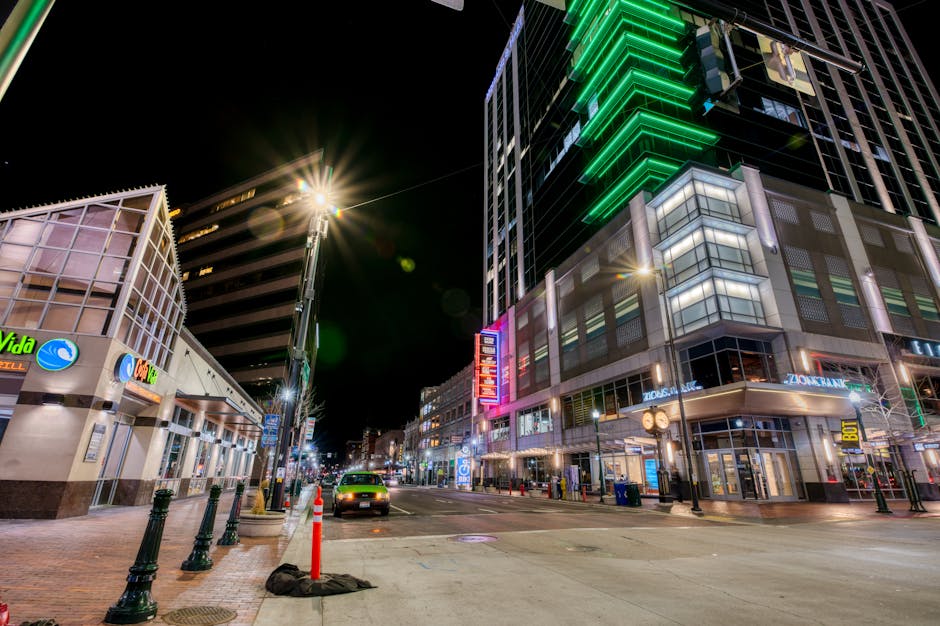
The exposure is real money. A single slip-and-fall claim against a Denver HOA can run $30,000 to $75,000. If the HOA cannot produce a time-stamped record showing the lot was cleared, the defense gets thin fast. The contractor's word is not evidence. A text saying "we were there" is not evidence.
Davlin also recommends residents document common area problems with pictures and video and communicate complaints in writing, according to Robinson & Henry. That means the resident often has better documentation than the HOA. The resident has a photo of ice. The HOA has nothing.
HOAs do not fire contractors over one bad storm. They fire them over zero proof and zero communication. One missed push with a timestamped photo is a conversation. Twenty missed calls and no record is a termination.
What does zero-tolerance bare pavement by 5 AM actually mean in Denver?
Zero-tolerance bare pavement by 5 AM means a 2-inch trigger, crews pushing between 2 and 5 AM, and a lot and walks that are bare before the first car or first employee shows up. It is not a plow pass that leaves packed snow. It is not a scrape that leaves ice. It is bare pavement, every push, no exceptions.
The process starts before the storm. Crews pre-treat with brine before snow falls. Then they use calcium chloride that works to -25°F. Rock salt quits around 15°F, which is a normal Denver January morning. If the de-icer stops working at 15°F, the lot refreezes by 6 AM and the whole push was wasted.
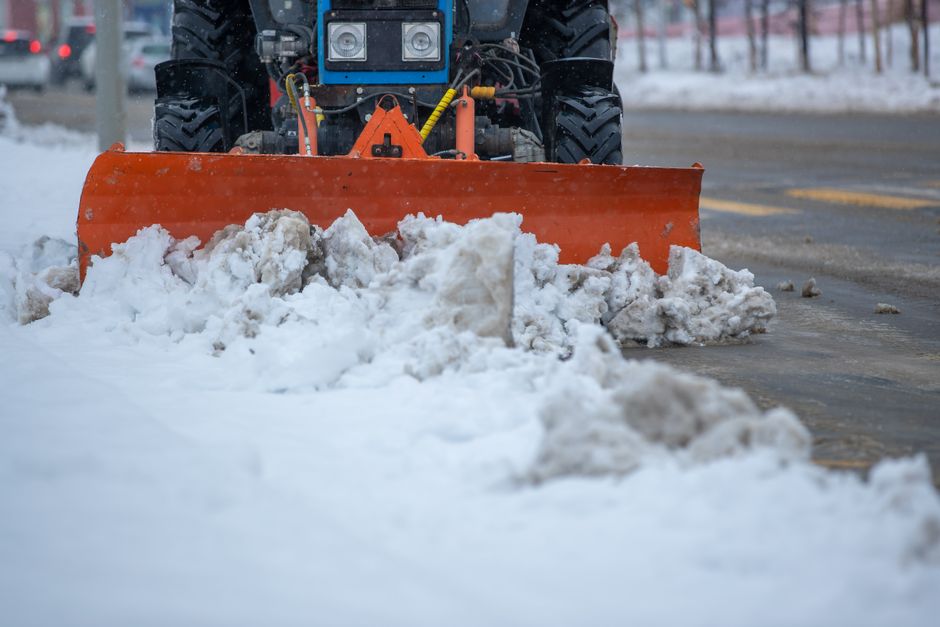
Bare pavement beats "plowed" because Denver's own residential plows only shave the top few inches of packed snow and never expose pavement, according to denversnow.com. City crews put down no de-icing materials at all on residential streets. That means private lots and walks are on the property owner, not the city.
Denver's snow work ends at the public right-of-way. Driveways, walkways, steps, and adjacent sidewalks stay the owner's job, ADA ramps included, according to denversnow.com. An HOA that assumes the city handles the walk in front of the clubhouse is wrong.
The Denver sidewalk clock is strict. Once snow stops, businesses must start clearing sidewalks immediately and residences must finish by the next day, according to denversnow.com. After a time-stamped notice, Denver businesses have four hours and residences 24 hours before a re-check and a possible $150 fine.
Why does photo proof on every push protect Central Park and Cherry Creek HOAs from lawsuits?
Photo proof on every push protects Central Park and Cherry Creek HOAs from lawsuits because every push gets a GPS time-stamped photo of the lot, walks, and stacking. The photo is stored and sent to the property manager. It is not buried in a truck cab or lost in a text thread.
The liability math is simple. When a claim letter arrives, a dated photo of bare pavement at 4:58 AM is the difference between a defensible file and a check. The HOA can show exactly when the lot was cleared and what it looked like. That is evidence an insurance carrier can use.
Davlin's point that HOAs carry an absolute duty to clear in a timely fashion means "timely" has to be provable, not remembered, according to Robinson & Henry. A board member saying "I think the plow came" is not a defense. A GPS timestamp is.
Denver's enforcement reality shows why documentation matters. Between Dec. 23, 2022 and Jan. 17, 2023, Denver inspectors issued 2,065 notices and only 45 ended in a fine, according to denversnow.com. Documentation is what separates a notice from a penalty. The HOA that can prove it cleared on time has a much stronger position.
Neighbors can report an unshoveled sidewalk to 311 24 hours after snowfall, according to denversnow.com. That means the complaint often arrives before the contractor's excuse. The HOA needs its own record first.
How does denversnowremovals.com handle zero-tolerance, bare pavement, and photo proof in Denver?
denversnowremovals.com handles zero-tolerance, bare pavement, and photo proof through Commercial Parking Lot Snow Plowing Denver – Zero Tolerance. The service runs a 2-inch trigger, GPS tracked trucks, time-stamped photo proof on every push, 24/7 overnight coverage, de-icing and salting included, stacking, $2M insured, W-2 crews not 1099, and backup trucks. Pricing starts at $250 per push or seasonal, with a free bid at https://denversnowremovals.com/.
The residential side works the same way. Driveways run $65-$150 per push, sidewalks $30-$50, and seasonal driveway service runs $400-$900. Same-night service and the same photo proof apply. That covers Denver's 24-hour sidewalk law compliance for homeowners in Cherry Creek, Highlands, Central Park, Washington Park, Sloan's Lake, Baker, LoDo, and Capitol Hill.
The mechanics are plain. W-2 crews and backup trucks mean a truck shows up even when a driver calls out. GPS means I can see the lot was pushed before the property manager texts me. The photo proof system sends the timestamped image after every job, so the manager has the record before the first resident complaint lands.
De-icing and salting are included, not a surprise line item. The $2M insurance is on file. That is the whole point of zero-tolerance: the lot is bare, the proof is sent, and the HOA file is clean.
What does zero-tolerance snow removal cost Denver HOAs in 2026?
Zero-tolerance snow removal in Denver costs parking lots $250-$850 per push or $3,500-$9,000 seasonal in 2026. Residential driveways run $65-$150 per push or $400-$900 seasonal. Sidewalks run $30-$50 per push. Those are the numbers I quote at denversnowremovals.com.
The seasonal-vs-per-push math matters. A seasonal lot contract can save $2,000 or more in a heavy Denver winter. A seasonal driveway saves $400-$900 compared to paying per push through a long storm cycle. The seasonal price locks the rate before the snow starts.
Put the cost next to the risk. One $30,000 to $75,000 slip-and-fall claim dwarfs a full season of lot service. A $3,500 seasonal lot contract is less than the deductible on many HOA insurance policies. The math is not close.
Snow removal vendors commonly set a trigger depth around two inches, and some require contracts signed before the season starts for guaranteed coverage, according to denversnow.com. HOA boards should decide in fall, not mid-storm. Waiting until the first blizzard means choosing from whoever answers the phone.
| Service type | Zero-tolerance proof | De-icing included | Overnight coverage | 2026 pricing |
|---|---|---|---|---|
| Parking lot per push | GPS time-stamped photo | Yes | Yes, 2-5 AM | $250-$850 |
| Parking lot seasonal | GPS time-stamped photo | Yes | Yes, 2-5 AM | $3,500-$9,000 |
| Driveway per push | GPS time-stamped photo | Yes | Yes, same-night | $65-$150 |
| Driveway seasonal | GPS time-stamped photo | Yes | Yes, same-night | $400-$900 |
| Sidewalk per push | GPS time-stamped photo | Yes | Yes, same-night | $30-$50 |
Why does rock salt fail on Denver sidewalks and what should HOAs use instead?
Rock salt fails on Denver sidewalks because it stops working around 15°F, and Denver spends plenty of January nights below that. Calcium chloride holds to -25°F. If the de-icer quits at 15°F, the sidewalk refreezes before morning and the HOA is back to square one.
Excess rock salt also burns paws and kills parkway grass. That is why pet-safe magnesium chloride matters on Sloan's Lake and Park Hill sidewalks. Residents notice brown grass and limping dogs. The HOA gets the complaints.
Denver residential plowing puts down no de-icing materials at all, according to denversnow.com. Ice on private walks is entirely the property's problem. The city will not treat an HOA walkway.
The Denver sidewalk duty applies here too. Businesses clear immediately after snow stops, residences by the next day, ADA ramps included, with a $150 fine possible after a re-check, according to denversnow.com. A walk that is scraped but still icy does not meet the standard.
De-icing and salting included in the service is what keeps a walk bare instead of merely scraped. The plow removes the snow. The de-icer prevents the refreeze. Both are required for zero-tolerance.
How does a GPS portal stop the 20-call morning for Denver property managers?
A GPS portal stops the 20-call morning because every push is logged with GPS coordinates and a time stamp, photos attached, visible to the property manager the same day. The manager opens the portal, sees the 4:58 AM photo of the bare lot, and answers the board with evidence instead of guesses.
The alternative is the phone-tree morning. The manager calls the contractor. The board texts the manager. Residents email 311. Nobody can say what time the truck came or whether it came at all. That is how a normal storm becomes a board crisis.
Davlin recommends residents document problems with pictures and video and complain in writing, according to Robinson & Henry. A contractor portal gives the HOA the same written record first. The HOA has the photo before the resident files the complaint.
Denver's 311 reporting window opens 24 hours after snowfall, according to denversnow.com. Same-night documentation is the HOA's best defense. The portal creates the record while the storm is still ending.
The practical result is fewer calls, a clean file, and a board that can answer a claim letter in an hour. That is what zero-tolerance actually buys.
Key Takeaways
- Denver HOAs fire snow contractors over missing proof, not just missing trucks, because a bare lot at 5 AM with no time-stamped photo still leaves the HOA exposed.
- Attorney Kit Davlin says an HOA may be responsible when someone slips in a common area and has an absolute duty to clear snow and ice in a timely fashion.
- Zero-tolerance means a 2-inch trigger, crews pushing 2-5 AM, brine pre-treatment, and calcium chloride rated to -25°F instead of rock salt that quits near 15°F.
- Denver's city plows only shave residential streets, never expose bare pavement, and apply no de-icing, so private lots, driveways, and sidewalks are the owner's responsibility, ADA ramps included.
- Denver businesses must clear sidewalks immediately after snow stops and residences by the next day, with a $150 fine possible after a re-check.
- 2026 pricing at denversnowremovals.com runs parking lots $250-$850 per push or $3,500-$9,000 seasonal, driveways $65-$150 per push or $400-$900 seasonal, and sidewalks $30-$50.
- A single $30K-$75K slip-and-fall claim costs more than a full Denver season of zero-tolerance lot service with GPS time-stamped photo proof on every push.
References
- Kit Davlin Talks HOA Snow Removal with Fox 31 – Robinson & Henry – January 18, 2023
- Snow Removal Washington Park West Denver Guide – denversnow.com – date unknown