
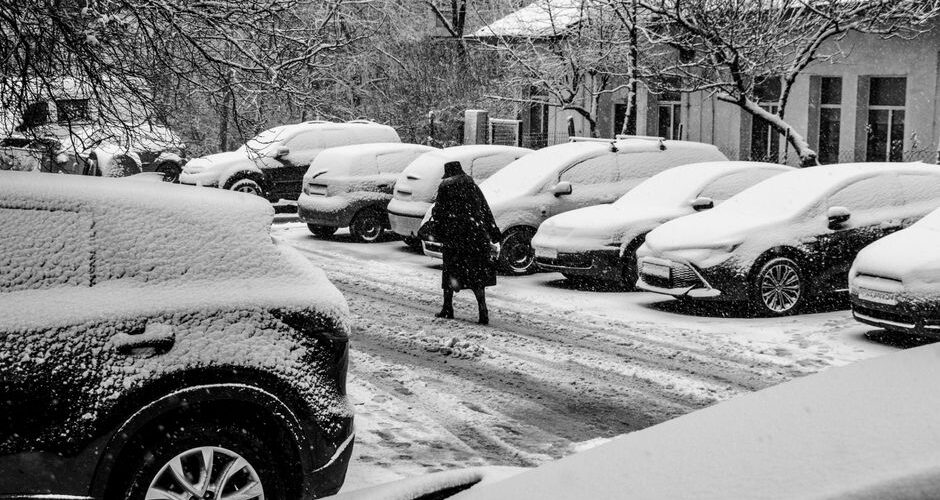
Your Denver parking lot is still icy after plowing because straight rock salt stops working around 15°F pavement temperature, and Denver winter pavement routinely sits between -5°F and 15°F overnight. The plow removed the snow, but the salt never melted the remaining ice, so it refroze into a liability claim waiting to happen. The fix is the right de-icer for the actual pavement temperature: calcium chloride to -25°F, magnesium chloride to -13°F, or a treated salt blend, applied on a 24/7 overnight schedule with photo proof on every push.
Table of Contents
- Why does salt stop melting ice in Denver when it gets cold?
- What is the difference between rock salt, calcium chloride, and magnesium chloride?
- Why do cheap bids mean straight rock salt and a refreeze?
- How do you decide which de-icer a Denver lot gets?
- What does de-icing actually cost on a Denver lot in 2026?
- How does denversnowremovals.com handle Denver de-icing and photo proof?
- Why is my lot still icy after the plow left?
- Is ice melt safe for dogs and does it damage concrete?
- Key Takeaways
- References
Why does salt stop melting ice in Denver when it gets cold?
Sodium chloride needs liquid water to work. Rock salt lowers the freezing point of water, but only so far. At roughly 15°F to 20°F pavement temperature, standard rock salt loses most of its melting power, according to Heattrak. Below that range, the salt sits on top of the ice doing nothing while the surface stays slick.
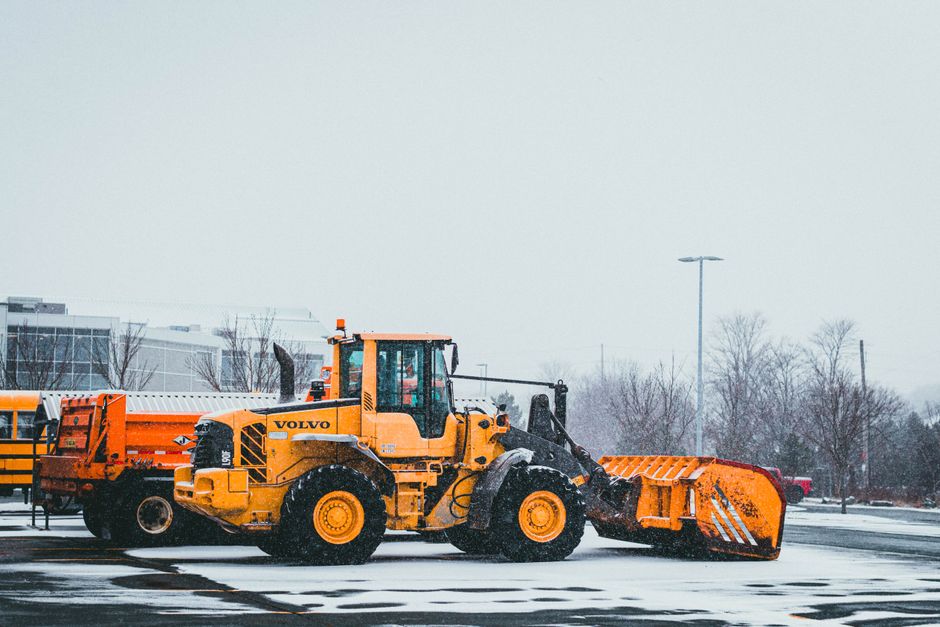
Denver's own street crews understand this. The City and County of Denver uses a naturally mined chloride blend called Ice Slicer and liquid magnesium chloride downtown, not straight rock salt, according to Denver's Department of Transportation and Infrastructure. The city made that switch because Denver pavement temperatures crash hard after sunset.
Here is the trap for property managers. A lot that looks wet at 8 p.m. becomes a sheet of black ice by 2 a.m. when the temperature drops below salt's working range. The moisture from the partial melt refreezes smoother than before. Beverly Companies notes that commercial snow removal problems often start before the first storm, and a refreeze cycle is one of the worst. Your liability exposure starts the moment a tenant's car slides toward a curb or a pedestrian hits the ground.
What is the difference between rock salt, calcium chloride, and magnesium chloride?
Rock salt works to about 15°F. Magnesium chloride works to about -13°F. Calcium chloride works to about -25°F. Those are the three products that matter most for Denver lots, and the difference between them is why some lots stay bare while others turn into skating rinks.
Rock salt is the cheapest bag on the shelf. It handles the warm edge of a Denver storm, but it quits exactly when overnight temperatures bottom out. Magnesium chloride keeps working through most Denver cold snaps. Calcium chloride is the heavy hitter for the -5°F nights in Cherry Creek and the Denver Tech Center. According to Heattrak, calcium chloride is effective down to about -25°F and magnesium chloride down to about -13°F.
Concrete and asphalt react differently to de-icers. Calcium chloride can contribute to concrete scaling if over-applied, so application rate matters. HOA properties with dog traffic need pet-safe options on sidewalks and common areas. Beet and corn based liquids are non-toxic to plants and wildlife but carry a strong odor, according to Heattrak.

Pretreating with liquid anti-icer before a storm uses roughly 25% of the material of reactive deicing after snow accumulates, according to Heattrak. That is a 75% reduction in product, which changes the cost math on every Denver lot.
| Ice Melt Type | Works To What Temp | Safe For Concrete/Pets | Cost | When We Use |
|---|---|---|---|---|
| Rock salt (sodium chloride) | About 15°F | Moderate concrete risk, not pet-safe | Lowest | Warm edge storms above 20°F |
| Magnesium chloride | About -13°F | Lower concrete risk, moderate pet concern | Mid | Most Denver nights from 10°F to 20°F |
| Calcium chloride | About -25°F | Higher concrete scaling risk if over-applied | Highest | Deep cold snaps below 10°F |
| Treated salt blend | Varies by blend | Varies by blend | Mid | General lot coverage with better cold performance |
| Beet/corn liquid | Varies | Pet-safe, non-toxic to plants | Higher | HOA sidewalks and pet areas |
Why do cheap bids mean straight rock salt and a refreeze?
Cheap bids usually mean straight rock salt because rock salt is the cheapest product on the shelf. A low number on a snow contract has to come from somewhere, and product is the easiest place to cut. The plow still runs, the salt still gets spread, but the chemistry quits at 15°F and the lot refreezes.
The refreeze cycle works like this. Salt melts the top layer of snow and ice into water. That water runs toward the lot entrance, the drains, and the shaded north side of the building. When the temperature drops below 15°F, the salt stops working and the water freezes again. Now the ice is thicker and smoother than before, and it is sitting exactly where cars and pedestrians travel.
Denver's own residential plows do not carry de-icing material at all, according to Denver's Department of Transportation and Infrastructure. That is why side streets stay packed and slick after a storm. The city makes one center pass and leaves the pack. A commercial lot cannot operate that way.
The real cost of a cheap bid is a slip-and-fall claim. Beverly Companies points out that snow removal problems compound when the wrong material is used. A few dollars of calcium chloride on a cold night is nothing compared to a lawsuit from a tenant who hit the ice at the entrance.
How do you decide which de-icer a Denver lot gets?
The de-icer decision starts with pavement temperature, not air temperature. Pavement holds heat differently than air, and shaded areas run colder than sun-exposed asphalt. I look at the actual surface temperature before choosing rock salt, magnesium chloride, or calcium chloride.
Sun exposure is the second factor. A south-facing lot in Cherry Creek gets afternoon sun that helps melt ice naturally. A shaded north wall in the Denver Tech Center stays frozen all day. Concrete versus asphalt matters too. Concrete is more prone to scaling from calcium chloride, so application rate has to be tighter on sidewalks and curbs.
Slope and drainage decide where water pools and refreezes. The rule is to apply anti-icer from high points downward so product does not pool at the bottom of a slope and create a slick spot, according to Heattrak. Spray traffic lanes first so vehicle tires carry the product into parking spaces.
HOA pet-safe requirements push toward beet and corn based liquids on sidewalks and common areas. Those products are non-toxic to plants and wildlife but carry a strong odor, according to Heattrak. Denver's own anti-icing program is described as rare because weather conditions and pavement temperatures have to be just right for pretreatment to be effective, according to Denver's Department of Transportation and Infrastructure.
What does de-icing actually cost on a Denver lot in 2026?
Commercial lot plowing in Denver runs $250 to $850 per push. De-icing is a separate line item at $75 to $250 extra per application. Residential driveway plowing runs $65 to $150 per push, and sidewalk clearing runs $30 to $50. Seasonal contracts for Denver properties run $400 to $900 depending on the lot size and trigger.
De-icing is a line item because product cost swings with temperature. A warm storm above 20°F needs cheap rock salt. A cold snap at -5°F needs calcium chloride, which costs more per bag. If de-ice were baked into the push price, the property manager would overpay on warm storms and the contractor would lose money on cold ones. Separate pricing keeps the math honest.
Seasonal contracts for Denver commercial snow run September through May, according to Denver Snow Removals. That covers the full Denver winter window, including the early and late storms that catch properties off guard.
| Denver Temperature | Straight Rock Salt Result | Treated Blend or Calcium Chloride Result |
|---|---|---|
| 25°F to 32°F | Melts well | Melts well, no advantage |
| 15°F to 25°F | Slows down, partial melt | Full melt, bare pavement |
| 5°F to 15°F | Stops working, refreeze risk | Magnesium chloride still working |
| -5°F to 5°F | No melt, black ice | Calcium chloride still working |
How does denversnowremovals.com handle Denver de-icing and photo proof?
I run Denver Snow Removals, and we handle Denver de-icing with a zero-tolerance commercial program built for property managers and HOA managers. Our Commercial Parking Lot Snow Plowing Denver – Zero Tolerance service runs on a 2-inch trigger with GPS tracked trucks, time-stamped photo proof on every push, 24/7 overnight dispatch, de-icing and salting included, stacking, $2M insured, W-2 crews, and backup trucks.
The photo proof system is the liability protection. Every push and every de-ice application gets a GPS time-stamped photo. A property manager in Cherry Creek or the Denver Tech Center can pull up the record and show exactly when the lot was cleared and what product went down. That documentation matters when a slip-and-fall claim lands.
We do residential driveways and sidewalks the same way. Denver has a 24-hour sidewalk law, and homeowners in Cherry Creek, Highlands, Central Park, Washington Park, Sloan's Lake, Baker, LoDo, and Capitol Hill need their sidewalks cleared whether they are home or traveling. Our crews handle the driveway, the walk, and the de-icing on the same overnight route.
We run W-2 crews, not 1099 subs. Every truck is GPS tracked. Every job gets photo proof. That is how a Denver lot stays bare to the concrete instead of turning into a refreeze hazard.
Why is my lot still icy after the plow left?
A plow is not a de-icer. The plow removes snow, but it does not melt the ice pack underneath. If the plow shaved the top and left a packed layer, that pack freezes solid overnight and the lot looks untouched by morning.
No de-icer applied is the most common cause. A plow-only bid removes snow and leaves everything else. The second cause is product applied above its working temperature. Rock salt spread at 10°F does nothing, and the lot refreezes.
Shaded areas never got sun, so they never melted. Drainage pooling at the entrance collects water that freezes into a thick ice sheet. Denver's own residential plows deliberately leave pack and do not expose bare pavement, according to Denver's Department of Transportation and Infrastructure. A commercial lot cannot accept that standard. Bare pavement takes both a plow and the right de-icer at the right temperature.
Is ice melt safe for dogs and does it damage concrete?
It depends on the product and the application rate. Straight rock salt and calcium chloride can irritate dog paws, and calcium chloride can contribute to concrete scaling if over-applied. HOA properties with heavy dog traffic should use pet-safe options on sidewalks and common areas.
Beet and corn based liquid anti-icers are non-toxic to plants and wildlife, according to Heattrak. The tradeoff is a strong odor that some property managers notice around entrances. Potassium acetate is noncorrosive and biodegradable but costs more, so it is usually reserved for priority areas.
Concrete scaling happens when de-icer forces rapid freeze-thaw cycles at the surface. The right application rate prevents most damage. That is why a Denver lot needs a crew that measures product per square foot instead of throwing handfuls from a truck window.
Key Takeaways
- Rock salt is effective only to about 15°F, and Denver pavement regularly sits below that overnight.
- Calcium chloride works to about -25°F and magnesium chloride to about -13°F.
- Pretreating with liquid anti-icer uses roughly 25% of the salt of post-storm deicing.
- Denver's residential plows make one center pass and carry no de-icing material, so side streets stay packed.
- Commercial lot de-icing in Denver runs $75-$250 extra on top of a $250-$850 push.
- Denver property owners are required to clear sidewalks, including ADA ramps and bus stops.
- Every denversnowremovals.com push comes with GPS time-stamped photo proof.
References
- Commercial Snow Removal Problems That Start Before the First Storm – Beverly Companies
- Snow Removal – City and County of Denver – Denver Department of Transportation and Infrastructure
- Commercial Snow Plowing in Cherry Creek: Reliable 24/7 Winter Coverage – Denver Snow Removals
- Commercial Snow Removal 101: How and Why to Pretreat Your Parking Lots – Heattrak, 2026