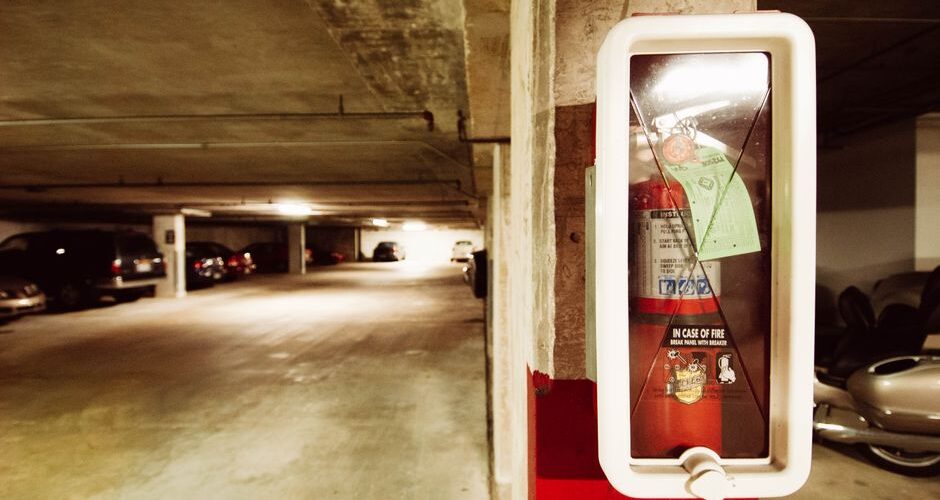
A parking structure is not just a parking lot with a roof on it. The roof, the ramps, the columns, the overhead piping, and the tight turning radii all change what kind of snow removal equipment can physically get in, work safely, and get back out. Property managers who plan for a surface lot and then apply the same equipment list to a covered garage usually find out about the mismatch during the first real storm.
The equipment question comes down to two things: what the machine must clear, and what the structure will physically allow. Snow removal can range from a basic shovel to equipment capable of clearing an entire commercial parking lot, and the right tool depends on the amount and type of snow, the size of the area, the available space, and the surface being cleared. Inside a Denver parking structure, the “available space” part of that list moves to the front.
Why a Parking Structure Changes the Equipment Conversation
An open lot lets a full-size plow truck work in long, fast passes and push snow to the perimeter. A structure does not offer that luxury. Snow has to be moved in shorter passes, often toward a ramp, a drive aisle end, or a designated haul-out point. Equipment that is too tall hits clearance bars or overhead systems. Equipment that is too wide cannot work between columns or around a ramp landing. Equipment that is too heavy or too aggressive can damage joint sealants, coatings, and drainage grates.
Denver snow events can also shift conditions quickly, and wind is a genuine factor in how snow behaves. Snow that arrives light and easy to move can end up drifted, packed, or considerably more difficult to clear later. Inside a structure, that same drifted snow tends to pile against columns, wheel stops, and stairwell entries where a wide machine cannot reach.
Measure the Structure Before You Shop for Machines
No equipment list is reliable until someone has walked the garage with a tape measure and a notepad. The measurements that matter most are the ones that cause expensive surprises at 3 a.m.
- Posted height restrictions at every vehicle entrance, plus the actual clearance under the lowest overhead obstruction inside.
- Clearance under sprinkler lines, conduit, signage, and light fixtures, since these often sit lower than the structural deck.
- Drive aisle width at the narrowest point, and the turning radius needed to swing around a ramp landing or a blind corner.
- Column spacing and the gaps between columns and parking stalls.
- Ramp grade and whether a machine can climb it with a blade or bucket loaded with snow.
- Door, gate, and entry widths where equipment must pass through rather than under.
- Surface type and condition, including coatings, joint seals, expansion joints, and drain locations.
Document those numbers and hand them to your snow contractor before the season, not after. A provider working a seasonal contract with trigger-depth terms needs the structure’s constraints on file so the right equipment is assigned to your route from the start.
Equipment That Typically Fits Inside a Denver Parking Structure
The equipment that works indoors tends to be smaller, lower, and more maneuverable. That does not mean less capable. It means matched to the space.
Utility Vehicles and Compact Tractors
Utility vehicles, sometimes called RTVs or UTVs, are a common sight in commercial snow work because they can carry a blade, a small spreader, or a broom and still fit through openings a truck cannot. Owners who run them note the tradeoff clearly: a machine like an RTV 1100 handles a lot of work well but is a bit too wide for standard 48 inch sidewalks. That width note matters even more inside a garage, where stall lines, columns, and pedestrian walkways create the same kind of pinch points.
Small front bucket tractors sit in a similar lane. They can handle driveways and small parking areas and can carry attachments, but the operator has to confirm overhead clearance and weight limits before taking one onto an upper deck.
Walk-Behind Machines, Blowers, and Rotary Brooms
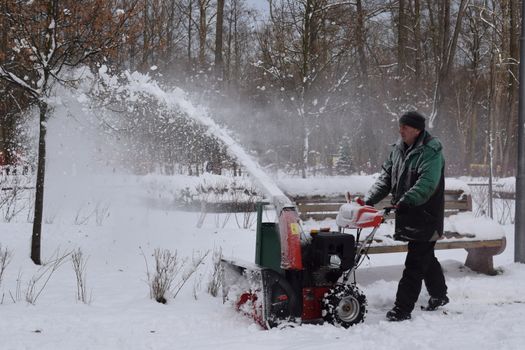
Walk-behind snow blowers and small rotary brooms are the backbone of interior work. They reach corners, stairwell landings, elevator lobbies, and the strips along walls that no vehicle-mounted blade can touch. Snow sweepers are specialized machines built for clearing snow efficiently from large areas such as streets, sidewalks, and parking lots, and a rotary broom mounted on a small deck mower or compact carrier is a practical middle option for covered drive aisles.
The limitation is production speed. Walk-behind equipment clears a structure thoroughly but slowly, so a garage with multiple levels and long aisles needs more than one unit, or a combination of walk-behind and small vehicle-mounted equipment.
Attachments That Earn Their Space Indoors
Attachment choice often matters more than the carrier. Plows, material buckets, and snow blowers all do similar-sounding work, but each behaves differently when the goal is removing snow quickly and cleanly from a confined area. A plow is fast for pushing snow along an aisle. A bucket is better for scooping and carrying snow to a haul-out point. A snowblower or pusher-style blade can move volume without leaving long windrows against the walls.
Sectional pusher blades are used in parking lot clearing and can be matched to smaller carriers. In a structure, the practical test is whether the attachment plus the carrier still clears the lowest overhead obstruction and still fits between columns at full width.
De-Icing and Material Handling Equipment
Salting equipment does not need to be large to be effective indoors. Small spreaders mounted on utility vehicles or walk-behind units let crews treat ramps and entry aprons where ice forms first. Keep in mind that material choice, application rate, and cleanup inside a structure deserve a conversation with the property owner, since residue tracking into lobbies and stairwells is a real complaint.
Equipment That Usually Stays Outside
Some equipment belongs on the surface lot and the entry drive, and forcing it into a structure creates more problems than it solves.
Full-Size Plow Trucks
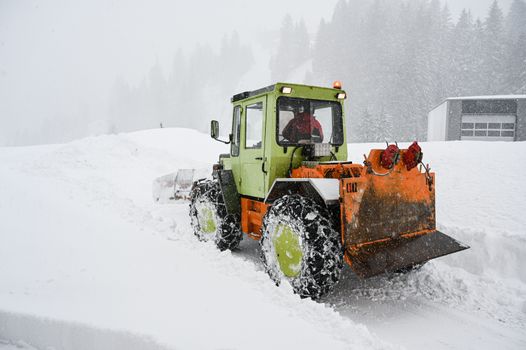
A plow truck is the fastest way to open a large surface lot, and it remains the right tool for the exterior drive aisles, entry aprons, and the pile areas where snow gets staged. Inside a structure, height and width almost always work against it, and the blade swing needed to angle snow to one side can put a column or a parked vehicle in the path.
Compact Wheel Loaders
When the main requirement is moving large amounts of snow across open areas, compact wheel loaders are a practical choice for parking lots and wide spaces. They can also work at structure entrances to move staged snow into trucks for hauling. The judgment call is whether a loader goes inside at all, which depends on deck load capacity, overhead clearance, and the operator’s ability to work without clipping the structure.
Indoor Versus Outdoor Equipment at a Glance
| Equipment type | Typical indoor fit | Best role in a structure | Watch out for |
|---|---|---|---|
| Walk-behind snow blower | Strong | Corners, walkways, stairwell landings, tight strips | Slow production, operator fatigue |
| Rotary broom or sweeper | Strong | Cleaning residual snow and light accumulation from aisles | Less effective on deep, packed snow |
| Utility vehicle with blade or spreader | Good, with measurement | Drive aisles, ramps, entry aprons, de-icing | Width at columns and walkways |
| Compact tractor with bucket | Selective | Scooping and carrying snow to a haul-out point | Overhead clearance and deck loading |
| Compact wheel loader | Limited | Moving volume at entrances and staging areas | Size, weight, and maneuvering room |
| Full-size plow truck | Rarely | Surface lots, drive aisles outside, snow hauling | Height, width, and blade swing |
Air Quality, Surfaces, and Structure Protection
Two operational issues come up indoors that rarely matter on an open lot. The first is exhaust and ventilation. Gas and diesel equipment running on a covered level produces fumes that concentrate in enclosed or semi-enclosed areas, so run times, staging locations, and ventilation need to be part of the plan. Confirm local requirements with the property’s own engineer or the appropriate authority rather than assuming an open-air approach will carry over.
The second is surface protection. Blades and buckets can catch on expansion joints, chip coatings, or drag a drain grate loose. Operators should know where the drains, wheel stops, and joint seals are before the first pass. A quick walk of the level with a photo record also gives the property manager a baseline if damage questions come up later.
Building a Layered Plan Around the Structure
Most well-run garages use a layered approach rather than betting on one machine. The surface lot and entry drive get plow trucks and, where volume demands it, loaders. The structure interior gets utility vehicles, walk-behind blowers, brooms, and hand tools. Snow gets pushed to agreed staging points inside, then moved out to the hauling operation. De-icing equipment works the ramps and entry aprons where ice shows up first.
That plan only holds together if it is confirmed before the season. By the time crews, routes, equipment, and material inventories are set, the remaining step is confirming the details only the property can provide: how the building operates, which areas must stay accessible, and what cannot be blocked when a storm hits. For a Denver property with 47 years of local snow work behind its contractor, that pre-storm conversation is where most of the value sits.
Questions to Confirm Before the First Storm
- Which entrances must stay open for tenants, deliveries, or emergency access at all times?
- Where can snow be staged inside, and where is the designated haul-out point?
- What is the posted height restriction, and what is the actual lowest clearance inside?
- Are there upper decks with load limits that restrict heavier equipment?
- Who is responsible for closing levels or blocking stalls so equipment can work?
- What is the trigger depth in the contract, and does it differ for the structure versus the surface lot?
Frequently Asked Questions
Can a regular plow truck clear snow inside a parking garage?
Rarely. Height restrictions, column spacing, and the space needed to angle a blade usually rule it out. Plow trucks are best used on the surface lot, entry drives, and staging areas outside the structure, while smaller equipment handles the interior levels and tight corners.
What is the most versatile machine for a covered garage?
A utility vehicle with interchangeable attachments covers a lot of ground, handling blades, spreaders, and brooms in aisles that a truck cannot enter. It still needs a walk-behind backup for corners, walkways, and stairwell landings, and its width should be checked against the narrowest pinch point first.
Does snow have to be hauled out of a parking structure?
Often, yes. Pushing snow to the walls or into stalls eventually blocks parking and creates meltwater problems. Many structures use interior staging points and then move snow out to a hauling operation, which is why snow hauling and disposal is usually built into the plan alongside plowing.
How early should equipment be matched to a Denver structure?
Before the first storm, and ideally before the season’s routes and equipment assignments are locked in. Walking the garage with a contractor in the fall lets you confirm clearances, staging points, and priority areas while there is still time to adjust the equipment lineup and the contract terms.